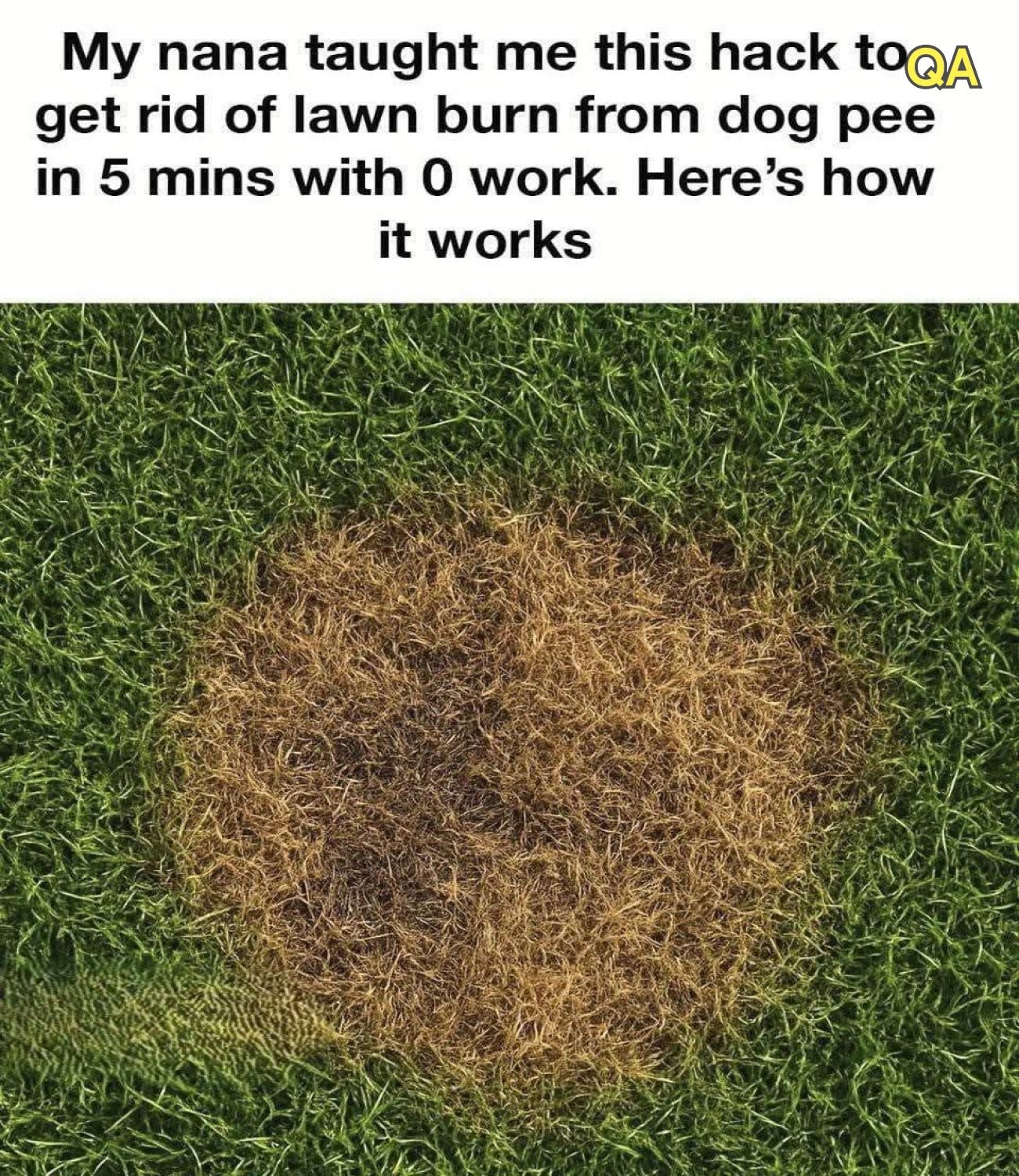
A healthy green lawn and a happy dog do not have to be competing goals. Many dog owners notice circular yellow, brown, or unusually dark green areas appearing in the grass where their pet regularly urinates. These lawn spots can be discouraging, especially after time and money have gone into mowing, watering, and maintaining a garden.
The most practical and well-supported approach is also simple: dilute fresh urine with water as soon as reasonably possible. This does not reverse grass that has already died, but it can reduce the concentration of compounds reaching the soil and may help prevent or limit further damage. Combined with sensible lawn care and reseeding where needed, it can make a meaningful difference over time.
Importantly, lawn care should never come before a dog’s wellbeing. Dogs need constant access to clean drinking water, and owners should not limit water intake in an effort to protect grass. Instead, use pet-friendly routines that support both lawn recovery and your dog’s normal outdoor life.
Why Dog Urine Can Turn Grass Yellow or Brown
Dog urine is mostly water, but it also contains nitrogen-containing waste products, minerals, and salts. Nitrogen is an essential plant nutrient and is a common ingredient in lawn fertilizers. In small amounts, it can encourage green growth. When it is repeatedly deposited in a small area at a high concentration, however, it can stress grass plants and their roots.
This is why a typical dog urine spot may have a brown or yellow center with a darker green ring around it. The central area receives the strongest concentration and may be damaged. Grass at the edge receives a lower dose, which can act somewhat like fertilizer and produce darker growth.
The pattern is not caused by a dog being “bad,” and it is not necessarily a sign that the dog is unwell. Lawn damage is affected by several practical factors, including the volume of urine, how often the same place is used, weather conditions, soil drainage, grass species, recent fertilizer use, and the overall health of the turf.
Hot, dry weather can make the issue more obvious because grass already under drought stress has less capacity to recover. A lawn that has been heavily fertilized may also be more vulnerable to additional nitrogen in concentrated areas. Conversely, a well-established lawn with suitable grass varieties may tolerate occasional use better than thin or stressed turf.
The Simple Trick: Dilute Fresh Urine With Water
Watering the location after your dog urinates is the most reliable household step for reducing the risk of urine-related lawn damage. A prompt rinse helps dilute urine and move soluble compounds farther into the soil, away from the grass blades and shallow root zone.
You do not need specialized chemicals. Use a watering can, hose, or a small bucket of fresh water. Apply enough to wet the area thoroughly without creating substantial runoff. The aim is dilution, not flooding.
Timing matters. Watering shortly after the dog has used the lawn is more useful than watering a patch that became brown days or weeks ago. Once grass tissue and roots have been severely damaged, water alone will not make dead grass turn green again. It may, however, help nearby grass remain healthier and support the soil before repair.
For many households, it is not realistic to follow a dog outside every time. A manageable routine is better than a perfect one that cannot be maintained. Keep a filled watering can near the door, rinse the lawn after morning or evening outings when possible, or focus on the areas your dog uses most often.
How to Tell Whether the Grass Can Recover
Not every discolored spot requires reseeding. Grass can look yellow or brown when it is stressed, dry, or temporarily dormant. Before removing turf, check whether there is still living growth at the base of the plants.
Gently inspect the affected patch after several days of appropriate watering. If the blades are dry and brittle but the crowns near the soil are still alive, the grass may recover as conditions improve. If the turf pulls away easily, remains straw-colored, or shows no new growth while surrounding grass is actively growing, the area may need repair.
It is also worth checking for causes unrelated to dog urine. Fungal lawn diseases, insect activity, uneven irrigation, mower damage, compacted soil, and fertilizer spills can all produce patches. If spots appear in areas where your dog does not go, or if the problem spreads quickly across the lawn, consider consulting a local garden center, lawn professional, or university extension service.
How to Repair Dog Urine Spots on a Lawn
1. Rinse and Monitor the Area
Begin by watering the patch to flush the soil gently. Continue normal lawn watering based on local weather and the needs of your grass type. Avoid keeping the ground constantly saturated, as overly wet soil can create other lawn problems.
2. Remove Clearly Dead Grass
If the grass has not recovered, use a hand rake to remove loose, dead plant material. Work carefully around the edges, where grass may still be healthy. This creates space for seed and allows better contact between the soil and new growth.
3. Loosen the Top Layer of Soil
Lightly rake the top layer of exposed soil. There is no need to dig deeply. The purpose is to create a receptive surface for seed and to reduce minor surface compaction. If the soil is poor, compacted, or uneven, a thin layer of quality topsoil can help create a better seedbed.
4. Choose Grass Seed That Suits Your Lawn
Select seed that matches the existing turf as closely as possible and is appropriate for your climate. Cool-season grasses, such as Kentucky bluegrass, perennial ryegrass, and fescues, are common in cooler regions. Warm-season lawns may use varieties such as bermudagrass, zoysiagrass, or St. Augustinegrass, although repair methods can vary by species.
For the most natural appearance, use the same seed blend originally used on the lawn when that information is available. Local extension services and reputable nurseries can help identify suitable options for regional conditions, sun exposure, and soil type.
5. Seed, Cover Lightly, and Water Carefully
Spread seed evenly over the prepared spot according to the package directions. Press it gently into the soil or cover it with a very thin layer of topsoil. Seeds need consistent moisture during germination, but excessive watering can wash them away or encourage disease.
Keep the repaired patch lightly moist until seedlings establish. Once grass is growing, gradually shift to deeper, less frequent watering consistent with local lawn guidance. Protect the area from heavy foot traffic and, if possible, discourage your dog from using the freshly seeded spot until the new grass is established.
How to Prevent Dog Urine Spots in the Future
Prevention works best when it combines realistic pet routines with good turf management. No method can guarantee that a lawn will never show a mark, but these steps can reduce repeated damage.
- Rinse frequent toilet areas: Diluting fresh urine with water remains the most direct way to reduce concentration in the soil.
- Create a designated dog area: Training a dog to use one part of the yard can protect the most visible lawn areas. Some owners use pet-safe gravel, mulch, artificial turf designed for pets, or a less prominent grass section.
- Choose materials carefully: Avoid cocoa mulch because it can be harmful if a dog eats it. Ensure any landscaping materials are suitable for pets and do not have sharp edges.
- Maintain a resilient lawn: Mow at the recommended height for the grass species, water appropriately, and address soil issues such as compaction or poor drainage.
- Avoid excessive fertilizer: Applying more nitrogen to a lawn already receiving concentrated nitrogen from urine can worsen stress. Follow local recommendations and product instructions.
- Repair small spots early: Overseeding or repairing a small bare area promptly can prevent weeds from becoming established.
Should You Change Your Dog’s Diet or Water Intake?
Do not reduce your dog’s water intake to protect the lawn. Adequate hydration is essential for normal health, temperature regulation, and urinary function. A dog should have regular access to fresh water, particularly during warm weather, after exercise, and when spending time outdoors.
It is also wise to be skeptical of products marketed as “lawn-saving” dietary supplements. Some products claim to neutralize urine, but dietary changes or supplements may not be appropriate for every dog and can affect nutrition or urinary health. There is no substitute for professional veterinary advice when considering a change to a pet’s diet.
If your dog is suddenly drinking much more or less than usual, urinating unusually often, straining to urinate, having accidents indoors, or showing other changes in behavior, contact a veterinarian. Those signs are health questions rather than lawn-care problems and deserve proper assessment.
Common Dog Urine Spot Myths
Myth: Only Female Dogs Cause Lawn Damage
Both male and female dogs can cause urine spots. The most important issue is usually where and how frequently urine is concentrated. Dogs that repeatedly use the same small location may create more noticeable damage regardless of sex.
Myth: Baking Soda, Vinegar, or Salt Will Fix the Lawn
These household remedies are not recommended. Vinegar can injure plants, while baking soda and salt can alter soil chemistry and potentially increase damage. Plain water is the safer choice for diluting fresh urine.
Myth: Fertilizer Will Make Brown Patches Green Again
Adding fertilizer to a urine-damaged patch can be counterproductive because the area may already have excess nitrogen and salts. First determine whether the grass is alive. If it is dead, reseeding or replacing the damaged turf is usually more useful than adding fertilizer.
Frequently Asked Questions About Dog Urine Lawn Spots
How long does it take for dog urine spots to recover?
Recovery depends on the grass type, season, weather, soil condition, and severity of damage. Mildly stressed grass may improve over several weeks with appropriate care. Dead patches generally need reseeding or other repair and may take longer to blend into the surrounding lawn.
Can dog urine spots disappear in five minutes?
The watering step can take only a few minutes, but grass recovery cannot. Prompt rinsing may reduce future damage, while established brown spots need time, care, or reseeding.
Will grass grow back on its own?
Some grasses spread naturally through runners or underground stems, while others are less able to fill bare areas. If the growing points remain alive, grass may recover. If the patch is fully dead, adding seed suited to the lawn is often the most dependable option.
A Practical Approach for a Greener Lawn and a Healthy Dog
Dog urine spots are a common gardening challenge, not a reason to restrict a dog’s normal access to water or outdoor time. The most effective strategy is straightforward: dilute fresh urine when possible, keep the lawn healthy without overfertilizing, and reseed areas that do not recover.
Small habits can add up. A watering can by the back door, a designated pet area, and early repair of damaged turf can help maintain a more even lawn while keeping routines comfortable for everyone in the household. With patience and realistic expectations, it is possible to care for both your garden and your dog responsibly.
Sources
Disclaimer: This content is intended for entertainment purposes only and is not based on real events.