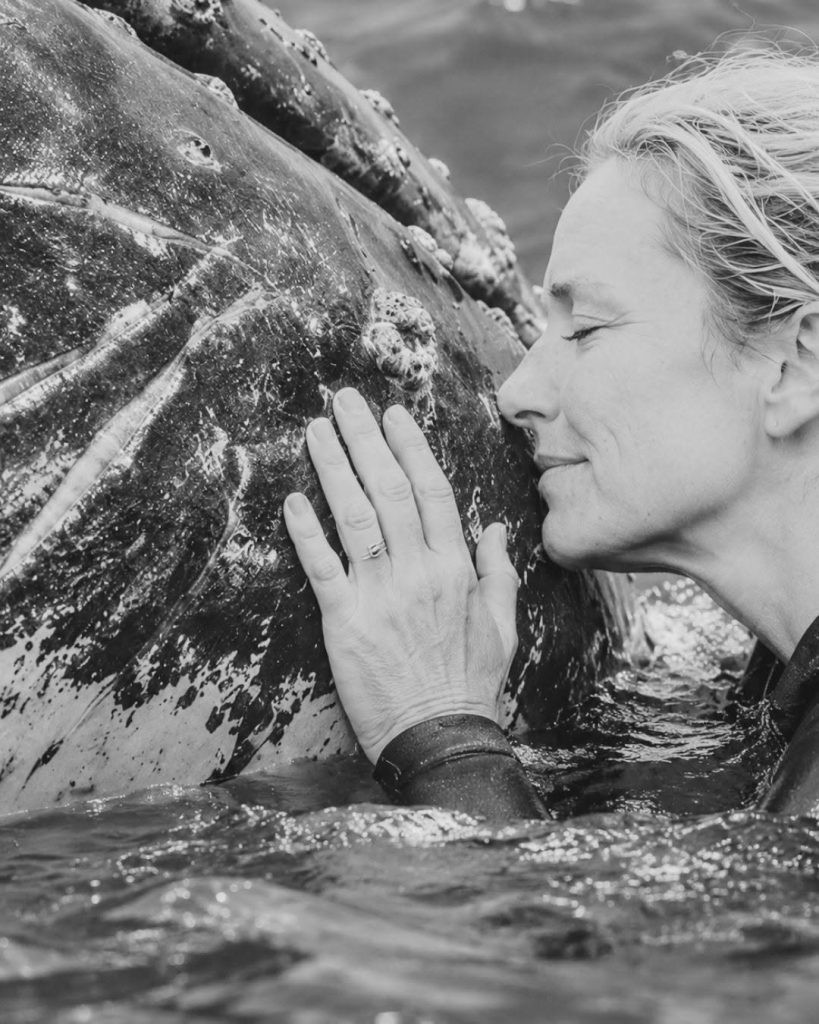
Humpback Whale Protects Marine Biologist in the Cook Islands
In 2017, marine biologist Nan Hauser experienced an unusual underwater encounter that captured worldwide attention. While observing humpback whales near the Cook Islands in the South Pacific, Hauser was repeatedly nudged, lifted and moved by a large whale. The behavior was startling because humpback whales are among the largest animals on Earth, and even a gentle movement from one can carry immense force.
Hauser later said that she initially feared the whale might accidentally injure her. But after the encounter, she believed the animal had positioned itself between her and a nearby shark and had attempted to guide her toward safety. Her account became a widely shared example of the complex and sometimes surprising behavior seen in humpback whales.
The episode is compelling not because it offers simple proof that a whale consciously “rescued” a human, but because it raises meaningful scientific questions. Humpback whales have been documented intervening in interactions involving predators and other marine animals. Researchers continue to study whether these events reflect protective instincts, anti-predator responses, curiosity, learned behavior, or a combination of factors.
The 2017 Nan Hauser Humpback Whale Encounter
Nan Hauser is a veteran marine biologist and the president of the Center for Cetacean Research and Conservation. She has spent decades studying humpback whales in the Cook Islands, a nation made up of islands spread across a large area of the Pacific Ocean. The region is an important seasonal habitat for humpbacks, which migrate there to breed and give birth.
During the 2017 encounter, Hauser was in the water observing whales when a large humpback approached. Video recorded during the event shows a whale using its head and pectoral fin to make contact with her and to move close around her. In her own descriptions of the event, Hauser said the whale seemed to keep her near its body and away from open water.
She later reported seeing a shark in the area and interpreted the whale’s conduct as an effort to shield her. Humpback whales can exceed 15 meters in length and weigh many tonnes, so the encounter was inherently risky even if the animal’s actions were not hostile. Hauser’s experience was especially remarkable because she was able to remain calm enough to observe the situation while staying close to the whale.
Accounts of the event sometimes describe it as a definite act of rescue. From a scientific perspective, however, intent is difficult to prove. Scientists can document an animal’s movements and compare them with known behavioral patterns, but they cannot directly determine what an individual whale perceived or intended. The careful conclusion is that the humpback showed unusual, close-contact behavior that Hauser reasonably interpreted as protective in the context of a nearby shark.
Why Humpback Whale Behavior Fascinates Researchers
Humpback whales, scientifically known as Megaptera novaeangliae, are baleen whales found in oceans around the world. They are known for long migrations, powerful breaching displays, complex social behavior and elaborate songs produced primarily by males in breeding areas. Their exceptionally long pectoral fins, which can reach roughly one-third of their body length, are a distinctive feature and play a role in swimming, maneuvering and communication.
Although humpbacks are not predators of sharks or large marine mammals, they are far from passive animals. Their size, speed and strength can make them formidable when responding to potential threats. Adult humpbacks may use tail slaps, pectoral-fin slaps, lunges and other forceful displays in interactions with other animals. Mothers are also known to closely guard calves, which can be vulnerable to predators in some regions.
Marine mammal researchers have reported observations of humpbacks approaching killer whale attacks involving seals, sea lions, dolphins and other whales. A widely discussed 2016 study in the journal Marine Mammal Science reviewed more than 100 reported cases in which humpbacks appeared to interfere with killer whale predation attempts. In many instances, humpbacks made noise, positioned their bodies near the animals being pursued, or used their fins and tails during the disturbance.
These observations do not establish that humpbacks are consistently acting out of concern for another species. Several explanations remain possible. A humpback might be responding to the sounds of a killer whale attack because such sounds resemble a threat to a humpback calf. It may be reacting instinctively to disturbance, investigating an unusual event, or engaging in behavior that incidentally benefits another animal. Scientists often refer to this as an important distinction between observed behavior and inferred motivation.
Could a Humpback Whale Deliberately Protect a Human?
The idea that a whale might intentionally protect a person is emotionally powerful, but it requires caution. Animal behavior research relies on repeated observation, careful documentation and consideration of alternative explanations. One extraordinary incident, even one supported by video and firsthand testimony, cannot by itself demonstrate a general rule about whale intentions.
At the same time, the available evidence shows that humpback whales can respond actively in situations involving potential danger. Their behavior around calves and their recorded interference with killer whale activity indicate that they are attentive to events in their environment. Humpbacks also have large, highly developed brains and sophisticated social lives, although intelligence should not be measured solely by comparing animals with humans.
Hauser’s account is therefore best understood as an important observation rather than a settled scientific conclusion. The whale’s actions may have reduced her exposure to a possible threat. Whether the animal recognized the shark as a danger to a human, reacted to its presence in a more general way, or behaved for another reason remains unknown.
This uncertainty does not make the encounter less significant. Instead, it highlights why scientists use cautious language when discussing animal cognition. Respecting the limits of the evidence is essential, particularly when studying species that live in environments where direct observation is difficult.
The Reported Reunion With a Humpback Whale
Hauser has also spoken publicly about a later interaction in which she believed she encountered the same whale again. She said she recognized distinctive markings and scars on the animal and felt that the whale’s behavior was gentle and familiar. Such personal experiences can be deeply meaningful, especially for researchers who spend years observing individual animals in the same population.
Photo identification is an established method in whale research. Scientists commonly identify humpbacks by the unique patterns, shapes and scars on the underside of their tail flukes. Marks on dorsal fins and other visible areas can also help researchers distinguish individuals. This approach has contributed greatly to understanding whale migration routes, population trends and long-term site fidelity.
Still, determining whether a whale remembered a particular person is much more difficult than identifying the whale itself. Memory, recognition and social awareness in cetaceans are active areas of research, but a brief reunion cannot conclusively demonstrate that a whale recognized an individual human. A responsible interpretation is that Hauser reported a moving and memorable encounter, while the question of what the whale understood remains open.
Humpback Whales and the Cook Islands Marine Environment
The Cook Islands are widely recognized as an important destination for humpback whale observation during the breeding season, generally from around June through October. Humpbacks that feed in colder waters migrate to tropical and subtropical areas for breeding and calving. These long journeys can span thousands of kilometers and are among the most impressive migrations in the animal kingdom.
Whale tourism can create opportunities for education and conservation when it is managed responsibly. Seeing a whale in its natural environment can help people understand the value of healthy oceans and encourage support for marine protection. However, close encounters also require strict safeguards. Boats, swimmers, drones and underwater cameras can disrupt animals if operators approach too closely or remain with them for too long.
Conservation organizations and government authorities generally advise people to keep an appropriate distance from whales, avoid separating mothers from calves, and follow local regulations at all times. People should never attempt to touch, feed, chase or block the path of a whale. Even calm animals can move unpredictably, and safe wildlife viewing protects both humans and marine mammals.
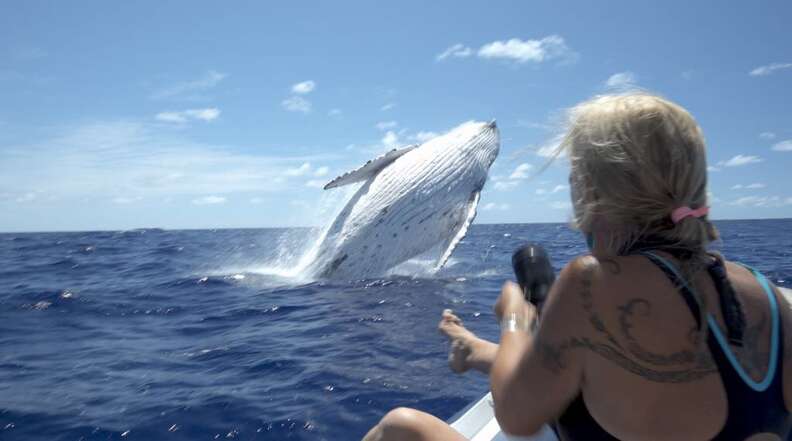
What This Story Teaches About Marine Wildlife
The story of Nan Hauser and the humpback whale has endured because it combines wonder with an important scientific lesson: the ocean contains complex interactions that humans do not always fully understand. It is tempting to frame every unusual animal encounter in human terms, assigning motives such as heroism, friendship or gratitude. Yet the natural world is often more complicated than those labels suggest.
Evidence-based storytelling does not remove the sense of wonder. On the contrary, it makes the story more meaningful. Humpback whales are remarkable animals with behaviors that have evolved in response to migration, reproduction, communication, feeding and survival. Their interactions with other species may reveal more about how marine ecosystems function and how animals respond to risk.
For marine biologists, each well-documented observation can contribute to a broader understanding of cetacean behavior. Video, photographs, location data and independent witness accounts are especially valuable because they enable other researchers to examine events carefully. Over time, a collection of observations may reveal patterns that a single incident cannot explain.
The encounter also underscores the importance of ocean conservation. Humpback whale populations have recovered in some regions since commercial whaling was restricted, but whales still face pressures from entanglement in fishing gear, vessel strikes, ocean noise, pollution and changing food availability linked to climate change. Protecting migration routes and breeding habitats remains essential for their long-term wellbeing.
A Lasting Reminder of Ocean Complexity
Nan Hauser’s 2017 experience in the Cook Islands remains one of the most widely discussed modern stories involving a human and a humpback whale. The images of a massive whale staying close to a lone diver understandably resonated with audiences around the world. They also encouraged public interest in the intelligence and social behavior of whales.
What can be stated with confidence is that a humpback whale displayed extraordinary close-contact behavior around an experienced marine biologist in an area where a shark was reportedly present. Hauser believed the whale was protecting her, and the encounter aligns with broader research showing that humpbacks sometimes intervene during predator-related events.
What cannot yet be stated with certainty is why the whale acted as it did. That unanswered question is not a weakness in the story; it is a reminder of the humility required in wildlife science. As research continues, careful observation and responsible conservation may help explain more about the lives of these extraordinary ocean mammals.
Sources
- BBC News: Report on Nan Hauser’s humpback whale encounter
- Reuters: International reporting and science coverage
- NOAA Fisheries: Humpback whale species information
- International Whaling Commission: Whale conservation and research information
- Marine Mammal Science: Research on humpback whales interfering with killer whale attacks
- IUCN Red List: Conservation status and species assessments
Disclaimer: This content is intended for entertainment purposes only and is not based on real events.