My Sister Collected Daddy’s Farm Rent While I Paid His Nursing Home Bills From My Retirement — Then the Attorney Uncovered Nearly $110,000
For four years, I watched my retirement savings shrink while helping pay for my father’s nursing home care. I believed my sister, Darla, was doing her part to protect the family farm and manage Daddy’s affairs.
I was wrong about how much I understood.
What I eventually learned about the rent from his 240-acre property forced our family to confront a painful question: What happens when the person entrusted with protecting an aging parent begins making decisions that benefit herself instead?
The answer changed our father’s finances, the future of the farm, and the way we understood forgiveness.
I Had Been Paying Daddy’s Bills While My Sister Collected the Rent
Daddy, Virgil, had spent most of his life connected to the land. The 240 acres were more than a financial asset to him. They represented decades of hard work, memories, and the life he had built from the ground up.
By the time he moved into a nursing home, managing everything himself had become difficult. I stepped in where I could, using money from my retirement savings to help cover the expenses.
I assumed Darla was handling the farm’s rental income responsibly.
The land was being rented to Ronnie, a local farmer who had known Daddy for years. The rent should have helped cover the cost of his care, but I had no idea that the payments were being deposited into an account belonging solely to my sister.
Meanwhile, I continued contributing from money I had intended to use for my own future.
It was an arrangement I believed was helping our family get through a difficult season. I never imagined that the financial burden might have been distributed so unfairly.
The Conversation That Changed Everything
The turning point came when Daddy spoke directly with Ronnie about the farm rent.
He made it clear that future payments should go straight into his own bank account rather than Darla’s. Before their conversation ended, he asked Ronnie whether his daughter had made any other requests involving the property.
Ronnie hesitated.
Then he revealed something that left Daddy deeply unsettled.
According to Ronnie, Darla had approached him the previous spring about purchasing the entire 240-acre farm. She had reportedly told him that Daddy had agreed to sell because he would never farm the land again.
The proposed price was roughly half the property’s actual value, and Darla had apparently planned to prepare the paperwork before Christmas.
Ronnie had not wanted to proceed without understanding whether Daddy truly intended to sell.
That hesitation mattered. Instead of accepting the proposal at face value, he had given Daddy the opportunity to hear about it himself.
On the drive home, Daddy reportedly said very little. But his silence was not the same as acceptance.
He needed to understand what had happened to his money, why his name had been used in a proposed sale, and whether the decisions being made on his behalf still reflected his wishes.
A Visit to the Attorney Revealed the Missing Money
On Monday morning, I took Daddy to see the attorney who had prepared his will approximately thirty years earlier.
It was not an easy visit. Daddy was older, his handwriting had become shaky, and the decisions before him were serious. But he was determined to make his wishes clear while he could still express them himself.
He revoked Darla’s power of attorney and appointed me and the attorney as co-agents instead.
The attorney then began reviewing the financial records available to him.
What they reportedly discovered was staggering: nearly $110,000 in farm rental payments collected over four years had been deposited into an account belonging exclusively to Darla.
That figure changed the meaning of everything I had experienced during those years.
I had been drawing from my retirement savings to help Daddy afford his care, believing the farm income was being handled separately and appropriately. Yet the rental money that could have helped cover those expenses had not been going into his account.
I thought about the sacrifices I had made, the bills I had worried over, and the future security I had put at risk.
The hardest part was not simply the amount of money involved. It was the realization that I might have been carrying a burden that the farm’s income could have helped ease.
Still, the next step had to be about protecting Daddy rather than allowing anger to make every decision for us.
Darla Finally Had to Explain Herself
Darla visited Daddy at the nursing home that Wednesday.
She arrived in tears and reportedly explained that she had fallen behind on her mortgage. She said she had intended to repay the money.
Daddy listened until she finished.
Then he confronted her about the rental payments and the proposed sale of the farm. He also challenged her for using his name in a way that did not reflect the decision he said he had made.
He was not interested in allowing the situation to be brushed aside with promises.
The farm would not be sold by Christmas, and Darla would no longer be responsible for directing its rental income. If she wanted to make things right, she would need to acknowledge what had happened and agree to repay the money.
The following week, she signed a repayment agreement.
That document could not erase the damage to our family, but it created a concrete starting point for addressing the financial loss.
Later that evening, Wes brought Daddy a pie. It was a small gesture, but it offered a welcome moment of comfort after days filled with difficult conversations.
Sometimes, when a family is struggling with a serious betrayal, kindness comes from the simplest things: a familiar face, a homemade dessert, or someone willing to sit beside you without demanding that you explain how you feel.
The Farm Income Finally Went Toward Daddy’s Care
Once the rental payments were redirected into Daddy’s account, the financial situation began to change.
The income from the farm was now available to help cover his remaining nursing home expenses. According to the account, it was enough to meet those costs while leaving money to spare.
The attorney also arranged for the money I had personally contributed over the previous four years to be reimbursed first.
For the first time in a long while, I could think about my own retirement without feeling that every dollar I had saved might disappear into another bill.
Wes and I placed the returned funds into our retirement savings.
The relief was difficult to describe. We had helped because we loved Daddy and wanted him to receive the care he needed. We had never expected a reward for doing that.
But there was a difference between choosing to help and unknowingly sacrificing our financial security while money intended for his care was being handled elsewhere.
Recovering those funds did not undo the stress of the previous four years. It did, however, give us a chance to rebuild some of what we had lost.
Ronnie Chose to Rent the Farm Instead
The proposed sale never went ahead.
Instead, Ronnie eventually signed a ten-year lease for the 240 acres.
He explained that he would never have considered purchasing the farm without Daddy’s handshake and trust. His decision reflected the relationship the two men had built over years of working around the same land.
For Daddy, the arrangement offered a way to preserve ownership while ensuring that the property remained productive.
The farm could continue supporting itself through rental income, and the land would remain under his control rather than being transferred through a sale he had not knowingly approved.
There was something reassuring about that outcome.
The farm had survived changing seasons, shifting markets, and decades of hard work. Now, even as Daddy’s circumstances changed, it could continue serving a purpose without forcing him to surrender something so deeply connected to his identity.
Ronnie’s decision also demonstrated the value of asking questions before making a major commitment. A proposed transaction involving valuable family property should never depend solely on one person’s account of what an older relative supposedly wants.
Clear instructions, properly documented agreements, and independent legal advice can help protect everyone involved.
Our Sunday Visits Became a Tradition Again
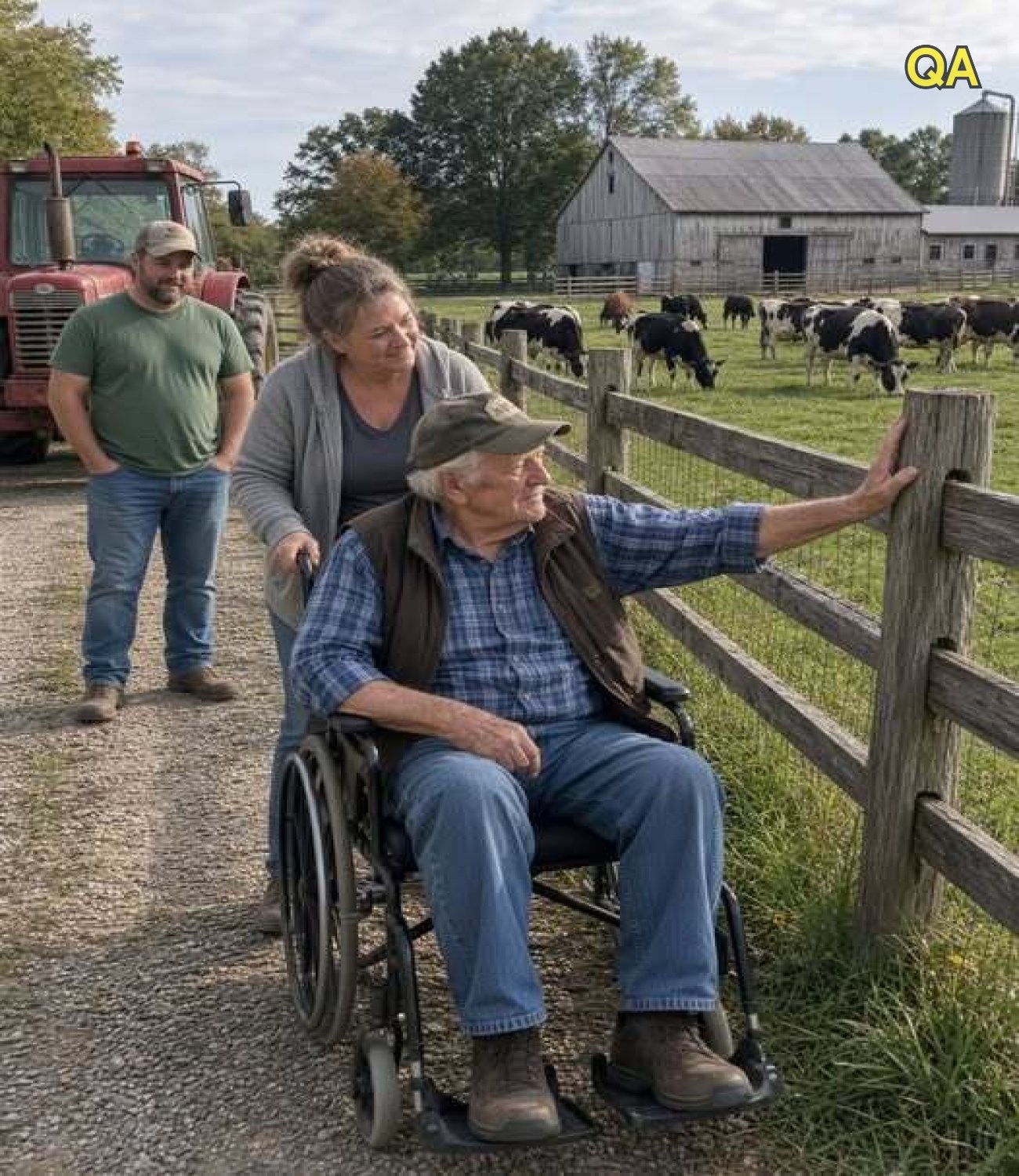
Every first Sunday, I put Daddy’s brown felt hat on his head and drive him out to the farm.
The hat has become part of the ritual. It is a small reminder of the man who once walked the property as its working owner, watching the weather and thinking about what needed to be done next.
Ronnie meets us at the fence.
The two men talk about beans, rainfall, cattle prices, and the many changes they have witnessed over the years. They discuss the land Daddy first marked with a corner post in 1958, remembering details that might seem ordinary to someone else but carry a lifetime of meaning for them.
I listen as they talk, sometimes adding a question or simply watching Daddy’s face as he looks across the fields.
Those visits have become more than an opportunity to check on the property. They allow him to remain connected to the place that shaped so much of his life.
The farm is still there. Ronnie is still working the land. And Daddy still has a say in what happens to it.
After everything that unfolded, that continuity matters.
Could Our Family Learn to Trust Again?
Darla now visits regularly, bringing the rent statement and reading it aloud to Daddy.
During her most recent visit, he told her he was proud of her for showing up.
I found that moment complicated.
The financial questions had required answers, and the repayment agreement remained important. Rebuilding trust could not depend on pretending that the past had never happened.
But Daddy’s words suggested that he was willing to recognize the effort she was making now, even after the choices that had hurt him.
Perhaps that is one of the hardest parts of family conflict: holding someone accountable without deciding that their worst actions must define every moment that follows.
Forgiveness does not require abandoning safeguards. It does not mean handing control back without careful thought or ignoring the financial consequences of past decisions.
It can begin with smaller steps — showing up, telling the truth, accepting responsibility, and demonstrating consistency over time.
Whether those steps will fully repair our relationship remains uncertain. Trust is not restored by one conversation or one signature. It has to be rebuilt through repeated actions.
Still, Daddy’s willingness to acknowledge Darla’s visits has left room for the possibility of change.
What the Farm Taught Me About Family and Responsibility
For years, I believed that taking care of Daddy meant doing whatever was necessary to keep his bills paid. I never questioned whether the family arrangements around his care were working fairly because I assumed everyone had the same goal.
I learned that love and trust, while essential, do not replace transparency.
Older family members deserve to have their wishes respected, their property protected, and their financial decisions handled with care. The relatives who help them also deserve clear information and arrangements that do not quietly place an unfair burden on one person.
When questions arise, reviewing records and consulting an independent attorney can be essential. Power of attorney arrangements should reflect the person’s wishes and be handled according to the applicable legal requirements. Significant property transactions deserve particular care, especially when questions exist about consent or authority.
For our family, the solution began when Daddy asked a direct question and Ronnie chose to answer honestly.
The nearly $110,000 in rental payments had created a serious financial problem, but the larger lesson was about responsibility. Money intended to support an aging parent must be handled transparently, and family loyalty should never be used as a reason to avoid accountability.
Today, when I drive Daddy to the farm and watch him stand beside Ronnie at the fence, I am reminded that protecting someone does not always mean keeping the peace.
Sometimes, it means asking uncomfortable questions, making difficult decisions, and ensuring that the person you love still has a voice in their own future.
The land Daddy marked in 1958 remains part of his life. The rent now helps pay for his care, and our Sunday visits continue.
Our family may never return to exactly what it was before. But with clearer boundaries, honest accounting, and a willingness to take responsibility, we have begun to find a different way forward.
And perhaps that is what matters most: not pretending that nothing went wrong, but making sure the next chapter is built on truth rather than assumptions.
Editorial note: This article is based on a supplied personal-style narrative. The financial allegations and events described have not been independently verified and should not be treated as established facts about identifiable individuals.