When Family Boundaries Have Lasting Consequences
Family relationships can be deeply loving while also carrying unresolved hurt, unmet expectations, and difficult questions about responsibility. A conflict between a parent and an adult child may begin with one practical request for help, yet the emotional consequences can last for years. When a young parent asks for support, when a grandparent feels overwhelmed, or when illness changes a family’s needs, the central issue is often not simply childcare or caregiving. It is whether each person feels seen, respected, and safe within the relationship.
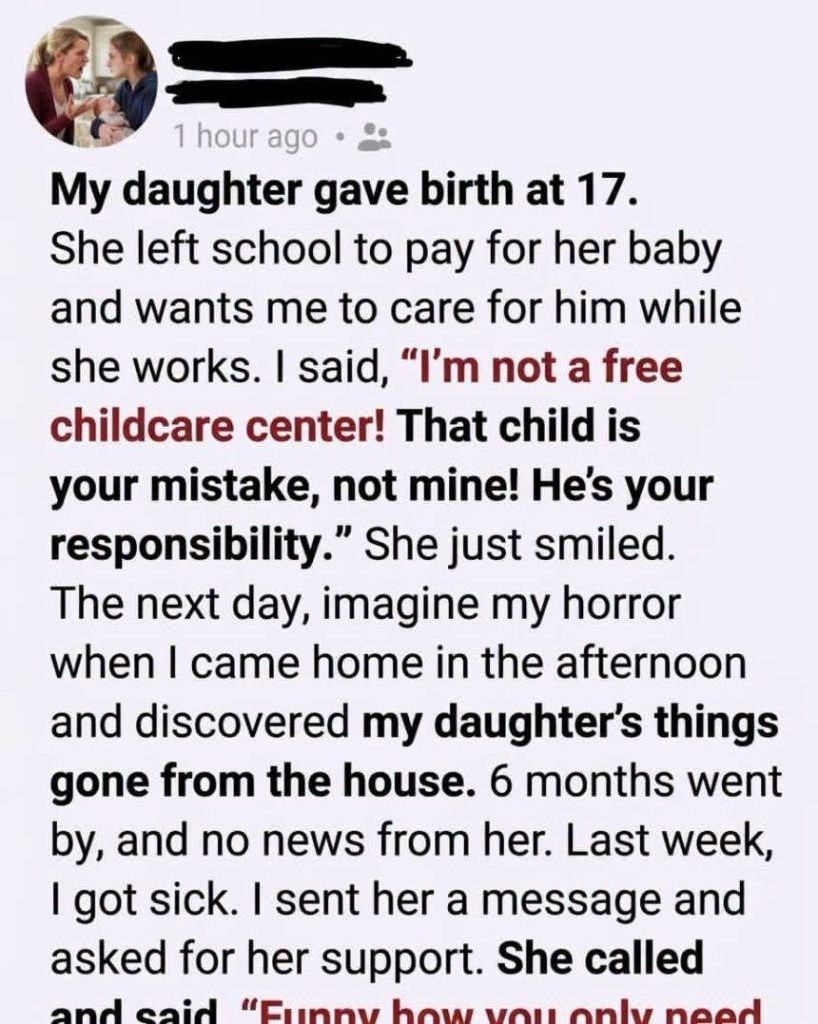
The story of a mother who declined to care for her teenage daughter’s newborn child, only to later seek support after becoming seriously ill, illustrates a painful but important reality: boundaries are meaningful, but they can also have consequences. A person has the right to set limits around childcare, money, housing, and caregiving. At the same time, the way those limits are communicated can shape trust for a long time. A refusal delivered without empathy may be remembered not as a boundary, but as abandonment during a crisis.
This article explores the broader lessons behind family estrangement, support for young parents, caregiver expectations, and the long process of repairing trust. It is not a substitute for medical, legal, or mental health advice. Every family situation is different, especially where there are concerns about safety, abuse, financial insecurity, or serious illness.
Why Support Matters for Young Parents
Becoming a parent during adolescence or early adulthood can bring intense pressure. Young parents may be balancing education, employment, housing, healthcare appointments, emotional adjustment, and the daily needs of an infant. They may also face stigma or judgment from relatives, schools, employers, and their wider communities. Supportive family relationships can make a meaningful difference, particularly when that support helps a young parent remain connected to education, health services, and stable housing.
Support does not always mean assuming full responsibility for a child. Grandparents and other relatives may have jobs, health limitations, financial constraints, or their own caregiving duties. It is reasonable for them to say that they cannot provide ongoing childcare. However, a compassionate response can still acknowledge the young parent’s fear and offer practical alternatives. These might include helping them identify local childcare programs, speaking with a school counselor, arranging an appointment with a healthcare provider, or helping them explore family leave, public benefits, and community services where available.
Public health organizations consistently emphasize the value of prenatal care, postpartum support, mental health screening, and access to social services for parents and infants. The well-being of a baby is closely connected to the well-being of the parent caring for that child. When a new parent is exhausted, isolated, or financially distressed, compassionate support from trusted adults and trained professionals can reduce stress and help the family make safer, more sustainable decisions.
Healthy Boundaries Are Not the Same as Emotional Withdrawal
Boundaries are an important part of healthy relationships. They help people define what they can realistically give without damaging their own health, finances, time, or emotional stability. A grandparent is not automatically obligated to become a child’s primary caregiver. Likewise, an adult child is not automatically obligated to provide hands-on care for a parent who becomes ill. Caregiving should not be assumed solely because of family roles.
However, boundaries are most effective when they are specific, respectful, and paired with honest communication. There is a significant difference between saying, “I cannot provide full-time childcare, but I want to help you find options,” and saying, “You made this choice, so you are on your own.” The first statement defines a limit while maintaining connection. The second may communicate rejection, even if the speaker intends to encourage independence.
In family conflict, people often believe they are teaching a lesson. A parent may think that withholding help will encourage maturity. An adult child may think that refusing contact will protect them from further disappointment. Sometimes distance is necessary and appropriate, especially when interactions are harmful. But punishment and emotional withdrawal rarely create the understanding that people hope for. More often, they deepen resentment and make future conversations harder.
The Emotional Impact of Feeling Unsupported
For a young parent, asking for help can require vulnerability. They may already feel ashamed, overwhelmed, or uncertain about their future. If their request is met with criticism or dismissal, the emotional impact can be substantial. They may decide that relying on family is unsafe or that their needs will always be treated as burdens.
These feelings do not disappear simply because time passes. When a parent later asks the same adult child for help, old memories may return immediately. The adult child may hear the request through the lens of earlier rejection: “You did not help me when I was struggling, so why should I help you now?” This does not necessarily mean they lack compassion. It may mean that they are protecting themselves from reopening a relationship that once caused profound pain.
Family estrangement is rarely caused by one isolated disagreement alone. It more commonly develops through repeated patterns: criticism, unmet promises, dismissive communication, unequal expectations, or a lack of accountability after hurtful events. A single conflict can become the defining moment when it confirms a longer-standing feeling that someone’s needs do not matter.
Illness Can Change Family Needs but Does Not Erase History
A serious medical diagnosis can make a person feel frightened, vulnerable, and dependent. It can also create practical concerns about appointments, medication, transportation, meals, finances, and future care. In those circumstances, people often turn first to family. This is understandable. Many families want to help one another through illness, and emotional support can be valuable alongside medical care.
Yet illness does not automatically repair a damaged relationship. A diagnosis may explain why someone needs support now, but it does not erase the pain another family member experienced in the past. An adult child who has been hurt may need time, distance, or clear conditions before considering renewed contact. Their choice should not be interpreted automatically as cruelty or lack of love.
Similarly, a person living with illness deserves dignity and access to care regardless of family conflict. If relatives cannot provide support, healthcare professionals, hospital social workers, patient navigators, local aging services, community organizations, and trusted friends may help identify resources. Depending on the location and diagnosis, assistance may include home health services, palliative care, transportation programs, support groups, counseling, or caregiver education.
The most constructive approach is to avoid framing care as a debt. Statements such as “I raised you, so you owe me” can intensify conflict because they transform a family relationship into an obligation. Parenting is a responsibility adults choose when they raise children; it should not be used later as leverage. Caregiving, meanwhile, should be based on informed consent, realistic capacity, and mutual respect.
Accountability Is Essential to Rebuilding Trust
When someone recognizes that they caused harm, the instinct may be to ask immediately for forgiveness. But reconciliation cannot be demanded. An apology is not a transaction that guarantees renewed closeness, regular visits, or caregiving help. It is the beginning of accountability.
A meaningful apology usually includes several elements. First, it names the behavior clearly: “I dismissed you when you were scared and needed support.” Second, it acknowledges the impact without minimizing it: “My words and actions likely made you feel alone.” Third, it avoids excuses and comparisons: “I was stressed” may provide context, but it should not replace responsibility. Finally, it respects the other person’s right to decide what happens next.
For example, a parent seeking to reconnect might say: “I understand why you pulled away. I did not show compassion when you needed it, and I am sorry. I am not asking you to take care of me or to forgive me immediately. I would like to listen if you ever want to tell me how that time affected you.” This kind of message does not pressure the other person to respond. It leaves space for choice.
Trust is rebuilt through consistent behavior, not a single emotional conversation. If contact resumes, small steps may be more realistic than trying to restore the relationship overnight. That could mean an occasional message, a brief phone call, or a conversation facilitated by a qualified family therapist. The pace should be guided by the person who was hurt, not by the person who wants relief from guilt or loneliness.
Communication Strategies for Difficult Family Conversations
Families facing conflict around childcare, illness, or financial support may benefit from a calmer and more structured approach to communication. The following practices can help reduce misunderstanding:
- Speak from personal experience: Use “I” statements, such as “I am worried about what I can manage,” rather than accusations.
- Validate emotions before discussing solutions: A person can acknowledge fear or disappointment even when they cannot agree to a request.
- Be specific about limits: Rather than saying “I cannot help,” clarify what is and is not possible.
- Do not make promises under pressure: Commit only to support that can realistically be sustained.
- Separate urgent needs from long-term arrangements: Immediate help may be possible even when ongoing care is not.
- Consider professional support: A licensed therapist, social worker, or mediator may help families communicate when direct discussions become too painful.
It is also important to recognize when direct communication is not appropriate. If there is a history of coercion, intimidation, abuse, or concerns about a child’s safety, professional guidance and local safeguarding services may be necessary. Reconciliation should never require a person to ignore legitimate safety concerns.
Compassion Without Entitlement
The central lesson in many family estrangement stories is not that one person is entirely right and the other is entirely wrong. It is that compassion cannot be postponed indefinitely without consequences. A parent may be correct that they cannot become a full-time caregiver. An adult child may be correct that they cannot become a parent’s caregiver after years of emotional distance. Both realities can exist at the same time.
What often determines whether a relationship survives hardship is not whether every request is granted, but whether each person is treated with dignity. When people feel respected, they may be more willing to negotiate limits, seek outside support, and remain emotionally connected. When they feel judged or used, they may choose distance.
Family bonds can be resilient, but they are not unlimited. Love is strengthened by reliability, empathy, accountability, and respect for personal choice. Whether a relationship is repaired or remains distant, those principles offer a healthier path than guilt, demands, or assumptions about what relatives “owe” one another.
Sources
Disclaimer: This content is intended for entertainment purposes only and is not based on real events.