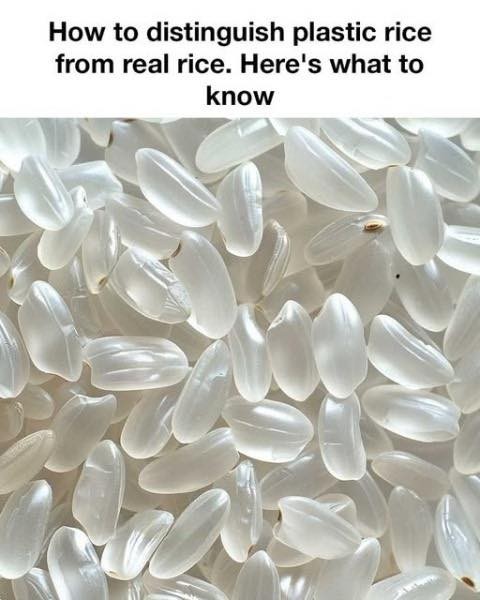
The Rising Concern
Claims about so-called “plastic rice” have circulated widely online for many years, often accompanied by alarming videos, home-testing tips, and warnings to avoid particular brands or shops. These posts can understandably worry people because rice is a daily staple for billions of people around the world. However, the available evidence from food-safety authorities and credible fact-checking organizations does not support the widespread claim that ordinary retail rice is being manufactured from plastic and sold as food.
Food safety is an important public-health issue, but it is equally important to separate verified risks from viral misinformation. Unusual-looking grains, changes in cooking texture, foam in boiling water, or rice that does not mold quickly are not reliable proof that a product contains plastic. Many ordinary factors, including rice variety, starch content, storage conditions, age, processing, and cooking method, can affect how rice looks and behaves.
This guide explains where plastic rice rumors come from, why the commonly shared home tests are unreliable, how consumers can make safer purchasing decisions, and what to do if they have a genuine concern about a rice product.
What Does the “Plastic Rice” Claim Mean?
Online reports commonly describe alleged counterfeit rice made from a mixture of potato, sweet potato, resin, or other synthetic materials shaped to resemble rice grains. The stories often state that these grains are mixed with genuine rice to increase profits. While the claim is repeated in social-media posts and forwarded messages, it has not been substantiated by robust, independently verified evidence showing that plastic rice is a widespread food-supply problem.
Food fraud does exist. It can involve mislabeling a product’s origin, substituting a lower-value ingredient, falsely marketing a food as organic, or selling poor-quality goods under a recognized brand. These practices can harm consumers and undermine trust in food systems. But food fraud should not be confused with every unverified claim that appears online. A serious allegation that rice contains synthetic polymers requires laboratory testing and investigation by competent food-safety authorities.
Rice is also a natural agricultural product with substantial variation. Long-grain, short-grain, fragrant, parboiled, brown, white, and glutinous rice can all look and cook differently. Broken rice grains, polished grains, chalky grains, and grains coated with naturally occurring starch may seem unfamiliar to shoppers but are not evidence of plastic contamination.
Why Plastic Rice Rumors Spread So Easily
Food rumors tend to spread quickly because they involve a basic human need: confidence in what we eat. Images of unusual grains or videos showing rice clumping in a pan can appear convincing without providing essential details such as the product’s source, the date of purchase, the cooking method, or any laboratory analysis. A short video may show an isolated observation, but it cannot identify the chemical composition of a food.
Some rumors also draw on legitimate concerns about food adulteration, poor storage, counterfeit packaging, and inadequate regulation. In many countries, consumers have experienced genuine food-quality problems, which can make alarming claims feel plausible. Yet plausibility is not proof. Public-health decisions should rely on evidence that can be checked, repeated, and independently assessed.
Experts in food science emphasize that visual appearance alone cannot confirm whether a material is safe or unsafe. Proper identification of possible contaminants may require microscopy, chemical analysis, polymer testing, or other methods performed by accredited laboratories. Consumers should be cautious about social-media posts that make absolute claims without naming a regulator, laboratory, recall notice, or verified investigation.
Are Home Tests for Plastic Rice Reliable?
Many articles and videos recommend water, heat, boiling, mold, fire, crushing, or iodine tests. These demonstrations may be easy to perform, but they are not validated methods for detecting plastic in rice. In some cases, they can be misleading or create unnecessary safety risks. A result from a kitchen experiment should not be treated as a diagnosis of food contamination.
The Water Test
A common claim says that real rice sinks in water while “plastic rice” floats. In reality, whether grains float, sink, or remain temporarily suspended can depend on trapped air, grain density, surface starch, broken pieces, and how the grains are introduced into the water. Rice varieties are not chemically identical, and a floating grain does not establish that it is synthetic.
The Heat or Frying-Pan Test
Another widely shared suggestion is to heat dry rice and look for melting or a chemical odor. This is not a dependable method. Heating food can cause browning, scorching, smoke, and changing aromas as carbohydrates and other natural components react to high temperatures. Residue in a pan may also come from oil, food debris, or the cooking surface. Deliberately overheating food can create fumes and is not recommended as a household safety test.
The Boiling Test
Foam, clumping, stickiness, or a thicker cooking liquid are often presented as warning signs. These are usually explained by starch. Rice releases starch during washing and cooking, especially short-grain and glutinous varieties. Older rice, different water ratios, vigorous boiling, and insufficient rinsing can also change the final texture. Properly cooked rice may be fluffy, sticky, creamy, separate, or soft depending on the variety and recipe.
The Mold Test
Leaving cooked rice in a warm place to see whether it develops mold is neither reliable nor advisable. Mold growth depends on moisture, temperature, storage time, microbial exposure, and the cleanliness of the container. A lack of visible mold after several days does not prove that rice is synthetic. More importantly, perishable cooked rice should be refrigerated promptly. Food-safety guidance generally recommends refrigerating cooked foods within two hours, or within one hour in very hot conditions, to reduce the risk of bacterial growth.
The Fire Test
Burning rice with a lighter or match is not a valid test and should be avoided. Burning food indoors may produce smoke and potentially irritating fumes. Smell is subjective and cannot identify a polymer or determine whether a product is safe to eat. If a food has a strong, unusual chemical odor before cooking, consumers should avoid eating it and contact the seller or relevant authority instead of attempting to burn it.
Crushing and Iodine Tests
Crushing rice into powder is sometimes described as a way to prove authenticity. Yet genuine dry rice naturally breaks into fragments or powder because it is rich in starch. Similarly, iodine can react with starch, but it cannot determine whether a rice product is genuine, adulterated, or safe. These tests may demonstrate a basic property of food, but they cannot replace laboratory analysis.
How to Choose Rice More Safely
Although viral plastic rice tests are unreliable, consumers can take practical, evidence-based steps to reduce the chance of purchasing poor-quality or improperly handled food. These habits are useful for rice and many other packaged staples.
- Buy from established retailers, reputable markets, or sellers with clear contact information and return policies.
- Choose sealed packages that display the manufacturer, importer when applicable, lot number, date marking, and country-of-origin information where required.
- Check that packaging is intact. Avoid products with torn seals, unexplained residue, moisture damage, pests, or signs of tampering.
- Store uncooked rice in a cool, dry place in a clean, tightly closed container to protect it from moisture and insects.
- Follow package instructions for rinsing and cooking, recognizing that different rice types need different amounts of water and cooking time.
- Use clean utensils and safe storage practices for cooked rice, including prompt refrigeration of leftovers.
Choosing whole-grain rice can offer nutritional benefits, including more fiber than refined white rice, but it is not inherently a way to avoid fraud. The best choice depends on dietary needs, cultural preferences, cost, and preparation methods. Brown rice may have a shorter storage life than white rice because it contains more natural oils, so proper storage remains important.
What to Do if You Suspect a Rice Product Has a Problem
Consumers should take an unusual product seriously without jumping to unsupported conclusions. If rice has an abnormal chemical smell, visible foreign objects, damaged packaging, unexpected discoloration, signs of infestation, or other clear quality concerns, do not consume it. Keep the product, packaging, receipt, lot number, and photographs if possible. These details can help a retailer, manufacturer, or regulator investigate.
Start by contacting the store where the item was purchased and the manufacturer listed on the package. Reputable companies may provide product information, arrange a refund, or request the item for assessment. If the concern appears significant, report it to the relevant local food-safety authority or consumer-protection agency. In the United States, food complaints can be directed to the Food and Drug Administration or local health departments, depending on the product and issue. Other countries have equivalent national or regional agencies.
If someone becomes ill after eating any food, seek medical advice, especially for severe, persistent, or concerning symptoms. It is not possible to determine the cause of illness from a social-media test. Health professionals and public-health authorities are better placed to assess symptoms, food history, and potential outbreaks.
Understanding Real Rice Safety Issues
Focusing on evidence helps consumers address the food-safety issues that are known to matter. Rice can carry risks if it is stored or prepared improperly. For example, uncooked rice can contain spores of Bacillus cereus, a bacterium that may survive cooking. If cooked rice is left at room temperature for too long, the bacteria can multiply and produce toxins. Prompt cooling and refrigeration are sensible precautions.
Rice can also contain naturally occurring inorganic arsenic absorbed from soil and water. This is a recognized long-term dietary consideration rather than a sign of plastic contamination. Health agencies advise a varied diet, which can reduce reliance on any one food. Preparation methods such as rinsing rice and cooking it with excess water may reduce arsenic levels for some types of rice, although consumers should follow reliable public-health guidance and consider nutrition as a whole.
These concerns illustrate an important point: real food-safety information is often more nuanced than a viral warning. It involves farming conditions, supply chains, storage, nutrition, regulation, and cooking practices. Reliable information may be less dramatic, but it is more useful for protecting households and communities.
Why Evidence-Based Information Matters
Unverified food scares can have consequences beyond individual anxiety. They may damage farmers, retailers, and food businesses without evidence, encourage unsafe home experiments, and distract from documented public-health priorities. Sharing a claim before checking its source can amplify misinformation, particularly when posts use emotional language or anonymous videos.
Before forwarding a warning about rice or any food, look for a recall notice, a statement from a recognized food regulator, reporting from established news organizations, or findings from an accredited laboratory. Check whether the information identifies the product, location, date, and evidence. If it does not, treat it with caution.
Consumers have a legitimate right to safe, accurately labeled food. That right is best supported by transparent regulation, careful reporting, responsive companies, and informed purchasing decisions. While the phrase “plastic rice” remains a recurring online concern, there is no sound basis for relying on viral household tests or assuming that unusual cooking behavior proves a synthetic product. When a genuine concern arises, careful documentation and official reporting are the most responsible next steps.
Sources
Disclaimer: This content is intended for entertainment purposes only and is not based on real events.