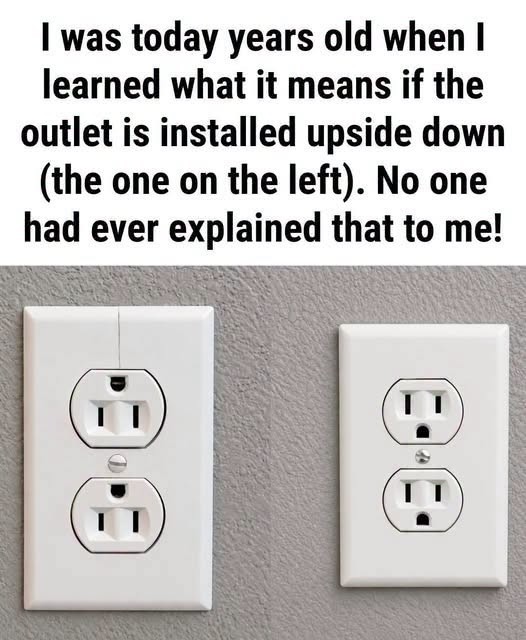
Why Are Some Electrical Outlets Installed Upside Down?
Seeing an electrical outlet with its round grounding hole at the top can be surprising. In many homes, the grounding slot is positioned below the two vertical blade slots, creating the familiar “face-like” appearance. When that layout is reversed, some people assume the outlet was installed incorrectly. In most cases, however, an upside-down outlet is not automatically a mistake.
The direction of a standard wall receptacle can reflect an electrician’s preference, a builder’s local convention, a practical safety consideration, or a visual signal that the outlet has a particular function. One common explanation involves switched outlets, which allow a nearby wall switch to control a lamp or other plugged-in device. But orientation alone cannot reliably tell a homeowner how an outlet is wired.
Understanding why outlets may be installed ground-up, ground-down, or even sideways can help residents use electrical systems more confidently. It can also help them recognize when a question about an outlet should be directed to a qualified electrician.
What Does an Upside-Down Outlet Mean?
An “upside-down” outlet usually refers to a standard duplex receptacle installed with the grounding opening at the top. In North American homes, a duplex receptacle has two plug-in points, each with a hot slot, a neutral slot, and a grounding opening. The grounding opening is typically round or U-shaped.
There is no universal visual rule that says an outlet with the ground opening at the top has one specific purpose. In some buildings, installers use that orientation to distinguish a switched receptacle from an always-powered receptacle. In others, all outlets are installed ground-up because the electrician, homeowner, or contractor prefers that position.
As a result, the appearance of an outlet should be treated as a clue rather than a diagnosis. A ground-up outlet may be switch-controlled, but it may also be continuously energized. Likewise, an outlet installed with the ground opening at the bottom may still have one or both receptacles controlled by a wall switch.
Switched Outlets and Lamp Control
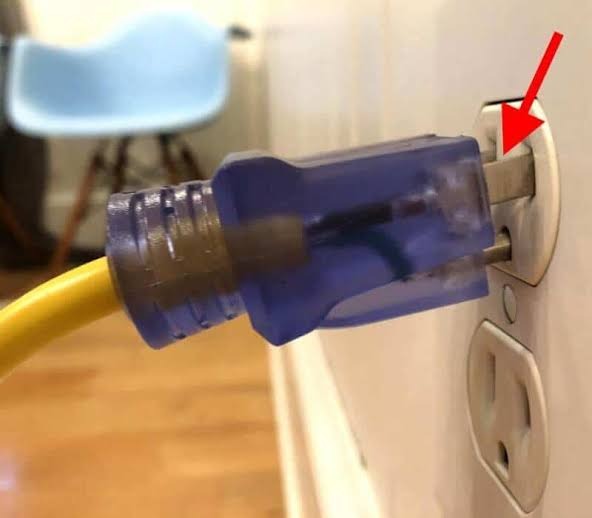
One of the most practical reasons for a differently oriented outlet is to identify a switched receptacle. In older homes, particularly those built before ceiling-mounted lighting became common in every room, wall switches were often designed to control a table lamp or floor lamp.
In this arrangement, a wall switch may control power to one half of a duplex outlet. A lamp plugged into that half can then be turned on or off from the room entrance. The other half of the outlet may remain powered at all times for items such as a phone charger, clock, router, or other device that should not turn off with the room light.
Some electricians install a switched outlet with the ground opening at the top as a visual reminder that it differs from nearby receptacles. This practice can be useful in a home with several outlets, especially when residents want to know where a lamp should be plugged in. However, it is a convention, not a standardized nationwide marking system.
A switched outlet may also be identified through other methods. For example, an installer might use a different-colored receptacle, add a label, or orient only the controlled outlet differently from the always-on outlet. The chosen approach depends on local practices, the project specifications, and the preferences of the electrician or builder.
Why Outlet Orientation Can Be a Safety Consideration
Another reason some professionals prefer the ground-up position is related to the possibility of accidental contact with a partially inserted plug. If a metal object were to fall across the exposed blades of a plug that is not fully seated, the position of the grounding opening could affect what the object touches first.
With the grounding opening at the top, a falling conductive object may be more likely to contact the grounded pin before touching energized plug blades. The grounding conductor is intended to provide a path for fault current and support the operation of protective devices under certain fault conditions. This does not make an outlet risk-free, and it does not eliminate the need to keep plugs fully inserted and electrical equipment in good condition.
People sometimes cite this explanation as proof that ground-up outlets are always safer. The reality is more limited. Safe electrical installation depends on many factors, including proper grounding, correctly sized wiring, secure connections, appropriate circuit protection, undamaged cords, and the use of modern safety devices where required. Outlet orientation is only one design choice among many.
Homeowners should never rely on outlet orientation as a substitute for electrical safety practices. Damaged receptacles, loose plugs, warm wall plates, repeated tripped breakers, buzzing sounds, or discoloration around an outlet deserve prompt attention from a qualified professional.
What Electrical Codes Say About Outlet Direction
In the United States, the National Electrical Code, published by the National Fire Protection Association, provides a widely used model for electrical safety. State and local authorities adopt and enforce their own versions of electrical rules, often based on the National Electrical Code with local amendments.
For typical wall-mounted receptacles, the code does not generally require every outlet to be installed with the grounding opening either up or down. This is why homes may show different orientations from room to room, neighborhood to neighborhood, or region to region. A receptacle can be installed in more than one direction as long as the installation meets applicable electrical requirements.
Local requirements can still matter. Electrical work is subject to the authority having jurisdiction, which may be a city, county, state agency, or other local inspection authority. Requirements may vary depending on whether work involves a new home, a renovation, a kitchen, garage, bathroom, outdoor location, commercial building, or another specialized setting.
For homeowners, the key point is simple: an outlet facing an unfamiliar direction is not by itself evidence of a code violation. Whether an installation is compliant depends on the complete electrical system and the rules enforced where the building is located.
Why Some Outlets Are Installed Sideways
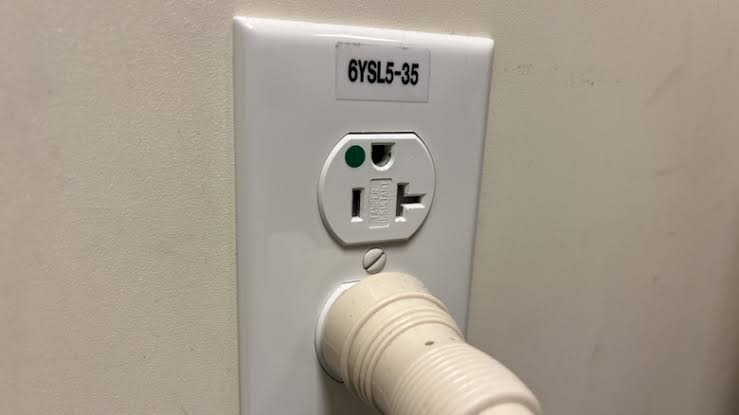
Not every nontraditional outlet is ground-up. Receptacles are also commonly installed sideways, especially where wall space, furniture placement, appliance cords, or multi-gang electrical boxes make that orientation more convenient. A horizontal outlet may make it easier to fit plugs behind furniture or accommodate a specific cover plate design.
In kitchens, workspaces, garages, and commercial settings, the placement of outlets is often shaped by how the space will be used. Countertop layouts, cabinetry, equipment access, accessibility needs, and local building standards can all influence receptacle location and orientation.
Sideways or ground-up outlets should therefore be understood as part of a broader installation decision. Their orientation may be functional, visual, or simply consistent with the rest of the building.
How to Tell Whether an Outlet Is Controlled by a Switch
The safest simple way to check whether an outlet is switched is to use an ordinary lamp or another low-power plug-in device that can be visibly turned on and off. Plug the lamp into one receptacle, turn it on using the lamp’s own switch, and then operate nearby wall switches one at a time. Repeat the test with the other receptacle in the duplex outlet, since one half may be switched while the other remains live.
This method can help identify common switched-outlet arrangements without removing a cover plate or touching wiring. It is important to avoid inserting tools, wire, or improvised objects into an outlet. If the outlet does not behave as expected, a qualified electrician can test the circuit using appropriate equipment.
A plug-in receptacle tester may provide useful information about certain wiring conditions, but it does not replace professional diagnosis. These testers have limitations and may not identify every wiring problem. They also cannot determine every detail of how a circuit is configured. If there are concerns about grounding, polarity, switches, breakers, or repeated electrical failures, professional assessment is the appropriate next step.
When an Upside-Down Outlet May Need Attention
Orientation alone is not normally a reason for concern. However, an outlet should be inspected if it shows signs of wear or poor performance. A qualified electrician should be contacted if a receptacle feels loose, if plugs fall out easily, if the cover plate is cracked, if the outlet is warm, or if there is visible damage.
Other warning signs include flickering lights connected to the same circuit, breakers that trip repeatedly, outlets that stop working unexpectedly, and a burning smell. These symptoms can have several causes, including overloaded circuits, damaged devices, loose connections, or issues elsewhere in the electrical system. They should not be ignored or addressed through do-it-yourself repairs unless the person performing the work is properly qualified and local rules allow it.
Modern homes may also include ground-fault circuit interrupter, or GFCI, protection in areas where electricity is used near water, such as bathrooms, kitchens, garages, basements, laundry areas, and outdoor spaces. GFCI protection is designed to reduce the risk of certain electrical shock hazards by disconnecting power when it detects an imbalance in current. Testing and replacement requirements should follow the manufacturer’s instructions and applicable local electrical rules.
Why Electrical Installation Details Matter
Outlet orientation may seem like a minor detail, but it reflects the practical decisions involved in building and maintaining safe, usable homes. A switched outlet can make everyday lighting more convenient. A ground-up installation may reflect a contractor’s safety preference. A sideways receptacle may better serve a particular room layout. None of these choices is automatically wrong merely because it looks different from what a homeowner expects.
The most useful approach is to focus on function and condition. Does the outlet securely hold a plug? Does it provide power as intended? Is it protected appropriately for its location? Does the circuit operate without warning signs? Those questions matter far more than whether the grounding opening points up or down.
For renovation projects, homeowners can discuss outlet orientation with a licensed electrician before work begins. This is especially helpful when planning switched outlets for living rooms and bedrooms, adding receptacles in kitchens, or updating older wiring. Clear labeling can also be valuable when an outlet is controlled by a wall switch, reducing confusion for future residents and visitors.
Bottom Line: Upside-Down Outlets Are Usually Intentional
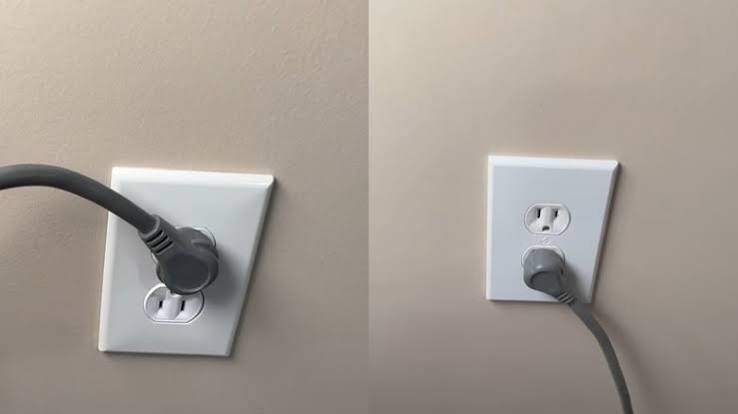
An upside-down electrical outlet is often an intentional installation choice rather than an error. It may be used as an informal marker for a switched receptacle, selected for a safety-related preference, or installed simply because of local custom or builder preference. There is no single meaning that applies to every ground-up outlet.
If you want to know whether an outlet is controlled by a switch, test it safely with a lamp or consult an electrician. If an outlet appears damaged, loose, warm, or unreliable, seek professional help rather than relying on its orientation to explain the issue. In a properly maintained electrical system, the direction of the outlet is usually less important than safe wiring, appropriate protection, and correct operation.
Sources
Disclaimer: This content is intended for entertainment purposes only and is not based on real events.