The Meaning and Evolution of the “E” on Gear Sticks
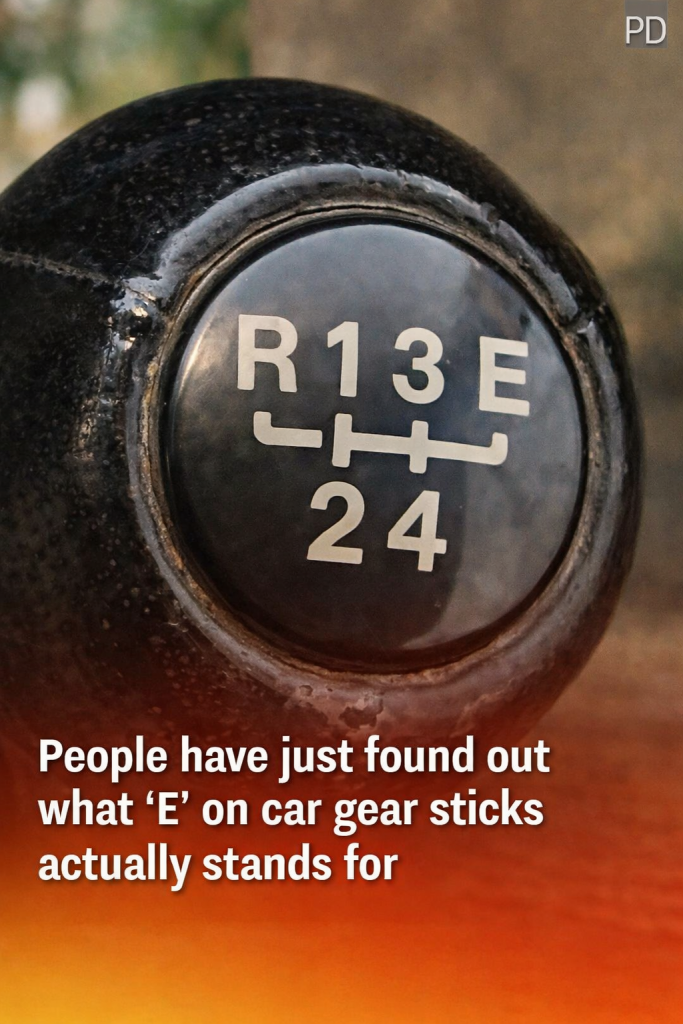
The configuration of gear sticks has been a constant in the world of driving for decades. For most motorists, the gear layout—whether manual with its arrangement of numbered gears and an “R” for reverse, or automatic with the sequence of “P,” “N,” “D,” and “R”—is instantly recognizable. These symbols represent Park, Neutral, Drive, and Reverse, respectively, with “L” often denoting a low gear option. Among these familiar symbols, the appearance of an “E” on certain older gear sticks has puzzled many, raising questions about its exact purpose and function.
Historic Gear Stick Layouts and the Mystery of “E”
Traditionally, gear stick symbols have been standardized to provide clarity for drivers and promote road safety. Manuals usually displayed all forward gears as numbers, along with an “R” for reverse gear, while automatic transmission layouts maintained a consistent order to reduce confusion and error. This consistency has helped drivers transition across different vehicle makes and models with relative ease.
It was therefore surprising for many drivers, both seasoned and new, when they encountered the letter “E” on the gear stick of certain older vehicles. The question about the mysterious “E” was recently reignited online, particularly after discussions shared by prominent automotive platforms like Supercar Blondie. This sparked widespread curiosity and debate: What exactly does “E” mean, and what purpose did it serve?
Expert Clarification: “E” Stands for Economy
As experienced motorists and automotive experts were quick to clarify, the “E” on these gear sticks stands for “Economy.” This was a specialized transmission mode introduced in various vehicles, primarily from past decades, to enhance fuel efficiency. Unlike the regular gear modes, the Economy position was engineered to modify the vehicle’s performance for optimal fuel saving.
In practice, the Economy mode engaged a high gear ratio while keeping the engine revolutions per minute (RPM) comparatively low. This adjustment reduced energy consumption, especially at cruising speeds or during highway driving. For instance, instead of accelerating rapidly or maintaining high engine power, the vehicle would prioritize smoother shifts and moderated acceleration. Limiting the RPM also often meant the car would use less fuel during everyday driving scenarios.
The inclusion of an Economy mode was particularly significant at a time when fuel efficiency was a growing concern for both consumers and manufacturers. Oil crises in the 1970s and rising fuel costs prompted car makers to prioritize ways to lower consumption. The “E” gear was one answer, reflecting both the technological constraints and priorities of the era.
Why Did Economy Gears Disappear?
As automotive engineering advanced, the need for a dedicated Economy gear steadily diminished. The automotive industry underwent a technological revolution, introducing a range of features that rendered manual fuel-saving gear positions obsolete.
The replacement came in the form of electronic fuel injection systems, which precisely measured and delivered fuel to the engine. This led to a marked improvement in both performance and efficiency, surpassing what mechanical solutions like the “E” gear could achieve. More notably, the widespread introduction of computerized engine management units (ECUs) meant that cars could automatically regulate their power output, fuel consumption, and gear shifts for optimal efficiency—without input from the driver.
Aerodynamics also played a larger role. As car designs became sleeker and more scientifically optimized, less energy was wasted overcoming air resistance. Advanced automatic transmissions could select the most efficient gear ratio based on speed, terrain, and load, adapting instantly to changing driving conditions.
The overall effect was that the manual selection of an Economy mode became unnecessary. By the turn of the 21st century, most manufacturers had phased out the “E” from gear sticks, relying instead on software and sensors to compete for superior fuel economy ratings.
The “E” Gear: A Relic of Automotive History
While only a small subset of modern drivers has ever seen or used the Economy gear, it remains a point of interest among automotive enthusiasts and historians. For those who remember driving with the “E” gear, it represents a transitional phase in automotive technology—one in which drivers were encouraged to participate in achieving fuel savings, rather than relying solely on the vehicle’s automated systems.
The “E” setting was often marketed as part of an environmentally conscious approach to car ownership. Brochures from manufacturers touted the practical benefits of using Economy mode for long-distance travel and steady, moderate speeds. It was an early attempt to address environmental concerns, predating today’s emphasis on low-emission vehicles and electrification.
Even as the “E” gear has faded from contemporary vehicles, it remains a testament to the automotive industry’s ongoing commitment to innovation. The shift away from direct mechanical fuel-saving solutions to integrated, automated systems mirrors broader trends in technology and user experience.
Modern Interpretations of “E” in Vehicles
In the current automotive landscape, the letter “E” has taken on a new and quite different significance. As electric vehicles (EVs) become more common, “E” is now more likely to be associated with electrification than Economy.
EVs operate fundamentally differently from internal combustion engine vehicles. They often do not require multi-speed gearboxes. Instead, the transmission system is typically simplified—a single-speed electric motor that provides instant torque with smooth, quiet acceleration. This simplicity eliminates the need for traditional gear sticks altogether in many cases.
In place of a mechanical lever, EVs frequently feature electronic selectors, buttons, or compact rotary dials to choose the direction of travel. In some vehicles, the letter “E” is used on dashboards or digital menus to indicate “Eco” or “Electric” mode, signifying an option that maximizes range and efficiency. In others, “E” might identify electric-specific features or designate drive modes via digital displays.
The Shift to Electrification: Social and Industrial Impact
The expansion of the electric vehicle market is reshaping driving habits, infrastructure, and policy worldwide. Governments are introducing incentives and regulations to accelerate the adoption of EVs, aiming to reduce greenhouse gas emissions and combat pollution. Major automakers have committed vast resources to the design and development of all-electric lines, and charging networks are expanding rapidly to support a broader consumer base.
As the world transitions to clean energy mobility, the former meaning of the “E” gear as an Economy mode becomes part of automotive folklore. Meanwhile, the modern association with “E” is increasingly futuristic, representing sustainable innovation and an ongoing commitment to protecting the environment.
The evolution from a mechanical “E” gear to an electronic “E” setting underscores how far the industry has come. It reflects broader societal changes: an increased focus on responsible energy consumption, technological adaptability, and the enduring desire for improved user experience.
Future of Gear Sticks: From Necessity to Nostalgia
Industry experts predict that as electric and hybrid vehicles become ever more popular, and as self-driving technology progresses, traditional gear sticks will become increasingly rare. For many drivers, manual gear selection already feels like a thing of the past—with most new models favoring automatic or semi-automatic transmissions.
Yet, for some enthusiasts and collectors, the physical act of shifting gears, including the use of now-archaic features like the “E” position, remains an integral part of the classic driving experience. Car shows and restoration projects often feature models with historic gear sticks, eliciting nostalgia and admiration from those who value engineering heritage.
As technology continues to advance, it is likely that gear sticks and their various settings will survive primarily as museum pieces—a symbol of the journey from the earliest automobiles to the high-tech, electrified vehicles of today. In this way, the “E” acts as a link between generations, connecting a bygone era of hands-on driving to the age of digital mobility.
Conclusion: The Legacy of the “E” on Gear Sticks
The letter “E” on gear sticks tells a compelling story about the history and evolution of automotive technology. Once a simple mechanical setting designed to save fuel, it has transformed into an emblem of the electric future of transportation. The shift from Economy mode to Electric mode highlights decades of innovation, changing priorities, and society’s ongoing pursuit of efficiency and sustainability.
While modern cars may no longer feature the “E” gear in its original context, the spirit of innovation it represented lives on—manifested in the intelligent systems, advanced engineering, and new cultural values guiding the automobile industry towards a cleaner, more efficient future.
Sources
- Reuters – Autos & Transportation
- BBC – Automotive News
- The Guardian – Car Industry
- Al Jazeera – Cars
- European Automobile Manufacturers Association (ACEA): Emissions Data
Disclaimer: This content is intended for entertainment purposes only and is not based on real events.