Providing More Than Just Financial Support: The Journey of Gabriel Torres and His Daughter Sofia
Introduction: A Life on the Road and the Struggle for Family Well-being
Gabriel Torres had spent three decades of his life driving freight trucks across Mexico, believing that unrelenting hard work would offer his family happiness and security. Raising his daughter Sofia after the loss of his first wife, Elena, to cancer, Gabriel’s daily labor and sacrifices represented a father’s commitment to providing for his child. The routine of long journeys, missed dinners, and late-night arrivals became a familiar pattern, but behind the veneer of provision lay issues within his family that Gabriel barely perceived.
With the passage of time and the remarrying of Patricia, Gabriel hoped to create a new, nurturing home for Sofia. The transition represented both a fresh start and an opportunity for additional love and support, yet unexpected complexities came with blended families and shifting household dynamics. The insertion of Patricia’s mother, Teresa, and her niece, Bianca, into their home changed things significantly. As Gabriel was often away working, he trusted Patricia to watch over Sofia, but subtle clues that something was amiss were overlooked in the hustle of earning a livelihood.
The Unfolding of Neglect: Sofia’s Silent Withdrawal
Gradually, Gabriel noticed a change in Sofia. The previously vivacious girl became reserved, her conversations about school ceased, and she began to ask for little. Each time Gabriel called home, Patricia had a reason why Sofia couldn’t come to the phone. Gabriel, focused on work and trusting his new wife, let these moments pass, convinced all was well.
Families who blend together after loss often face the challenge of balancing old bonds with new relationships. According to family counseling experts, children in blended households are susceptible to feelings of displacement or isolation, particularly when new relatives move in and household routines change. In Gabriel’s situation, the combined presence of Patricia’s mother and niece may have added strain to the delicate process of adjustment, making it vital for parents to maintain open lines of communication and watch for signs of emotional distress.
The Return Home: Discovery of Sofia’s Struggles
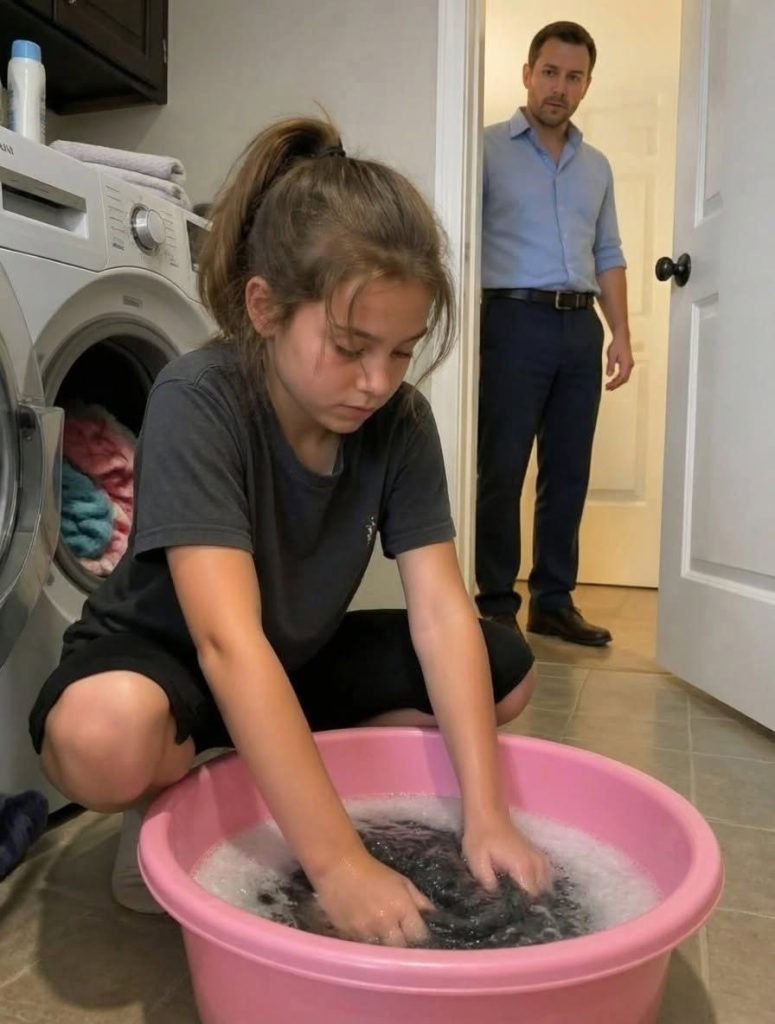
A cancelled delivery led Gabriel to return home unexpectedly three days early. Upon arrival, he found his home enveloped in darkness, a subtle indication of absence. Following a peculiar scrubbing sound, Gabriel was drawn to the laundry room, where he witnessed Sofia kneeling beside a bucket, washing clothes by hand in cold, soapy water. Her hands were red and cracked, and she wore worn slippers—a stark contrast to the comfort he believed she had.
Gabriel’s realization was further sharpened by a memory of harsh words overheard: “Your daughter doesn’t deserve a seat at this table. Let her eat standing up.” The atmosphere Gabriel stumbled upon revealed more than inconvenience; it was a sign of deep neglect and exclusion. Family neglect, even when subtle, can severely affect a child’s emotional and physical health. According to UNICEF and mental health organizations, children exposed to neglect and exclusion often recover slowly and require support to regain their sense of belonging and self-worth.
Revelations: Sofia Tells Her Story
The next morning, Gabriel encouraged Sofia to speak openly about what she had endured. Sofia recounted that Patricia had restricted her access to basic amenities, such as the washing machine, and left her behind while she and her family went on vacation. Sofia was responsible for all chores and subjected to isolation during family events. On her birthday, the money Gabriel sent for a celebration was used for Bianca, Patricia’s niece, and Sofia was made to watch from the backyard.
Sofia disclosed deeper betrayals, including Patricia’s efforts to exert unauthorized control over financial resources meant for Sofia’s future. In blended families, financial manipulation can undermine a parent’s intent and a child’s security. Family law experts warn that such actions not only breach trust but also create lasting legal and psychological consequences.
Seeking Justice and Support: Gabriel’s Response
Upon discovering evidence of neglect and the attempt to misappropriate Sofia’s funds, Gabriel acted decisively. He documented all incidents, contacted a lawyer, and reached out to appropriate authorities. Proper documentation and legal guidance are fundamental in cases of child neglect, ensuring that the child’s rights and well-being are protected.
Patricia, upon return, tried to shift blame to Sofia, but Gabriel had gathered thorough records and support from professionals. The investigation pressed forward, providing Sofia with a safer environment and protecting family finances from future vulnerabilities.
Experts in child welfare emphasize the importance of early intervention and professional counseling for children exposed to neglect. Agencies such as Mexico’s National System for Integral Family Development (DIF) offer resources to families affected by such issues, including psychological support and legal assistance.
Healing and Rebuilding: Steps Toward Recovery
Healing from neglect is a gradual and multi-faceted process. Initially, Sofia remained apologetic for small mistakes and hesitated before accessing food or household privileges, a behavior shaped by prior conditioning. Gabriel reassured her through everyday actions, such as inviting her to share meals and encouraging open communication.
Experts suggest creating a stable, predictable routine and affirming the child’s place within the family as key elements for recovery. In addition, therapy and community support can help children like Sofia rediscover self-confidence and trust in their caregivers.
Over time, small breakthroughs occurred: Sofia began to smile more, participate in family activities, and re-engage with friends. Gabriel made it clear—through both words and deeds—that Sofia would always have a seat at their table and that her well-being was his priority.
Reflections: Redefining Parental Support and Responsibility
Gabriel’s journey illustrates the difference between material provision and emotional presence. While financial stability is necessary for family welfare, it does not guarantee emotional security or protection against neglect. Parenting, as family psychologists detail, is about listening to children, understanding their needs, and ensuring a safe, nurturing environment.
Gabriel’s experience resonates with parents everywhere: the importance of balancing work, trust, and active involvement in children’s lives. Children require not just protection, but affirmation that their feelings matter and their place in the family is secure.
International and Societal Reactions: A Broader Perspective
The issues raised in Gabriel and Sofia’s story are not unique to Mexico. Worldwide, child neglect and family dysfunction remain significant concerns, prompting responses from organizations such as UNICEF, the World Health Organization, and government agencies. Societies are increasingly aware of the complexities blended families face, and legislative reforms seek to strengthen protections for children and clarify custodial responsibilities.
Studies by the World Health Organization and child welfare groups show that comprehensive support—including legal remedies, counseling, and community engagement—can significantly improve outcomes for neglected children. Societal stigmas surrounding family challenges have also evolved, fostering conversations that encourage transparency and proactive solutions.
Conclusion: The True Meaning of Providing for Family
Gabriel’s story ends with a joyful transformation. On Sofia’s next birthday, friends gathered around a table where Sofia sat proudly at the center, surrounded by love and laughter. For Gabriel, this moment crystallized the true meaning of parental responsibility: providing is not only about working hard or earning money, but about remaining present, listening, and making sure children feel valued and safe.
Experiences like Gabriel’s encourage all parents to look beyond material provision and prioritize emotional awareness, vigilance, and active engagement. Healing, protection, and resilience occur when children know their place is secure—not just financially, but emotionally and spiritually within the family.
Sources
Disclaimer: This content is intended for entertainment purposes only and is not based on real events.