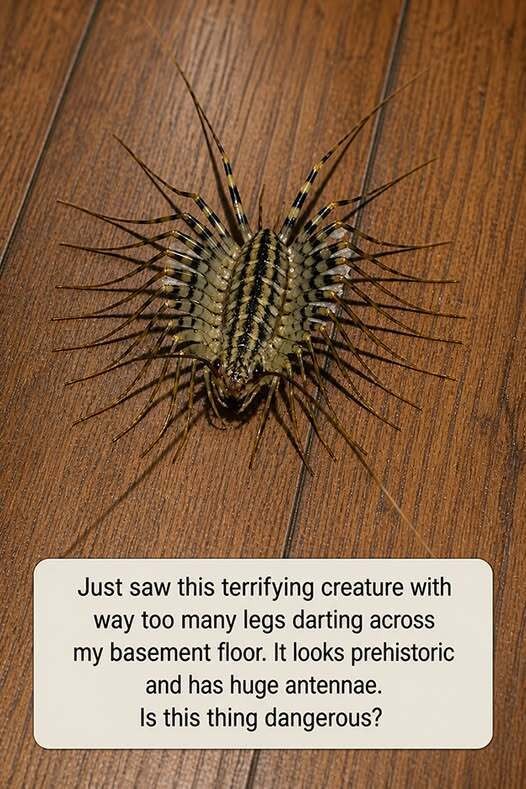
The Startling Truth About House Centipedes: Friend or Foe in Your Home?
Introduction: An Unnerving Encounter
Imagine standing in your basement when suddenly, a creature rushes across the concrete floor, its swift movement propelled by countless writhing legs. Long, delicate antennae sweep ahead of it, probing for a safe, shadowy space. In that heart-stopping instant, the sight of this alien-looking being—a house centipede—makes you question whether it is dangerous and if immediate action is necessary. For many, this initial shock is all too familiar, as house centipedes seem to appear suddenly, evoking both fear and curiosity.
Identifying the House Centipede: Appearance and Behavior
The house centipede (Scutigera coleoptrata) is instantly recognizable due to its unique physical characteristics. With 15 pairs of long, slender legs that extend from its elongated body, and two exceptionally long antennae, it often seems much larger and more menacing than it is in reality. Adults usually measure between 2.5 and 4 centimeters in length, but their extended legs can make them appear quite sizable as they dart about at astonishing speeds—reaching up to 40 centimeters per second according to entomological studies.
Native to the Mediterranean but now found worldwide, house centipedes have adapted remarkably well to human dwellings, especially those with cool, damp environments. Their coloration—typically yellowish-gray with darker stripes—adds to their prehistoric, intimidating appearance. Many homeowners report encountering them most frequently in basements, bathrooms, garages, and cluttered storage rooms, where conditions mirror their natural habitat of underground spaces and wood debris.
Why Do House Centipedes Enter Homes?
Understanding the behavior of house centipedes is crucial to managing them. These nocturnal predators seek out environments that offer:
- Moisture: Dampness is essential for their hydration and survival, so basements, bathrooms, and under-sink cabinets are prime locations.
- Shelter: Cracks in walls, floor voids, or piles of cardboard and other clutter provide safe hiding places during the day.
- Abundant Prey: As natural hunters, they are drawn to homes with existing insect populations, such as spiders, cockroaches, silverfish, ants, and termites, making your space even more appealing if a pest problem exists.
The presence of house centipedes is rarely random; it usually signals environmental conditions inside the home that favor humidity and offer abundant prey.
Natural Pest Controllers: Predators at Work
Despite their unsettling appearance, house centipedes play a surprisingly helpful role in the household ecosystem. Unlike many household pests that contaminate food or cause direct harm, these arthropods are voracious predators. They actively hunt and consume a wide array of nuisance insects, including:
- Spiders
- Silverfish
- Cockroaches
- Termites
- Bed bugs and other small arthropods
By feeding on these insects, house centipedes contribute to the natural balance in homes, potentially reducing the likelihood of infestations by more problematic bugs. According to experts from the National Pest Management Association, their presence can be considered a form of biological pest control. Some homeowners even opt to let centipedes be, preferring to tolerate their rare sightings rather than risk a surge in pest populations.

Are House Centipedes Dangerous?
Much of the fear surrounding house centipedes stems from uncertainty about their risks. Fortunately, scientific evidence and expert consensus agree that house centipedes pose minimal direct threat to humans. While they do possess venomous fangs used to subdue prey, their venom is not potent enough to seriously harm people or pets.
Bites are extremely rare and typically occur only if an individual attempts to handle the centipede roughly or traps it against their skin. In the unusual event of a bite, typical symptoms are mild: slight redness, localized pain, or swelling similar to a bee sting. There is currently no scientific documentation of severe allergic reactions from house centipede bites. Common advice from the Mayo Clinic and other health authorities is to gently wash the affected area and apply a cold compress if needed.
Beyond the rare risk of a minor bite, the psychological discomfort triggered by their sudden appearance is arguably their most significant impact.
What Attracts Centipedes to Certain Homes?
The appearance of a house centipede in your home can serve as a subtle warning sign about underlying conditions. Since these arthropods thrive in damp, cluttered, and poorly maintained areas, spotting one is often an indicator of excessive moisture, undetected leaks, or gaps and cracks in walls and floors that enable both centipedes and their prey to invade the house. Prolonged humidity can not only attract centipedes, but also foster mold and attract a larger array of pests. This is why consistent home maintenance is crucial, not just to keep centipedes away, but to preserve the overall health and safety of your living environment.
Expert Recommendations for Prevention and Control
Confronted by house centipedes, homeowners face a key decision: tolerate these beneficial predators, or take steps to remove them? Regardless of preference, pest management specialists agree that addressing the root causes of an infestation is vital. Recommended strategies include:
- Reducing Moisture: Use dehumidifiers in basements or damp areas, ventilate bathrooms, and repair leaking plumbing fixtures as soon as possible.
- Sealing Entry Points: Inspect your home for cracks in walls, gaps under baseboards, or spaces around windows and doors, and seal these openings with caulk or weatherstripping.
- Eliminating Clutter: Regularly organize and clean storage spaces, basements, and attics to remove hiding places and potential prey.
- Regular Cleaning: Promptly sweep away crumbs, vacuum regularly, especially along corners and behind furniture, and safely dispose of any dead insects.
- Addressing Other Pest Problems: If you notice evidence of other insects, consult a pest management professional, as centipede populations often mirror underlying infestations.
For those who still prefer to remove centipedes, humane catch-and-release methods such as jars or specialized traps are recommended over chemical treatments, as harsh pesticides can disrupt beneficial insects and pose health risks, especially when misused indoors.
Societal and Cultural Reactions: Fear, Fascination, and Acceptance
The reaction to house centipedes is often visceral; their sudden sprints and alien features elicit fear in many people. Yet, in countries where they are common, some cultures have come to accept or even appreciate their presence as useful components of the household ecosystem. Entomologists highlight the importance of public education, dispelling myths and promoting understanding of these misunderstood animals.
Public health campaigns suggest shifting the focus from eradication to prevention and balanced pest management. By embracing preventive home maintenance and understanding the real—rather than imagined—risks posed by house centipedes, society can reduce unnecessary extermination and foster more sustainable relationships with household wildlife.
International Perspective: House Centipedes Around the World
Originally native to the Mediterranean, house centipedes have successfully spread to most temperate regions globally. In Europe and North America, their adaptive behaviors have allowed them to flourish in cities and rural areas alike. Researchers have documented their ability to tolerate varying temperatures and develop new hunting methods in different environments. However, while widely present, no country regards the house centipede as a significant pest requiring large-scale control, thanks to its minimal impact on health and property.
In Japan, where insects often hold symbolic significance, house centipedes are less vilified and occasionally even regarded as lucky. In contrast, Western householders may perceive their presence as a symptom of poor hygiene, stressing the importance of debunking misconceptions and focusing on environmental factors rather than stigma.
Conclusion: Living with House Centipedes
Despite their fearsome appearance, house centipedes play a largely positive role in the indoor environment by curbing populations of more destructive pests. Modern pest science supports a balanced approach: rather than panicking or resorting to harmful chemicals, focus on prevention—reduce excess moisture, seal gaps, and eliminate clutter. If you do encounter one of these fast-moving creatures, know that you are not alone in your reaction, but also consider the silent pest control services they provide.
In summary, house centipedes are striking representatives of the balance between nature and urban life, reminding us to look beyond first impressions and focus on facts when confronting the unknown in our homes.
Sources
Disclaimer: This content is intended for entertainment purposes only and is not based on real events.