Let’s Talk About Safely Towing a Trailer with a Car
Towing a trailer with a car is a common practice for many drivers transporting goods, equipment, or recreational vehicles. However, safely towing a trailer involves more than simply attaching it to a car’s hitch and starting your journey. Understanding the technical details and physics behind towing is essential for protecting both the driver and other road users, as well as preventing accidents and mechanical failures.
Understanding the Basics of Trailer Towing
The fundamental principle behind safe trailer towing centers on balancing forces and maintaining stability. Every trailer-car combination involves a complex interplay of weights, forces, and leverage. If not managed properly, even small mistakes in loading or hitching can result in instability, with consequences ranging from poor handling to severe accidents.
The science behind towing a trailer relies on the concept of tongue weight, the downward force the trailer exerts on the car’s hitch. This force must be carefully regulated to ensure safety during motion, braking, turning, and emergency maneuvers.
What is Tongue Weight and Why Does it Matter?
Tongue weight is a pivotal aspect of towing. It refers to the downward force applied to the car’s hitch by the trailer’s coupling. According to experts from the National Highway Traffic Safety Administration (NHTSA) and the U.S. Department of Transportation, having the proper tongue weight is essential for maintaining a safe and stable driving configuration.
If the tongue weight is too low or too high, the towing setup may become unstable. Improper tongue weight can have severe effects, including unstable handling, increased risk of trailer sway, compromised braking, and unsafe steering control.
The Physics of Load Distribution
Properly distributing the trailer’s load directly affects tongue weight and the balance of the vehicle-trailer system. Placement of heavy cargo is a crucial decision every time you tow.
The Role of the Trailer’s Axle
The main point of balance in a trailer is its axle and wheels. This is where the trailer supports its own weight. When you load the trailer, the position of heavy cargo determines how forces are distributed onto the car’s hitch.
Visualizing Load Placement
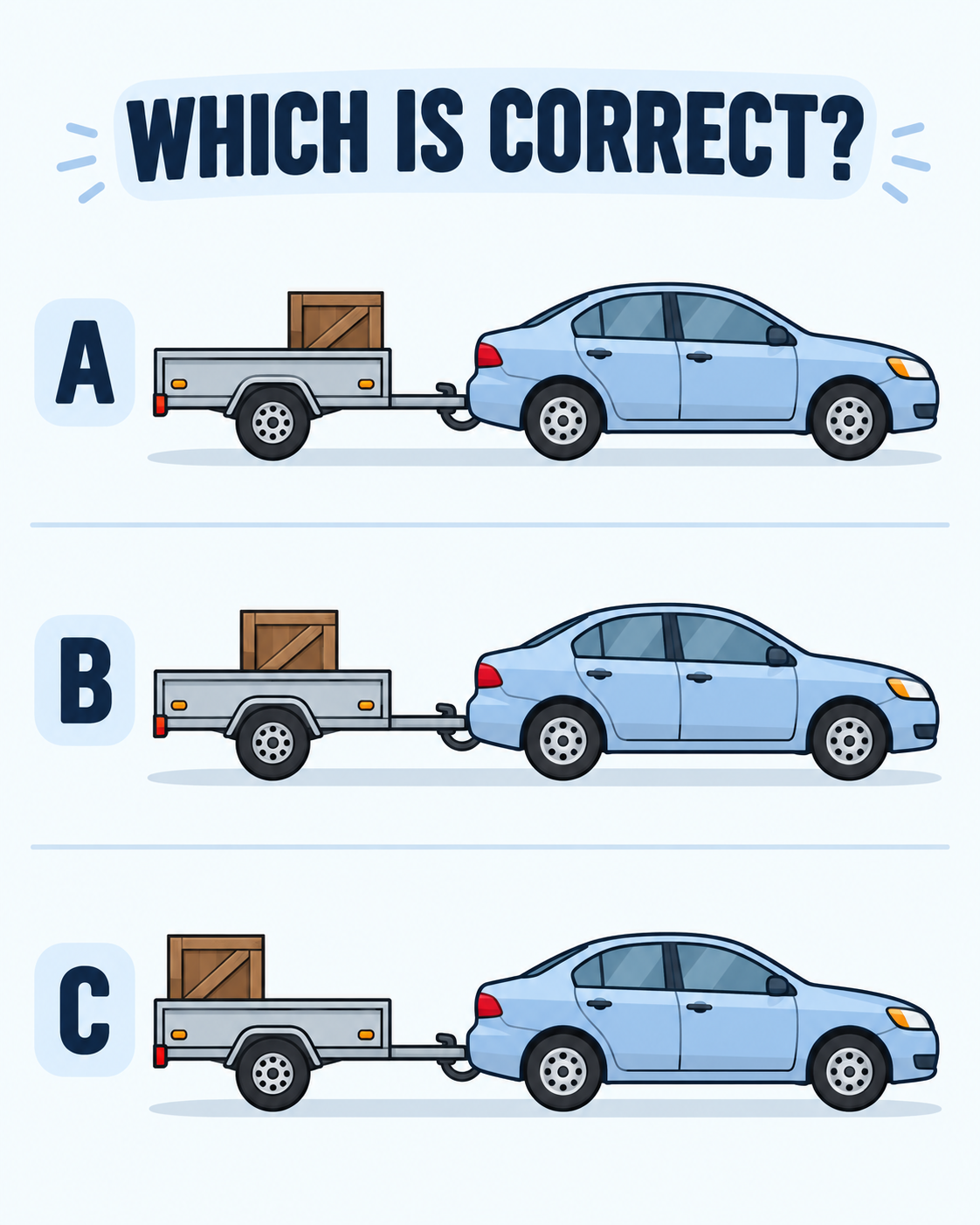
To illustrate the importance of load placement, consider the image below:

In this diagram, a heavy box—the main load—needs to be placed somewhere in the trailer. The decision on where this box goes dramatically affects driving stability and safety.
Best Practices for Load Positioning
Expert consensus among automotive engineers and towing specialists suggests placing the main weight in the center of the trailer, directly over its axle. When heavy cargo is centered, the trailer’s wheels fully support it, minimizing unnecessary forces and maximizing stability.
This central position prevents either the front or rear of the trailer from tipping. The ideal amount of tongue weight is maintained, providing stable connection between the trailer and car, without overloading the hitch.
In option B of the diagram, the car and trailer are flat and level. This is recognized as the correct and safe configuration, according to both manufacturer guidelines and regulatory advice.
The Dangers of Incorrect Load Placement
Misplacing the main cargo can significantly affect towing dynamics. Let’s break down the dangers of the two most common mistakes:
Option A: Heavy Cargo at the Front
Putting the heavy box at the front of the trailer increases tongue weight, pushing down on the car’s hitch excessively. This causes:
- The front of the car to tilt up.
- The rear of the car to sink down.
- Reduced contact between the car’s front tires and the road, undermining steering and braking.
Excessive tongue weight impairs vehicle control, particularly during emergency stops or turns. According to AAA and towing safety research, this configuration can lead to unpredictable handling and loss of steering effectiveness.
Option C: Heavy Cargo at the Rear
Placing heavy cargo at the rear shifts weight behind the axle, reducing tongue weight and making the trailer unstable. This can result in:
- The rear of the car lifting up.
- The front of the car pressing down.
- Loss of traction on the car’s drive wheels.
- Increased risk of trailer sway or “fishtailing,” which is a leading cause of trailer accidents, as reported by the NHTSA.
This configuration acts like a seesaw, destabilizing the trailer and causing oscillations that are difficult to correct while driving.
Scientific Principles Behind Safe Towing
The science of trailer towing is rooted in basic physics: balancing torque and forces to maintain stability. Too much weight forward or backward shifts leverage and reduces traction or steering effectiveness, increasing the risk of accident. Centered loads over the axle maintain equal distribution, minimizing the chance of tip-over, sway, or mechanical strain.
Automotive engineers recommend that tongue weight should typically equal 10-15% of the total loaded trailer weight. This range, cited by vehicle manufacturers and safety agencies, optimizes stability without overloading the towing vehicle.
The Importance of Equipment and Inspection
Safe trailer towing isn’t just about weight placement—it also depends on proper equipment and regular inspections. This includes:
- Using a hitch rated for the trailer’s full weight.
- Ensuring correct connection between hitch and coupling.
- Regularly inspecting tires, brakes, lights, and suspension.
Experienced mechanics also advise checking the trailer’s frame for cracks or damage, verifying wheel bearings and tire pressures, and confirming all chains or breakaway cables are properly attached.
Advanced Safety Features
Modern vehicles and trailers increasingly come equipped with safety technologies designed to support towing. These include trailer sway control systems, electronic stability programs, and anti-lock braking designed specifically for towing setups. According to manufacturers such as Ford, GM, and Toyota, such features help maintain control during sudden maneuvers or in challenging road conditions.
Expert Tips for Trailers and Towing Vehicles
Experts recommend several practical tips for safe towing, including:
- Always consult the vehicle manufacturer’s towing guide before loading a trailer.
- Never exceed the towing capacity specified for your vehicle or hitch.
- Stop periodically to inspect the hitch, suspension, and tire condition during long trips.
- If your trailer sways, reduce speed gradually and avoid sharp steering corrections.
- Use weight distribution hitches and sway bars for larger loads.
These practical measures, endorsed by organizations like the U.S. National Safety Council and AAA, significantly reduce the risk of towing mishaps.
International Standards and Societal Impact
Towing regulations vary internationally, but most countries require adherence to similar principles of load placement, equipment standards, and safe tongue weight. Safety agencies such as Transport Canada, Australia’s National Heavy Vehicle Regulator, and the European Transport Safety Council emphasize driver education, mandatory equipment checks, and load balancing as lifesaving practices.
Improved towing safety has a broader societal impact, reducing accidents on highways and increasing the reliability of goods transport for both private and commercial operators. Insurance statistics also show that improper towing is a leading cause of claims involving trailers, underscoring the importance of education and compliance.
Summary – The Correct Way to Tow a Trailer
In conclusion, safely towing a trailer with a car demands accurate load placement, proper equipment, and diligent preparation. Of the configurations described:
- Option B—cargo centered over the axle—provides the safest, most stable setup, with optimal tongue weight and balanced forces.
- Option A causes excessive tongue weight, leading to loss of steering and braking effectiveness.
- Option C reduces tongue weight too much, increasing the risk of trailer sway and loss of vehicle control.
Drivers should always follow manufacturer recommendations, inspect equipment, center heavy loads over the trailer’s axle, and remain vigilant throughout their journey. These best practices are supported by safety organizations worldwide and backed by scientific research into towing dynamics.
The balanced and safe configuration is Option B. This approach ensures a secure connection, reliable performance, and safer roads for everyone.
Sources
Disclaimer: This content is intended for entertainment purposes only and is not based on real events.