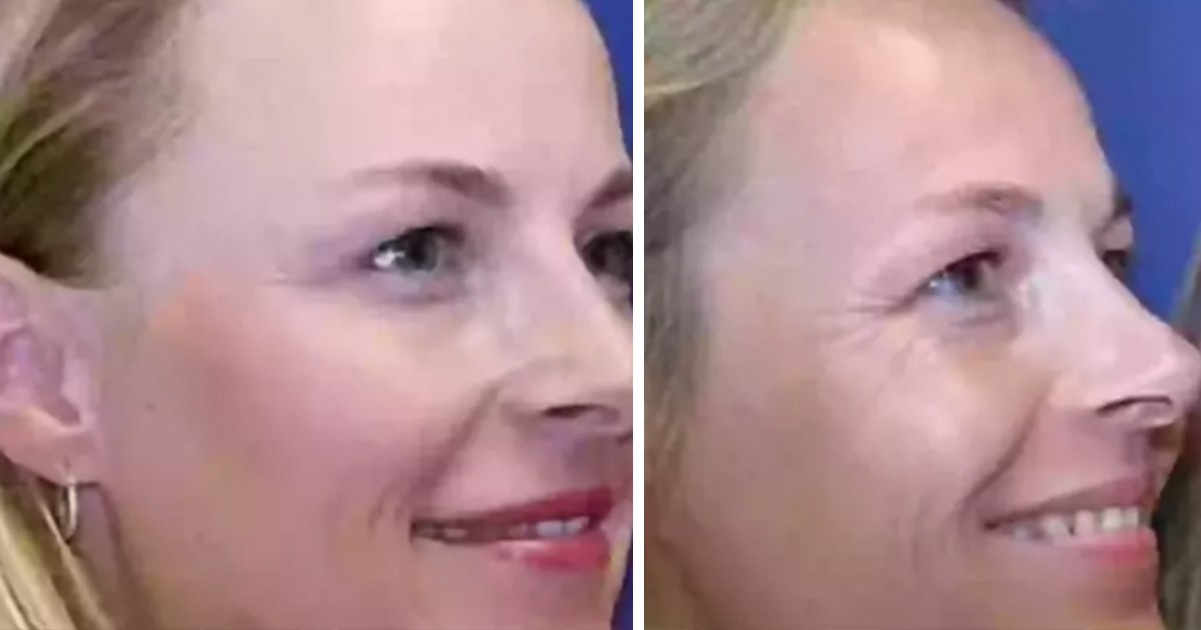
What would happen if two identical twins followed almost the same life path, but only one received Botox for decades?
That question became the basis of a remarkable long-term comparison involving identical twin sisters.
One sister began receiving Botox injections in her 20s and continued treatment regularly for years. The other chose not to undergo Botox.
Over time, photographs taken as part of a medical investigation appeared to show noticeable differences between the sisters’ facial appearance.
The Botox-treated twin had a smoother forehead and fewer visible lines around her eyes, while her untreated sister developed more pronounced facial wrinkles.
The comparison quickly became one of the most talked-about examples of what long-term Botox treatment may look like.
But there is an important detail: the sisters did not live identical lives, and the comparison cannot prove that Botox alone caused every difference between them.
The Botox Twin Study
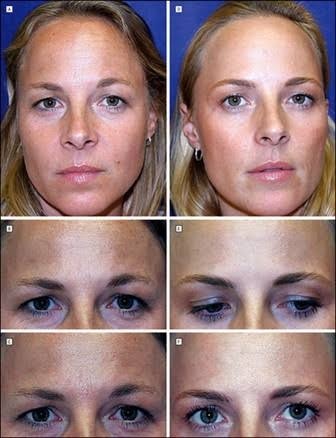
The two sisters were identical twins, making their comparison particularly interesting to researchers and cosmetic specialists.
One twin began receiving Botox treatments at approximately age 25.
Her injections were reportedly administered two or three times a year, primarily targeting the forehead and the vertical lines that develop between the eyebrows.
She also occasionally received treatment around the outer corners of her eyes, where crow’s feet commonly appear.
The other twin did not receive Botox.
Because identical twins share essentially the same genetic background, comparisons between them can sometimes provide useful insight into environmental and lifestyle differences.
In this case, photographs taken over a period of years provided a visual record of how their faces changed.
The Differences Were Already Visible in Their 30s
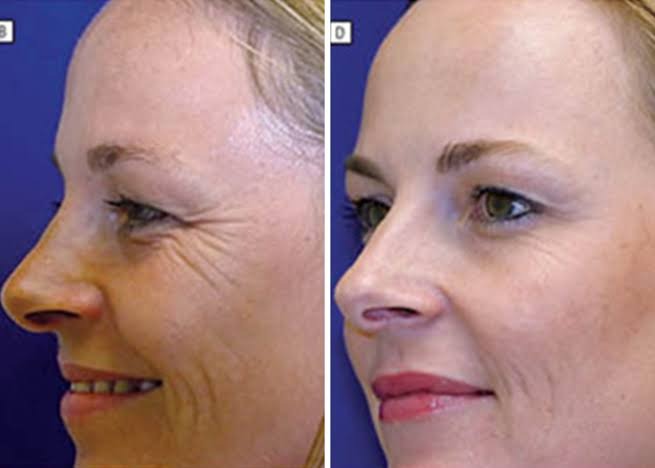
Dr. William Binder began documenting the sisters in 2006, when they were around 38 years old.
At that point, photographs reportedly showed a noticeable difference in their foreheads.
The Botox-treated sister had a smoother forehead with fewer visible expression lines.
Her untreated twin displayed more prominent lines, particularly in areas affected by repeated facial movement.
The difference was not necessarily surprising.
Botox works by temporarily reducing activity in specific muscles.
When certain facial muscles contract less frequently, the skin above them undergoes less repetitive folding.
Over time, this can reduce the appearance of certain dynamic wrinkles.
What Happened Six Years Later?
The comparison became even more interesting when photographs were taken again several years later.
Reports describing the study noted that the untreated twin had developed deeper facial lines and other visible differences in facial shape and fullness.
Her Botox-treated sister continued to have a smoother appearance in the areas that had been treated.
However, researchers were careful about drawing a direct cause-and-effect conclusion.
The sisters lived in different environments.
The untreated twin lived in Munich, Germany, while her sister lived in Los Angeles.
That distinction matters because environmental exposure—particularly sunlight—can contribute significantly to visible skin aging.
Why Identical Twins Make Interesting Comparisons
Genetics play an important role in how people age.
Skin thickness, collagen production, facial structure, and many other characteristics have genetic components.
Identical twins share extremely similar genetic backgrounds.
That makes them particularly interesting for researchers studying differences in aging.
If two genetically similar people experience different environmental conditions or cosmetic treatments, researchers can compare how their appearances change.
But identical genetics do not mean identical lives.
Diet, exercise, stress, sleep, occupation, climate, sun exposure, skincare, smoking history, medications, and countless other factors can influence the aging process.
That is why a twin comparison can be informative without being definitive proof.
How Does Botox Actually Work?
Botox is a brand name commonly associated with botulinum toxin type A.
When used cosmetically, it is injected into selected muscles.
The treatment temporarily reduces communication between nerves and muscles, causing the targeted muscles to contract less strongly.
This can soften certain dynamic wrinkles—lines that become visible when facial muscles move.
Common treatment areas include:
-
Forehead lines
-
Frown lines between the eyebrows
-
Crow’s feet around the eyes
The effect is temporary.
As nerve-muscle communication gradually returns, muscle activity increases again and wrinkles can become more visible.
For this reason, cosmetic Botox treatments generally need to be repeated to maintain their effect.
Dynamic Wrinkles vs. Static Wrinkles
One of the most important distinctions when discussing Botox is the difference between dynamic and static wrinkles.
Dynamic wrinkles appear primarily when the face moves.
For example, repeatedly raising your eyebrows can create horizontal forehead lines.
Frowning can produce lines between the eyebrows.
Smiling and squinting can contribute to crow’s feet.
Static wrinkles, on the other hand, remain visible even when the face is relaxed.
Repeated muscle movement over many years can contribute to these lines becoming more noticeable.
By reducing the movement responsible for certain expression lines, Botox may help prevent or soften some of these changes.
However, it cannot stop the entire aging process.
The Role of Sun Exposure
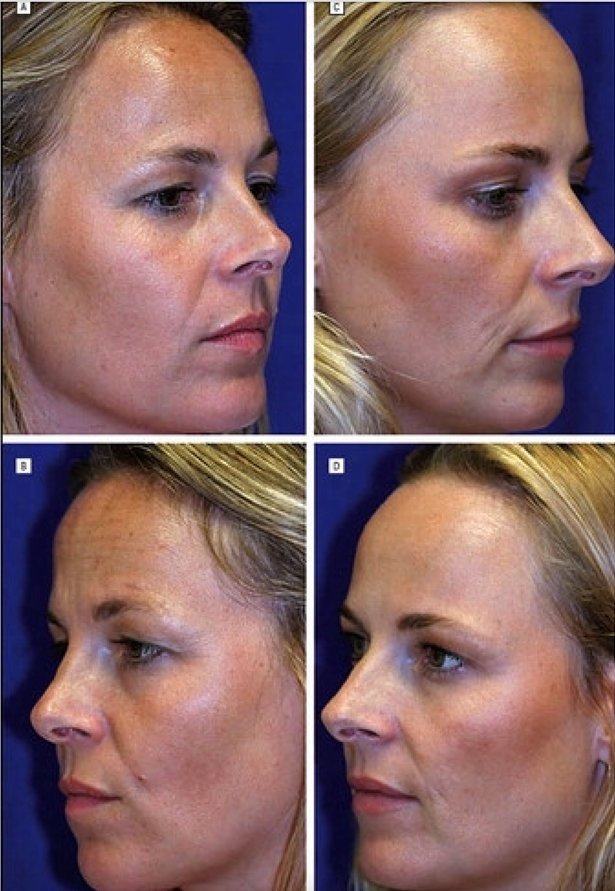
The twin comparison also highlights an important factor that has nothing to do with Botox: the environment.
Los Angeles receives substantially different levels of sunlight and ultraviolet exposure than Munich.
Ultraviolet radiation is one of the major environmental contributors to premature skin aging.
Repeated UV exposure can damage collagen and elastin, contributing to wrinkles, uneven pigmentation, and changes in skin texture.
Even when people regularly use sunscreen, differences in lifetime sun exposure can still matter.
This makes it difficult to determine exactly how much of the difference between the sisters came from Botox and how much came from their different environments.
Both Sisters Reportedly Had Healthy Habits
Reports about the twins indicated that both sisters used sunscreen and maintained relatively healthy lifestyles.
That makes the comparison even more interesting.
Nevertheless, healthy habits do not eliminate every environmental difference.
Where someone lives, how much time they spend outdoors, their occupation, and their cumulative UV exposure can all influence the appearance of their skin.
The comparison therefore offers an intriguing illustration of Botox, but it should not be interpreted as a controlled experiment in which every variable was identical.
What the Doctor Concluded
Dr. Binder’s observations suggested that long-term Botox treatment could help prevent or reduce the development of certain static facial lines.
The idea is relatively straightforward.
If a muscle repeatedly contracts over many years, the skin covering that muscle is repeatedly folded.
Reducing that muscle activity may reduce the repeated mechanical stress placed on the skin.
Over time, this could make certain wrinkles less pronounced.
However, the effect depends on the muscles treated, the timing and frequency of treatment, individual anatomy, and other factors.
Another Doctor Tried a Different Experiment
The twin comparison isn’t the only unusual demonstration of Botox’s effects.
Dr. Bita Farrell, a physician with extensive experience using cosmetic injectables, reportedly performed an experiment on herself.
Instead of treating both sides of her face, she treated only one side.
The idea was simple: compare the treated and untreated sides under similar conditions.
After approximately two weeks, she showed the results to her followers.
The untreated side displayed stronger muscle contraction, while the treated side appeared smoother and somewhat more lifted.
Why Can Botox Make the Face Look More Lifted?
Botox is primarily known for relaxing muscles, not physically lifting the skin.
However, facial muscles work in opposing directions.
Some muscles pull parts of the face upward, while others pull downward.
Relaxing selected downward-pulling muscles can sometimes alter the balance between those forces.
This can create a subtle lifting or reshaping effect in certain patients.
The result depends heavily on facial anatomy and exactly where the injections are placed.
This is why Botox should be administered by an appropriately qualified medical professional who understands facial anatomy.
Can Botox Reduce Jowls and Marionette Lines?
Some cosmetic practitioners use carefully placed neuromodulator injections to influence muscles associated with downward movement around the lower face.
In selected patients, this may create a subtle improvement in the appearance of areas such as the jawline or corners of the mouth.
But Botox is not a universal treatment for jowls or sagging skin.
Structural changes associated with aging involve much more than muscle activity.
Loss of collagen and elastin, changes in fat distribution, bone remodeling, and changes in skin elasticity can all contribute to facial aging.
Depending on the underlying problem, different cosmetic treatments may be more appropriate.
Is Long-Term Botox Safe?
Botulinum toxin has both cosmetic and medical uses and has been studied extensively.
Like any medical treatment, however, it can cause side effects.
Common temporary effects can include pain, swelling, bruising, or headache at the injection site.
More significant complications can occur if the toxin affects unintended muscles.
The safety of treatment depends on factors including the product used, dosage, injection technique, treatment location, and the experience of the practitioner.
Anyone considering repeated cosmetic injections should discuss potential risks and benefits with a qualified healthcare professional.
Botox Doesn’t Stop Aging
Perhaps the biggest misconception surrounding stories like the twin comparison is that Botox can stop facial aging.
It cannot.
Botox primarily affects muscle activity.
It does not prevent the natural changes that occur in the skin, connective tissue, fat, and bone as people grow older.
Skin continues to experience changes in collagen, elasticity, hydration, pigmentation, and texture.
Lifestyle and environmental factors continue to matter as well.
That means even someone who receives Botox regularly will still age.
The goal of cosmetic treatment is generally to modify specific visible features—not to stop the biological aging process.
The Importance of Sunscreen
If there is one lesson from the twin comparison that extends far beyond Botox, it is the importance of protecting the skin from UV exposure.
Sun protection can help reduce cumulative ultraviolet damage and is an important part of maintaining skin health.
Broad-spectrum sunscreen, protective clothing, shade, and avoiding excessive sun exposure can all help reduce UV exposure.
Botox and sunscreen also serve completely different purposes.
Botox temporarily changes muscle activity.
Sunscreen helps protect the skin from ultraviolet radiation.
One cannot replace the other.
What the Twin Comparison Really Shows
The photographs of the sisters are certainly striking.
One woman received Botox regularly for many years.
Her identical twin did not.
The treated sister appeared to have fewer visible lines in areas targeted by injections.
That makes the comparison an interesting illustration of what long-term neuromodulator treatment may accomplish.
But it does not prove that Botox was responsible for every difference between the two women.
Their different living environments alone introduce an important variable.
The untreated sister’s residence in Munich and the treated sister’s life in Los Angeles meant their cumulative environmental exposures were not identical.
A Fascinating Look at Facial Aging
The reason the story continues to attract attention is easy to understand.
Most people know that identical twins can look remarkably similar.
Seeing them appear increasingly different over time naturally raises questions about what caused the changes.
In this case, Botox provides one possible explanation for differences in facial movement and wrinkle formation.
But the broader story is actually more complicated.
Aging is the result of many interacting biological and environmental processes.
Genetics provide the foundation.
Sun exposure, lifestyle, hormones, skincare, stress, and other factors contribute to the changes that occur over time.
Cosmetic treatments can modify some of those visible features, but they do not control the entire process.
The Bottom Line
The long-running comparison between the identical twins offers an intriguing look at what repeated Botox treatment may do to certain facial wrinkles.
The sister who received Botox regularly had a smoother appearance in several treated areas, while her untreated twin developed more visible expression lines.
A separate one-sided experiment by Dr. Bita Farrell also demonstrated how temporarily reducing muscle activity can alter facial movement and appearance.
But the evidence should be interpreted realistically.
Botox can soften certain dynamic wrinkles and may help reduce the appearance of some lines over time, but it does not stop aging—and a twin comparison cannot prove that Botox alone caused every difference between the sisters.
For anyone considering Botox, the most important decision is not whether a dramatic photograph promises a younger-looking face.
It is choosing an appropriately qualified medical professional, understanding what the treatment can and cannot do, and weighing the potential benefits and risks for your own face and circumstances.
After all, aging is not something that can be switched off with an injection.
Botox can change a few pieces of the picture—but the picture itself continues to evolve.