Two Weeks Before the Baby Shower: A Story of Generosity, Friendship, and Self-Respect
Introduction: The Spirit of Generosity
Acts of generosity among friends often revolve around significant life events such as weddings, anniversaries, or the welcoming of a new child. The offering of time, effort, and resources is a mark of deep caring and emotional investment. However, these displays of friendship and selflessness can sometimes intersect with sensitive social dynamics, leading to unexpected outcomes. This article explores one such situation, providing context, analysis, and insights into the delicate balance between generosity, gratitude, and the preservation of personal boundaries.
Going Above and Beyond: Planning for the Baby Shower
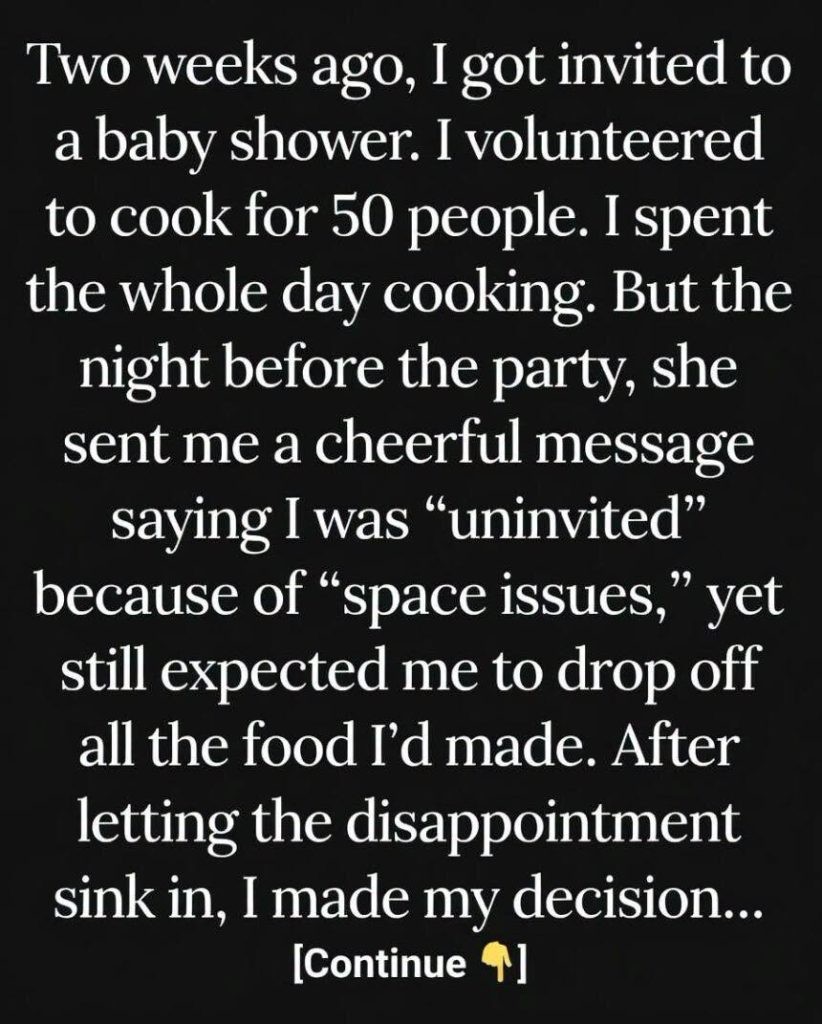
In anticipation of a friend’s baby shower, I enthusiastically volunteered to cook Filipino dishes, motivated by our shared history and my desire to support her through a challenging pregnancy. The plan was to prepare enough food for 50 guests, a scale well beyond the 15 invitees expected. The menu included classics like lumpia (spring rolls), pancit (stir-fried noodles), chicken adobo, steamed rice, and a carefully curated grazing table. I also contributed $200 toward decorations, aiming to create an atmosphere filled with warmth and love.
The preparations consumed four full days, from shopping for ingredients and containers to making childcare arrangements so I could participate. The lumpia alone required rolling 300 pieces—an act of culinary devotion. My total personal expenditure for the occasion reached nearly $900, reflecting both the significance of the event and the depth of my affection for my friend.
Dedication Meets Disappointment: A Sudden Change
Despite meticulous planning, the night before the event brought unexpected news. My friend sent a message explaining that she’d been forced to make some “hard decisions,” resulting in my removal from the guest list. Still, she requested that I deliver all the food I had prepared. There was no substantive explanation, only an insistence that her feelings toward me remained unchanged and an appeal for understanding.
My response was honest yet polite—I clarified that my willingness to cook had been based on my role as an invited guest, and I could not justify traveling 75 minutes to cater an event from which I was now excluded. This prompted accusations of being unkind and unsupportive, and several mutual friends took her side, suggesting that I should rise above my own hurt feelings to help her during a difficult time.
The Turning Point: Choosing a New Direction
With a heavy heart, I weighed the situation. Rather than allow my efforts to go unappreciated or be used purely out of obligation, I decided to redirect my generosity toward those truly in need. I delivered all the food to a local women’s and children’s shelter, where the staff expressed gratitude for the donation. There was no request for reimbursement of the money spent on decorations or food. My only choice was to detach from the drama and focus on a more meaningful contribution.
This decision provided a sense of closure. The food I had lovingly prepared was enjoyed by individuals facing challenges far greater than my own social disappointment. The act of giving in this context reaffirmed the intrinsic value of generosity, independent of the social expectations or recognition associated with it.
Aftermath and Revelation: The Real Reason Emerges
A year later, the pieces of the puzzle finally fell into place. A mutual friend, who had originally supported the hostess, confided in me about conversations behind the scenes. It turned out that there had been a premeditated plan among the expectant mother and several friends to take advantage of my willingness to help, but exclude me from the actual gathering.
According to this new information, my financial stability and eagerness to contribute had made others uncomfortable—my lavish support was perceived as potentially making the guest of honor feel inferior. The strategy had been to keep up the appearance of inclusion until the last moment, to ensure all the food and decorations would be available; only then was it deemed appropriate to uninvite me.
This experience revealed the complexities involved in navigating generosity and friendship. It highlighted how differing perceptions of social status, financial contributions, and expectations can challenge even established bonds.
Expert Perspectives: Navigating Boundaries and Generosity
Psychologists often point out that friendship is built on mutual respect, honesty, and reciprocity. While generosity is widely regarded as a virtue, experts caution that it should not come at the expense of one’s well-being or self-respect. Clinical psychologist Dr. Susan Newman, for instance, notes that “true friends accept both the gifts and the giver; they honor boundaries and acknowledge the value of emotional labor as much as material contributions.”
Research in social psychology has further shown that excessive generosity can sometimes trigger feelings of guilt, dependency, or inadequacy in others—particularly if they are unable to reciprocate at the same level. Such dynamics are further complicated when generosity inadvertently highlights differences in financial means.
Addressing these issues requires open communication and a willingness to accept that healthy relationships involve both giving and receiving, as well as the setting and honoring of personal boundaries. Experts recommend that individuals who feel compelled to give, either out of love or a sense of obligation, pause to ask themselves whether their help is being truly appreciated or taken for granted.
Societal Reactions and the Value of Generosity
In today’s interconnected yet increasingly complex social landscape, stories like this have resonated broadly. Online forums and social media platforms often feature discussions on similar situations—where acts of goodwill are met with mixed responses or outright exploitation. Many readers express empathy for those who are left feeling undervalued, while others suggest that boundaries are critical for sustaining long-term friendship and protecting emotional health.
There is also a growing recognition of the importance of rechanneling generosity when it is not appreciated in its original context. Charitable organizations and social welfare groups often rely on the time, skills, and resources of volunteers who may have once felt unappreciated in their personal circles. Redirecting support in this way not only meets real needs but also fosters a sense of agency and positive self-worth among donors and volunteers alike.
Learning the Lesson: Generosity as a Choice, Not a Requirement
The ultimate lesson drawn from this experience is both simple and profound: generosity is a gift, not an obligation. Gratitude should be mutual, and real friendship is never predicated on accepting disrespect or being taken for granted. Boundaries help to protect individuals from manipulation and disappointment, reinforcing the importance of self-care alongside compassion for others.
Forgiveness and reconciliation may be possible, but it is equally acceptable to let go of relationships that fail to honor shared values. The act of giving, in its truest sense, should uplift both the giver and the receiver. Anything less is an invitation to imbalance and, potentially, harm to personal well-being.
Conclusion: Moving Forward with Purpose and Self-Respect
The experience of planning, preparing, and ultimately redirecting a substantial act of generosity was deeply instructive. It highlighted the best of intentions, the risks of interpersonal misunderstandings, and the enduring value of self-respect. By choosing to walk away from exploitative dynamics and support a worthy cause, I gained new clarity about my own boundaries and the true meaning of giving.
In sharing this story, the hope is to encourage others to evaluate the health of their own relationships and to remember that kindness should always be coupled with self-respect. Authentic generosity does not require the sacrifice of one’s dignity; rather, it is most meaningful when both parties benefit and honor each other in return.
Sources
- Psychology Today
- BBC News
- The Guardian – Friendship and Relationships
- Mayo Clinic – The Health Benefits of Good Friends
Disclaimer: This content is intended for entertainment purposes only and is not based on real events.