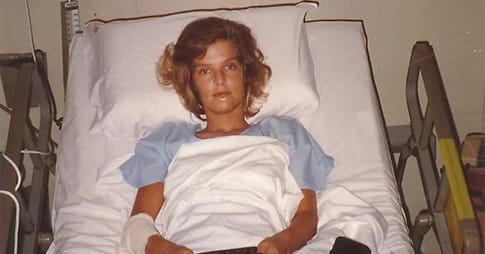
In 1992, Annette Herfkens appeared to have everything ahead of her.
She was building a successful career in finance, living between countries and enjoying a long relationship with the man she loved. A trip to Vietnam was supposed to be a chance for the couple to reconnect after months spent apart.
Instead, the journey changed the direction of her life forever.
What followed became an extraordinary story of endurance, instinct and psychological resilience. Herfkens spent eight days in a remote Vietnamese jungle before rescuers finally found her. Decades later, she has continued to speak about what happened, not simply as a story of survival, but as a lesson about accepting circumstances, recognizing what remains and finding a way forward.
Her story has been described in interviews, her book Turbulence: A True Story of Survival, and her own accounts of the experience. Some details are necessarily based on personal recollection, so they are best understood within that context.
A Long-Awaited Trip to Vietnam
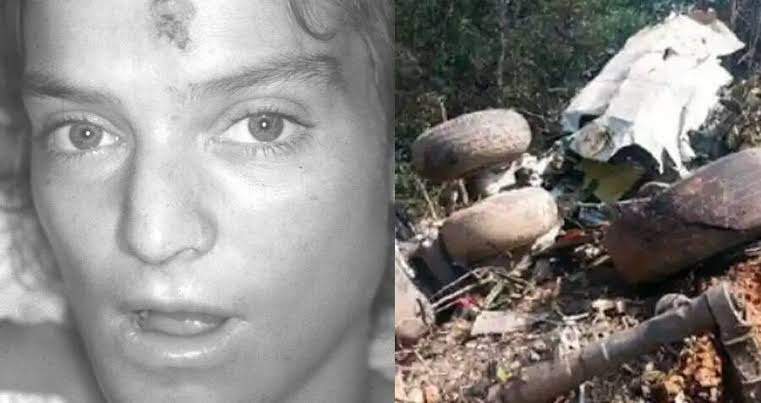
Annette Herfkens was born in the Netherlands and had developed a career as a trader on Wall Street.
Her longtime partner, Willem van der Pas, worked in Vietnam as the head of the local branch of a Dutch bank. Because their professional lives kept them in different countries, the couple had spent months apart.
Eventually, they arranged a trip together.
Their plan was relatively simple: spend time in Ho Chi Minh City before traveling to Nha Trang, a coastal destination known for its beaches and relaxed atmosphere.
For Herfkens, however, flying was already difficult.
She had struggled with claustrophobia for much of her life, and the aircraft they boarded on November 14, 1992, did little to ease her concerns.
The aircraft was a Yakovlev Yak-40 operated by Vietnam Airlines on Flight 474.
Her partner tried to reassure her by telling her that the flight would be short.
But the journey did not unfold as expected.
When the Flight Changed Everything
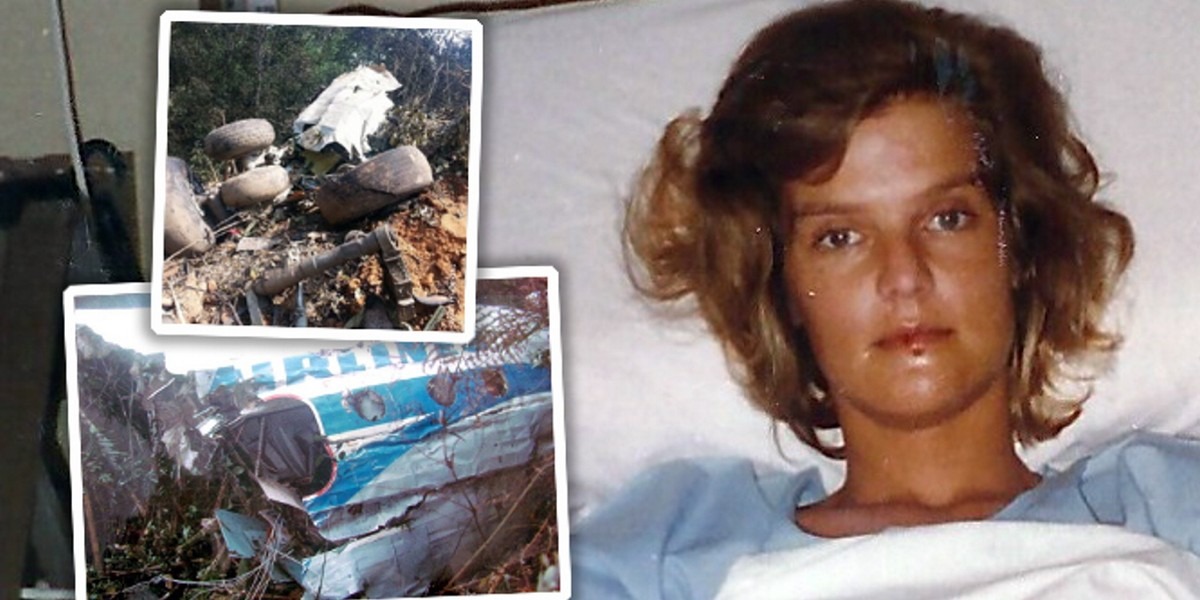
According to Herfkens’ later recollections, the aircraft experienced serious problems during its approach to Nha Trang.
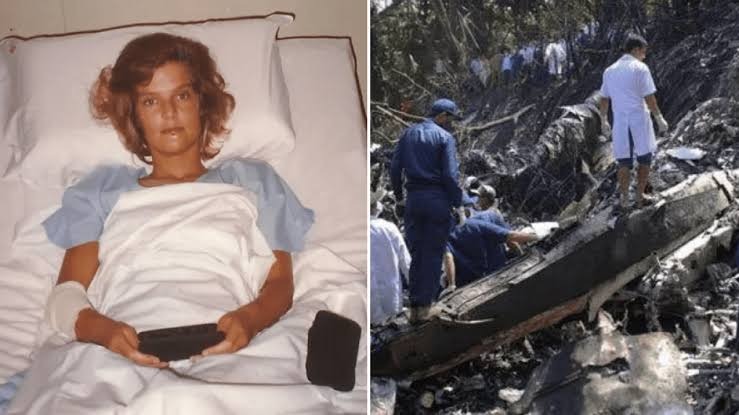
The flight eventually went down in the mountainous jungle near the destination.
Herfkens survived the initial impact but sustained severe injuries.
Her memories of those first moments were fragmented.
She later recalled regaining consciousness and realizing that she needed to get away from the aircraft.
She was seriously injured, yet somehow managed to move away from the wreckage.
Her partner had been sitting nearby.
He did not survive the crash.
For Herfkens, this created an overwhelming combination of physical difficulty and emotional shock.
Yet she had no opportunity to process everything immediately.
She had to concentrate on staying alive.
Alone in the Jungle
The remote location created another challenge.
The crash site was surrounded by dense vegetation and difficult terrain. Help was not immediately available.
Herfkens has described using breathing techniques to help manage her physical condition and remain calm.
This became one of the most important themes of her later reflections.
Rather than trying to solve everything at once, she focused on what she could do next.
She needed water.
She needed shelter.
She needed to conserve her limited energy.
And she needed to maintain hope that someone would eventually find her.
Finding Water
One of the most important challenges was obtaining drinking water.
Herfkens later described collecting rainwater using material she found around the aircraft.
She rationed what she collected carefully.
Instead of drinking large amounts at once, she took small quantities at intervals.
That routine gave her something else that was important in an uncertain situation: structure.
Every small action became a reason to keep going.
Collecting water was not simply about hydration.
It gave her a task.
And completing that task gave her a sense of progress.
The Power of Staying Focused
Modern psychology often discusses how people respond to extreme stress through concepts such as attention, coping strategies and problem-solving.
Herfkens’ account provides a personal example of those ideas.
She didn’t know when help would arrive.
She couldn’t control the weather.
She couldn’t change the location.
She couldn’t undo what had happened.
But she could control some small decisions.
She could conserve water.
She could regulate her breathing.
She could observe her surroundings.
She could keep moving when necessary.
That distinction became central to her later philosophy.
Instead of focusing entirely on what she had lost, she gradually learned to concentrate on what remained available to her.
The World Believed She Was Gone
Meanwhile, thousands of miles away, Herfkens’ family and friends had little reason to believe she was still alive.
The crash had been devastating, and the search situation was extremely difficult.
As time passed, hope began to disappear.
But one of Herfkens’ colleagues and close friends, Jaime Lupa, continued to believe that she might still be alive.
According to Herfkens’ later accounts, Lupa even promised her father that he would bring her daughter home.
It was an extraordinary commitment given the circumstances.
For Herfkens, however, those days in the jungle passed without knowing what was happening outside.
She had only her immediate surroundings and her determination to continue.
Eight Days of Waiting
Herfkens eventually spent eight days in the jungle before being discovered.
The rescue team that reached the area reportedly had not expected to find a living passenger.
Her discovery therefore transformed the search operation.
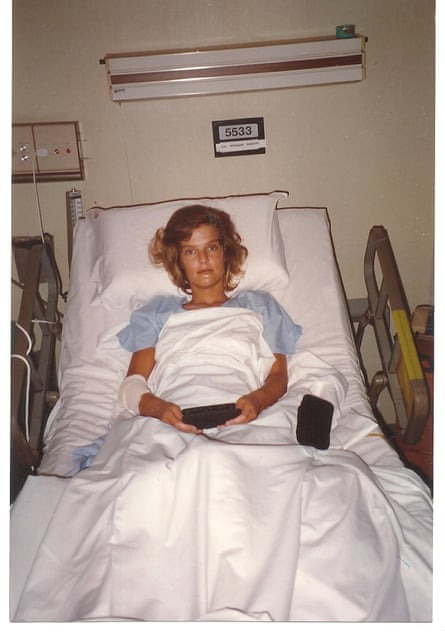
After being brought out of the mountainous region, Herfkens returned to civilization and began a long process of recovery.
The physical recovery was only one part of the story.
There was also grief.
She had lost the person she loved and had to return to a world that had continued without her.
Returning to Everyday Life
Herfkens attended her partner’s funeral in a wheelchair.
Yet her recovery progressed quickly.
Within weeks, she was walking again.
By early 1993, she had returned to her career in banking.
From the outside, that might have appeared to be a remarkable return to normality.
But physical recovery doesn’t automatically erase emotional experiences.
Herfkens later spoke about grief, anger and the lasting effects of what she experienced.
She had survived, but survival didn’t mean forgetting.
Finding a New Perspective
Over time, Herfkens developed a philosophy centered on accepting what could no longer be changed.
One of her most memorable ideas is the importance of recognizing what is still present rather than becoming consumed by what has disappeared.
She used the jungle itself as an example.
Initially, the jungle represented isolation and uncertainty.
But eventually, she began to see it differently.
Rather than seeing only what she had lost, she learned to notice the natural environment around her.
That shift in perspective became one of the most important lessons she carried forward.
From Survivor to Author and Speaker
Herfkens eventually turned her experience into the book Turbulence: A True Story of Survival.
She also became an inspirational speaker, sharing her experiences with audiences and discussing resilience, adaptation and personal growth.
Her message isn’t simply that people should remain positive regardless of circumstances.
Instead, her story suggests something more nuanced.
Some losses cannot be undone.
Some experiences cannot be forgotten.
But people can still choose how they respond to the circumstances that remain.
That distinction makes her story more meaningful than a simple tale of extraordinary endurance.
A Philosophy of Acceptance
Herfkens has described acceptance as a practical tool.
Acceptance doesn’t necessarily mean approving of something unpleasant.
It means recognizing reality rather than spending all of one’s energy wishing that reality were different.
That philosophy can apply far beyond extreme circumstances.
People experience career changes, relationship difficulties, unexpected setbacks and major life transitions.
Not all of them can be fixed immediately.
Sometimes the first step is simply acknowledging what has changed.
Only then can attention shift toward the possibilities that remain.
Turning Experience Into Empathy
Herfkens later applied this philosophy to her family life as well.
When her son Max was diagnosed with autism, she described using a similar approach.
Rather than focusing exclusively on expectations that might not match reality, she concentrated on understanding her son and supporting his individual needs.
This illustrates an important aspect of resilience.
Resilience isn’t always about returning to exactly the life someone had before.
Sometimes it means building a different life.
The new life may not resemble the original plan, but it can still contain purpose, connection and happiness.
The Jungle Became a Place of Meaning
Perhaps the most surprising part of Herfkens’ story is how her relationship with the jungle changed.
The environment where she experienced one of the most difficult periods of her life eventually became meaningful to her.
She has described it as a kind of safe place.
That transformation demonstrates how memories can evolve.
A location isn’t necessarily defined forever by the most difficult thing that happened there.
With time and reflection, people can attach new meanings to old experiences.
The jungle that once represented uncertainty could later represent strength, survival and gratitude.
Remembering the Anniversary
Herfkens has also continued to mark the anniversary of the eight days she spent waiting for rescue.
Her personal rituals have become a way of acknowledging the past while appreciating the present.
Rather than treating the anniversary solely as a reminder of hardship, she uses it as an opportunity to celebrate being alive.
That perspective captures the broader philosophy she has developed over the decades.
Survival wasn’t the end of her story.
It was the beginning of another chapter.
What Her Story Can Teach Us
Annette Herfkens’ experience offers several lessons that don’t require anyone to have faced anything remotely similar.
The first is the importance of focusing on what can be controlled.
The second is that recovery can happen in stages.
Physical healing may come before emotional healing.
The third is that acceptance and optimism are not necessarily the same thing.
A person can acknowledge that something painful happened while still choosing to build a meaningful future.
Finally, her story demonstrates that identity can evolve.
She began as a financial professional, became known for surviving an extraordinary ordeal and later built a new role as an author and speaker.
One chapter doesn’t have to define an entire life.
A Story That Continues
More than three decades after Flight 474, Herfkens continues to speak about what happened.
The event remains a major part of her personal history, but it isn’t the entirety of who she is.
She became a mother.
She built new relationships.
She developed a career beyond banking.
She wrote about her experiences.
And she found ways to transform an extraordinary period of hardship into a source of reflection.
Her story is therefore not simply about surviving eight days.
It is about what happened during the decades afterward.
Final Thoughts
Annette Herfkens’ story is extraordinary, but perhaps its most valuable lesson is surprisingly ordinary.
Life can change in ways we never anticipate.
Plans can disappear.
Circumstances can become completely different from what we imagined.
And sometimes, the only choice available is to look at what remains and decide what to do next.
Herfkens’ experience in the Vietnamese jungle became a defining moment in her life, but she didn’t allow that moment to become the final chapter.
Instead, she continued forward, carrying both the memories and the lessons with her.
Her journey reminds us that resilience doesn’t always mean forgetting the past or pretending that difficult experiences didn’t matter.
Sometimes resilience means acknowledging what has happened, appreciating what remains and slowly creating meaning from a life that took an unexpected direction.
Perhaps that is why stories like hers continue to fascinate us.
They remind us of one of humanity’s oldest questions: when everything changes around us, what allows us to keep moving forward?