
You have finally arrived at your hotel after a long journey. You walk into the room, drop your keys on the table and instinctively place your suitcase on the bed. It seems completely natural. After all, that is what luggage racks are for, right?
But before you unpack, there is one surprisingly simple habit that travel experts recommend considering: keep your suitcase away from the bed and upholstered furniture while you inspect the room.
One unusual option is the bathtub.
At first, putting a suitcase inside a clean bathtub may sound strange. Yet the idea has a practical reason behind it. Hotels have a constant flow of visitors, and certain unwanted insects can occasionally travel from one room to another by hiding in luggage, clothing and other personal belongings.
Bedbugs are particularly well suited to this kind of travel. They are small, difficult to notice and capable of hiding in narrow spaces.
The bathtub is not a magical guarantee against them, but its smooth surface and separation from common hiding places can make it a useful temporary location for luggage while you check the room.
Why Are Hotels a Concern?

Hotels are not inherently unclean. In fact, many accommodations follow detailed housekeeping routines.
The issue is turnover.
A hotel room can host many different travelers over time. Each guest brings luggage, clothing and personal belongings into the space. That constant movement creates opportunities for insects that are good at hiding and traveling unnoticed.
Bedbugs are particularly effective hitchhikers. They can move between nearby hiding places and may become associated with luggage, clothing and upholstered furniture.
According to pest-control guidance from Orkin, travelers should inspect hotel rooms rather than assuming that a room’s appearance alone guarantees that no pests are present.
The important point is that cleanliness and pest presence are not necessarily the same thing. A room can look spotless while still presenting a small possibility of unwanted insects.
Why the Bed Is Not the Best First Stop for Your Suitcase
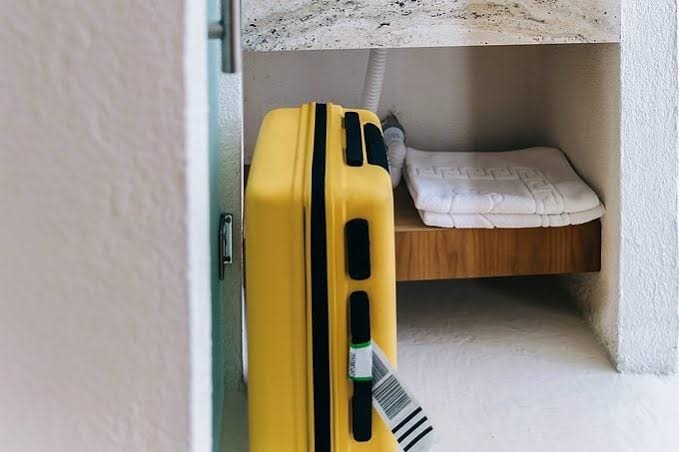
The bed is usually the largest piece of furniture in a hotel room, and it is also one of the first places travelers naturally put their luggage.
From a practical perspective, however, that may not be the best habit immediately after arriving.
Beds contain multiple layers and seams where small insects can hide. Mattresses, box springs, bed frames and nearby upholstered furniture provide numerous narrow spaces that are difficult to inspect at a glance.
Putting luggage directly on the bed before examining these areas gives any hidden insects an easier opportunity to come into contact with your belongings.
This is why some pest-control professionals recommend keeping luggage elevated and separated from the sleeping area until the room has been checked.
The goal is not to assume that every hotel has a problem. It is simply a low-effort precaution.
Why the Bathtub Can Be Useful
The bathtub offers a surprisingly practical alternative.
Its smooth, hard surface provides fewer hiding places than a bed, carpet or upholstered chair. It is also physically separated from the main sleeping area.
Entomologist Katelyn Kesheimer has described using the bathroom as a temporary location for luggage while inspecting a hotel room. Her reasoning is straightforward: people spend considerably less time in bathrooms than they do in bedrooms, making them a less likely location for bedbugs to establish themselves.
The bathtub therefore functions as a temporary holding area while you examine the room.
However, it is important not to interpret this advice too literally. A bathtub is not guaranteed to be completely free of insects, and simply placing luggage there does not eliminate the possibility of encountering bedbugs.
It is better understood as one part of a broader inspection routine.
The S.L.E.E.P. Method for Hotel Travelers
Orkin recommends a memorable S.L.E.E.P. approach for travelers who want to reduce the possibility of bringing bedbugs home.
Survey the Room
Before unpacking, take a few minutes to look around.
Pay particular attention to the sleeping area. Look for unusual dark marks or other signs around mattress seams, bed frames and nearby furniture.
The purpose is not to conduct a professional pest inspection but to notice anything that appears unusual.
Lift and Look
Bedbugs can hide in small spaces.
Lift the corners of the mattress and inspect seams, the area around the box spring and other potential hiding places.
You can also examine nearby furniture and areas around the bed.
A flashlight can make this process easier, particularly in darker corners.
Elevate Your Luggage
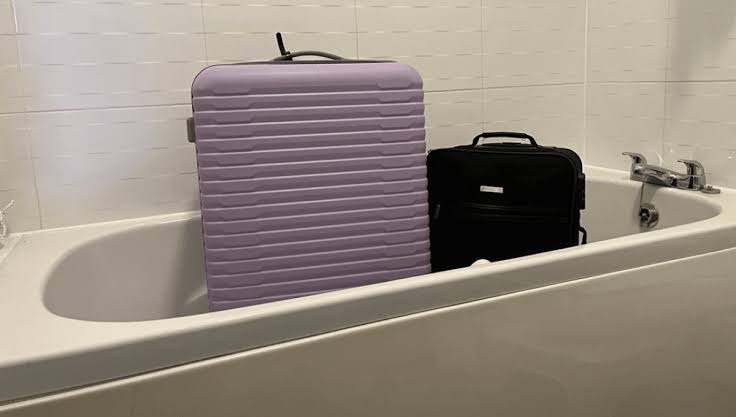
Keep your suitcase away from the bed and floor while you inspect the room.
A luggage rack positioned away from the bed can be useful if it is available and appears clean. The bathtub can also serve as a temporary option during the initial inspection.
The main principle is separation.
Examine Your Belongings
Before leaving the hotel, take a moment to inspect your suitcase and clothing.
Pay attention to seams, pockets and folds where small insects could potentially hide.
This step is particularly useful if you have stayed somewhere for several nights or noticed anything unusual during your trip.
Place Suitable Clothing in the Dryer
After returning home, some experts recommend using a dryer for clothing that can safely tolerate the heat.
The exact temperature and duration should follow the garment’s care instructions and reputable pest-control guidance.
The important idea is that heat treatment can be useful for appropriate fabrics, while clothing that cannot tolerate high temperatures should be handled according to its care requirements.
Why Bedbugs Are Such Effective Travelers
Bedbugs have characteristics that make them particularly difficult for travelers to detect.
They are small and can hide in seams, folds and narrow spaces. A suitcase contains many such locations.
Clothing, bags, books and fabric accessories can all provide potential hiding places.
This is why prevention often focuses on limiting opportunities for insects to reach luggage in the first place.
Keeping a suitcase away from the bed does not guarantee protection, but it reduces one obvious route between a potential hiding place and your belongings.
Should You Unpack Everything?
If you are staying in a hotel for several nights, unpacking can make the room more convenient.
However, some pest-control advice recommends limiting unnecessary contact between clothing and areas that are difficult to inspect.
Instead of spreading clothes across the room, travelers can keep much of their wardrobe inside the suitcase or use sealed packing bags.
This approach has another advantage: it makes it easier to keep track of where belongings have been placed.
The fewer surfaces your clothing touches, the easier it may be to inspect everything when it is time to leave.
What About the Hotel Luggage Rack?
A luggage rack can be perfectly useful, but its location matters.
Ideally, luggage should remain away from the bed and upholstered furniture.
Before placing a suitcase on a rack, examine the rack itself. Hard surfaces are generally easier to inspect than fabric-covered furniture.
The key lesson is not necessarily “never use a luggage rack.” Instead, it is “do not automatically place your suitcase next to the bed before checking the area.”
A few seconds of inspection can make your travel routine more deliberate.
What Should You Do With Clothing?
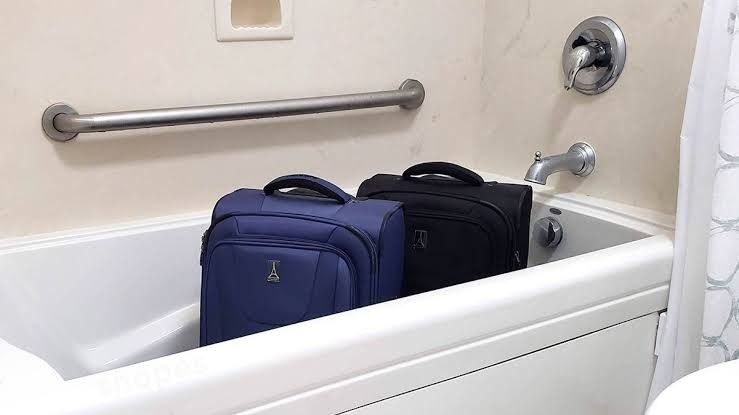
Clothing deserves particular attention because it spends considerable time inside luggage and can easily be transferred between different surfaces.
During a hotel stay, consider keeping worn clothing separate from clean clothing.
Resealable bags can also help organize items and limit unnecessary exposure to different surfaces.
Shoes should be treated similarly. Rather than leaving them scattered around the room, keep them together in a designated area or bag.
Organization is helpful not only for hygiene but also for making the final luggage inspection easier.
Why Early Inspection Is Better Than Panic Later
The bathtub trick is ultimately about prevention rather than fear.
Travelers do not need to enter every hotel room expecting a problem. Most hotel stays are completely uneventful.
The purpose of an initial inspection is simply to reduce an avoidable risk.
A few minutes spent checking the sleeping area can be far less inconvenient than discovering an unwanted travel companion after returning home.
That is particularly true because bedbugs can be difficult to notice immediately.
By making inspection part of the normal check-in routine, travelers can treat it like checking the room temperature, testing the Wi-Fi or locating the nearest exit.
What If You Notice Something Unusual?
If you see insects or signs that strongly suggest a pest issue, avoid immediately unpacking your belongings.
Instead, contact hotel management or the front desk and explain what you have observed.
If necessary, request another room or follow the hotel’s established procedure.
Travelers should also avoid moving belongings unnecessarily between rooms because doing so could potentially spread an existing problem.
If you have already returned home and later become concerned that your luggage may have been exposed, professional pest-control advice can help determine the most appropriate next steps.
Is the Bathtub Really the “Safest” Place?
The word “safest” should be used carefully.
A bathtub is not a guaranteed bedbug-free zone, and there is no single hotel-room trick that provides absolute protection.
The advantage is practical: a clean, smooth bathtub is generally less hospitable to hiding insects than a bed, carpet or upholstered chair, and it keeps your suitcase separated from the main sleeping area during your initial inspection.
Once you have checked the room and are satisfied with what you see, you can decide where to keep your luggage for the remainder of your stay.
The bathtub is therefore best viewed as a temporary precaution rather than a permanent storage rule.
A Small Habit That Can Change Your Travel Routine
Travel advice often focuses on major decisions such as choosing a destination, booking flights or finding the best hotel.
Yet some of the most useful habits are surprisingly small.
Keeping your suitcase away from the bed when you first arrive takes almost no effort. Inspecting mattress seams takes only a few minutes. Checking luggage before heading home can become part of the normal packing routine.
None of these steps guarantees that a traveler will never encounter bedbugs.
They simply reduce opportunities for an unpleasant surprise.
Final Thoughts: A Little Curiosity Can Go a Long Way
The idea of putting your suitcase in the bathtub may sound unusual the first time you hear it.
But once you understand the reasoning, it becomes much more practical. Hotels accommodate large numbers of travelers, and bedbugs are highly capable of hiding and hitchhiking between locations.
Keeping luggage away from beds and upholstered furniture while you inspect a room is a simple precaution. The bathtub can provide a convenient temporary location because its smooth surface offers fewer hiding places and keeps luggage separated from the sleeping area.
The most important lesson is not to become anxious about every hotel room. Instead, develop a calm and consistent routine: inspect the sleeping area, keep luggage separated, organize clothing and examine your belongings before heading home.
Travel is supposed to be about discovering new places and creating good memories. A few thoughtful habits can help ensure that the only things you bring home are souvenirs, photographs and stories worth sharing.
Sources
Orkin, travel guidance on inspecting hotel rooms and reducing the risk of transporting bedbugs.
Reader’s Digest, expert commentary from entomologist Katelyn Kesheimer concerning luggage placement and hotel-room inspections.
U.S. Environmental Protection Agency, educational resources concerning bedbugs, prevention and household management.
Centers for Disease Control and Prevention, general information about bedbugs and practical prevention measures.
U.S. Department of Agriculture, educational information concerning bedbugs and their behavior.