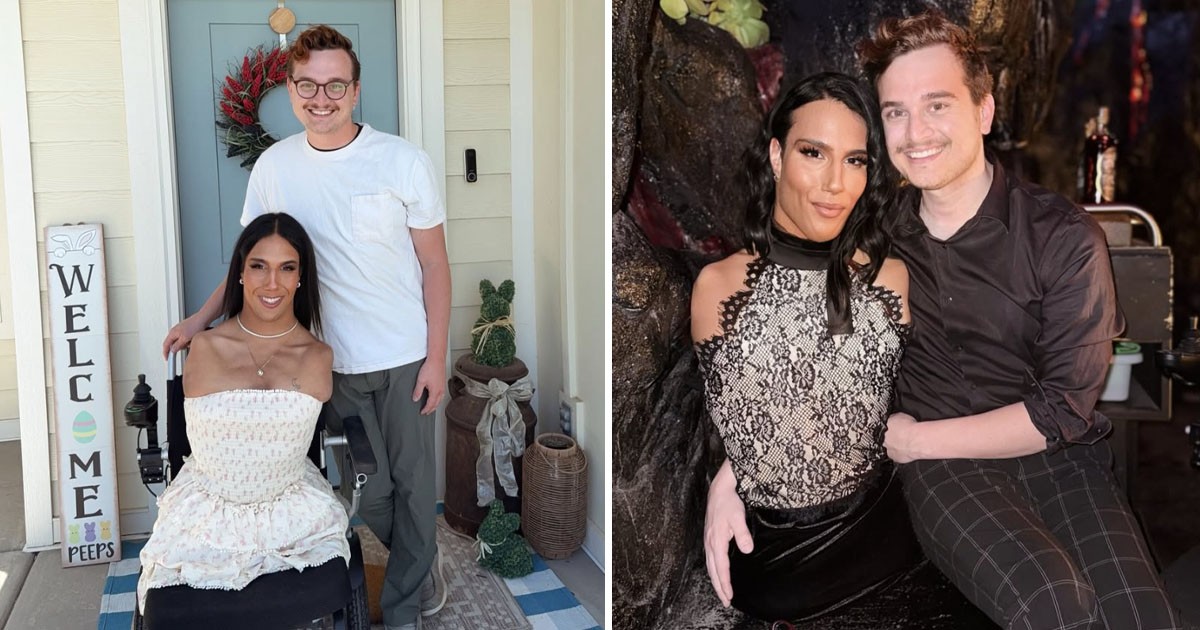
For many people, the most meaningful relationships are built on something deeper than appearances.
They are built through patience, honesty and the willingness to grow alongside someone.
Briel Adams-Wheatley has shared much of her life with millions of people online, from makeup tutorials and cooking videos to everyday moments with her husband, Adam. Born with Hanhart syndrome, a rare congenital condition affecting limb development, Briel has also spoken openly about her experience as a transgender woman.
Her story has attracted a large audience, but one particular question has continued to appear from followers.
How did her husband respond when she began her transition?
The answer, according to the couple themselves, offers an interesting look at how relationships can evolve when one person begins a deeply personal journey of self-discovery.
A Life Shared With Millions

Briel Adams-Wheatley has built a significant audience across social media.
With more than 1 million followers on Instagram and millions more on TikTok, she regularly shares parts of her everyday life with viewers around the world.
Her content isn’t limited to discussions about her identity or disability.
She posts makeup tutorials, cooking content, lifestyle moments and videos featuring her relationship with Adam.
That openness has allowed followers to see a side of her life that is often absent from traditional conversations about disability.
Rather than allowing one aspect of her identity to define everything she shares, Briel presents herself as a person with many interests, relationships and ambitions.
And sometimes, her audience gets a glimpse into the more personal parts of her journey.
The Question Followers Kept Asking
One question appeared frequently enough that Briel and Adam eventually decided to address it directly.
The couple posted a video explaining how Adam first learned about Briel’s transition.
Briel began by explaining that she started her transition approximately a year after they were married.
Adam agreed with her recollection.
But Briel added an important detail.
Adam had known about her feelings before almost anyone else.
In fact, she had spoken to him about those feelings before they were married.
At that stage, however, she wasn’t certain what she wanted to do.
She explained that she wasn’t sure whether she would eventually move forward with her transition or continue keeping those feelings private.
That uncertainty is an important part of her story.
Personal identity can be complicated, and not everyone reaches clarity at the same pace.
For Briel, the process involved time, reflection and eventually making decisions that felt right for her.
Adam Was the First Person She Told
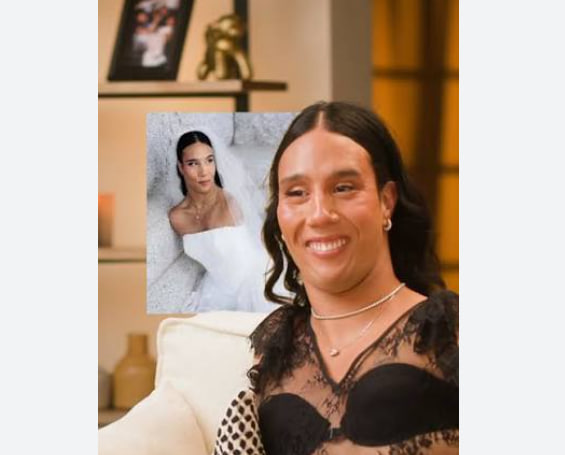
Before sharing her transition publicly, Briel chose to speak privately with Adam.
That decision meant he became one of the first people to know about something deeply personal in her life.
She explained that she had already begun making some changes privately before publicly discussing them.
This gave the couple time to adjust together.
It also meant Adam had to navigate a situation that was new to him.
For someone who had spent years knowing their partner one way, changes involving names and pronouns could naturally require some adjustment.
Adam acknowledged that openly.
“It Was Just a Lot of Learning”
Adam described the experience as a learning process.
He explained that one of the challenges was knowing which people had already been told about Briel’s transition.
At home, he could use her new pronouns.
Outside the home, however, he sometimes had to remember whether another person had been informed yet.
That created an unusual situation.
The couple had to navigate different environments while trying to respect Briel’s privacy and her evolving identity.
Then there were additional changes.
Briel eventually changed her name and began wearing wigs.
For Adam, it meant learning one new thing after another.
He described the experience as a journey filled with continuous learning.
But he also emphasized something more important.
He said Briel was patient with him.
That patience appears to have been an important part of how they navigated the changes together.
What Adam Said About Falling in Love

Perhaps the most revealing part of Adam’s response was how he described his feelings toward Briel.
He explained that he cared about who she was as a person rather than focusing solely on how she identified in the past.
He also said he was happy to see the difference in her happiness and confidence.
That perspective highlights an important aspect of long-term relationships.
People change.
Their interests can change.
Their goals can change.
Their understanding of themselves can change.
A relationship that lasts through those changes often requires both people to remain willing to communicate.
For Adam and Briel, that communication appears to have been particularly important.
Their Story Goes Beyond One Conversation
Briel’s social media presence gives viewers a glimpse into a relationship that isn’t defined by a single event.
The couple regularly share pieces of their life together.
Their content shows everyday activities alongside conversations about more personal experiences.
That balance is significant.
Briel was born with Hanhart syndrome, which affected the development of her limbs.
She has therefore spent much of her life navigating circumstances that many people may find unfamiliar.
Yet her online presence demonstrates that her life cannot be reduced to her medical condition.
She cooks.
She experiments with makeup.
She creates videos.
She shares humor.
And she maintains a relationship with her husband.
Her story is ultimately about much more than what makes her physically different.
Understanding Hanhart Syndrome
Hanhart syndrome is a rare congenital condition associated with abnormalities affecting the development of the limbs and, in some cases, other parts of the body.
Because rare conditions can vary significantly from one person to another, medical professionals generally assess each individual based on their specific characteristics and needs.
Briel’s experience provides a highly visible example of someone living with a rare condition while building an active life online.
Her social media presence can also help challenge assumptions about disability.
People unfamiliar with limb differences may automatically focus on what someone cannot do.
But Briel’s videos often demonstrate the opposite perspective.
She shows how people can develop their own techniques and routines for accomplishing everyday tasks.
Disability Is Not the Whole Story
One of the most interesting aspects of Briel’s content is the variety of subjects she discusses.
Her audience doesn’t only see conversations about disability.
They also see beauty, food, relationships and ordinary daily experiences.
That matters because people with disabilities are often discussed primarily through the lens of their condition.
Briel’s content offers a broader picture.
She is a creator, wife and individual with her own interests and personality.
Her story also demonstrates why representation can matter.
For someone who has never encountered a person with a similar disability, seeing someone confidently demonstrate everyday activities can challenge assumptions.
A Relationship Built on Patience

The story of Briel and Adam also illustrates something that applies far beyond their particular circumstances.
Relationships often involve learning.
Sometimes the learning is about communication.
Sometimes it involves adapting to a partner’s changing goals.
And sometimes it means understanding something about your partner that you hadn’t previously experienced yourself.
Adam acknowledged that he made mistakes while learning.
Instead of presenting the process as effortless, he described it as something that required repeated adjustment.
Briel, meanwhile, gave him room to learn.
That combination of patience and communication appears to have helped them navigate an important period in their relationship.
Why Their Story Resonates With Viewers
Briel’s story has attracted attention partly because it combines several themes that many people can relate to.
Identity.
Relationships.
Change.
Acceptance.
Communication.
At the center of all of them is a simple question: How do we continue loving and understanding someone as they grow?
There isn’t always an immediate answer.
People can need time.
Partners can make mistakes.
Families can need time to adjust.
Friends can need explanations.
What matters is the willingness to keep communicating.
The Importance of Listening
Perhaps the most valuable lesson from Briel and Adam’s story is the importance of listening.
Briel didn’t immediately know exactly how she wanted to approach her transition.
She shared her uncertainty with the person closest to her.
Adam listened.
Later, he had to learn new terminology, new habits and new ways of understanding his partner.
Neither process happened instantly.
But they continued moving forward.
That is something many relationships require.
People don’t always understand each other immediately.
Sometimes understanding develops gradually through conversations and shared experiences.
Final Thoughts
Briel Adams-Wheatley’s story is ultimately about more than a social media question.
It is about what happens when someone begins discovering a deeper understanding of themselves and invites the person they love to take that journey alongside them.
Her experience with Hanhart syndrome has shaped part of her life, while her transition has represented another deeply personal chapter.
Through it all, she has continued sharing everyday moments with a growing audience.
Adam’s response adds another perspective.
He didn’t claim that every adjustment was effortless.
Instead, he described a process of learning, adapting and becoming more comfortable with changes that were unfamiliar to him.
And perhaps that’s what makes their story relatable.
Healthy relationships aren’t necessarily built on knowing everything from the beginning.
They are often built by being willing to learn.
Sometimes love means having all the answers.
And sometimes, it simply means staying beside someone while you learn them together.