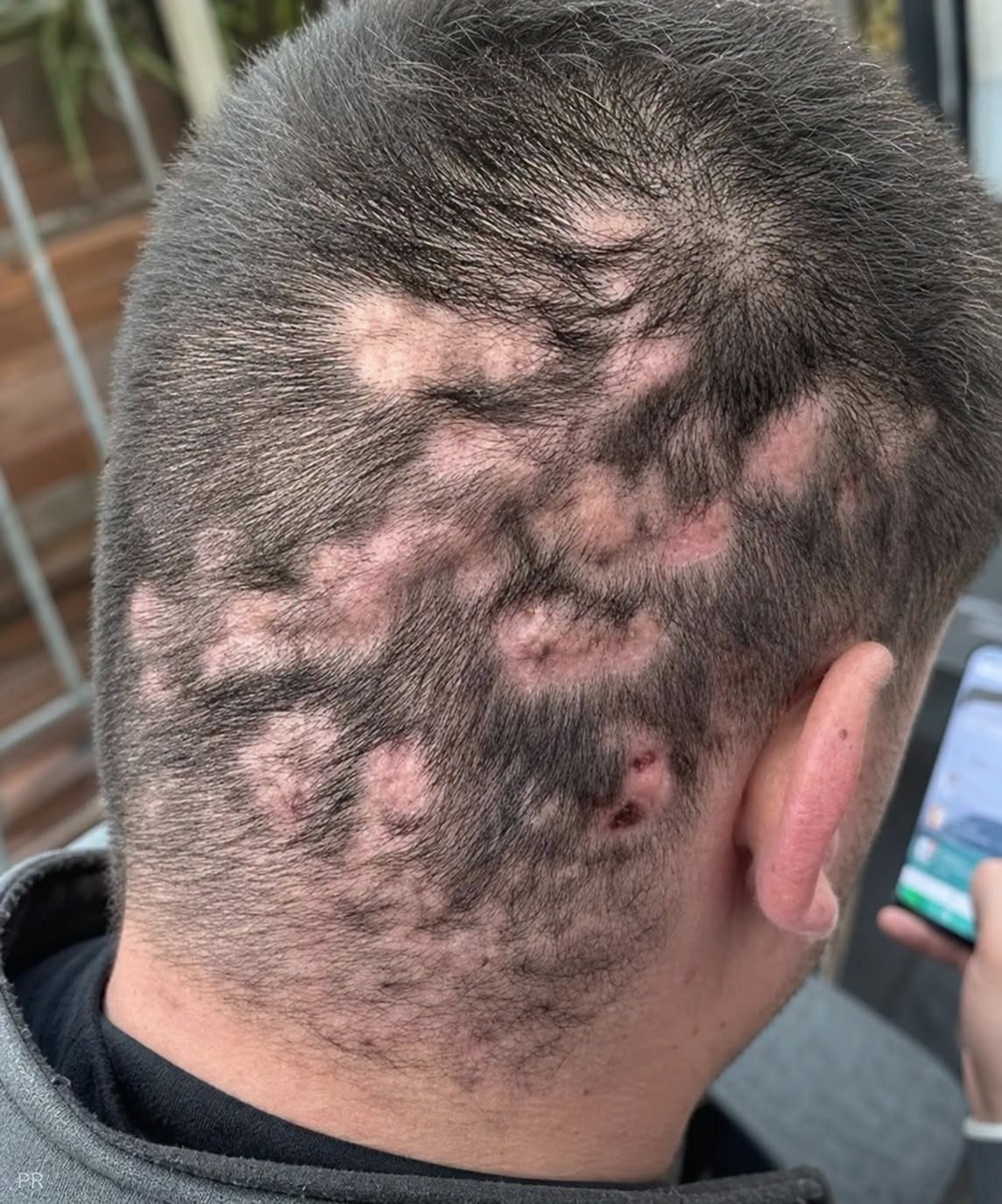
At first glance, a photograph showing unusual changes on the back of the scalp can raise many questions. Several raised areas appear inflamed, while some sections show reduced hair density and changes to the skin surface. To someone unfamiliar with dermatology, such an image may seem mysterious or even suggest an unusual condition.
Yet the science behind scalp disorders is often more interesting than the appearance itself.
The scalp contains thousands of hair follicles, along with oil glands, nerves, blood vessels and other structures. When inflammation affects these follicles, the visible result can range from small bumps to larger swollen areas and localized hair loss. In some conditions, prolonged inflammation can also affect the structures responsible for hair growth.
Although unusual scalp conditions have sometimes inspired cultural explanations, folklore, or speculation about their origins, modern dermatology approaches these changes differently. Doctors look at the pattern of inflammation, hair loss, skin changes and the patient’s medical history before determining what may be happening.
It is important to emphasize that a photograph alone cannot establish a diagnosis. Several different scalp conditions can look similar, and some require laboratory testing or a closer examination.
What Can Inflamed Scalp Bumps Tell Us?
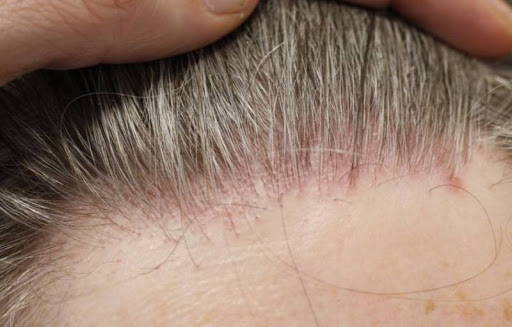
The scalp is a complex environment. Each hair grows from a follicle embedded within the skin, and these follicles can become inflamed for many different reasons.
When inflammation occurs around several follicles, people may notice raised bumps, tenderness, swelling or changes in hair growth. If the inflammation continues for a prolonged period, the follicle can potentially become damaged.
This is particularly important because some forms of hair loss are temporary, while others can involve scarring.
Non-scarring hair loss occurs when the follicle remains structurally intact and may continue producing hair once the underlying problem is addressed. Scarring hair loss is different because prolonged inflammation can damage the follicle itself.
That distinction is one reason unusual scalp changes deserve professional evaluation rather than self-diagnosis.

Dissecting Cellulitis of the Scalp
One condition that dermatologists may consider when there are deep inflammatory bumps, interconnected areas of swelling and hair loss is dissecting cellulitis of the scalp.
Despite its name, the condition is primarily associated with inflammation around hair follicles rather than the everyday meaning people may associate with the word “cellulitis.”
It is considered an uncommon inflammatory disorder affecting the scalp. The condition can begin with follicular blockages and inflammatory changes that develop deeper within the skin.
Over time, some individuals may develop interconnected inflammatory areas, and hair loss can occur within affected regions.
The exact reason this condition develops is not completely understood. Researchers believe that several factors may contribute, including follicular inflammation and individual susceptibility.
Importantly, seeing a photograph with raised scalp lesions does not mean that dissecting cellulitis is necessarily present. Other disorders can produce overlapping visual features.
Inflammatory Tinea Capitis and Kerion
Another possibility doctors may investigate is inflammatory tinea capitis.
Tinea capitis is a fungal infection affecting the scalp and hair follicles. It is particularly common among children, although adults can also develop it.
Some forms produce relatively mild scaling, while inflammatory forms can create swollen areas and patches of hair loss. A particularly pronounced inflammatory reaction is sometimes referred to as a kerion.
The appearance of a kerion can be striking, but its cause is biological rather than mysterious. Certain dermatophyte fungi can trigger an immune response in the scalp, producing inflammation around affected hair follicles.
Diagnosis may involve examining affected hairs or skin and performing laboratory testing to identify fungal organisms.
This distinction matters because fungal conditions require a different treatment approach from inflammatory scalp disorders that are not caused by fungi.
Folliculitis Decalvans and Scarring Hair Loss
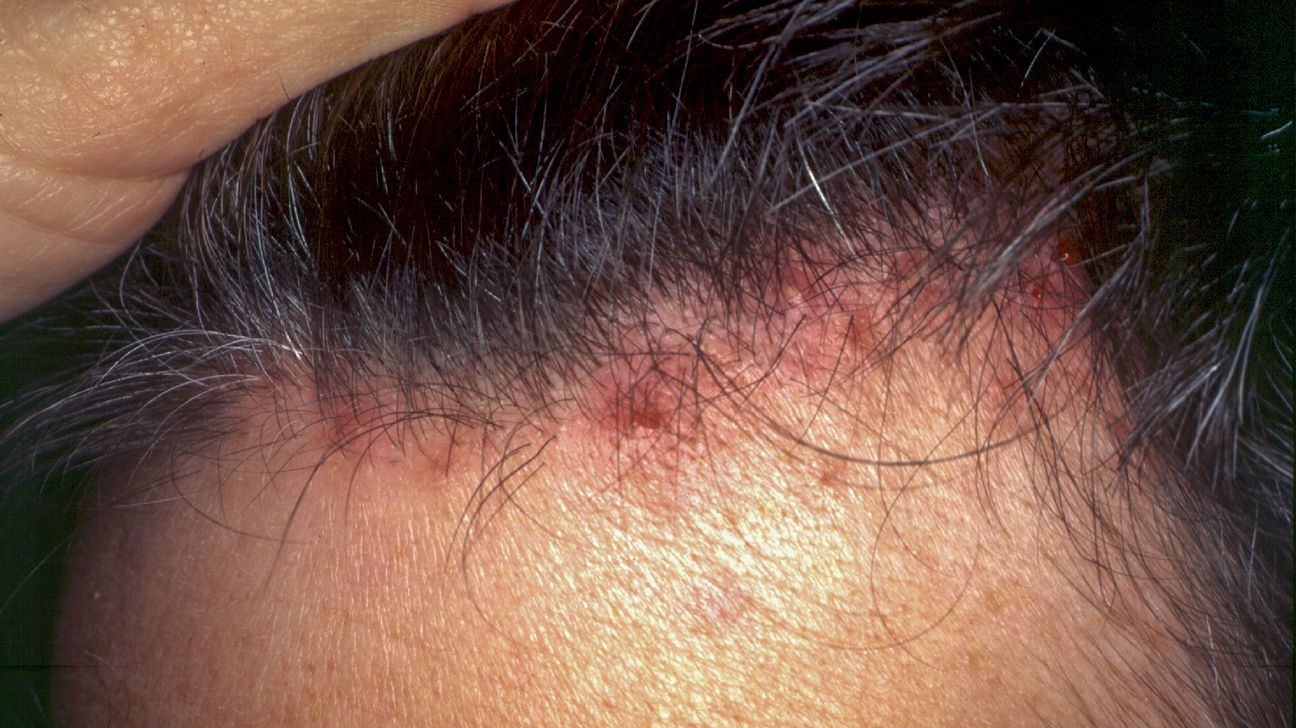
Folliculitis decalvans is another condition that can be considered when inflammation around hair follicles is accompanied by progressive hair loss and scarring.
The condition is classified among primary cicatricial, or scarring, alopecias. It involves inflammation that can ultimately damage hair follicles.
Some people develop follicular bumps, crusting or areas where multiple hairs appear to emerge from a single opening. Hair density can gradually decrease in affected areas.
Scientists continue to investigate the mechanisms behind folliculitis decalvans. Bacterial involvement, immune responses and individual susceptibility have all been considered as potential contributors.
Again, the presence of inflamed follicles alone does not establish this diagnosis. A dermatologist may need to examine the scalp closely and, in certain circumstances, perform additional testing.
Why Can Scalp Conditions Cause Hair Loss?
To understand the connection between inflammation and hair loss, it helps to understand the basic structure of a hair follicle.
A follicle is more than simply a hole in the skin. It contains specialized structures responsible for producing the hair shaft and supporting its growth cycle.
Hair normally moves through several phases, including active growth, transition and resting periods.
Inflammation can interfere with this process.
Some inflammatory conditions temporarily disrupt hair growth without permanently damaging the follicle. Once the underlying problem improves, hair may gradually return.
Other conditions can damage the follicular structures themselves. When that happens, the resulting hair loss can be more persistent.
This is why early evaluation is particularly important when hair loss appears together with ongoing inflammation or visible changes to the scalp.
Why Does the Back of the Scalp Matter?
The location of a scalp condition can provide useful clues, although location alone is never enough to establish a diagnosis.
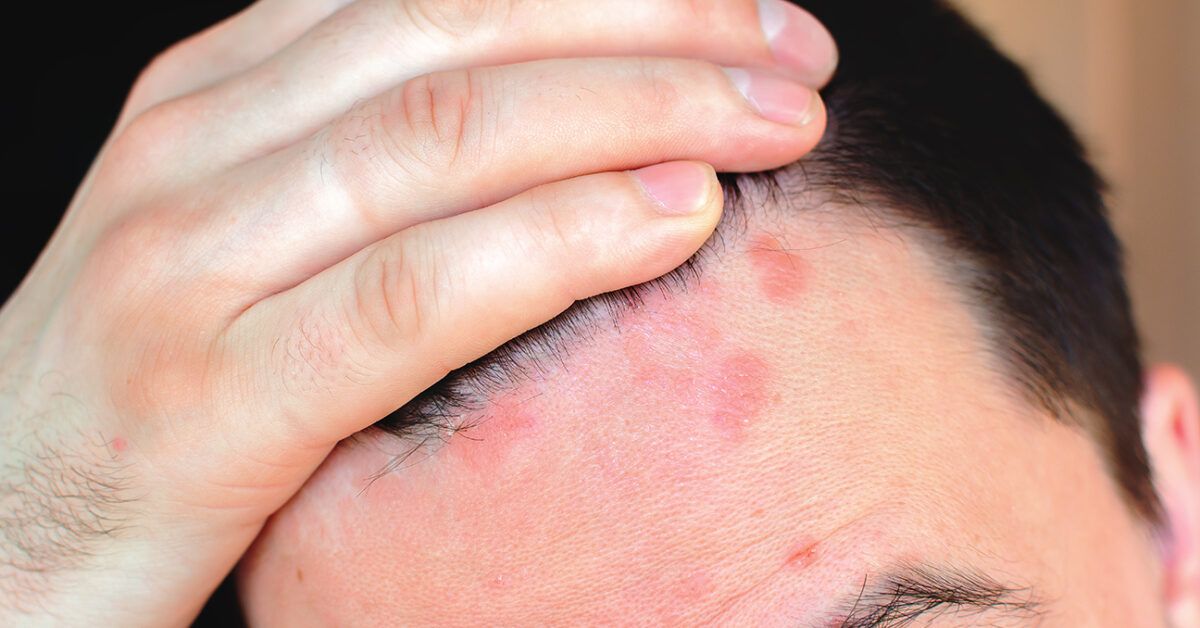
The occipital region, commonly described as the back of the scalp, contains numerous hair follicles and can be affected by several inflammatory and infectious disorders.
Some conditions may favor particular areas, while others can occur across different parts of the scalp.
Dermatologists therefore consider location together with other characteristics such as the shape of the affected area, whether individual follicles are involved, whether scaling is present and whether the hair loss appears temporary or associated with scarring.
The patient’s age, medical history, family history and previous treatments can also provide important information.
Cultural Interpretations of Unusual Physical Conditions
Throughout history, unusual changes in the human body have often attracted cultural explanations.
Before modern medicine developed detailed knowledge of skin structure, infection and inflammation, people naturally tried to understand physical changes through the cultural and scientific frameworks available to them.
Scalp and hair have held particular symbolic importance in many societies. Hair has been associated with identity, strength, beauty, spirituality and social status.
Because of that symbolism, unusual changes involving hair can sometimes acquire meanings that go beyond medicine.
Stories about extraordinary physical conditions may therefore become part of folklore or popular culture. Some interpretations suggest unusual origins or symbolic significance, while others are simply attempts to explain something that appears difficult to understand.
These interpretations can be culturally fascinating, but they should not replace medical evaluation.
What Modern Science Says
Modern dermatology takes a more evidence-based approach.
Instead of interpreting unusual scalp changes through appearance alone, physicians examine the biological processes responsible for the symptoms.
A dermatologist may use magnification tools to examine follicles more closely. Depending on the suspected condition, laboratory testing may also be appropriate.
For suspected fungal infections, samples from affected hairs or skin can sometimes help identify the organism.
For certain inflammatory or scarring disorders, a small skin sample may occasionally be examined under a microscope. This can help doctors distinguish between conditions that appear similar from the surface.
The goal is not simply to give the condition a name. Correct identification helps determine which treatment strategy is most appropriate.
How Are These Conditions Usually Managed?
Treatment depends entirely on the underlying cause.
If a fungal infection is responsible, doctors may prescribe antifungal medication, often using treatment that reaches the scalp through the bloodstream because topical products alone may not adequately treat infections involving hair follicles.
Inflammatory scalp disorders may require different approaches. Depending on the diagnosis and severity, dermatologists may consider anti-inflammatory medications or other specialist treatments.
In selected situations, additional procedures may be considered when there are persistent localized collections or structural changes.
Because several scalp disorders can look alike, using medication without a confirmed diagnosis is not recommended.
For example, treating a fungal infection as though it were an inflammatory disorder could delay appropriate care. Conversely, treating a non-fungal inflammatory condition with antifungal products alone may not address the underlying process.
Why Self-Diagnosis Can Be Misleading
Online photographs can be useful for learning, but they have significant limitations.
Lighting, camera angle, image quality and hair coverage can dramatically change the appearance of scalp conditions. A photograph also cannot reveal important information such as tenderness, texture, microscopic features or the progression of the condition over time.
Two completely different disorders can sometimes produce similar-looking areas of redness, swelling or hair loss.
That is why medical professionals consider the complete clinical picture rather than relying on one visual characteristic.
When Should Someone Seek Medical Advice?
Anyone experiencing persistent scalp inflammation or unexplained hair loss should consider discussing the symptoms with a healthcare professional.
Medical evaluation becomes particularly important when changes continue to expand, when hair loss is increasing, or when the scalp develops persistent swelling, crusting, drainage or noticeable scarring.
Early assessment can help distinguish between conditions that may respond well to treatment and disorders that require longer-term specialist management.
People should also avoid aggressively scratching, squeezing or manipulating inflamed areas, as additional irritation can make scalp problems more difficult to manage.
The Fascinating Science Behind Hair and the Scalp
The human scalp may appear simple, but it is actually an intricate biological environment.
Every strand of hair represents the activity of a microscopic follicle interacting with surrounding skin, immune cells, oil glands and blood vessels.
When something disrupts this balance, the visible result can sometimes appear dramatic.
That is part of what makes dermatology so fascinating. A seemingly simple change in hair density or skin texture can reflect a complicated interaction between inflammation, infection, immunity and follicular biology.
Scientific research continues to uncover more about these relationships.
At the same time, cultural interpretations remain valuable in another sense. They show how humans have always tried to make sense of unusual things they encounter.
The important distinction is recognizing the difference between cultural storytelling and medical evidence.
Final Thoughts
An unusual scalp photograph can immediately spark curiosity, especially when inflammation, hair loss and changes in skin texture appear together. But what looks mysterious at first often has a complex biological explanation.
Conditions such as dissecting cellulitis of the scalp, inflammatory tinea capitis and folliculitis decalvans represent very different processes, even though some of their visible features can overlap.
Science provides tools for investigating these differences through clinical examination, laboratory testing and, when necessary, microscopic analysis.
Cultural stories, meanwhile, remind us that curiosity about the human body is not new. For generations, people have observed unusual physical changes and searched for explanations using the knowledge available to them.
Today, the most responsible approach is to appreciate the mystery without allowing speculation to replace evidence. Behind every unusual medical image is an opportunity to learn more about the remarkable biology of the human body.
Ultimately, human curiosity is what drives both storytelling and scientific discovery. The questions raised by an unusual photograph may begin with simple fascination, but they can lead to a deeper understanding of how the body works, how diseases develop and why careful observation remains one of the foundations of medical knowledge.