Looking Back at the 1975 Oscars: Glamour, Controversy, and Lasting Legacy

The Academy Awards, often referred to as the Oscars, have long stood as a symbol of Hollywood glamour, artistry, and cultural impact. For many, images from Oscar ceremonies past—especially those from the 1970s—hold a unique nostalgic allure. The 1975 Oscars, also known as the 47th Academy Awards, are especially etched in the collective memory for their dazzling display of star power, controversial moments, and the complex intersection of culture and politics that played out on Hollywood’s biggest night.
Revisiting photographs and media coverage from the 1975 Oscars evokes a sense of longing for an era when the Hollywood elite were seen both as icons of sophistication and as mirrors of society’s shifting values. In that era, many viewers recognized every nominee and film, and the event itself commanded the world’s attention. Today, the images and stories from that evening provide a lens into a time of both tradition and transformation in the film industry.

The Context of the 47th Academy Awards
Held on April 8, 1975, at the Dorothy Chandler Pavilion in Los Angeles, California, the ceremony was hosted by several luminaries, including Bob Hope, Frank Sinatra, Shirley MacLaine, and Sammy Davis Jr. The years leading up to 1975 had been transformative for both Hollywood and the United States, marked by social upheaval, the tail end of the Vietnam War, and the Watergate scandal. Moviegoers were flocking to bold new films, while politics and entertainment often shared the spotlight.
The nominees that year underscored the changing tides. Best Picture contenders included Chinatown, The Conversation, Lenny, The Towering Inferno, and the eventual winner, The Godfather Part II. These films reflected both the artistic ambition and the moral conscience of an industry reckoning with the world around it.
The Glamour and Elegance of Old Hollywood
There is often a perception that celebrities of the 1970s exuded a timeless class, glamour, and poise. At the 1975 Oscars, this was certainly on display as stars arrived in sophisticated attire. Renowned actors, directors, and musicians mingled on the red carpet, and the ceremony itself was imbued with an air of formality and grace that many feel has diminished in the decades since.
Looking at photos from that night, it’s impossible not to feel a sense of loss for the many stars who have since passed away, reminding us of the fleeting nature of fame—and of life itself. For industry veterans and casual fans alike, the Oscars continue to serve as a visual time capsule of American popular culture.
Dustin Hoffman’s Disdain: “Ugly” and “Grotesque”
Some of the evening’s most memorable moments stemmed from the actors themselves, particularly Dustin Hoffman. At 87, Hoffman is a legendary figure, and in 1975, he was nominated for Best Actor for his transformative performance in Lenny, a biopic about boundary-pushing comedian Lenny Bruce.
Yet, despite his nomination, Hoffman was vocal about his discomfort with the ceremony. He was known for his critique of the Academy Awards, famously describing the event as “garish and embarrassing,” and even calling it “ugly” and “grotesque”—likening it to a beauty contest rather than a celebration of art.

Host Bob Hope responded to this sentiment with characteristic wit, joking, “If Dustin Hoffman wins tonight, he’s going to have a friend pick it up for him—George C. Scott,” a playful reference to Scott’s refusal to accept his own Oscar in 1971. While Hoffman did not win Best Actor that year, his critical view of the proceedings became a talking point of the night.
Elsewhere, Frank Sinatra, one of the hosts, joined in the banter with a joke directed at Hoffman that was not as well received, underscoring the unpredictable nature of live television and the complex dynamics among celebrities.
Frank Sinatra’s On-Stage Missteps
Frank Sinatra was more than just a beloved singer; he was also an enduring symbol of Hollywood’s glamor and charm. However, his performance as a co-host during the 47th Academy Awards was met with mixed reviews. Legendary critic Roger Ebert, writing for the Chicago Sun-Times, described the experience as underwhelming and at times awkward. According to Ebert and other contemporary sources, Sinatra appeared slightly inebriated and stumbled over his lines, making several uncomfortable remarks that didn’t resonate with the audience.
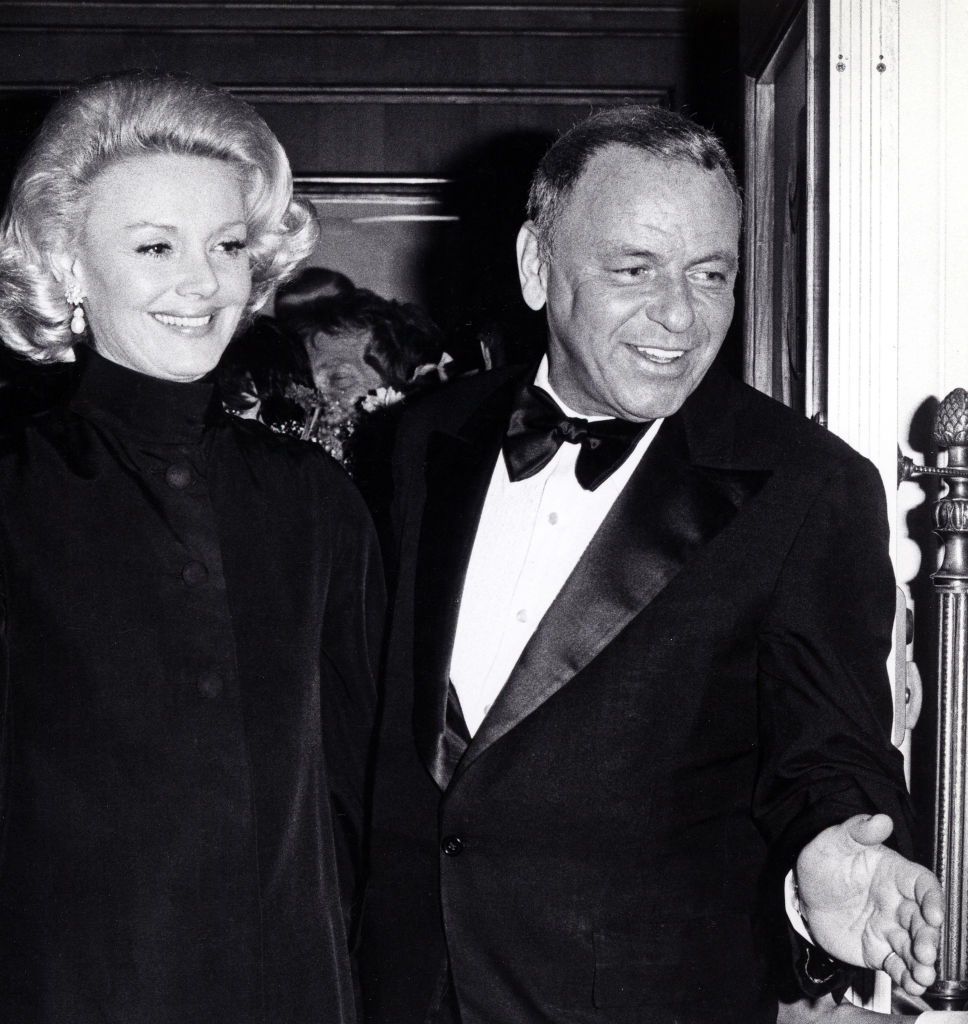
Sinatra’s “pointed, tasteless references to his fellow Italian-Americans” were called out for being in poor taste, and the moment drew audible boos from the crowd. While today’s ceremonies are often critiqued for political statements from the podium, the 1975 event revealed that controversy and tension have long been part of the Oscars’ DNA.
The Speech That Shook the Night: Politics from the Podium
Contrary to the belief that the Oscars were less political in the past, the 1975 ceremony included a particularly polarizing moment. In the closing days of the Vietnam War, emotions ran high both in America and among those in Hollywood. This atmosphere set the stage for one of the most talked-about acceptance speeches in Oscar history. Bert Schneider, who won Best Documentary Feature for Hearts & Minds—a powerful exploration of the Vietnam War’s human toll—used his moment to spotlight the ongoing conflict.
Taking the stage, Schneider remarked, “It’s ironic that we’re here at a time just before Vietnam is about to be liberated,” reflecting the anti-war sentiment that underpinned much of his film. He intensified the moment by reading a telegram from Viet Cong Ambassador Dinh Ba Thi, conveying “Greetings of Friendship to All American People,” and thanking the American anti-war movement for advocating for peace. Historically, this statement drew sharp division among attendees and the wider American public, as tensions over the war remained fresh and unresolved.

A Divided Audience: Bob Hope, Frank Sinatra, and Hollywood’s Response
Not everyone in the audience was supportive of Schneider’s statement. Bob Hope, a prominent proponent of the war effort, took issue with the political nature of the speech. Roughly an hour later, an official telegram was hastily drafted backstage. Frank Sinatra read it aloud, stating, “The academy is saying, ‘We are not responsible for any political references made on the program, and we are sorry they had to take place this evening.’”
The intervention sparked immediate reaction from other hosts and celebrities. Actor Warren Beatty, also known for his political engagement, jested, “Thank you, Frank, you old Republican.” Oscar-winner Shirley MacLaine added, “You said you were speaking for the Academy. Well, I’m a member of the Academy and you didn’t ask me!” The moment illustrated the spectrum of opinions in Hollywood and the complex relationship between entertainment and activism. In retrospect, some argue that Schneider’s words, while provocative, were relatively measured given the turbulent political backdrop of the time.
Ingrid Bergman and the Question of Hollywood’s Conscience
Another deeply human moment came as Ingrid Bergman, the legendary Swedish actress, accepted the Oscar for Best Supporting Actress for her role as Greta Ohlsson in Murder on the Orient Express. Though the audience honored her with a standing ovation, Bergman gave a humble and reflective speech, acknowledging that fellow nominee Valentina Cortese was perhaps more deserving of the award.

Bergman’s humility was about more than just her performance. The actress became emblematic of Hollywood’s willingness—and sometimes reluctance—to forgive its own. Just over 25 years prior, Bergman had been shunned by much of Hollywood following her relationship with director Roberto Rossellini, a scandal at the time. Some observers, and even Bergman herself, speculated that her 1975 Oscar was partially motivated by a sense of collective regret or “show business guilt” for her earlier ostracization.
Elegance Captured: The Iconic Voight-Welch Photo
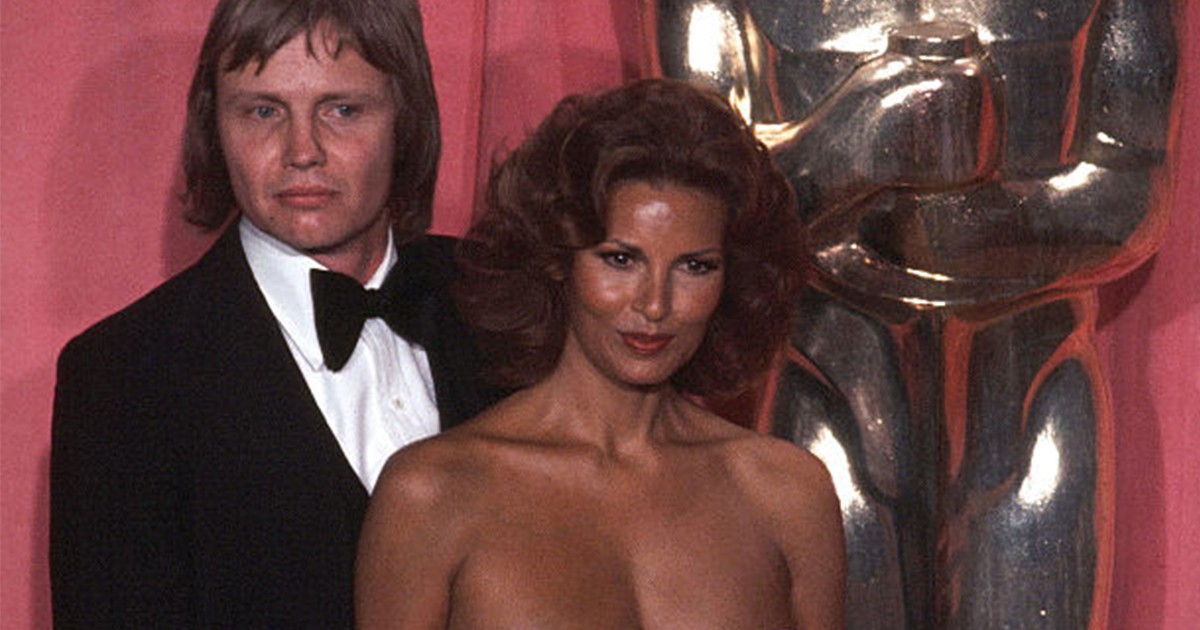
The enduring fascination with the 1975 Oscars is epitomized in a single photograph that continues to surface across media platforms. Taken as Jon Voight and Raquel Welch stood side by side on stage, both dressed impeccably—Voight in a classic tuxedo, Welch in a luminous pink gown—the image radiates the grace and showmanship of the era.
As presenters for the Best Cinematography award, they commanded attention despite not being nominees themselves. Decades later, the photograph still generates conversation, serving as an emblem of Hollywood elegance, as well as a touchstone for debates about changing social attitudes and the ways we interpret star behavior in retrospect.

Gender, Optics, and Social Media: Conversations Around a Viral Image
While most see the Voight-Welch photo as a testament to old-Hollywood style, it has also attracted criticism in recent years. Social media commentators have scrutinized Jon Voight’s posture and hand placement, with some suggesting that Welch’s body language appears uncomfortable. Comments such as “Jon’s looking like a creep. Raquel doesn’t look comfortable. Unless they were a couple—that’s well creepy,” reflect evolving norms about personal space and consent in public images.
Others have argued that it is unfair to judge the past by today’s standards. Defenders of the photograph, including women who attended similar events in the 1970s, contend that the pose was typical for the time and not inherently inappropriate, asserting that contemporary outrage misses important contextual nuance. Indeed, the debate highlights generational differences in how public behavior is viewed, as well as broader conversations about gender dynamics in Hollywood through the decades.

This ongoing discourse provides a window into how society reexamines its icons and traditions, blending nostalgia with constructive introspection about progress and fairness on and off the stage.
The Legacy of the 1975 Oscars: An Era Remembered
The 47th Academy Awards remain a defining moment in the history of both cinema and American pop culture. The night represented far more than just a competition for golden statuettes. It was a convergence of artistry, controversy, celebration, and conscience. Unforgettable films like The Godfather Part II claimed top honors, while impassioned acceptance speeches and headline-making incidents reflected a nation—and a Hollywood—grappling with change.
Nearly 50 years on, the photographs and stories from the 1975 Oscars still evoke admiration, debate, and longing for what some describe as a golden era of film. Whether viewed as a glimpse into a more glamorous age or as a reminder of the progress yet to be made, this unforgettable night in Hollywood continues to inspire conversation, analysis, and a love for the movies that bind generations together.
Further Reading
- Why the 1972 Oscars remains one of the the best ever
- Little-known mistakes and bloopers in The Rifleman
Sources
Disclaimer: This content is intended for entertainment purposes only and is not based on real events.