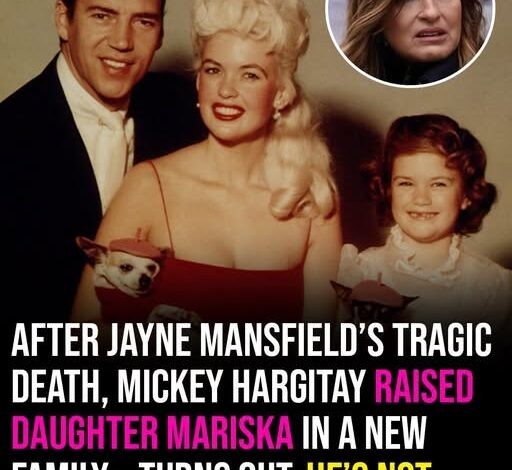
Mariska Hargitay: Born Into Hollywood Legacy
Mariska Hargitay, known worldwide for her starring role on the television series Law & Order: SVU, has always been recognized as the daughter of two Hollywood icons: the legendary actress Jayne Mansfield and actor-bodybuilder Mickey Hargitay. For decades, Mariska’s sense of self and her understanding of family was rooted in the strong, supportive presence of her father, Mickey, whose love and Hungarian heritage played a pivotal role in shaping her identity from childhood. The comforting security of this familial bond was unquestioned — until a single unexpected discovery in adulthood prompted Mariska to reconsider the very foundation of her story.

The Discovery of an Unfamiliar Face
Mariska’s life took a dramatic turn when, at the age of 25, she visited a devoted collector of Jayne Mansfield memorabilia. While surrounded by relics of her mother’s glamorous career, she was unexpectedly presented with a photograph of a man named “Nelson”—a name she did not recognize. The image had an immediate, visceral impact on Mariska. As she later recounted in her documentary, My Mom Jayne, she felt a jolt of recognition that was almost physical, as if some part of her DNA had acknowledged a deep, unknown connection.
The man in the photograph was Nelson Sardelli, an Italian-born entertainer and singer who had been romantically involved with Jayne Mansfield during a period when she was separated from Mickey Hargitay. For Mariska, who had embraced her family’s Hungarian roots and believed unequivocally in Mickey’s paternity, the revelation was shattering. Her world, once anchored by a clear lineage, suddenly became uncertain.
Reeling from the possibility that her family history had not been what she believed, Mariska described feeling so disturbed and dissociated that she barely remembered the drive to her brother’s home after discovering the photograph. The carefully built understanding of her childhood, family, and identity had been upended by one startling image.
Confronting Her Father, Mickey Hargitay
Unable to ignore the weight of what she’d learned, Mariska approached the person she had always known as her father: Mickey Hargitay. At the time, he was working on building a house for her—a testament to the deep connection and care he had shown throughout her life. She asked him candidly about Nelson Sardelli and about what, if anything, had been hidden from her for so long.
Mickey firmly denied that Sardelli was her biological father. He assured Mariska that she was truly a Hargitay, pointing out the similarities she shared with his own family, and dismissed her fears. Despite her lingering doubts and emotional turmoil, Mariska recognized the depth of Mickey’s pain at the question. His love and role as her father far outweighed her need for a definitive, potentially hurtful answer.
Choosing empathy and loyalty over confrontation, Mariska thanked Mickey and accepted his denial publicly, never forcing the issue again. Even in the years leading up to his passing in 2006, Mickey would occasionally refer to the incident as an episode where Mariska had believed a “crazy” idea. Out of respect and affection, she continued to play along, knowing that their emotional bond could not be altered by the unresolved question of her paternity.

The Emotional Cost of Feeling Unclaimed
The discovery of Nelson Sardelli’s possible paternity introduced a new and difficult emotional challenge for Mariska: if he was truly her biological father, why had he never come forward? The absence and silence weighed heavily on Mariska, leading her to struggle with feelings of abandonment and inadequacy. These feelings compounded the loss of her mother, Jayne Mansfield, who died tragically in a car accident when Mariska was just a child.
For years, the unanswered questions about her parents—and especially about Nelson—created a painful sense of being unclaimed. Mariska struggled with the belief that Nelson must have known about her but chose to remain absent, a perception that deeply affected her sense of value and belonging.
Eventually, Mariska tracked Nelson Sardelli down while he was performing in Atlantic City. The emotional reunion brought tears to Nelson’s eyes. He expressed that he had waited decades for such a meeting. However, for Mariska, the encounter was fraught with complexity. She was not ready to accept him immediately as her father, asserting that she wanted nothing from him because she already had the only father she needed in her life—Mickey Hargitay.
Evolving Toward a Greater Understanding
With time and introspection, Mariska’s relationship with her identity and her understanding of her family’s story shifted. She gradually became open to building a relationship with Nelson Sardelli and connected with members of his family as well. This journey did not diminish her loyalty to Mickey; instead, it allowed her to expand her understanding of what it meant to be a daughter within a unique, blended lineage.
Mariska developed empathy for the decisions her mother, Jayne Mansfield, and Mickey Hargitay had made in raising her. She came to believe that her mother had ultimately returned to Mickey out of confidence that he could provide the stability and love Mariska needed. Rather than viewing her childhood as a lie, Mariska embraced the idea that the family who had raised and loved her did so with the best intentions.
The making of her documentary, My Mom Jayne, marked an important milestone in this journey. It became a heartfelt tribute to Mickey Hargitay—the father who provided unwavering love and guidance. At the same time, it was a way to acknowledge Nelson Sardelli and unify the two branches of her family in a way that felt honest and healing.
For many years, Mariska had described relatives from the Sardelli family as “family friends,” never acknowledging their deeper connection to her. By sharing her story publicly, she was able to release herself, her family, and everyone involved from the burden of secrecy. Her film helped redefine her family narrative in a way that made room for both truth and love.
The Complex Reality of Identity
Mariska’s path to integrating this new knowledge was not straightforward. It required her to revisit old wounds, process feelings of betrayal, grief, and lost time, and confront her own assumptions about what makes a family. Through this process, her perspective on her mother also broadened; what had once seemed like deception began to look more like a desperate attempt to shield her from pain and provide security.
The public acknowledgment of her biological connection to Nelson Sardelli culminated at the 2025 Tribeca Festival premiere of My Mom Jayne. Nelson joined Mariska, members of the Hargitay and Mansfield families, and her husband Peter Hermann in a powerful show of unity. It was a moment that made visible the connections she had once kept quiet, signaling her acceptance of all aspects of her personal history.
Reflecting on her journey, Mariska described her gratitude for gaining a fuller understanding of her story—a “miracle” in her words. At 25, the revelation had seemed only painful and bewildering. Years later, she recognized the importance of being able to hold multiple truths: that Nelson Sardelli was her biological father; that Mickey Hargitay was the father who raised, loved, and shaped her; and that both men played integral roles in the woman she became.
Redefining Fatherhood and Family
The odyssey that began with a single photograph ultimately became a profound exploration of the concepts of loyalty, forgiveness, family, and identity. For Mariska Hargitay, the discovery of her biological father did not diminish the special legacy of Mickey Hargitay; rather, it enriched her understanding of parenthood itself.
By choosing honesty and empathy, Mariska was able to build bridges between families and generations. Her story highlights the complexities many people face in the modern era when it comes to blended families, conflicting narratives, and the search for belonging.
Her journey stands as a testament to the idea that family is shaped by love and commitment as much as—if not more than—by genetics. In telling her story, Mariska Hargitay offers a message of hope and healing to anyone grappling with questions of heritage and identity: that truth, however complicated, can ultimately be a source of strength.
Societal Reflections and Broader Importance
The deeply personal nature of Mariska’s journey intersects with broader societal discussions about identity, adoption, and the meaning of family in the 21st century. Psychologists and family therapists underscore the importance of open communication and honesty, particularly when handling family secrets or questions of parentage. Experts emphasize that supportive relationships and emotional security often make a greater impact on a child’s well-being than biological ties alone.
Public reaction to Mariska’s story has largely been supportive, with many praising her vulnerability and courage in sharing such a complex experience. Her willingness to discuss difficult truths openly has resonated with a wide audience, especially those who have walked a similar path of discovering unexpected family histories.
In the era of personal DNA testing and increased awareness around adoption and blended families, stories like Mariska Hargitay’s are more relevant than ever. They serve to foster dialogue about how we define relationships and the enduring power of love to heal even the deepest wounds.

Conclusion: Embracing a Nuanced Truth
Mariska Hargitay’s journey was not a simple one, but it is ultimately a narrative of acceptance, love, and the courage to face complicated truths. By exploring and sharing her story, she has helped challenge old notions of family and has affirmed that our identities are informed not solely by our biological origins, but by the lasting bonds we create throughout our lives. Her example continues to inspire discussions about the meaning of belonging in today’s world and the profound healing that comes from compassion and honesty.
Sources
Disclaimer: This content is intended for entertainment purposes only and is not based on real events.