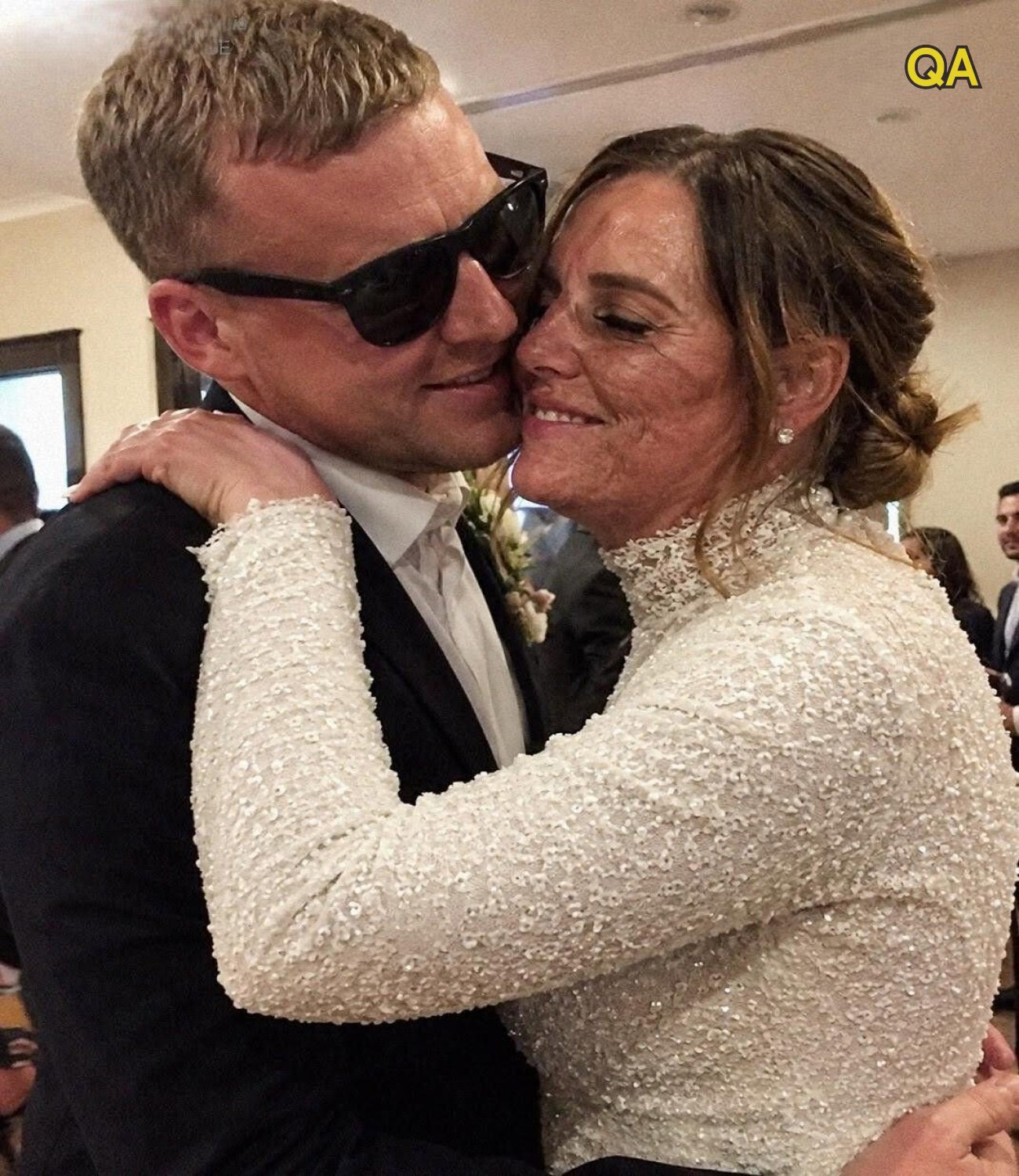
A Quiet Conversation That Changed Everything
The room suddenly felt smaller, the air heavier than it had moments before. My heart pounded as Callahan sat across from me, his fingers gently wrapped around my trembling hands. For years, I had carried the story of the explosion like a private wound that never fully closed. The police had called it an accident. The neighbors had repeated the same explanation. Insurance agents, reporters, and distant relatives all used the same word: tragic, but accidental.
Over time, I stopped asking questions. I learned to live around the unanswered parts, the way you learn to walk around a missing step in an old staircase. Yet the way my husband now tilted his face toward me, his expression solemn and intent despite his blindness, made it clear that everything I believed about that day was about to change. Whatever secret he had hidden for twenty years was not a small omission. It was tied directly to the worst moment of my life.
The Revelation: “The Explosion Wasn’t an Accident”
“Merritt,” he said quietly, “the explosion wasn’t an accident.” The words landed with a force that felt almost physical. I stared at him, unable at first to find air, let alone speech. For so long, I had treated what happened as something random and unexplainable. Now, with a single sentence, chance was being replaced by something far more deliberate and unsettling.
Callahan began to explain. Before the car crash that left him blind, his father had worked for the gas company responsible for maintaining the lines in our neighborhood. For most of our marriage, that fact had seemed like a distant detail of his family history, not something that would intersect with the deepest trauma of my life. But years earlier, while sorting through his late father’s belongings, Callahan had discovered documents that changed everything he thought he knew about his own family—and everything I thought I knew about the explosion.
Buried in old folders and boxes were internal reports and maintenance records. They showed that multiple safety warnings had been raised about a dangerous gas leak near my childhood home. Technicians had flagged the issue. Inspectors had documented it. Yet instead of immediate repairs, the decision was made to delay action. The papers made it painfully clear that postponing the fix had been a calculated choice, one that weighed financial cost against safety and chose wrongly.
Discovering a Pattern of Negligence
As Callahan spoke, my mind reeled. This was not just a single missed step or an unfortunate oversight. According to the documents he found, the company had been warned more than once about the deteriorating lines in our area. The records suggested a pattern that has echoed in real-world cases: aging infrastructure, cost-cutting priorities, and a culture that sometimes treats safety measures as negotiable.
Around the world, investigations into gas explosions and industrial accidents have repeatedly highlighted the consequences of overlooking known risks. Regulatory agencies and safety experts frequently emphasize routine inspection, transparent reporting, and rapid response to hazard alerts as critical protections for communities. When those protections fail—whether through neglect, misjudgment, or deliberate delay—the impact can be catastrophic for families and neighborhoods.
In my case, those systemic failures were no longer abstract concepts. They had a date, a location, and a direct link to the scars on my body. The explosion that had reshaped my life at thirteen was, according to the evidence Callahan uncovered, the foreseeable outcome of problems that were documented but not fixed in time.
A Web of Silence and Buried Evidence
I felt sick as he continued. The documents did not just show ignored warnings; they pointed to a series of actions taken after the explosion to keep the full truth from surfacing. According to the reports, several individuals within and around the company had helped bury the evidence. Certain maintenance logs disappeared. Some internal memos were reworded. Responsibility was quietly shifted to less critical factors—unusual weather, aging appliances, vague “structural issues”—anything but a preventable leak.
Families in our neighborhood, including mine, had been told stories that fit neatly into the category of “tragic accident.” We were encouraged to accept the official explanation and move on, to believe that what happened was beyond anyone’s control. For a child trying to understand sudden loss and disfigurement, the narrative of bad luck was easier to absorb than a complicated story of corporate decisions and regulatory failures.
In many real-life cases involving industrial incidents, survivors and relatives describe similar experiences: brief investigations, technical language, and conclusions that often leave them with more questions than answers. Legal and safety experts stress that transparency and access to accurate information are crucial not only for accountability, but also for healing. When information is withheld or distorted, trauma can be prolonged by doubt and confusion.
Years of Quiet Investigation
Callahan had not simply stumbled onto one incriminating file. He had spent years piecing the truth together. After his father’s death, the first documents he found raised enough concerns that he began asking discreet questions. He carefully contacted former colleagues, requested archived reports, and compared timelines. Slowly, a clearer picture formed of what had happened before and after the explosion near my home.
He admitted that he had wanted to tell me many times. But each time he imagined handing me the evidence, he saw not just anger or outrage, but the possibility of reopening the most painful chapter of my life. As someone already living with the long-term impact of a car crash and blindness, he understood how deeply a sudden, life-altering event can shape a person’s identity. He was afraid that hearing the full story would force me to relive every moment of the fire, the hospital stays, the endless questions about why it had happened.
This conflict—between the moral urgency of truth and the instinct to protect loved ones from further pain—is a familiar one in many families dealing with past tragedies. Psychologists who study trauma often note that survivors need both accurate information and emotional readiness to process it. The timing and context in which difficult truths are shared can influence whether they become an opening for healing or a source of renewed distress.

The Envelope of Evidence
On our wedding day, however, something shifted for him. Standing beside me as we promised to build a life together, he realized he could not carry a secret of this magnitude into our future. After we returned home, once the last congratulations faded and the house fell quiet, he reached for a worn envelope he had kept hidden for years.
He placed it in my hands, his expression tense and vulnerable. Inside were copies of reports, photographs, and signed statements. Some pages were printed on company letterhead, others were handwritten notes from people who had witnessed discussions or decisions. There were dated inspection logs, diagrams of the gas lines in our neighborhood, and internal emails that showed how the risk had been discussed—and downplayed—over time.
As I read, tears streamed down my face. For seventeen years, I had blamed fate for what happened. I believed I was simply unlucky, caught in the wrong place at the wrong moment. But now the evidence told a different story. The scars that traced across my skin were not random. They were the visible outcome of choices made by people who, according to these documents, consistently prioritized financial savings and short-term convenience over comprehensive safety.
Every page chipped away at the story I had accepted since childhood. I had grown used to the idea that some tragedies have no explanation. That belief, flawed as it was, had been a kind of coping mechanism. Learning that the explosion was preventable replaced accidental chaos with preventable harm, and that realization carried its own heavy weight.

From Victimhood to Agency
By sunrise, everything had changed. The man I had married had not hidden the truth to protect himself. He had carried it alone because he wanted, in his own imperfect way, to shield me. Once the evidence was laid out between us, however, we both understood that silence was no longer an option. Continuing to call the explosion an accident would mean accepting a narrative that the documents clearly contradicted.
Together, we decided that the people responsible, and the systems that enabled them, would finally be confronted. We knew that legal and regulatory processes could be slow and complex. We understood that not every document in that envelope would automatically translate into accountability. Yet we also knew that many survivors of man-made disasters eventually find strength in seeking answers, pressing for reform, and insisting that lessons be learned so that others are protected.
For the first time since I was thirteen, I felt something stronger than pain. I felt the beginnings of freedom. The scars I had spent years covering with clothing and carefully chosen hairstyles no longer symbolized shame or pure loss. They became evidence of survival—a record of what I had endured, and a reminder of the resilience that had allowed me to keep moving forward despite incomplete explanations.
The Broader Context: Safety, Accountability, and Reform
Across many countries, gas explosions and infrastructure failures have prompted important discussions about safety standards and corporate responsibility. Investigative reports and official inquiries typically highlight several key measures that can reduce risk: regular inspections, clear maintenance protocols, open communication with regulators, and robust whistleblower protections for employees who raise concerns.
When these safeguards are strong and consistently enforced, communities are less likely to face the kind of preventable disaster that changed my life. When they are weak, underfunded, or undermined by short-term financial pressures, the consequences can be severe. That is why experts in public safety, engineering, and law often stress the importance of independent oversight and transparent reporting in high-risk industries.
Survivors and advocacy groups around the world have played a central role in pushing for higher standards. By sharing their experiences, they help policy-makers understand the human cost of delayed maintenance or ignored warnings. Their efforts have, in many cases, contributed to tighter regulations, improved technology for detecting leaks, and stronger penalties for organizations that fail to comply with safety requirements.
Healing, Truth, and the Path Forward
On a personal level, learning that the explosion was not an accident reshaped my understanding of my past, but it did not erase it. The physical and emotional scars remain, and healing is still a process rather than a destination. Yet knowing the truth brought a different kind of clarity. It allowed me to redirect my questions—from “Why did this happen to me?” toward “How can this be prevented for others?”
Mental health professionals who work with survivors of traumatic events often emphasize that validation and accurate information are essential to recovery. Feeling heard, believed, and informed can help transform a narrative of powerlessness into one of agency. For me, that transformation began the moment Callahan chose transparency over silence, trust over fear.
With the evidence now out in the open, our path forward includes seeking legal advice, consulting with safety experts, and deciding how best to share the documents with relevant authorities. It also involves ongoing conversations—about what accountability should look like, about how to honor those who were harmed, and about the kind of future we want to build together, one defined not by secrecy but by honesty and shared purpose.
The truth that had been buried for twenty years is finally coming to light. While it cannot change what happened, it can shape what happens next. My scars, once a reminder of a story I did not fully understand, now stand as proof that I survived—and as a reason to insist that the systems meant to keep communities safe truly live up to that responsibility.
Sources
- Reuters – Coverage of industrial safety and gas infrastructure incidents
- BBC News – Reporting on public safety, regulation, and corporate accountability
- The Guardian – Investigations into infrastructure, energy companies, and safety standards
- World Health Organization (WHO) – Resources on the health impacts of environmental and man-made disasters
- U.S. Centers for Disease Control and Prevention (CDC) – Guidance on trauma, injury, and community health after emergencies
Disclaimer: This content is intended for entertainment purposes only and is not based on real events.