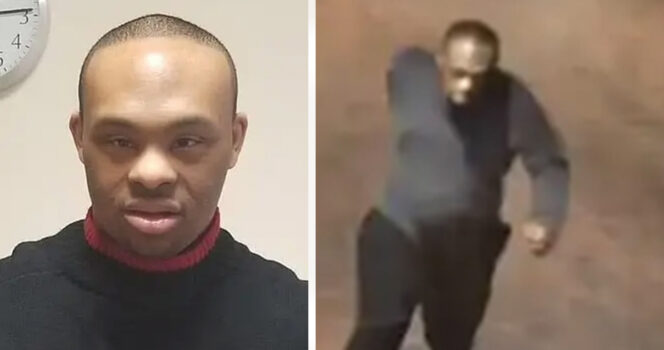
For nearly a week, a family searched desperately for their missing son. He was nonverbal, had Down syndrome, and needed constant supervision. What they eventually discovered was almost impossible to comprehend.
On October 20, 2023, 31-year-old Rashawn Williams disappeared in Montgomery County, Maryland.
Rashawn, who is nonverbal and has Down syndrome, had been staying at a hotel while receiving care through WeAchieve, a nonprofit organization.
According to a lawsuit filed by his family, Rashawn indicated that he needed to use the bathroom around 6:20 p.m.
While his caregiver went to get a key, Rashawn walked through the hotel lobby.
Then he disappeared.
His family had no idea where he had gone.
“I just want my son.”
The search quickly became a nightmare.
Rashawn could not simply call his family for help. He could not explain where he was or tell anyone what had happened.
His father, Jimmy Hall, desperately appealed for information as police and relatives searched the area.
“Non-verbal, he can’t defend himself, no food, no water,” Hall said.
Then the days began passing.
One day.
Two days.
Three.
By the fifth day, the family’s desperation had reached a devastating point.
They searched wooded areas.
They checked dumpsters.
They looked anywhere they thought their son might possibly be.
Hall later described the experience in heartbreaking terms:
“I was searching for my son’s body.”
But Rashawn was still alive.
And incredibly, he was much closer than anyone realized.
The sixth day changed everything
Almost one week after he disappeared, police finally found Rashawn.
He was inside the Glenmont Metro Station, operated by the Washington Metropolitan Area Transit Authority, or WMATA.
According to the family’s lawsuit, Rashawn had spent days trapped inside an area of the station.
The discovery raised a horrifying question:
How could a missing man have been inside a Metro station for six days without being found?

He had reportedly boarded a train
According to the lawsuit, Rashawn had boarded a WMATA train on the night he disappeared.
He reportedly remained on the train for approximately six hours.
Shortly after midnight, the train arrived at Glenmont and went out of service.
A Metro employee allegedly told Rashawn to leave the train.
But, according to the lawsuit, the employee did not make sure that he safely found his way out of the station.
Rashawn then reportedly approached a station kiosk, apparently looking for assistance.
The lawsuit alleges that an employee inside the kiosk was on a personal phone call and did not help him.
Rashawn eventually walked away.
He passed through an emergency exit into what was described as an “Area of Refuge.”
Then the door reportedly locked behind him.
And Rashawn was left there.
Alone.
Six days in darkness
According to a later federal court ruling, the conditions in which police found Rashawn were extremely serious.
Judge Paula Xinis wrote that he had no light, water, food or toilet facilities.
He was reportedly severely dehydrated and undernourished.
The ruling also described him as being covered in urine and feces, with insects found in his hair.
For six days, his family had been desperately searching for him.
Meanwhile, he had allegedly been trapped inside the very transit system they may never have thought to search in that way.

But surviving was only the beginning
Rashawn was taken to the hospital for treatment.
Yet according to his family, the ordeal did not end when he left the station.
They say his behavior changed dramatically afterward.
He allegedly became unable to tolerate complete darkness.
He reportedly experienced panic attacks, disrupted sleep and sudden screaming episodes.
His family also said he sometimes rocked back and forth and became intensely distressed in situations that reminded him of what he had experienced.
For someone who could not verbally explain what happened to him, those changes became one of the few ways his family could see the impact the ordeal had left behind.
Then came another shocking development
Rashawn’s family filed a lawsuit against WMATA and WeAchieve.
WMATA sought to have the case dismissed.
Among its arguments was the claim that Rashawn had become a “trespasser” in the station after Metro service ended.
But Judge Xinis rejected the attempt to dismiss the lawsuit.
The judge found that WMATA owed Rashawn a duty of care and pointed to station policies that required areas of refuge to be inspected.
She also noted that employees were not supposed to allow personal phone calls to interfere with assisting passengers.
The judge wrote that basic communication with Rashawn to make sure he safely left the station could hardly have been considered an unreasonable burden.
He might have been found that same night
Perhaps the most disturbing part of the ruling was what it said about Metro’s own procedures.
According to the court, no Metro personnel inspected the Area of Refuge on the night Rashawn became trapped — or during the following six days.
The ruling stated that Rashawn could have been found the same night if established protocols had been followed, including checking station rooms and continuously monitoring camera footage.
That detail transformed the family’s story from a heartbreaking disappearance into a much larger question about responsibility.
A vulnerable man had vanished.
His family searched desperately for days.
And according to the allegations and court findings, he may have been inside a Metro station the entire time.
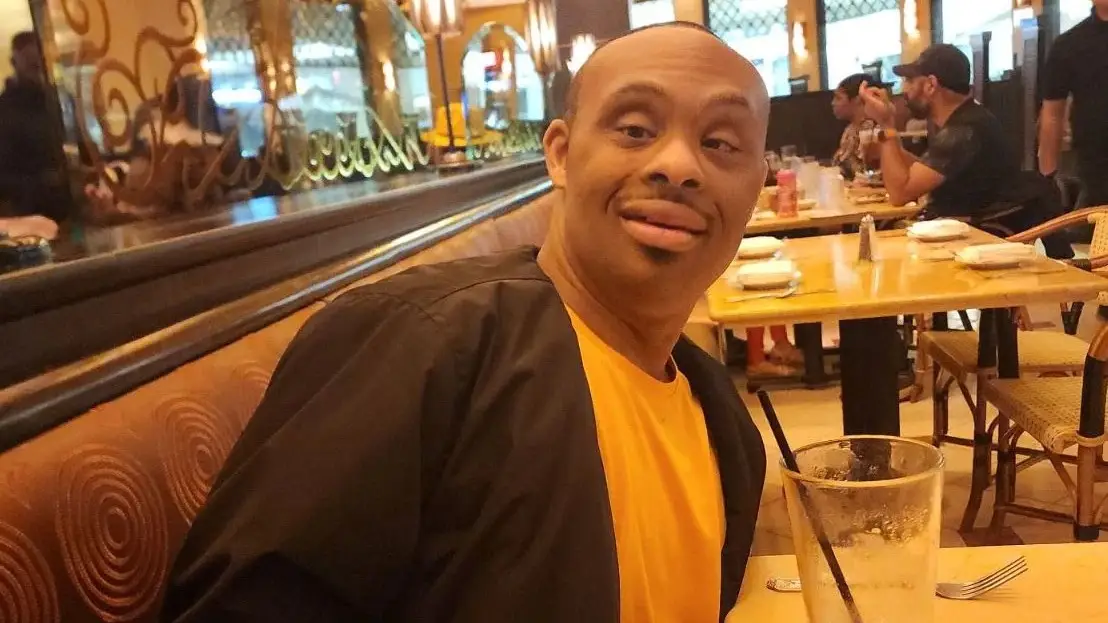
The case is still unfolding
WeAchieve has denied allegations of negligence or intentional misconduct and has previously argued that WMATA was responsible for injuries allegedly suffered by Rashawn.
The lawsuit itself is not a final finding of liability.
But the case has already raised difficult questions about how vulnerable people are protected when they become separated from their caregivers — and what should happen when someone clearly needs help but cannot communicate in the usual way.
For Rashawn’s family, however, the legal battle is only part of the story.
They spent six days wondering whether they would ever see their son again.
Then they found him alive.
But according to his family, he came home carrying trauma that may stay with him for years.
The most heartbreaking question may be the simplest one: How different might those six days have been if someone had simply stopped, noticed that Rashawn needed help, and stayed with him?