For most people, fingernails are easy to overlook. We trim them, paint them, clean them, and rarely give much thought to what they might reveal about our overall well-being. Yet for generations, people have looked at the nails as small clues about what may be happening inside the body.
That has led to an intriguing question: can the appearance or growth of your fingernails tell you something about how quickly you are aging?
Some popular articles have claimed that a particular feature of the fingernails could even predict how long a person might live. Such statements can certainly grab attention, but the scientific reality is more nuanced. Fingernails can sometimes provide useful information about general health, nutrition, circulation, or changes in the body, but they cannot reliably predict an individual’s life expectancy.
Still, there is a fascinating reason scientists pay attention to nails. They are constantly growing, and their growth reflects an ongoing process of new cell production. Understanding that process offers an interesting window into how the body changes over time.
Why Fingernails Can Offer Clues About Your Health
Fingernails are made primarily of keratin, a tough protein also found in hair and skin. The visible nail is produced by specialized cells in an area called the nail matrix, located beneath the skin near the base of the nail.
As new cells are produced, older cells are pushed forward, creating the nail plate that we see.
This means that fingernails are constantly recording a small part of the body’s recent history. Changes in their growth or appearance can sometimes occur when the body experiences changes in nutrition, circulation, hormones, medications, or general health.
However, this does not mean that every unusual nail feature indicates a medical problem.
Nails naturally vary from person to person. Their thickness, texture, color, and growth rate can be influenced by age, genetics, daily activities, and environmental factors.
That is why looking at one characteristic in isolation can be misleading.

Do Fingernails Grow More Slowly as We Age?
One of the more interesting facts about fingernails is that their growth rate generally changes with age.
Younger adults often experience faster nail growth than older adults. Research has found that fingernail growth can gradually slow over the years, although the exact rate varies considerably between individuals.
Several factors may influence nail growth, including circulation, nutrition, hormones, physical activity, and overall health.
This is one reason the nails have attracted interest among researchers studying aging. Because the nail matrix continually produces new cells, nail growth provides a visible example of a biological process that changes over time.
But there is an important distinction.
A slower nail growth rate does not provide a countdown to a person’s lifespan. It is simply one biological characteristic that can change with age.
The Myth of a Fingernail “Life Expectancy” Sign
The idea that your fingernails contain a specific sign that can tell you how long you will live is much more dramatic than what current scientific evidence supports.
There is no established fingernail feature that doctors can use to calculate an individual’s life expectancy.
Certain nail changes can be associated with health conditions, but association is not the same thing as prediction.
For example, changes in nail color, shape, thickness, or texture can occasionally accompany nutritional deficiencies or medical conditions. Yet the same visible change can have several possible explanations, including completely harmless ones.
This is why healthcare professionals consider the broader picture rather than attempting to make a major health prediction based solely on the appearance of someone’s nails.
In other words, your fingernails may sometimes provide clues, but they are not a crystal ball.
What About the Appearance of Nail Growth?
Nail growth itself is a fascinating biological process.
The cells in the nail matrix continually divide and develop into the hard keratinized material that forms the nail. Because this process takes place continuously, fingernails gradually move outward over time.
Researchers have estimated that fingernails grow roughly a few millimeters each month, although growth rates vary depending on the individual and the specific finger.
The thumbnail and other fingernails may grow at somewhat different rates, and factors such as age, season, health, and physical activity can influence the process.
You may even notice that one fingernail seems to grow faster than another.
That variation is normal.
What Can Nail Changes Actually Tell You?
Although nails cannot predict life expectancy, they can sometimes provide useful clues that deserve attention.
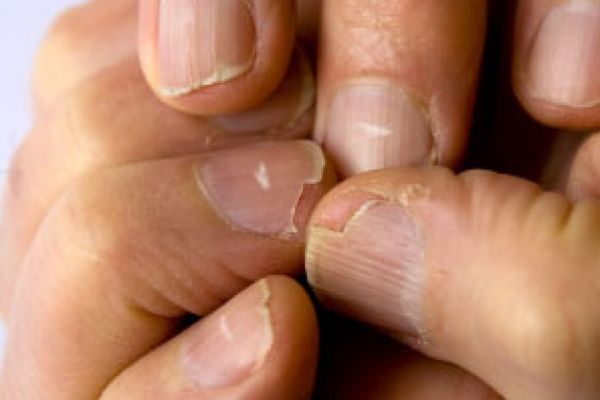
For example, persistent changes in nail color, unusual thickening, significant changes in shape, or alterations that appear suddenly may be worth discussing with a healthcare professional.
Some nail characteristics have been associated with nutritional problems or underlying medical conditions. However, a nail change alone is rarely enough to establish a diagnosis.
This is particularly important because nails are exposed to everyday wear and tear.
Frequent hand washing, cleaning products, manicures, nail polish, minor injuries, and repetitive activities can all influence their appearance.
A person might therefore notice a change that has nothing to do with their overall health.
The safest approach is to view nails as one small piece of information rather than a definitive health test.
The Cultural Fascination With Fingernails
Long before modern medicine, people paid attention to visible changes in the body.
Nails, hair, skin, and facial appearance have historically been associated with ideas about vitality, age, beauty, and overall well-being.
In different cultures, the condition of someone’s hands and nails could even carry social meaning. Well-maintained nails might suggest cleanliness, status, or careful grooming, while unusual changes could inspire curiosity or traditional explanations.
Some historical health practices also involved examining physical characteristics in an attempt to understand what was happening inside the body.
Modern medicine has replaced many of these interpretations with laboratory testing, imaging, and evidence-based clinical assessment. Nevertheless, the fascination remains.
Perhaps this is because fingernails are so accessible. Unlike many biological processes, nail growth can be observed without specialized equipment.
Every few weeks, we can literally see evidence that our bodies are continuing to produce new cells.
Why Aging Changes the Body in So Many Ways
Aging is not a single process that affects every part of the body at the same speed.
Hair can become thinner. Skin may become less elastic. Muscle mass can change. Recovery from physical activity may take longer. Fingernails can also grow differently than they did earlier in life.
These changes are part of the body’s complex biology.
The rate at which cells are produced, repaired, and replaced is influenced by many factors. Genetics, hormones, nutrition, lifestyle, and environmental exposure all contribute to how the body changes over decades.
That complexity is exactly why researchers are cautious about using a single visible characteristic as a measurement of biological age.
One person’s nails may grow relatively quickly in later adulthood, while another person’s nails may grow more slowly. Neither observation alone tells us how healthy or long-lived that person will be.
When Should You Pay Attention to Your Nails?
There is no need to constantly inspect your fingernails for signs of aging.
Instead, simply become familiar with what is normal for you.
If you notice a persistent or unexplained change in your nails, particularly one that develops without an obvious cause, consider mentioning it to a healthcare professional.
It is also helpful to remember that nail changes can have simple explanations.
A minor injury, repeated exposure to water or chemicals, changes in grooming habits, or natural variation can all affect the appearance of the nails.
The key is not to panic over an isolated change.
At the same time, ignoring persistent changes is not always wise. A professional can consider your medical history, medications, lifestyle, and other symptoms before deciding whether further evaluation is appropriate.
Healthy Aging Is More Complicated Than a Fingernail
The biggest lesson from the fascination surrounding fingernails is that human aging cannot be reduced to one visible feature.
Healthy aging involves many interconnected systems. Physical activity, balanced nutrition, sleep, stress management, preventive healthcare, social connection, and genetics can all influence how people experience aging.
Scientists continue to investigate biological markers that might help us understand aging more accurately. Some researchers study cellular changes, proteins, DNA-related processes, and other biological indicators.
These fields are developing rapidly, but they are very different from claiming that a particular fingernail feature can tell someone exactly how long they will live.
For now, the most reliable approach remains much simpler: take care of your overall health and use unusual physical changes as reasons to ask questions rather than reasons to make frightening assumptions.
The Small Clue That Keeps Us Curious
There is something wonderfully fascinating about the human body.
A tiny fingernail seems insignificant, yet behind its simple appearance is a continuous process involving cells, proteins, blood supply, genetics, hormones, and time.
That makes nails an interesting reminder of how much is happening beneath the surface.
So, can your fingernails predict your life expectancy?
No reliable scientific evidence supports using them that way.
But can your nails sometimes reflect changes happening in your body?
Yes, in certain circumstances, they can offer useful clues.
The difference between those two ideas matters.
Human curiosity has always encouraged us to look for hidden messages in ordinary things. Sometimes those observations lead to genuine scientific discoveries. Other times, they create myths that sound convincing because they contain a small piece of truth.
Perhaps that is what makes questions about fingernails so fascinating. They remind us that even the most ordinary parts of our bodies can inspire extraordinary questions.
And while your fingernails cannot tell you how many years you have ahead, they can still serve as a small reminder of something much more meaningful: your body is constantly changing, adapting, and renewing itself.
Sources
Cleveland Clinic, information on nail anatomy and common nail changes.
American Academy of Dermatology Association, guidance on nail health and changes.
National Institutes of Health, research and educational resources concerning nail growth and aging.
MedlinePlus, U.S. National Library of Medicine, information on nail disorders and general health.
Encyclopaedia Britannica, background information on fingernail anatomy and growth.