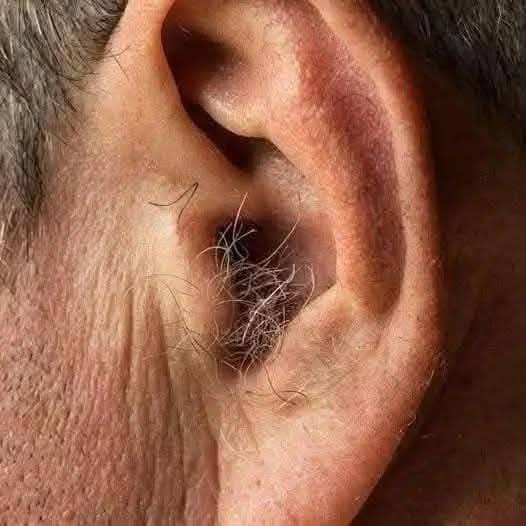
One morning, you look in the mirror and notice something you could have sworn was never there before: a few hairs sticking out around your ears.
At first, you may wonder whether you simply overlooked them. Then you check again. Maybe there are a few more than you remember.
For many people, this becomes noticeable sometime in middle age or later. It can be surprising, especially when the hair on the scalp seems to be becoming thinner at the same time.
But there is usually no mystery behind it.
Ear hair is a common feature of aging, particularly in men, and is generally considered a cosmetic change rather than a sign of illness. Scientists believe that changing hormone activity, genetics, and the different ways hair follicles respond to hormones all contribute to why certain areas of the body become hairier while others become less so.
The subject may seem amusing, but it also reveals something fascinating about the human body. It raises questions about evolution, cultural ideas of aging, personal grooming, and the complex relationship between hormones and hair.
So why does ear hair become more noticeable with age, and should you be concerned?
What Is Ear Hair?
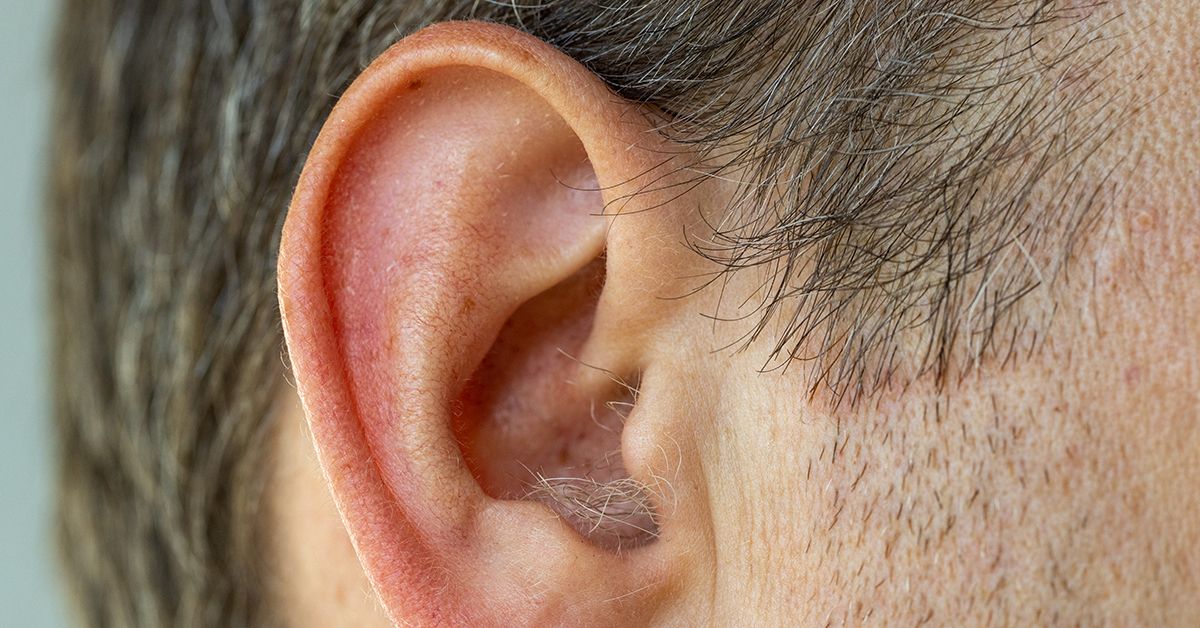
Ear hair refers to visible hair growing on the outer ear or in the outer portion of the ear canal. Medically, noticeable excessive hair growth around the outer ear can be described as auricular hypertrichosis.
It is important to distinguish the visible hair around the ear from the deeper structures of the ear canal. The outer portion of the auditory canal naturally contains hair follicles, along with glands that contribute to earwax production. These structures form part of the ear’s protective environment.
Most people have at least some fine hair in and around their ears. The difference is that, for some individuals, these hairs become longer, darker, or more noticeable with age.
That does not necessarily mean something has suddenly gone wrong.
In fact, Cleveland Clinic notes that men may develop more prominent ear hair as they age, although researchers are still studying exactly why some people experience much more visible growth than others.
Why Does Ear Hair Become More Noticeable With Age?
Hair growth is not controlled by a single mechanism throughout the body.
Different follicles respond differently to hormones. This helps explain one of the stranger features of aging: a person may experience thinning hair on the scalp while simultaneously noticing more visible hair around the ears, nose, or eyebrows.
Androgens, including testosterone, play an important role in the development of many types of body hair. Researchers believe that changing hormone activity and the sensitivity of particular follicles may contribute to increased ear and nose hair in some men as they get older.
Genetics also matter.
Two people of exactly the same age can have completely different patterns of body hair. One person may barely notice any change around the ears, while another may develop clearly visible strands.
This is one reason there is no specific age when ear hair suddenly “starts.” It can become noticeable at different times depending on genetics, hormones, hair characteristics, and individual aging patterns.

Why Can Scalp Hair Thin While Ear Hair Becomes More Visible?
At first glance, this seems contradictory.
If aging can make hair thinner, why would hair around the ears become more noticeable?
The answer lies in the fact that hair follicles are not identical.
Aging can affect the hair-growth cycle, and inherited factors and hormonal sensitivity can influence how different follicles behave. Conditions such as androgenetic hair loss can cause scalp follicles to gradually produce finer and shorter hairs, while follicles in other areas can respond differently.
Think of the body as having thousands of tiny hair-producing systems, each with its own characteristics.
They do not all receive the same biological instructions in exactly the same way.
This is why aging can produce an unusual combination of changes: less noticeable hair in one place and more noticeable hair somewhere else.
Is Ear Hair More Common in Men?
Visible ear hair is particularly associated with aging in men.
One explanation involves androgen activity. Men generally have higher levels of circulating androgens than women, and androgen-sensitive hair follicles can respond to these hormones in different ways depending on their location.
However, this does not mean women cannot develop noticeable ear hair.
Women also have androgens, and changes in hormone levels throughout adulthood can alter hair-growth patterns. Individual genetics and follicle sensitivity can be just as important as age itself.
Therefore, visible ear hair should not be treated as an exclusively male characteristic.
It is simply more noticeable in some people than others.

Does Ear Hair Have a Purpose?
This is where science and human curiosity meet.
Hair around the outer ear is part of a larger biological system. The external auditory canal contains hair follicles and glands that contribute to the ear’s protective environment. Earwax, for example, helps trap particles and contributes to the canal’s protective barrier.
It is tempting to assume that every visible hair must have a specific modern function, such as keeping insects or dust away.
There is some biological logic behind the idea that hair and earwax can contribute to protection from foreign particles. However, claims that the longer ear hairs seen in older adults evolved specifically for one particular protective purpose are more difficult to establish scientifically.
In other words, the presence of hair in the ear is clearly part of normal anatomy, but the precise evolutionary explanation for why some older adults develop more visible hair remains uncertain.
That distinction is important.
Science can describe what happens without necessarily having a definitive answer for every evolutionary “why.”
Ear Hair in Traditional Beliefs and Popular Culture
Human beings have always attached meaning to physical characteristics.
Gray hair, wrinkles, facial hair, and other visible signs of aging have been interpreted differently across cultures and historical periods. Some traditions have associated certain physical features with wisdom, maturity, experience, or status, while popular culture has sometimes treated them humorously.
Ear hair is no exception.
In some older cultural narratives, unusual or prominent body hair has been connected with ideas about personality, longevity, masculinity, or vitality. These ideas can be interesting from a cultural perspective, but they should not be confused with established medical evidence.
There is no reliable scientific basis for using ear hair as a simple test of someone’s health, personality, circulation, or lifespan.
A physical characteristic can have cultural meaning without having diagnostic meaning.
That distinction helps separate fascinating traditions from medical facts.
Can Ear Hair Tell You Something About Your Health?
For most people, isolated ear hair is simply a cosmetic feature.
Cleveland Clinic describes hairy ears primarily as a cosmetic concern and notes that the condition generally does not affect hearing.
This means that seeing a few more hairs around your ears as you get older is usually not a reason to panic.
At the same time, hair growth can sometimes change because of broader hormonal conditions. For example, excessive androgen activity can cause increased coarse hair growth in certain patterns, particularly in women.
That does not mean ear hair itself is a reliable indicator of a hormone problem.
If hair growth changes suddenly or is accompanied by other unusual symptoms, however, discussing the change with a healthcare professional can help determine whether anything else needs attention.
The key is to look at the overall picture, rather than treating one physical feature as a diagnosis.
Does Trimming Make Ear Hair Grow Back Thicker?
This is one of the most persistent myths surrounding body hair.
Many people believe that cutting or shaving hair causes it to return thicker or darker.
It does not.
When a hair is naturally growing, its end can become tapered. When you cut it, the remaining hair has a blunt edge. As it grows outward, that blunt edge can make the strand appear darker or thicker than it did before.
The follicle itself has not been transformed.
So trimming visible ear hair does not cause the body to suddenly produce thicker hair.
What you may notice is simply the visual effect of a freshly cut hair becoming visible again.
Is It Safe to Remove Ear Hair?
For people who dislike visible ear hair, grooming is entirely a matter of personal preference.
Some people leave it alone. Others trim the visible strands occasionally.
If you choose to groom the area, caution is important.
The outer ear is one thing; the deeper ear canal is another.
The ear canal has delicate skin, and inserting objects too deeply can cause irritation or interfere with the natural movement of earwax. Medical guidance generally emphasizes that the ear has its own cleaning mechanisms and that unnecessary manipulation can create problems.
A small personal trimmer designed for external ear or facial grooming can be a practical option for visible hair.
If using scissors, choose an appropriate grooming tool and work only on hair that is clearly visible and easy to reach.
There is no reason to try to remove every hair inside the ear.
The goal, if grooming is desired, is appearance rather than creating a completely hair-free ear.
When Should You Talk to a Healthcare Professional?
Most visible ear hair does not require medical treatment.
However, it is reasonable to seek professional advice if you notice a sudden and unusual change in hair growth, especially if it occurs alongside other unexplained physical changes.
For example, women who experience sudden increases in coarse facial or body hair may want to discuss the change with a healthcare professional because excessive androgen activity can sometimes affect hair-growth patterns.
Likewise, any persistent ear discomfort, changes in hearing, unusual skin changes, or other concerning symptoms deserve attention for their own sake.
The important point is not to become alarmed by ordinary aging.
Instead, pay attention to changes that are genuinely unusual for you.
Aging Does Not Always Look the Way We Expect
Perhaps the most interesting thing about ear hair is not the hair itself.
It is what the phenomenon tells us about aging.
We often imagine aging as a simple process in which everything gradually becomes slower, thinner, or less active. Human biology is much more complicated.
Some hair follicles become less productive. Others become more noticeable.
Skin changes. Hair texture changes. Hormone levels shift. Features that were almost invisible in youth can become more apparent later in life.
None of this means the body has failed.
It means the body is changing.
The same perspective can help us think differently about gray hair, wrinkles, changing hairlines, and other ordinary signs of getting older.
Rather than treating every change as something that needs to be corrected, we can sometimes simply understand it.
The Bottom Line
If you have noticed more hair around your ears as you’ve gotten older, you’re certainly not alone.
For many people, it is a normal consequence of aging, genetics, and the changing way individual hair follicles respond to hormones. Men are particularly likely to notice prominent ear hair as they age, although women can experience it as well.
There is no good scientific reason to assume that ear hair automatically signals poor circulation, organ problems, or another hidden illness.
And if you decide you do not like the appearance, simple grooming can take care of visible strands.
Perhaps the bigger lesson is that something as ordinary as ear hair can inspire surprisingly complicated questions.
Why does it happen? Did it serve a purpose? Why do some people have it while others do not? Why do cultures interpret signs of aging so differently?
Human beings have always been fascinated by the small mysteries of the body.
Sometimes the answer is extraordinary. More often, it is beautifully ordinary.
Ear hair is one of those reminders that aging is not a single predictable process. It is a gradual collection of changes shaped by biology, genetics, environment, and time.
And perhaps there is something reassuring in that.
The next time you notice an unexpected hair around your ear, you do not necessarily need to see it as something embarrassing or something to fear. You can simply see it as another small detail in the remarkable story of how a human body changes over a lifetime.