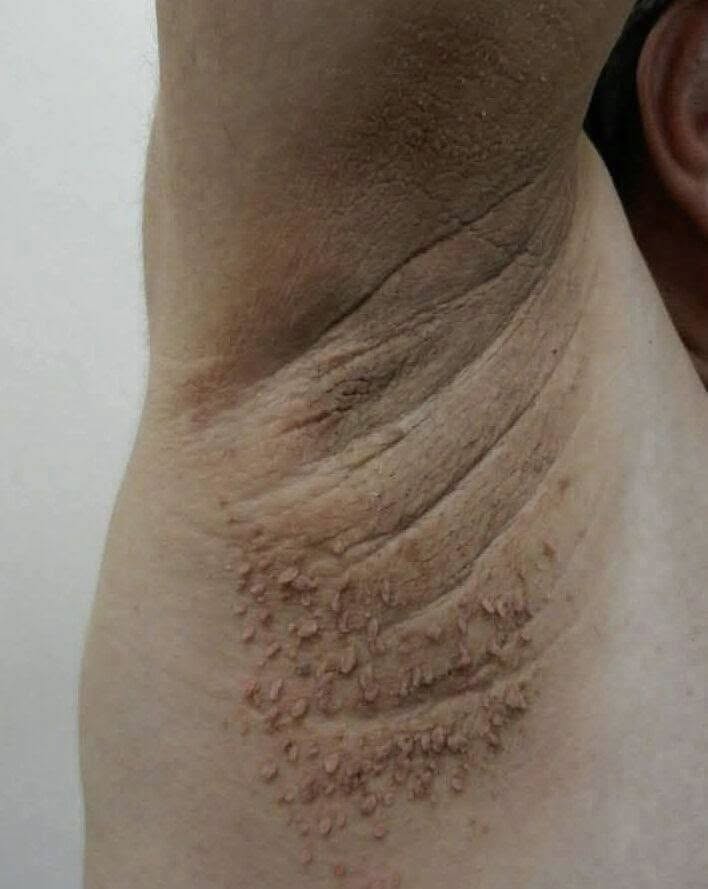
You notice something unusual while looking in the mirror.
There is a darker patch of skin around your neck. It feels slightly thicker and has a soft, almost velvety appearance.
At first, you might assume it is simply dirt.
You wash your neck more carefully. You scrub. You try different soaps.
But the dark area doesn’t disappear.
That’s because, in some cases, the discoloration has nothing to do with poor hygiene.
It may be a skin condition known as acanthosis nigricans—a change in the skin that can sometimes be associated with an underlying health issue.
What Is Acanthosis Nigricans?
Acanthosis nigricans is a skin condition characterized by areas of skin that become darker, thicker, and sometimes velvety to the touch.
It commonly develops in areas where skin folds or rubs together, including:
-
The back or sides of the neck
-
Armpits
-
Groin
-
Elbows
-
Knees
-
Knuckles
The appearance can vary from person to person.
For some people, the change may be subtle. For others, the affected skin can become noticeably darker and thicker over time.
Because the condition can resemble dirt or buildup, some people may repeatedly scrub the area without realizing that the discoloration is coming from changes within the skin itself.

Why Does It Happen?
Acanthosis nigricans isn’t a disease in itself.
Instead, it can sometimes be a visible sign associated with another condition or factor.
One of the most common associations is insulin resistance.
Insulin is a hormone that helps the body regulate blood glucose.
When the body becomes less responsive to insulin, the pancreas may produce more insulin to compensate. Persistently elevated insulin levels can affect certain skin cells and may contribute to the thickening and darkening characteristic of acanthosis nigricans.
This is why the condition is sometimes seen in people with prediabetes or type 2 diabetes.
However, insulin resistance isn’t the only possible explanation.
Other Possible Causes
Several factors can be associated with acanthosis nigricans.
These may include hormonal conditions, certain medications, genetics, and other underlying health issues.
In some families, the condition can occur even when there is no obvious underlying metabolic problem.
Certain medicines can also trigger changes resembling acanthosis nigricans.
Because there are multiple possible causes, it isn’t possible to determine the reason simply by looking at a photograph or noticing a dark patch.
A healthcare professional can evaluate the skin and consider the person’s overall health, medical history, medications, and other symptoms.
Why Scrubbing Doesn’t Usually Solve It
One of the most common misunderstandings is assuming that darker skin in these areas must be caused by dirt.
But acanthosis nigricans isn’t simply something sitting on the surface of the skin.
The affected skin itself has changed.
That means aggressive scrubbing won’t necessarily remove the discoloration.
In fact, repeatedly rubbing or irritating the area may make the skin uncomfortable and potentially worsen irritation.
Gentle skin care is generally preferable to harsh scrubbing when the cause of a skin change is uncertain.

Is It Something to Worry About?
Acanthosis nigricans itself is often not dangerous.
However, because it can sometimes be associated with insulin resistance and other health conditions, an unexplained new skin change is worth discussing with a healthcare professional.
This is particularly important if the change appears suddenly, spreads quickly, or occurs alongside other symptoms.
A clinician may decide to check for possible underlying causes based on the individual’s circumstances.
That could include evaluating blood glucose or other relevant health markers.
The goal isn’t simply to make the skin look different.
It’s to understand why the change happened in the first place.
Treating the Underlying Cause
There isn’t one universal treatment for acanthosis nigricans because treatment depends on the cause.
If the skin changes are associated with insulin resistance, improving metabolic health may help.
Depending on the individual situation, this can involve changes in diet, physical activity, weight management when appropriate, and medical treatment recommended by a healthcare professional.
If a medication is contributing to the condition, a doctor may review the treatment plan.
And if another medical condition is responsible, addressing that condition may help improve the skin.
As the underlying issue improves, the affected skin may gradually become less noticeable.
However, improvement can take time.
Don’t Focus Only on the Appearance
Darkened skin can understandably cause embarrassment, especially when it appears on a visible area such as the neck.
Some people may worry that others will assume they don’t wash properly.
But skin conditions aren’t a reflection of personal cleanliness.
If you notice persistent dark, thickened, or velvety skin, repeatedly scrubbing it isn’t the answer.
Instead, consider it a reason to pay closer attention to your overall health.
Your skin is the body’s largest organ, and changes in its appearance can sometimes provide useful clues about what’s happening elsewhere in the body.
When Should You Seek Medical Advice?
A new or unexplained area of darker, thicker skin is worth having evaluated, particularly if it doesn’t improve with normal skin care.
You should also consider seeking professional advice if:
-
The patches are spreading or becoming more noticeable
-
The skin becomes unusually thick or velvety
-
Similar patches appear in several body folds
-
You have other unexplained changes in your health
-
The discoloration develops suddenly
-
You’re concerned about possible blood sugar or hormonal issues
A healthcare professional can determine whether the appearance is consistent with acanthosis nigricans or another skin condition.
Your Skin May Be Giving You a Clue
It’s easy to dismiss a change in skin color as a cosmetic issue.
Sometimes, it is simply a harmless variation.
But persistent dark, velvety patches—especially around the neck, armpits, or other skin folds—can sometimes be associated with conditions such as insulin resistance.
That doesn’t mean every dark patch indicates prediabetes or diabetes.
It simply means the change deserves attention rather than being automatically dismissed as dirt.
The most important lesson is simple:
Don’t scrub harder. Look deeper.
If a skin change persists despite normal washing and you’re unsure what caused it, talking with a healthcare professional is a much better approach than trying increasingly aggressive home remedies.
Your skin may not be telling you exactly what is wrong—but sometimes, it can be telling you that it’s worth taking a closer look at your health.