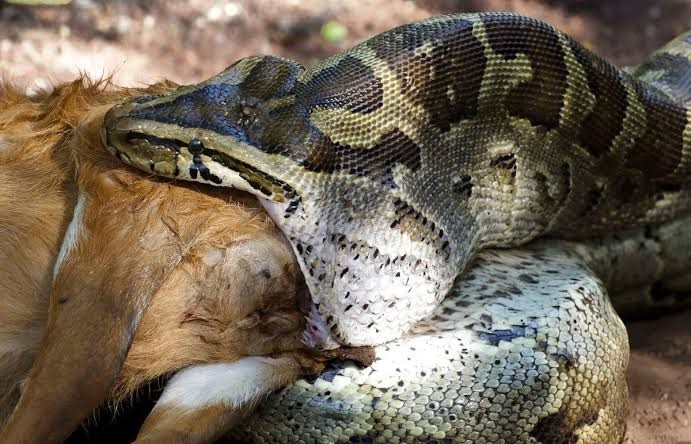
Imagine standing on the African savanna as the sun begins to disappear behind the acacia trees. A herd of zebras grazes near a waterhole, occasionally lifting their heads to watch for danger. Then, something moves through the grass. A massive snake emerges, coils around one of the animals, and begins an attack.
It sounds like a scene from a wildlife horror movie. Online videos and dramatic stories have made many people wonder whether a giant snake could actually swallow an entire zebra.
The idea is not completely unreasonable. Some of the world’s largest snakes can kill surprisingly large animals and swallow them whole. Their flexible jaws and powerful muscles allow them to consume prey that appears far too large for their bodies.
But there is an important distinction between swallowing a large animal and swallowing a full-grown zebra.
So, can a snake really eat a zebra? The answer depends on the snake’s species, size, and the size of its potential prey. And the science behind this question is more fascinating than the viral stories suggest.
The African Rock Python: A Powerful Predator
If a snake in Africa were capable of attempting such an extraordinary hunt, one of the most likely candidates would be the African rock python (Python sebae).
This species is among Africa’s largest snakes. It can reach impressive lengths, with exceptional individuals growing to around six meters or more. Unlike venomous snakes, African rock pythons rely on powerful muscles to capture and subdue their prey.
Their diet changes as they grow.
Young pythons generally feed on smaller animals, including rodents and birds. Larger individuals can hunt much bigger prey, such as monkeys, monitor lizards, crocodiles, and antelope.
According to the Animal Diversity Web, large African rock pythons have been recorded taking antelope weighing up to approximately 59 kilograms.
That is an extraordinary meal for a snake. However, it is still considerably smaller than a typical adult zebra.
The African rock python is an ambush predator. It often waits near places where animals gather, including paths and water sources. When suitable prey comes within striking distance, the snake attacks with remarkable speed.
It then uses its muscular body to constrict the animal.
This hunting method makes the African rock python a formidable predator, but it does not mean that every large animal is within its reach.
Why Swallowing a Zebra Would Be So Difficult
Adult zebras are not small animals.
Depending on the species, an adult zebra can weigh approximately 200 to 450 kilograms. Plains zebras commonly fall within this broad range, while Grevy’s zebras are among the largest members of the zebra family.
Their bodies are muscular, their legs are powerful, and their hooves can deliver dangerous kicks.
Now consider the difference in size.
A large African rock python may be capable of capturing an antelope weighing several dozen kilograms. An adult zebra, however, can weigh several times more.
The challenge is not simply whether a snake can stretch its mouth wide enough. It must first overpower the animal, avoid injury, and then swallow a body that may be far beyond its physical feeding capacity.
A zebra is also not an easy target. Healthy adults can run quickly and defend themselves with powerful kicks. A snake attempting to attack one would face a serious risk of injury.
For these reasons, the idea of an ordinary giant python regularly hunting and swallowing healthy adult zebras is not supported by established evidence.
A smaller or very young zebra would present a different situation because of its much lower body weight. Nevertheless, that possibility should not be confused with proof that African rock pythons commonly prey on zebra foals.
How Can a Snake Swallow Animals Larger Than Its Head?
One reason giant snakes inspire so much fascination is their unusual anatomy.
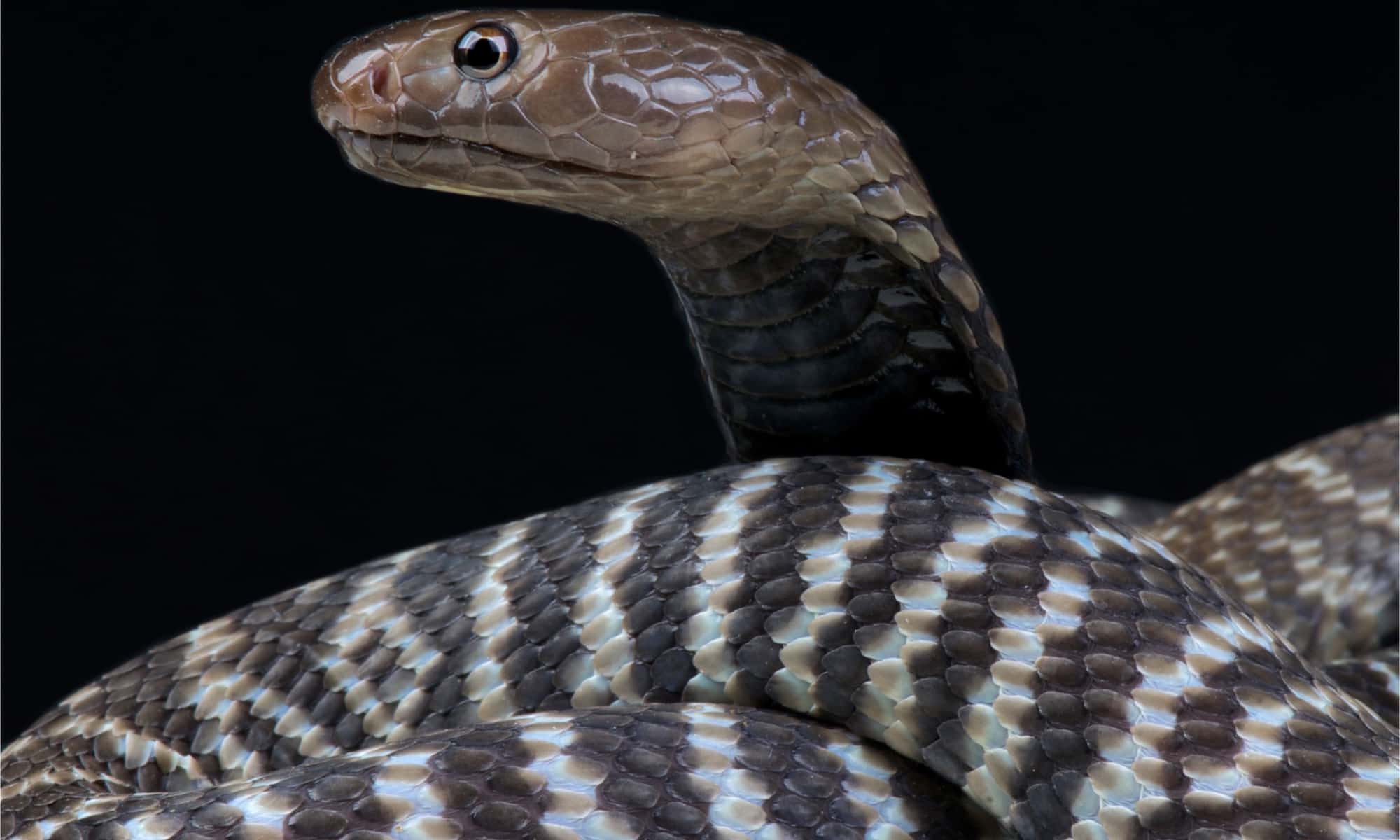
Unlike humans, snakes do not have jaws joined together in the same rigid way. Their lower jaw consists of two separate halves connected by flexible tissues and ligaments. Their skull and jaw structures allow considerable movement while feeding.
When a snake swallows prey, the two sides of its lower jaw can move independently.
Rather than opening its mouth like a person taking a bite, the snake works its jaws around the prey. It alternates movements on each side, gradually drawing the animal into its throat.
The process can look almost impossible.
The skin and soft tissues around the mouth and throat also stretch to accommodate large meals. Research published in the Journal of Experimental Biology examined the unusual extensibility of snake muscles and the biological mechanisms that allow them to recover after extreme stretching.
However, there is a common misunderstanding worth correcting.
A snake’s mouth does not simply stretch without limits. Its ability to swallow prey depends on the dimensions of its skull, the flexibility of its tissues, and the size and shape of the animal it has captured.
A python can swallow prey much wider than its own head, but that does not mean it can swallow an animal of any size.
A Real Example: The Python That Swallowed a Hyena
Although a full-grown zebra would be an extraordinary challenge, African rock pythons have demonstrated that they can consume surprisingly large mammals.
One remarkable incident was documented in Kenya’s Maasai Mara National Reserve in March 2017.
A visitor named Jos Bakker spotted an African rock python swallowing a spotted hyena. The snake was approximately 13 feet long, and the hyena was estimated to weigh around 150 pounds, or 68 kilograms.
Researchers associated with a nearby field research camp examined the incident. They initially found it difficult to believe that a python could successfully take down an animal of that size.
However, the video footage and their subsequent observations supported the conclusion that the snake had captured and swallowed the hyena.
National Geographic reported the incident as an unusually rare observation of an African rock python consuming such a large carnivore.
This example demonstrates how powerful these snakes can be. It also shows why stories about giant pythons sometimes sound believable.
But a hyena weighing around 68 kilograms is not the same as an adult zebra weighing several hundred kilograms.
The documented event should not be used as evidence that pythons can routinely consume animals several times larger.
What Happens When a Snake Eats Too Much?
Even a successful hunt can become dangerous for a python.
After swallowing a large meal, a snake may become extremely swollen and move very slowly. Digestion requires considerable time and energy, leaving the animal more vulnerable to predators and other threats.
A real incident in South Africa illustrates the risks.
In 2015, a 3.9-meter African rock python was found dead after eating a large porcupine at Lake Eland Game Reserve. An examination revealed numerous quills inside the snake’s digestive tract.
The case demonstrated that capturing and swallowing prey does not always guarantee survival.
Large prey can injure a snake internally, especially when the animal has defensive structures such as sharp spines or quills.
A zebra would present a different set of dangers. Its powerful legs and hooves could seriously injure a snake during an attempted attack.
Even if a predator successfully captures an animal, the physical challenge of consuming it may still be too great.
Could Viral Videos of Snakes Eating Zebras Be Real?
Images of enormous snakes swallowing horses, zebras, and other large animals frequently attract attention online.
Some videos show genuine feeding behavior, while others may contain misleading captions, exaggerated descriptions, or digitally altered imagery.
A photograph alone rarely tells the complete story. Viewers may not know the animal’s actual size, the snake’s species, whether the prey is alive, or whether the footage has been edited.
The best way to evaluate an extraordinary wildlife claim is to look for reliable documentation.
Useful evidence includes the location, date, identification of the snake species, independent photographs or video footage, and confirmation from wildlife researchers or conservation professionals.
A dramatic headline is not scientific proof.
In particular, claims that a giant snake swallowed a healthy adult zebra should be treated cautiously unless credible evidence supports the specific incident.
The Real Lesson Behind the Myth
The natural world is full of predators with abilities that seem almost impossible.
African rock pythons can capture large mammals, overpower dangerous prey, and swallow animals whole. Their flexible jaws and extraordinary muscular systems make them some of the most impressive ambush predators on the continent.
But nature also has limits.
A snake’s ability to consume large prey does not mean it can swallow every animal it encounters. Size, body structure, hunting conditions, and the danger posed by the prey all matter.
So, can a snake really eat a zebra?
There is no well-established evidence that African rock pythons regularly swallow healthy adult zebras. While these snakes can consume surprisingly large mammals, the size and strength of an adult zebra make it an exceptionally unlikely target.
The truth is already remarkable enough: one of Africa’s largest snakes can swallow prey weighing dozens of kilograms, sometimes even animals that would normally be considered dangerous predators themselves.
Nature does not need exaggerated stories to be astonishing.