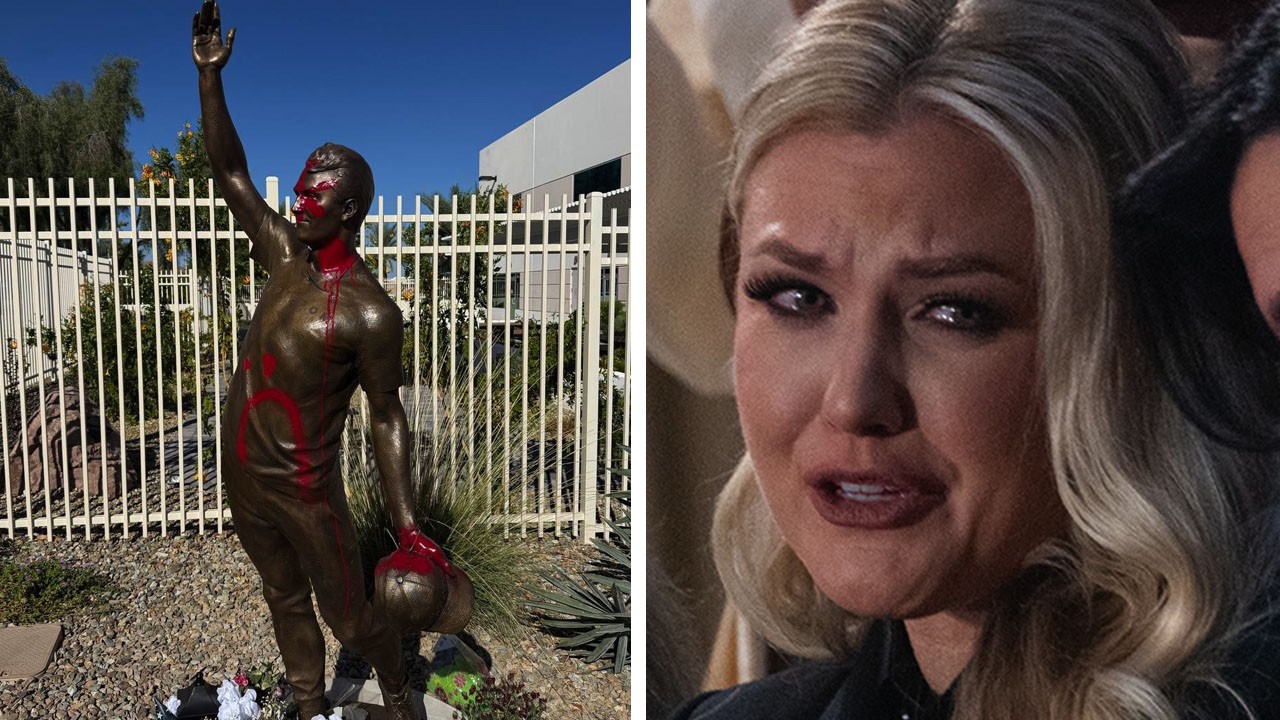
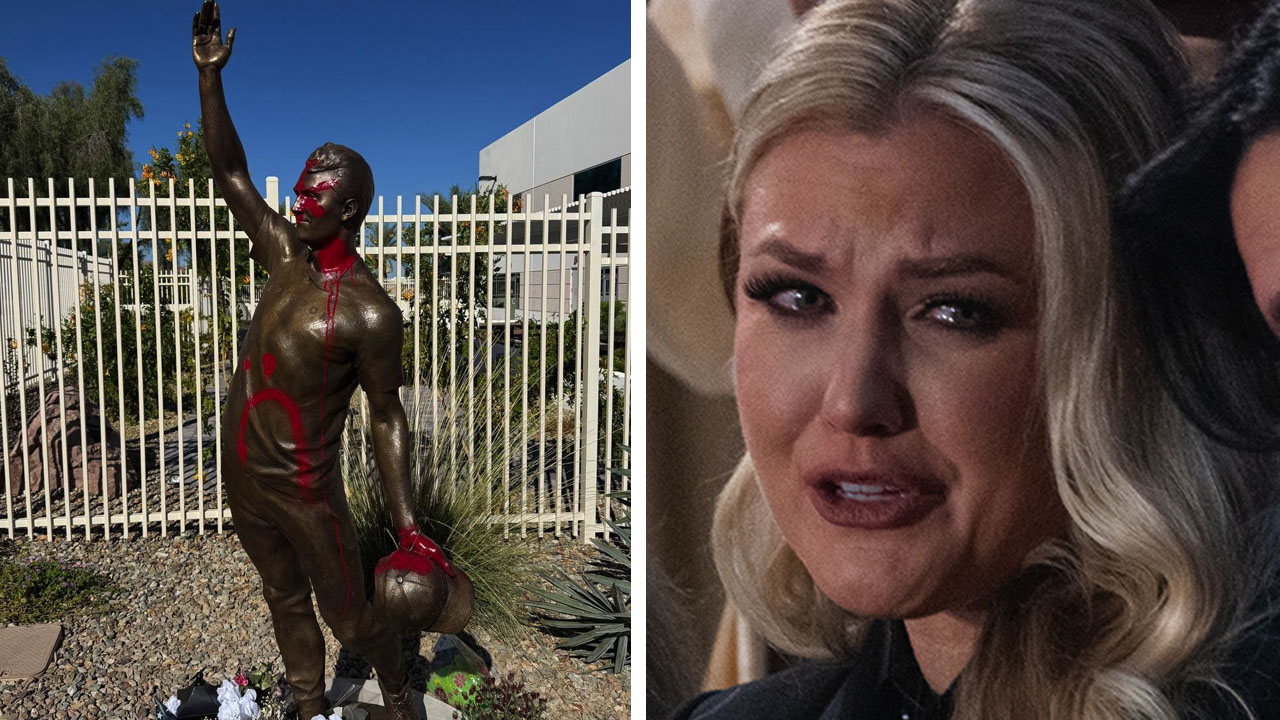
A statue of Charlie Kirk was vandalized with red spray paint mere days after being erected. Neither Turning Point USA or Kirk’s widow, Erika, stayed silent.
The recently unveiled statue of Charlie Kirk, a conservative activist and founder of Turning Point USA, was vandalized with red spray paint within days of its installation at the organization’s headquarters in Phoenix, Arizona. The act, which has prompted strong reactions from both Turning Point USA and Kirk’s widow, Erika, has ignited a broader conversation about political symbolism, memorialization, and responses to public dissent.
Background: The Legacy of Charlie Kirk and the Commemoration Effort
Charlie Kirk was a prominent figure in American conservative politics, best known as the founder and leader of Turning Point USA, a nonprofit organization focused on engaging young people in conservative activism. He gained national attention for his commentary and public speaking, influencing the ideological landscape among American youth.
Tragically, Kirk was fatally shot while speaking at Utah Valley University in September 2025. The incident was widely reported, drawing reactions from across the political spectrum and leading to memorial services, tributes from public figures, and renewed debates over political violence and free speech.
On September 10, 2026, a year after his death, Turning Point USA unveiled an 8-foot statue honoring Kirk. The statue, installed at the organization’s Phoenix headquarters, was designed as a lasting tribute to Kirk’s influence in contemporary American politics and youth activism.
The Incident: Vandalism at Turning Point USA Headquarters
Just days after its dedication, the statue was targeted by vandals who defaced it with red spray paint, marking Kirk’s face and neck. In addition to the statue itself, a nearby commemorative poster displaying a Christian religious message and a photograph of Kirk was also defaced. Specifically, vandals crossed out the name “Jesus” on the sign, underscoring the incident’s symbolic weight for many observers.
The act was discovered by Turning Point USA staff, who immediately contacted law enforcement. Security footage from the night is currently being reviewed as authorities work to identify those responsible. The vandalism has sparked a considerable response from the organization and Kirk’s family, as well as commentary from political and religious leaders.
Turning Point USA’s Response to the Vandalism
Turning Point USA issued a formal statement soon after the incident, emphasizing their intent to restore the statue and replace the damaged poster. The organization characterized the act of vandalism as “diabolical,” highlighting the emotional and political impact on the community.
In their statement, posted on their official X account, the organization pledged to pursue accountability:
“We will restore the statue and replace the signs, but we are also reviewing the footage of the incident and are working with law enforcement to identify who did this and hold them accountable. But vandalism like this is not funny, it’s diabolical. The incident happened in the…”
Turning Point USA underscored the targeted nature of the act, noting that the religious sentiment expressed in the commemorative poster was specifically defaced. The group concluded their message with a passage from the Gospel of John: “If the world hates you, keep in mind that it hated me first,” reinforcing the idea of enduring opposition for one’s beliefs.
This reaction reflects both an intent to move forward constructively and a public stance against acts that undermine civil discourse and memorial traditions.
Expanded Security Measures and Legal Process
Following the incident, Turning Point USA has increased security at their headquarters, including more frequent patrols and enhanced surveillance measures. The organization is coordinating with local law enforcement as the investigation continues.
Legal experts note that vandalism of public memorials, especially those on private property, is prosecutable under Arizona law and may carry additional penalties if motivated by ideological or religious animus. Police are encouraging witnesses or individuals with information about the incident to come forward.
Reactions from Erika Kirk and Family
Erika Kirk, widow of Charlie Kirk, responded publicly by sharing Turning Point USA’s post and offering her personal perspective on social media. Her comments emphasized resilience, drawing on her husband’s legacy and the broader community of supporters who have been galvanized by his work.
“Charlie once said we should be building two statues for every statue that they tear down. His instinct was always to build, not to destroy. They thought a bullet would silence my husband’s voice but it only made it louder. They think spray paint can obscure his legacy, but it will only spread it further. Every attempt to tear down what Charlie built makes us root deeper and work even harder.”
Erika Kirk specifically addressed the defacement of the religious message:
“If you think crossing out the name of Jesus Christ will silence Christians, history has already proved you wrong. We know what it costs to stand firm for Christ and we will stand anyway. God will not be mocked.”
Her remarks have resonated with many within the Christian and conservative communities, reinforcing themes of perseverance amid adversity. On the one-year anniversary of Kirk’s death, Erika commemorated their relationship, sharing a wedding photograph with the simple caption, “…until Heaven.”
Societal and Political Reactions
The statue’s defacement has attracted attention across the political spectrum. Former President Donald Trump, speaking at the Republican National Committee’s Midterm Convention in Dallas, referenced Kirk’s contributions and influence, stating, “And in Charlie’s honor, I just want to say: We love you, Charlie.”
Reactions from the broader public and media have been mixed, with some condemning the act as an attack on free expression and memorialization, while others see it within a larger context of political dissent and polarization. Experts on political communication note that memorials to contemporary figures often become symbolic flashpoints, especially in highly charged environments.
Civil discourse advocates and public art professionals have weighed in as well. According to Dr. Rina Feldman, a sociologist specializing in collective memory:
“Public statues serve not just as tributes, but as sites for ongoing dialogue about society’s values. While vandalism is never constructive, it signals deep divisions and offers an opportunity for greater engagement and understanding.”
Religious leaders have also addressed the incident, underscoring the sanctity of memorial spaces and the importance of respectful disagreement in a pluralistic society.
International media have covered the story, noting the incident as indicative of rising tensions in American political and cultural life. The global context for such acts includes similar controversies over political iconography and monuments in various democracies.
Contextualizing the Vandalism: Public Memorials and Civic Dialogue
Public memorials—whether statues, plaques, or other forms—hold a crucial role in preserving historical memory and honoring influential individuals. However, their installation, especially concerning contemporary political figures, often elicits passionate responses from supporters and critics alike.
The defacement of the Charlie Kirk statue follows a pattern seen in recent years, where monuments become focal points for societal grievances. Scholars point to the importance of community engagement in the planning and safeguarding of memorials to maintain their intended meaning and educational value.
In response to rising incidents of vandalism at public monuments, both governmental and private institutions have considered strategies such as public art education, inclusive dialogue about the choice and design of memorials, and legal protections against hate-motivated vandalism.
This incident also occurs against a backdrop of heightened polarization and concerns over the health of American civic life. Political organizers, law enforcement officials, and cultural leaders all play critical roles in shaping a climate where diverse voices can be heard without resorting to destructive acts.
The Path Forward: Restoration and Reflection
Turning Point USA has announced plans to fully restore the statue and commemorative signs. The organization views the restoration as an affirmation of Kirk’s legacy and the values he championed. Supporters have organized online campaigns and memorial events to demonstrate solidarity and continue the mission of the late leader.
As the investigation proceeds, observers note the potential for this incident to catalyze broader conversations on the intersection of political activism, freedom of expression, and respectful public engagement. Community leaders have called for a renewed commitment to civil discourse, dialogue, and empathy in the face of disagreement.
The legacy of Charlie Kirk, shaped by both his life and posthumous commemoration, remains a touchstone for ongoing discussions about leadership, ideals, and the responsibilities of public memory. The response to the vandalism serves as a reminder of the power of community resolve, and the enduring impact of those who seek to shape the future, even in adversity.
Sources
Disclaimer: This content is intended for entertainment purposes only and is not based on real events.