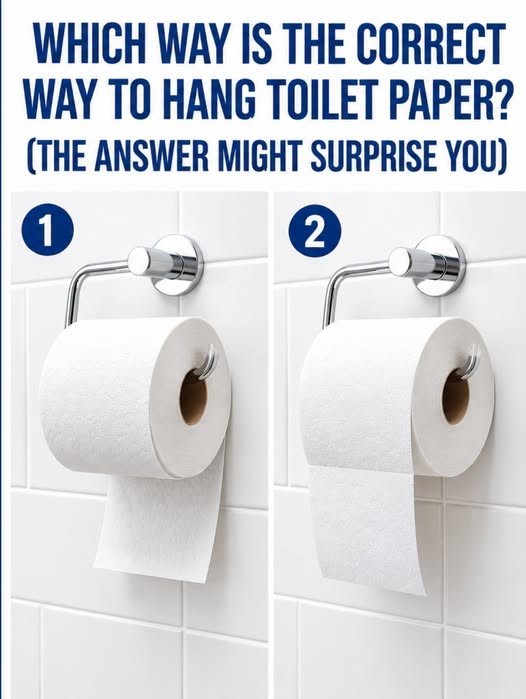
While seemingly trivial at first glance, the question of how to properly hang a roll of toilet paper has sparked passionate debates in homes across the world. For many, this small choice has become a symbol of personal preference, household harmony, and even tradition. The classic argument boils down to two main camps: those who favor the over method (the loose end drapes over the front of the roll) and those who advocate for the under method (the loose end hangs at the back near the wall).
Why does such a small detail invite such intense discussion? This article delves into the origins, reasoning, and implications behind the toilet paper orientation debate, drawing on historical evidence, practical considerations, and expert opinions.

The Origins of Rolled Toilet Paper and the Debate
The history of toilet paper is surprisingly rich. It was in the late nineteenth century, with the rise of indoor plumbing, that modern rolled toilet paper gradually replaced earlier alternatives like newspaper, corncobs, or cloth. As plumbing fixtures became common in North America and Europe, manufacturers needed new storage and dispensing solutions for their product.
The earliest commercially successful toilet paper roll is attributed to Seth Wheeler of Albany Perforated Wrapping Paper Company, who in 1891 patented a roll with perforated sheets. Product illustrations from Wheeler’s original patent clearly depicted toilet paper hanging over the roll, suggesting this orientation made dispensing easier and more hygienic for users. These illustrations have been cited in countless discussions and news articles as “evidence” for the over position.
However, habit is powerful. As bathrooms became more private and personal spaces, family customs around tissue orientation developed. Many people simply inherited the method they grew up with, viewing it as the default or traditional approach, regardless of what patents may have shown.
Arguments for the “Over” Method
Supporters of the over method—where the paper comes over the top and faces outward—commonly cite several advantages:
- Ease of Use: It is generally easier to spot and grab the end of the sheet. Tearing off sheets, whether single or multiple, tends to be more straightforward.
- Cleanliness: The over setup means your hand does not need to touch the wall or the dispenser itself, potentially reducing contact with bacteria or grime.
- Neat Appearance: The hanging edge is visible, creating a tidy, hotel-style presentation.
- Historical Precedent: As noted, early product diagrams and some public restrooms favor this arrangement, strengthening its claim as the “proper” format.
The over method is also widely recommended by hospitality professionals who aim to present a clean and easily usable restroom experience. In commercial settings, this arrangement ensures consistent user experience and helps janitorial staff quickly identify and replace depleted rolls.
Arguments for the “Under” Method
Advocates for the under method—where the sheet hangs next to the wall—offer their own rationale:
- Safety and Cleanliness: Especially in households with pets (notably cats) or toddlers, the under method can prevent playful unspooling of the entire roll, keeping bathrooms tidier.
- Minimalistic Appearance: Some users prefer the less conspicuous look, noting that the loose end tucked away appears neater in some bathroom designs.
- Space and Design Considerations: In tight bathrooms or where roll holders are close to walls or cabinets, the under method’s proximity can help avoid accidental tears or snagging from nearby objects.
- Personal Habit: In households where the under method has always been used, it feels familiar and “right.” Changing orientation can feel uncomfortable or even annoying.
While the under method might be less publicly promoted, many people defend it as being particularly well-suited for certain living arrangements and specific challenges.
Practical Considerations and Bathroom Design
The choice between over and under is sometimes dictated by bathroom layout or holder design. For example, open-ended holders may allow easier tearing with one method or the other, depending on hand dominance and space availability. Similarly, wall-mounted holders close to sinks or cabinets may make one orientation more practical to avoid contact with water or reduce the risk of bumping the paper while moving around the space.
Accessibility needs also play a role. Elderly or differently abled users might find one arrangement easier to reach and manipulate safely. For families, childproofing considerations often drive the choice—installing the roll in the under direction to thwart curious youngsters or pets.
Beyond home bathrooms, public and commercial restrooms must prioritize ease of use and efficient maintenance. In such cases, the over method often wins out, as it is more accessible for the majority of users and allows staff to quickly monitor roll levels.
Cultural Trends and Global Preferences
Though the debate is prominent in the United States, Canada, the UK, and other Western countries, not all cultures consider this issue significant. In parts of Asia and the Middle East, water-based cleansing systems are more common than toilet paper, and the orientation debate is far less relevant.
Surveys in the US and Europe generally show a majority preference for the over method, with various online polls reporting two-thirds or more choosing “over.” However, these trends vary by region, generation, and family tradition.
Entertainingly, the topic has even been referenced in popular culture, from television sitcoms to viral social media debates, often as shorthand for differences in personality and domestic compatibility.
Expert Views and Scientific Insights
Hygienists and hospitality professionals usually recommend the over method, citing reduced contact with the wall where germs may accumulate. The Centers for Disease Control and Prevention (CDC) and other health organizations do not officially prescribe an “over” or “under” method, though the principles of hand hygiene—washing thoroughly after use—are universally endorsed.
Myth-busting organizations, such as Snopes, have investigated claims that one method is “healthier” than the other. Their findings indicate that while the orientation may slightly affect hygiene in some cases, regular cleaning and proper handwashing are far more important than which way the roll faces.
Etiquette writers and psychologists also suggest that the intensity of the debate has more to do with habit and a desire for control in shared spaces than any objective benefit. Minor rituals often take on amplified significance within the intimacy of home life.
Psychology of Household Rituals
The toilet paper debate serves as an example of how seemingly minor preferences can carry emotional weight. Psychologists observe that routines and rituals in daily life—like how to hang toilet paper—become associated with comfort, stability, and personal autonomy.
When multiple people share a living space, negotiating these rituals can test communication and flexibility. The orientation of a toilet paper roll, whether inherited from childhood or consciously chosen, may serve as a symbol of household consensus or, occasionally, discord.
For newlyweds, roommates, or families, resolving such conflicts amicably is less about the object itself and more about mutual respect and compromise. Some couples settle the matter with good-humored agreements, while others rotate the task or simply revert to the arrangement that’s least likely to cause friction.
What the Evidence Says: Is There a Right Answer?
The historical origin of rolled toilet paper and early patent illustrations arguably favor the over method as the manufacturer’s intent. Yet, practicality, household needs, bathroom layout, and personal preference all play significant roles in shaping what feels “correct.”
There is no universally endorsed answer by health authorities, etiquette experts, or the scientific community. The right method is whatever works best for those using the bathroom. The intensity of the debate reflects deeper human tendencies to value the familiar and to seek harmony in shared environments.
Conclusion: A Matter of Preference and Harmony
While the debate over toilet paper orientation has historical roots and practical implications, it ultimately remains a matter of personal and household preference. Whether over or under, the orientation you choose should fit the needs, layout, and habits of those who share the space.
In the end, resolving such a debate amicably can bring people closer together, transforming a trivial detail into an opportunity for understanding and cooperation. As with many aspects of home life, what matters most is respecting each other’s choices and maintaining a harmonious environment.
Sources
Disclaimer: This content is intended for entertainment purposes only and is not based on real events.