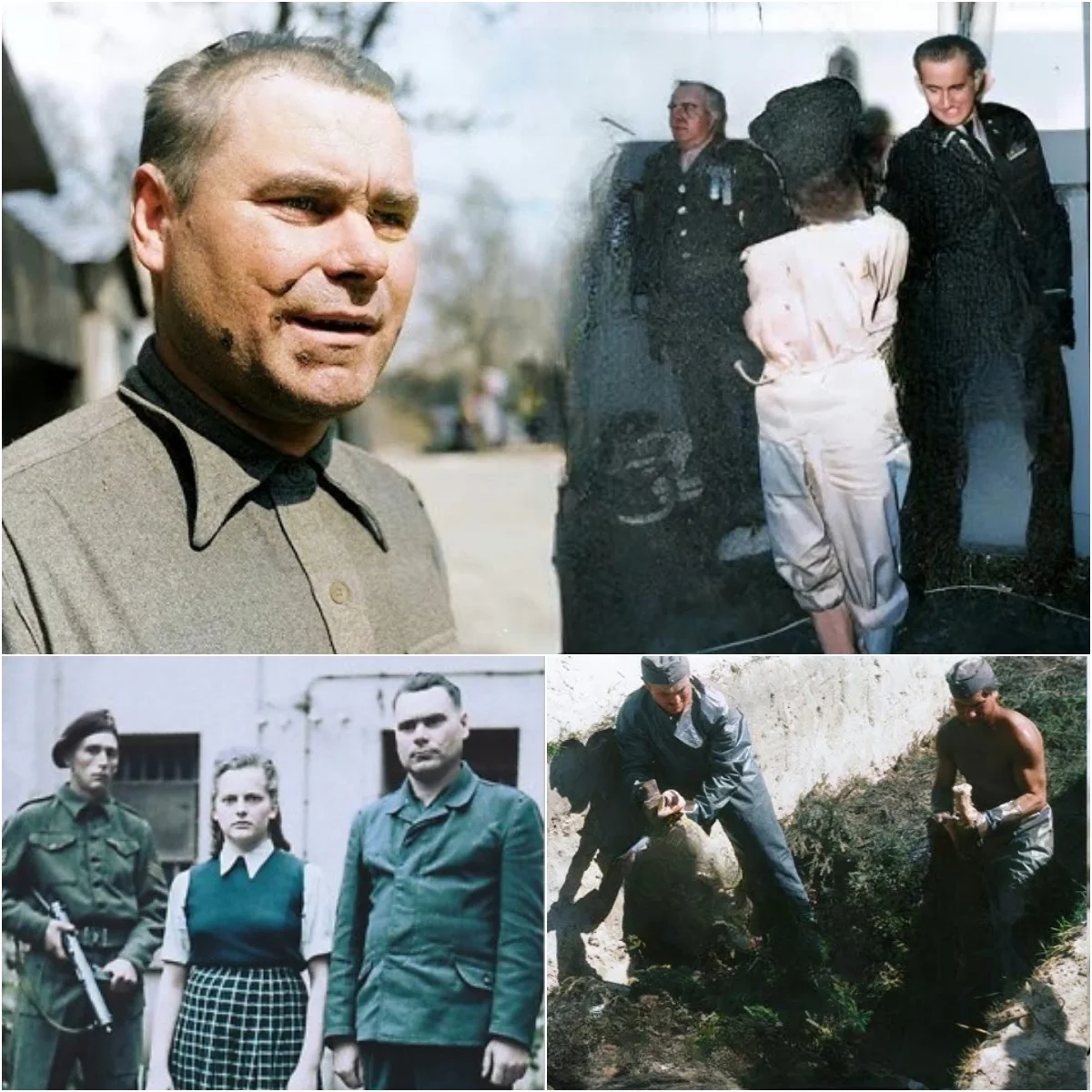
History remembers many figures whose actions became lasting reminders of the consequences of hatred and absolute power. Among them was Josef Kramer, a man whose name became forever linked with some of the darkest chapters of World War II.
Often referred to as the “Beast of Belsen,” Kramer served as a commandant at several Nazi concentration camps, including Natzweiler-Struthof, Auschwitz-Birkenau, and Bergen-Belsen. His leadership during those years placed him at the center of events that shocked the world when Allied forces uncovered the reality of the camps in 1945.
As the war drew to a close, Kramer believed the collapsing Third Reich might somehow shield him from accountability. Instead, history took a very different course.
A Career Built Within the Nazi Camp System
Born in 1906 in Munich, Germany, Josef Kramer joined the Nazi Party during its rise to power and later became a member of the SS. His career advanced steadily as he accepted increasingly important positions within the concentration camp system.
Unlike many who served briefly, Kramer held authority at multiple camps over several years. His assignments eventually included some of the most infamous locations established by the Nazi regime.
Survivor testimonies presented after the war described an atmosphere of fear and relentless suffering under his administration. These accounts would later become crucial evidence during legal proceedings.
The Liberation That Changed Everything
In April 1945, British forces entered Bergen-Belsen.
What they discovered stunned even experienced soldiers who had witnessed years of conflict.
Thousands of people required immediate assistance, while countless others had already lost their lives due to starvation, disease, and the catastrophic conditions inside the camp.
Photographs and official reports quickly spread across the world, becoming undeniable evidence of crimes committed during the Holocaust.
Among those still present when British troops arrived was Josef Kramer himself.
He did not attempt a dramatic escape.
Instead, he was taken into custody along with dozens of camp personnel who remained on the grounds.
Gathering the Evidence
Following Germany’s surrender, Allied investigators began collecting documents, photographs, military records, and survivor testimony.
Witnesses from different countries described their experiences inside the camps where Kramer had served.
Medical personnel, military officers, and liberated prisoners all contributed to building a detailed picture of the conditions they had encountered.
Rather than relying on rumors, prosecutors assembled evidence that could withstand judicial examination.
This approach helped establish one of the earliest major war crimes trials after World War II.
The Belsen Trial
Later in 1945, Kramer stood before a British military court alongside numerous former camp officials.
The proceedings attracted worldwide attention.
Survivors recounted what they had endured.
Military investigators presented documents and photographs.
Medical experts explained the devastating humanitarian conditions found after liberation.
Throughout much of the trial, observers remarked that Kramer appeared calm and composed.
He denied personal responsibility for many events, arguing that he had followed orders within the Nazi system.
The court ultimately rejected those arguments.
After reviewing extensive evidence and testimony, the judges found Kramer guilty of war crimes.
The Final Five Minutes
In December 1945, Josef Kramer was informed that his sentence would be carried out.
Historical accounts describe those final moments as quiet rather than dramatic.
There were no speeches intended for history.
No public declarations that altered the outcome.
Officials completed the legal procedures established following the court’s decision.
Albert Pierrepoint, Britain’s most experienced executioner of the period, carried out the sentence according to official protocol.
Within minutes, the legal judgment reached its conclusion.
For many survivors, however, the end of Kramer’s life did not erase years of unimaginable loss.
Justice could acknowledge responsibility, but it could never restore the lives forever changed by the Holocaust.
Remembering the Victims
Today, historians emphasize that discussions about Josef Kramer should never focus solely on the individual himself.
The greater story belongs to the millions of innocent people who suffered under the Nazi regime.
Museums, memorials, and educational institutions continue preserving survivor testimony so future generations understand where hatred, discrimination, and unchecked power can lead.
The legacy of Bergen-Belsen, Auschwitz, and Natzweiler is not simply one of tragedy.
It is also a reminder of the importance of human rights, historical truth, and the responsibility to confront intolerance whenever it appears.
Why This History Still Matters
More than eighty years later, World War II continues to shape international law, human rights standards, and public understanding of crimes against humanity.
The story of Josef Kramer serves as one example of how individuals in positions of authority can be held accountable through legal processes after periods of conflict.
For historians, educators, and visitors to Holocaust memorial sites, the focus remains not on sensational details, but on preserving historical memory and honoring those who endured one of history’s darkest chapters.
Remembering these events helps ensure that future generations understand the value of justice, dignity, and the responsibility to protect human life.