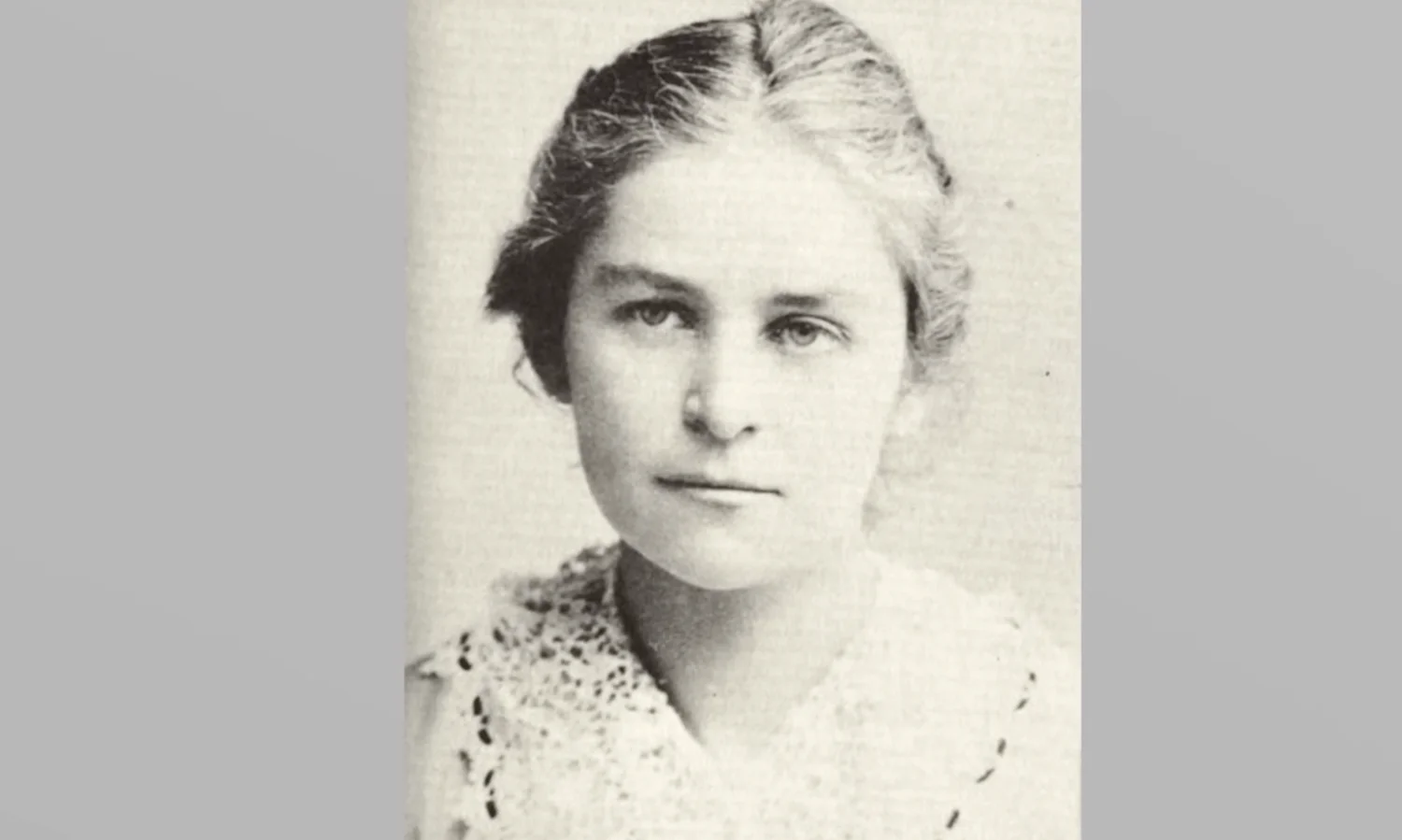
History is often remembered through the actions of prominent figures, yet it is equally shaped by the people who lived alongside them. One of the most discussed examples is the story of Hedwig Höss, the wife of Rudolf Höss, the longtime commandant of Auschwitz during World War II.
For decades, historians have examined not only Rudolf Höss’ role in operating Auschwitz but also the unusual domestic life his family maintained only a short distance from the camp. Their story raises enduring questions about moral responsibility, everyday life under authoritarian regimes, and how ordinary family routines could exist alongside one of history’s darkest chapters.
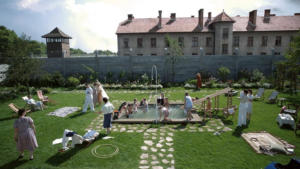
Interest in Hedwig Höss grew significantly after the release of The Zone of Interest (2023), an Academy Award-winning film inspired by Martin Amis’ novel. Rather than focusing on events inside Auschwitz, the film explores the unsettling contrast between the peaceful routines of the Höss household and the reality beyond the garden walls. Although the film is a work of historical fiction inspired by real people, it renewed public discussion about the family’s life and the broader issue of complicity.
Understanding Hedwig Höss requires careful attention to historical evidence. While many aspects of her daily life are well documented, other claims that have circulated online remain disputed or unsupported. A balanced approach helps distinguish established facts from speculation and allows history to be understood through reliable sources.
Who Was Hedwig Höss?
Hedwig Hensel was born in Germany in 1908. During a period of political instability following World War I, she became acquainted with nationalist circles and later married Rudolf Höss in 1929.
At the time, Rudolf Höss was building a career within the SS, an organization that would become central to Nazi Germany’s system of persecution and repression. As his assignments changed, the family relocated several times before moving to occupied Poland after Rudolf was appointed commandant of Auschwitz in 1940.
The couple eventually had five children. Historical records indicate that the family sought to maintain what appeared to be a conventional household despite living beside one of the largest concentration and extermination camps established by Nazi Germany.
The Family Villa Beside Auschwitz
One of the most remarkable aspects of the Höss family’s story is the location of their residence.
The villa stood adjacent to the Auschwitz complex and included a spacious garden where the children played. Photographs, architectural records, and postwar investigations confirm that the family lived immediately outside the camp’s perimeter.
The contrast between the carefully maintained home and the nearby camp has become one of the most studied symbols of everyday life under the Nazi regime.
Historians generally agree that the family enjoyed privileges unavailable to the surrounding population. The residence was larger and more comfortable than most homes in the area, reflecting Rudolf Höss’ senior position within the SS.
While popular accounts often describe specific sights, sounds, or smells experienced by the family, scholars note that some of these details cannot always be verified with certainty. As a result, responsible historical writing distinguishes documented evidence from later interpretations or artistic portrayals.
Daily Life During Wartime
Available records suggest that Hedwig Höss focused primarily on managing the household and raising the couple’s children.
Like many senior SS families during the war, the household relied on labor assigned through the camp system. Historians have documented that prisoners performed various forms of work connected to SS residences, including gardening, maintenance, and domestic tasks.
This arrangement was part of the broader system of forced labor established by Nazi authorities throughout occupied Europe.
Researchers continue to examine how much individual family members understood about every aspect of camp operations. While Rudolf Höss left detailed accounts of his responsibilities after the war, evidence regarding Hedwig’s personal knowledge, opinions, and decisions is comparatively limited.
Consequently, historians often avoid making definitive statements that extend beyond the available documentary record.
Rudolf Höss and His Historical Responsibility
Unlike the questions surrounding other members of the household, Rudolf Höss’ role is extensively documented.
Following Germany’s defeat in World War II, he was captured, questioned by Allied investigators, and later testified during postwar proceedings. His memoirs and court testimony, together with extensive archival documentation, provide substantial evidence regarding his leadership role at Auschwitz.
Modern historians estimate that more than one million people, the overwhelming majority of them Jewish, were murdered at Auschwitz during its operation.
Rudolf Höss accepted responsibility for administering the camp under Nazi policies. He was later tried by Polish authorities, convicted of war crimes and crimes against humanity, and executed in 1947 near the former Auschwitz camp.
His case remains one of the most thoroughly documented examples of accountability following the Second World War.
:focal(700x527:701x528)/https://tf-cmsv2-smithsonianmag-media.s3.amazonaws.com/filer_public/c8/64/c864c312-958b-43db-a615-d2ae692817eb/zone.jpg)
The Question of Complicity
The story of Hedwig Höss is frequently discussed within the broader historical concept of complicity.
Complicity does not necessarily imply direct participation in criminal acts. Instead, historians use the term to explore how individuals may benefit from, support, or fail to oppose unjust systems.
Scholars continue to debate where responsibility begins and ends for people who lived within authoritarian governments.
Some historians argue that maintaining ordinary domestic life while benefiting from structures built upon persecution represents a form of moral responsibility. Others emphasize the importance of evaluating each individual according to documented evidence rather than assumptions.
These discussions remain active within Holocaust scholarship today.
The Children of the Höss Family
The Höss children have also attracted considerable historical interest.
Growing up beside Auschwitz created circumstances unlike almost any other childhood in modern history.
After the war, surviving family members gave interviews describing their memories of daily life. Some stated that they experienced what they believed to be a normal childhood, while later reflecting on the extraordinary historical setting in which they had lived.
Historians generally caution against drawing broad conclusions regarding exactly what each child knew or understood at different ages.
As with many families living under authoritarian regimes, personal memories, historical documentation, and later interpretations do not always align perfectly.
The Zone of Interest and Renewed Public Interest
Public attention surrounding Hedwig Höss increased dramatically following the release of The Zone of Interest in 2023.
Directed by Jonathan Glazer, the film received widespread critical acclaim and won the Academy Award for Best International Feature Film.
Rather than depicting events inside Auschwitz directly, the story concentrates on everyday family life next door, allowing ordinary routines to stand in stark contrast with the historical reality surrounding the household.
It is important to recognize that the film is an artistic interpretation inspired by Martin Amis’ novel and historical research. While grounded in real historical figures, some scenes and conversations are fictionalized for dramatic purposes.
The film’s greatest contribution may be its ability to encourage viewers to reflect on questions of moral blindness, normalization, and personal responsibility.
Separating History from Online Claims
The renewed interest in Hedwig Höss has also led to the spread of numerous viral stories online.
Some articles claim certainty regarding her personal behavior, emotions, or conversations for which reliable evidence does not exist. Others present dramatic quotations without identifying original historical sources.
Professional historians recommend approaching such claims carefully.
Reliable historical research depends upon primary documents, court records, contemporary testimony, and peer-reviewed scholarship rather than sensational headlines or social media posts.
Understanding complex historical figures requires acknowledging both what historians know and what remains uncertain.
Why the Story Continues to Matter
The enduring interest in Hedwig Höss is not simply about one individual.
Instead, her story serves as a lens through which historians examine larger questions about society.
How can ordinary routines continue during periods of injustice?
What responsibilities do individuals bear within systems created by governments or institutions?
How do people reconcile private family life with public events unfolding around them?
These questions extend far beyond World War II.
Across history, scholars have repeatedly explored how ordinary people respond to extraordinary circumstances and how personal choices intersect with larger political systems.
Conclusion
The story of Hedwig Höss remains one of the most thought-provoking chapters connected to the history of Auschwitz.
While Rudolf Höss’ responsibility as commandant is firmly established through extensive historical documentation, discussions surrounding Hedwig focus less on criminal liability and more on the broader themes of moral responsibility, privilege, and complicity.
Modern scholarship encourages readers to avoid simplistic conclusions. Instead, historians emphasize careful examination of documentary evidence while recognizing the limits of what can be known with certainty.
The renewed attention generated by books, documentaries, and films has encouraged many people to revisit this history through a more thoughtful lens. Rather than seeking sensational answers, these conversations remind us that understanding the past requires patience, evidence, and critical thinking.
Ultimately, history is not only a record of major events but also a study of human choices. Examining lives like those of the Höss family encourages reflection on how ordinary decisions, personal beliefs, and social systems can intersect in ways that shape generations. That enduring curiosity continues to inspire historical research and reminds us why preserving accurate evidence remains essential.
Sources
Auschwitz-Birkenau Memorial and Museum — https://www.auschwitz.org
United States Holocaust Memorial Museum — https://www.ushmm.org
Yad Vashem — https://www.yadvashem.org
Rudolf Höss, Commandant of Auschwitz: The Autobiography of Rudolf Höss
United States National Archives, Nuremberg Trial Records — https://www.archives.gov
Jonathan Glazer (Director), The Zone of Interest (2023), inspired by the novel by Martin Amis.