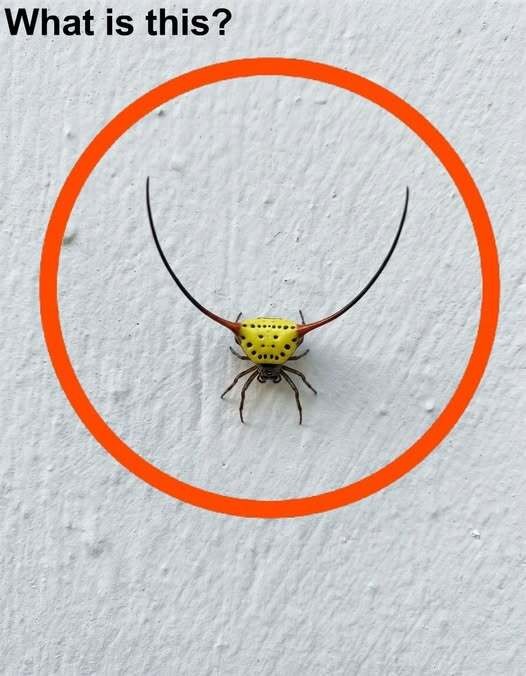
The Spiny Orb-Weaver: Understanding Gasteracantha Spiders
Finding an unfamiliar spider on a garage wall, porch, garden fence, or window frame can be startling. Bright colors, sharply pointed spines, and an unusually still posture can make some spiders appear more threatening than they are. One of the most distinctive examples is the spiny orb-weaver, a group of spiders in the genus Gasteracantha. In many parts of the Americas, the best-known species is the spiny-backed orb-weaver, Gasteracantha cancriformis.
These spiders are especially memorable because of their broad, hardened abdomens, which may be white, yellow, orange, or red and marked with dark spots. Many female spiny orb-weavers have six prominent spines extending from the abdomen. Their unusual form can resemble a small piece of natural armor, leading people to wonder whether the spider is dangerous. In ordinary circumstances, however, spiny orb-weavers are not considered medically important to humans. They are web-building spiders that primarily use their silk to capture small flying insects.
Learning to recognize a spiny orb-weaver can replace alarm with curiosity. These small arachnids are part of a larger ecological system, helping to catch insects while providing food for birds and other wildlife. Their presence near a home often reflects the availability of suitable web sites and insect prey rather than any threat to people or pets.
Why Spiny Orb-Weavers Look So Unusual
A spiny orb-weaver’s appearance is one of its most recognizable features. The female, which is much more conspicuous than the male, has a flattened, rounded abdomen with rigid projections along the edge. In Gasteracantha cancriformis, these projections commonly form six visible spines. The abdomen may be bright yellow with black spots, but color patterns vary widely among individuals and populations. Some spiders are predominantly white, while others show orange or reddish tones.
Color variation is normal in this species. It means that a spider seen in one garden may not look exactly like another photographed in a different state, island, or country. The combination of a broad, crab-like abdomen, dark spots, and long abdominal spines is often more useful for identification than color alone.
The spider’s dramatic shape is not a sign that it is preparing to attack. Like many animals, spiders have physical traits that may help them avoid predators or blend into visually complex surroundings. Researchers continue to study how body shape, color, web placement, and behavior influence survival among orb-weaving spiders. What is clear is that the spines are not stingers, pincers, or structures used to inject venom. They are fixed parts of the abdomen.
Spiny orb-weavers can remain motionless for long periods, particularly when resting in or near a web. That stillness is practical. Motion may alert prey, while a stationary spider can wait for vibrations traveling through the silk. A spider on a nearby wall may also be resting, moving between web sites, or sheltering from weather. Its lack of response to a person is typically an indication that it is avoiding attention rather than challenging it.
What Is a Gasteracantha Spider?
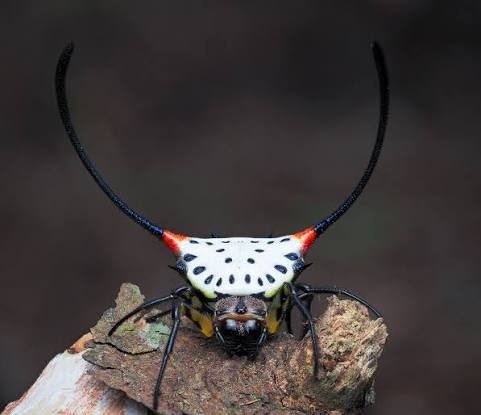
Gasteracantha is a genus within the orb-weaver family, Araneidae. Orb-weavers are named for the familiar wheel-shaped webs made by many species. These webs consist of supporting threads and sticky spiral threads designed to intercept flying insects. The family includes a great diversity of spiders around the world, ranging from small, modestly colored species to highly ornate spiders with striking patterns.
The name “spiny orb-weaver” is used for more than one species, so precise identification may depend on location and close examination. In the United States, Central America, the Caribbean, and parts of South America, Gasteracantha cancriformis is commonly associated with the name spiny-backed orb-weaver. It is also sometimes called a crab-like orb-weaver because of its broad outline and lateral spines.
Females are generally larger and more easily noticed than males. Male spiny orb-weavers are much smaller and may have less pronounced markings and spines. As with many spider species, the adult female’s size and color make her the more visible member of the species, especially when she occupies a web in an open garden area.
Although spiders are often discussed as household pests, orb-weavers are better understood as outdoor predators. They do not seek out people, and they do not feed on plants, wood, fabric, or stored household goods. Their role is to catch insects. When an orb-weaver chooses a location near a home, it is usually because the area offers supports for a web and access to flying prey.
Are Spiny Orb-Weaver Spiders Dangerous?
For most people, encountering a spiny orb-weaver is not a health concern. These spiders are not known for aggressive behavior toward humans. They generally remain in their web or attempt to move away when disturbed. Like nearly all spiders, they can bite if handled, trapped against skin, or threatened, but such events are uncommon because orb-weavers are not inclined to pursue contact with people.
Spiny orb-weaver bites are not generally regarded as medically significant. Still, it is sensible to avoid touching any unidentified spider. A person who develops concerning symptoms after any suspected bite or sting, especially trouble breathing, widespread swelling, dizziness, or signs of an allergic reaction, should seek prompt medical advice. This is general safety guidance and does not mean that such reactions are expected from spiny orb-weavers.
For everyday situations, the simplest approach is to give the spider space. Observe it from a short distance, take a photograph if desired, and avoid disturbing its web. If a web is located in a doorway, garage path, or another unavoidable area, moving around it carefully or gently encouraging the spider to relocate with a container may be preferable to using pesticides. Local extension services can offer region-specific identification help when needed.
How Spiny Orb-Weavers Build and Use Their Webs
Orb-weaver webs are among the most recognizable structures in the natural world. A typical web includes radiating lines that extend outward from a central area and spiral capture threads that help retain insect prey. The architecture allows the spider to detect vibrations when an insect becomes entangled. Rather than relying on speed alone, the spider uses a carefully engineered silk trap.
Spiny orb-weavers often build their webs in shrubs, small trees, garden vegetation, and around structures where there is enough open space between branches, posts, or other supports. Their webs may appear near outdoor lights because lights attract insects, although many factors influence where a spider settles. Webs can be rebuilt or repaired regularly, especially after wind, rain, or encounters with larger animals.
When prey becomes trapped, the spider responds to movement in the web. It may approach quickly, immobilize the insect, and wrap it with silk. This behavior is part of the spider’s normal feeding ecology. The prey is usually small and may include flies, moths, mosquitoes, and other insects that happen to strike the web.
A web can seem inconvenient when it crosses a walkway, but it is also evidence of a working predator-prey relationship in a local habitat. The spider is not “taking over” a garage or garden. It is using a temporary hunting site. Many orb-weavers have relatively short adult lives, and the web may disappear after a few days or weeks as the spider moves, reproduces, or reaches the end of its seasonal life cycle.
The Ecological Value of Orb-Weaving Spiders
Spiders are important predators in terrestrial ecosystems. By catching insects, they contribute to natural food webs in gardens, forests, fields, and urban green spaces. Their activity does not eliminate insects, nor should it be viewed as a replacement for broader pest-management practices. However, spiders are one of many groups of predators that help shape insect populations.
Orb-weavers are also prey. Birds, lizards, wasps, and other animals may feed on spiders or their egg sacs. This makes them part of a connected ecosystem rather than isolated visitors to human spaces. The presence of a spider near a house can reveal something about the surrounding environment: there are insects to eat, places to anchor silk, and enough shelter to support small wildlife.
Ecologists and naturalists often encourage people to distinguish between spiders that pose a verified health risk and those that are simply unfamiliar. This distinction supports more informed choices. Removing every spider with chemicals can affect non-target insects and reduce local biodiversity. In contrast, leaving a harmless outdoor orb-weaver alone, when practical, is often a low-risk way to coexist with wildlife.
What to Do If You Find a Spiny Orb-Weaver at Home
If a spiny orb-weaver is located outdoors and is not blocking an essential path, the best response is often to leave it undisturbed. Its web may remain in place only temporarily, and the spider may help capture insects in the area. Watching from a respectful distance can also be an opportunity to see how an orb-weaver responds to wind, prey, and changing light.
If relocation is necessary, avoid direct handling. A clear container and a stiff piece of paper or cardboard can be used to guide the spider safely into the container. It can then be released in a sheltered outdoor location with vegetation, away from frequently used doors or walkways. This should be done calmly and gently to minimize harm to the spider and reduce the chance of accidental contact.
Photographs can be useful for identification. A clear image of the spider’s upper body, abdomen, and web, along with a general location, can help a local university extension office, museum naturalist program, or reputable identification community provide guidance. Online searches should be approached carefully, as common names are inconsistent and dramatic images can lead to incorrect conclusions.
From Initial Fear to Informed Curiosity
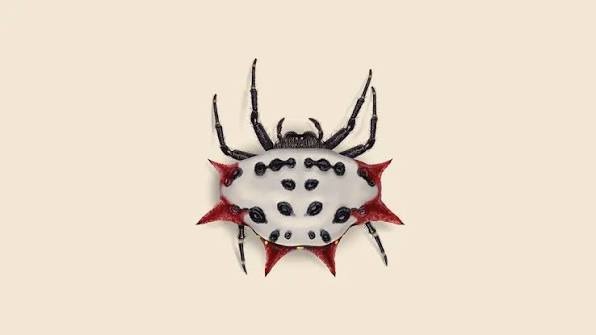
It is understandable to feel uneasy when seeing a creature with vivid colors, dark markings, and six rigid spines. Human attention is naturally drawn to unfamiliar shapes that appear sharp or unusual. In the case of the spiny orb-weaver, however, a closer look reveals a small, specialized spider adapted to life in a web.
What may initially seem alien or alarming is often an example of ordinary biodiversity close to home. The bright abdomen, black spots, and still posture are not evidence of hostility. They are features of an orb-weaving spider whose daily activities are focused on finding a suitable location, building silk structures, and catching insects.
Leaving a harmless spiny orb-weaver in place can turn an uncomfortable encounter into a reminder that garages, gardens, and porches are connected to the wider natural world. A shared space does not have to feel less familiar because a small spider occupies one corner of it. With accurate identification and basic caution, it can become an opportunity to appreciate an intricate animal that has been quietly doing its ecological work all along.

Sources
Disclaimer: This content is intended for entertainment purposes only and is not based on real events.