
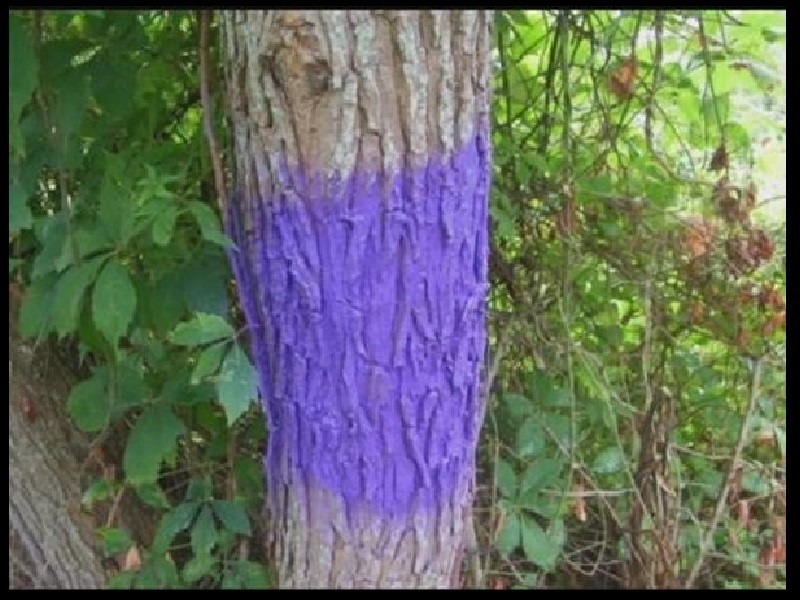
While hiking, driving through rural areas, or exploring woodlands in parts of the United States, you may come across vertical purple paint markings on trees or fence posts. To some, these marks might look decorative or accidental, but in a growing number of states, these purple stripes carry important legal significance. Recognizing what these markers mean is essential both for property owners and members of the public who want to avoid trespassing.
The Purpose and Evolution of Purple Paint Laws
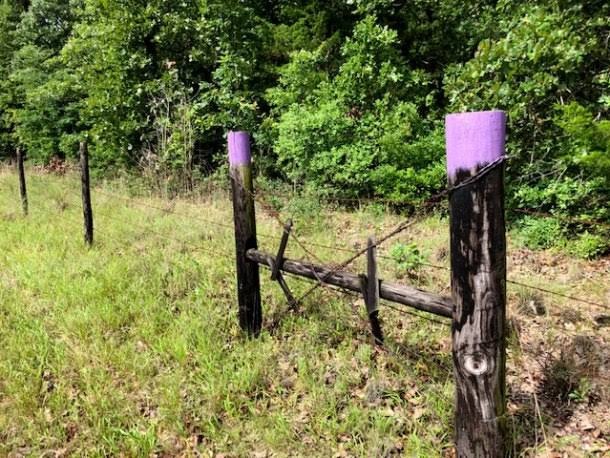
The primary reason behind the adoption of purple paint laws is the challenge rural property owners face in marking boundaries and communicating access restrictions. Traditional “No Trespassing” signs may fall down, become obscured by overgrown vegetation, fade due to weather, or even be deliberately removed. Maintaining signs on expansive properties can be costly and labor-intensive. The idea behind using purple paint is to provide a clear, lasting, and affordable method for marking private property and warning visitors against entering without permission.
The concept was first codified in the late 20th century and has since become an established part of the legal framework in multiple states. The use of color-coded paint marks to indicate property lines is rooted in the need for a universally recognizable signal that is not reliant on language or materials that degrade easily over time.
How Purple Paint Functions as a Legal Boundary Marker
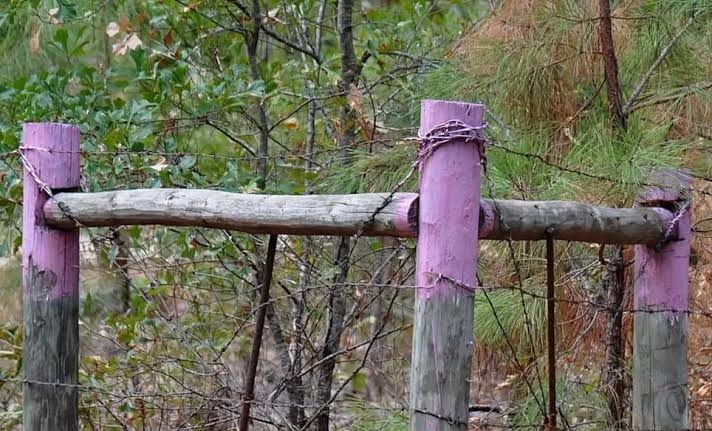
Purple paint laws give landowners the right to post their property boundaries using specified paint markings. When done according to state regulations, these marks serve as an officially recognized notice that trespassing is prohibited, carrying the same weight as a traditional posted sign. Importantly, these laws do not override or replace other forms of posting, but instead offer an additional, more durable option.
For the public, the presence of qualifying purple paint means that entering the marked area without permission is likely considered trespassing under law, and violators could face fines or other penalties. Because these marks are intended to act as a legal notice, ignorance of their meaning is not generally accepted as a defense.
Variations By State: Not All Purple Paint Is the Same
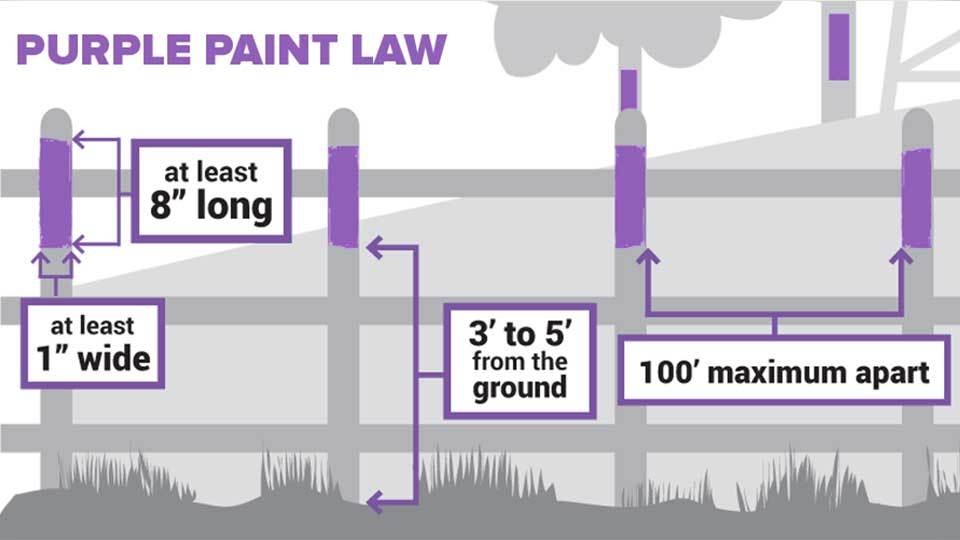
The specific regulations for purple paint marks vary by state. Although the color purple is a common thread, lawmakers have set detailed criteria for the type of paint used, the direction or orientation of mark application, the minimum length and width, the height from the ground, and the maximum spacing between marks. States may also stipulate that marks must be clearly visible and vertical to minimize confusion.
Arkansas: The Original Adopter
Arkansas was among the first states to pass purple paint legislation, enacting its law in 1989. Under Arkansas Code, property owners can lawfully signal “No Trespassing” with vertical stripes of light purple exterior-grade paint. To satisfy the law, marks must be at least 8 inches long and 1 inch wide, placed between 3 and 5 feet off the ground, and no more than 100 feet apart on forest land or 1,000 feet apart on non-forest land. This system allows landowners to cover large swathes of property with relatively little maintenance compared to signs.
Texas: Codifying Legal Standards
Texas updated its criminal trespass laws to acknowledge purple paint as a valid notice against entry. Texas statutes require a vertical line of purple paint at least 8 inches long and 1 inch wide, placed 3 to 5 feet from the ground. On forest land, marks must be no more than 100 feet apart; elsewhere, the maximum spacing is 1,000 feet. These details ensure paint marks are easily visible and consistently applied, furthering the law’s intent to communicate boundaries clearly.
North Carolina: Including Specific Recreational Restrictions
North Carolina’s purple paint law, which came into effect more recently, specifically addresses unauthorized hunting, fishing, and trapping, in addition to general trespassing. To meet state requirements, each mark must be a vertical line measuring at least 8 inches long and placed between 3 and 5 feet above ground. The spacing of marks varies, but visibility and clarity are emphasized in the statutes. Entry onto land marked in this manner for prohibited activities can result in criminal charges.
Other States with Active Purple Paint Laws
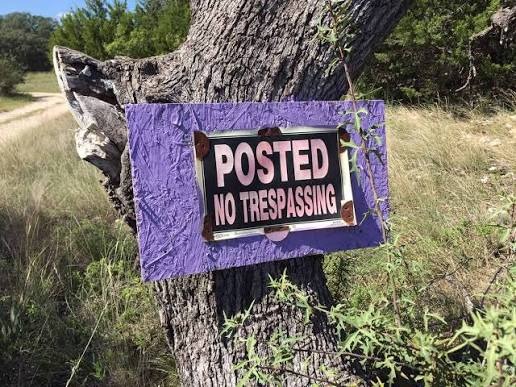
In addition to Arkansas, Texas, and North Carolina, the use of purple paint as a legal boundary marker is recognized in several other states, including:
- Illinois
- Kansas
- Missouri
- Indiana
- Montana
- Pennsylvania
- South Carolina
- Tennessee
Each state prescribes its own standards for mark application and enforcement, and these laws are subject to legislative changes. Residents and visitors are encouraged to review the official statutes in any state where outdoor activities are planned.
Purple Paint Versus Other Forestry and Trail Markings
It is important to note that not every purple mark found outdoors signifies “No Trespassing.” In some cases, forestry workers, utility companies, or survey crews use color markings (including purple, but often other colors as well) to indicate survey boundaries, tree management areas, or utility placements. Likewise, parks and trail organizations may use painted blazes to mark hiking or biking routes. However, in states where purple paint laws are in effect, a repeated pattern of vertical purple marks along what appears to be a private boundary should be understood as a legal notice, not merely a guide or a maintenance code.
Advice for Hikers, Hunters, and Outdoor Enthusiasts
The safest approach before entering unfamiliar land is to verify access rights. Check for maps, consult local regulations, or ask the landowner or public land manager for guidance. Many managed trails and parks post clear signage and provide information online about what to expect. Given that purple paint is not a federal or nationwide code, but a series of state laws, what applies in one jurisdiction may not apply in another.
If you see purple paint that appears to mark a boundary, do not remove, alter, paint over, or attempt to bypass the markings or any associated fences. Respect for property rights is not only a legal obligation but also key to maintaining positive relationships between the public and landowners. When in doubt, err on the side of caution and seek permission before entering.
Property Owners’ Perspectives and Responsibilities
For landowners, purple paint offers a practical solution for marking boundaries and deterring unauthorized entry. The method is cost-effective, weather-resistant, and reduces the need for repeated sign replacement. However, to benefit from the protections afforded by purple paint laws, owners must carefully follow state guidelines for mark size, height, spacing, and visibility. In some states, property owners are recommended (but not always required) to maintain a record of paint application and periodically refresh the marks as needed. Local law enforcement and game wardens are typically briefed on these regulations and can assist in resolving disputes over trespass violations.
Potential Limitations and Developments in Purple Paint Law
Despite its increasing popularity, the purple paint system does have limitations. These include the risk of confusion for those unfamiliar with the law, particularly visitors from states where no such requirement exists. Critics note that the effectiveness of purple paint relies on widespread education, consistent visibility, and law enforcement support. Some legal experts advocate for additional outreach, updated signage at public park trailheads, or smartphone apps that include alerts about local property-marking customs.
There is also ongoing debate over whether other colors should be standardized for related purposes—such as blue to indicate water supply rights or other property restrictions—to further clarify communication among diverse groups of land users.
Societal and Cultural Impact
Purple paint laws reflect broader trends in rural property management and private land stewardship. They offer insight into how communities adapt legal frameworks to address changes in land use, outdoor recreation, and the rights of property owners. In states with longstanding outdoor traditions—such as hunting, fishing, and hiking—purple paint marks represent a compromise between encouraging public access and protecting privacy and safety. These laws are typically accompanied by educational campaigns to ensure the public understands what the markings mean and how to respond appropriately.
As outdoor recreation continues to grow in popularity, respect for property boundaries—whether communicated through paint, signs, or other methods—remains a cornerstone of responsible land stewardship and outdoor ethics.
Conclusion: The Importance of Awareness and Respect
Purple paint is more than a splash of color on a tree or fence post; in many states, it’s a legal message about property rights and visitor responsibilities. By understanding the rules, recognizing official marks, and asking questions when in doubt, both locals and visitors can help ensure that America’s rural lands are enjoyed safely and respectfully. As purple paint laws evolve, continued education and respectful communication will remain crucial to their success.
Sources
- Reuters
- BBC
- The Guardian
- Texas Department of Agriculture
- Arkansas Department of Agriculture
- North Carolina General Assembly
- US Law – Purple Paint Laws State Summaries
Disclaimer: This content is intended for entertainment purposes only and is not based on real events.