A Tiny Discovery That Raised a Big Question
It was an ordinary day at home when I noticed something strange on the floor.
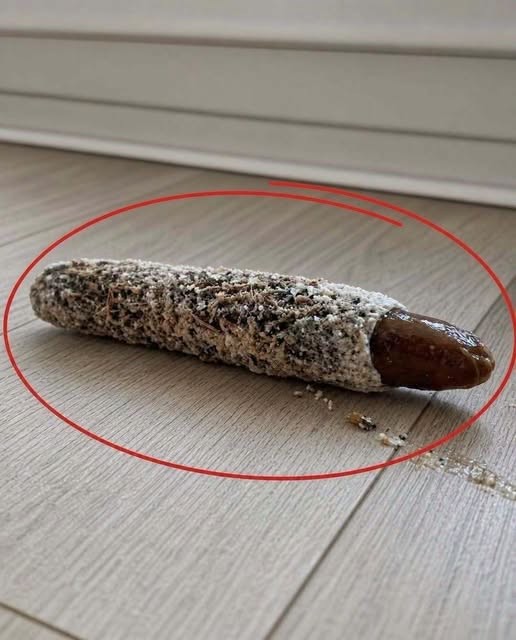
At first, I thought it was a small piece of dust, a bit of dried plant material, or perhaps something that had fallen from a nearby piece of furniture. It was tiny, oddly shaped, and covered in a rough texture that made it look different from the usual household debris.
I moved closer to get a better look.
The little object seemed almost deliberately constructed. It had an uneven surface, a narrow shape, and tiny fibers or particles attached to its exterior. It did not look like a typical insect, but it was unusual enough to make me wonder whether something living might be hiding inside.
My first instinct was to pick it up and throw it away.
Instead, I decided to investigate.
A little research eventually led me to a fascinating possibility: the object might be the portable protective case of a household casebearer larva, commonly known as a plaster bagworm.
What initially looked like a random piece of dirt could actually have been a tiny shelter built by a living creature.
1. What Is a Plaster Bagworm?
The name plaster bagworm sounds unusual, especially if you have never encountered one before.
It generally refers to the larval stage of a small moth commonly identified as the household casebearer, Phereoeca uterella. The insect belongs to the Tineidae family, which also includes several species of clothes moths.
The name can be confusing because true bagworms belong to a different moth family. However, household casebearers are widely known by the common name plaster bagworm.
Unlike many caterpillars that move around without carrying a visible shelter, these larvae construct protective cases around themselves.
The case is usually small, flattened, and somewhat seed-shaped. Its exterior may appear gray, brown, or dusty because it contains materials collected from the surrounding environment.
When someone discovers one on a wall, floor, or piece of furniture, it can easily be mistaken for an insect cocoon, a dried leaf fragment, or a piece of household debris.
The surprising part is that the little structure is not simply something the larva happens to be hiding inside. It is something the creature actively builds and carries.
2. The Larva Builds Its Own Protective Shelter
The household casebearer larva produces silk and combines it with small particles from its surroundings.
These materials can include dust, sand, lint, hair, insect remains, and other tiny pieces of debris.
Gradually, the mixture becomes a portable case that protects the developing insect while it moves around in search of food.
The larva can extend its head and legs through an opening to crawl along a surface, pulling the case behind it. When disturbed, it can retreat inside for protection.
This behavior explains why the object may look lifeless at first.
The case does not move like an ordinary insect. Instead, it may appear to slide slowly across a wall or floor, with only a small part of the larva visible at certain moments.
What looks like an accidental collection of dust is actually a carefully assembled structure serving a practical purpose.
3. Why Would a Tiny Insect Collect Dust and Hair?
The materials found in the case are not necessarily signs that the insect is eating everything it collects.
The larva uses silk to hold the particles together, creating a protective covering that blends into its surroundings.
This can make the case difficult to distinguish from ordinary household debris.
The insect’s feeding habits are also interesting. Household casebearer larvae are associated with spider webs, dead insects, accumulated hair, and other organic material. They may also feed on certain natural fibers, including wool, under suitable conditions.
That means a neglected corner containing old spider webs, dust, and tiny insect remains can provide both shelter-building materials and potential food.
It is one reason these insects are sometimes noticed in garages, storage areas, closets, bathrooms, and other quiet parts of a home.
Their presence may reveal something about the environment around them, particularly areas where cleaning is infrequent or humidity remains relatively high.
4. Where Are These Tiny Cases Commonly Found?
Household casebearer cases can appear in places that are easy to overlook during everyday cleaning.
Common locations include:
-
Along wall edges and baseboards.
-
Behind furniture and inside closets.
-
Near old spider webs.
-
Around windows, ceilings, and corners.
-
In garages, storage rooms, and other quiet spaces.
-
On curtains, rugs, and other surfaces where fibers accumulate.
Bathrooms and other humid areas may also provide suitable conditions.
Because the cases can resemble small pieces of debris, people sometimes discover several of them before realizing that they may be connected to an insect.
However, finding one case does not automatically mean there is a serious infestation. A closer inspection of the surrounding area can help determine whether more larvae or cases are present.
5. Are Plaster Bagworms Dangerous to People?
The discovery of an unfamiliar insect inside a home can naturally cause concern.
Fortunately, household casebearer larvae are not generally considered a direct threat to people. They are not known for biting or stinging humans.
Their main significance is related to household materials and accumulated organic debris.
Depending on the species and available food, some case-bearing moth larvae may feed on natural fibers such as wool, silk, and other animal-based materials. This means that a larger or persistent presence deserves attention, particularly in closets and storage areas containing vulnerable fabrics.
Still, finding a single case on the floor is not a reason to panic.
The most sensible response is to identify the object as accurately as possible, remove it if unwanted, and inspect nearby areas for additional cases or potential food sources.
6. How to Keep These Insects From Becoming a Household Problem
If you discover several plaster bagworm-like cases around your home, a few simple maintenance steps can help make the environment less attractive to them.
Vacuum neglected corners regularly. Pay particular attention to baseboards, spaces behind furniture, closets, storage areas, and other locations where dust and hair accumulate.
Remove old spider webs. Household casebearer larvae are associated with spider webs and the small insects trapped in them. Cleaning these areas can reduce available food sources.
Keep fabrics properly stored. Wool clothing, blankets, rugs, and other natural-fiber materials should be kept clean and stored appropriately, especially when they are not used regularly.
Control excessive humidity. Bathrooms, garages, and storage spaces that remain damp may provide favorable conditions for these insects. Improve ventilation and address leaks or persistent moisture where possible.
Inspect areas where cases repeatedly appear. If you continue finding them in the same location, look for hidden accumulations of lint, hair, spider webs, or damaged natural-fiber materials.
For occasional discoveries, thorough cleaning and removing visible cases are often sufficient. A persistent or widespread problem may require identification by a pest-management professional before choosing any treatment.
7. Why This Small Discovery Changed the Way I Looked at My Home
After learning what the strange object might be, I began to see it differently.
What had initially looked like a useless piece of debris was potentially a carefully constructed shelter. Every little fiber and particle had a purpose, helping a tiny creature move through an environment that was much larger than itself.
It was a reminder that familiar spaces can contain forms of life we rarely notice.
A floor may look clean, a corner may appear empty, and an old spider web may seem insignificant. Yet these small details can become part of the environment in which insects survive and develop.
That does not mean every household visitor should be welcomed. Keeping a home clean, dry, and well maintained remains important.
But understanding what we find can be more useful than immediately assuming the worst.
Sometimes, a strange little object is not just a piece of dirt waiting to be swept away. It may be evidence of an unexpectedly fascinating natural process happening quietly inside our homes.
The Bottom Line: A Strange Little Case May Belong to a Tiny Moth Larva
If you find a small, gray or brown, seed-shaped object on your floor or attached to a wall, it may be the protective case of a household casebearer larva, often called a plaster bagworm.
These insects use silk and surrounding debris to build portable shelters, which they carry while moving and feeding.
The discovery is usually not a cause for alarm, but repeated sightings may be a reason to clean neglected areas, remove spider webs, inspect natural-fiber fabrics, and address excessive indoor humidity.
And before throwing away the next strange little object you find, take a closer look. What appears to be ordinary dust may have a much more interesting explanation.