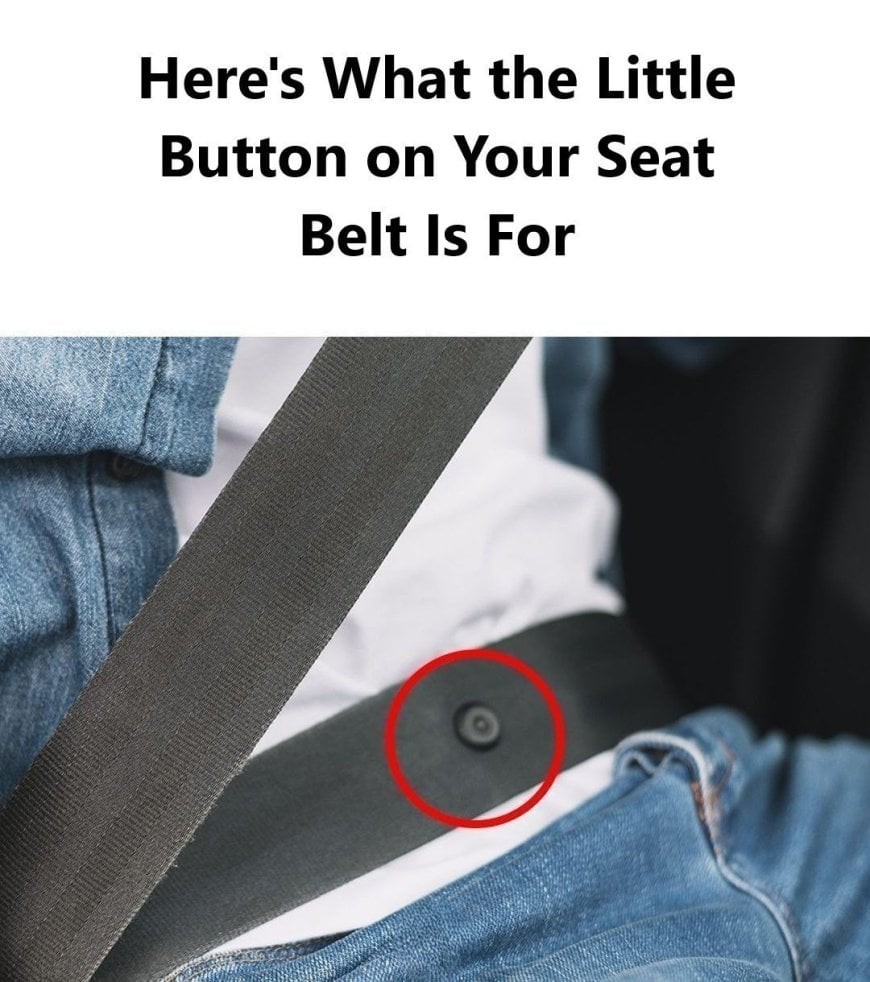
There are countless small details inside a car that most drivers rarely notice.
The buttons on the dashboard get plenty of attention. So do the steering wheel, pedals, mirrors, and gear selector. But tucked along the seat belt is a tiny piece of plastic that quietly performs a useful job every time you get behind the wheel.
It is called a seat belt stop button, also known as a seat belt stopper or comfort button.
It may look like nothing more than a small plastic fastener attached to the belt. Yet without it, using your seat belt can become surprisingly inconvenient.
That tiny component is a good example of how automotive design often works: the best features are sometimes the ones you barely notice because they simply do their job.
What Is the Small Button on a Seat Belt?
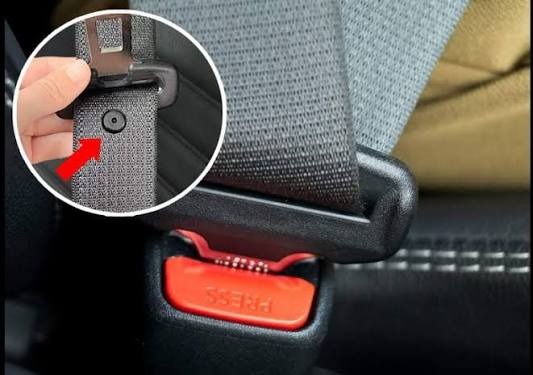
The small plastic piece attached to a seat belt is designed to limit how far the metal latch plate can slide along the belt.
When you unbuckle your seat belt, the latch plate normally travels upward or downward along the webbing depending on the vehicle’s design and the position of the belt.
The stop button prevents it from sliding too far.
Instead of allowing the latch to disappear down toward the floor or become trapped beside the seat, the button keeps it positioned within an easier reach.
It is a remarkably simple solution to a common everyday problem.
Why Is the Seat Belt Stop Button Important?

The primary purpose is convenience.
Imagine getting into your car, reaching for the seat belt, and discovering that the metal latch has slid all the way down beside the seat.
You would have to bend down, search for it, pull it upward, and then fasten the belt.
It takes only a few extra seconds, but repeating that process every time you drive would quickly become irritating.
The stop button eliminates much of that inconvenience.
By keeping the latch in a predictable position, it makes fastening the seat belt easier and more automatic.
That matters because simple, convenient routines are easier to maintain.
A Small Design Feature That Supports a Bigger Safety Habit
The stop button itself is not a primary safety component like the seat belt webbing, buckle, pretensioner, or other restraint-system components.
Its contribution is much simpler.
It helps make the seat belt easier to use.
That convenience can support the larger habit of buckling up every time you drive.
Modern cars contain many examples of this philosophy. Designers constantly look for ways to make important actions easier, faster, and more intuitive.
The seat belt stopper is a tiny example.
You do not normally think about it when it works correctly.
And that is exactly the point.
What Happens When the Button Breaks?
The importance of the little button often becomes obvious only after it disappears.
If the stop button breaks or falls off, the latch plate may slide much farther down the belt.
Depending on the vehicle and seat position, it could end up close to the seat base or partially hidden beside the seat.
Suddenly, something that was previously effortless becomes annoying.
You may have to reach farther than usual to grab the latch before fastening your seat belt.
Some drivers may also notice that the belt behaves differently when the latch is no longer held in its usual position.
The belt may move more freely along the webbing, and the latch can potentially come into contact with nearby trim or other surfaces.
Can a Missing Stop Button Damage the Seat Belt?
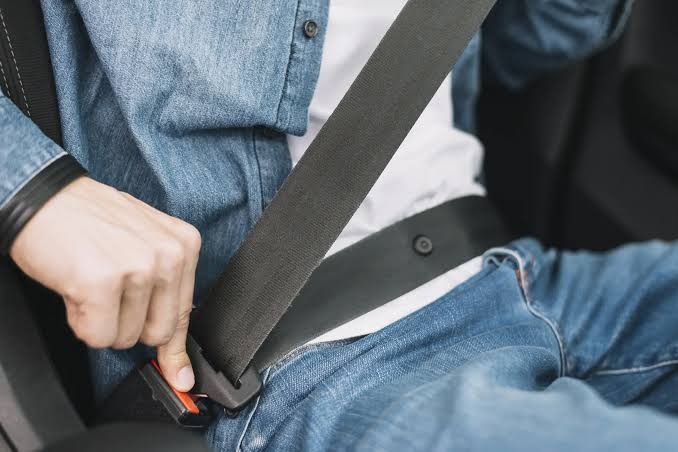
A missing stop button does not automatically mean that the seat belt itself is unsafe.
The stopper is primarily a positioning and convenience component.
However, the entire restraint system should be inspected if the belt has become damaged, frayed, twisted, or otherwise abnormal.
Never assume that a damaged seat belt is fine simply because the small plastic button is the only visible problem.
The webbing is a critical safety component, so any signs of serious wear or damage deserve attention.
If you are uncertain, consult the vehicle manufacturer’s guidance or a qualified automotive professional.
Why Does the Seat Belt Have This Design?
Seat belts have to accomplish several things at once.
They need to remain flexible enough for comfortable everyday use while being strong enough to function as part of the vehicle’s occupant-restraint system.
The belt also needs to move smoothly as people enter, exit, and adjust their seating positions.
The latch plate must remain accessible without constantly falling out of position.
A small stop button provides a straightforward way to control the movement of the latch without making the belt itself complicated.
It is inexpensive, lightweight, and easy to manufacture.
Sometimes the simplest engineering solutions are the most effective.
The Button Is Not the Same as the Seat Belt Buckle
It is easy to confuse the two.
The seat belt buckle is the receiving component attached to the vehicle or seat. You insert the metal latch plate into the buckle when fastening the belt.
The stop button is the small plastic piece attached directly to the seat belt webbing.
The two work together from a user-experience perspective, but they have very different functions.
The buckle secures the latch.
The stopper helps keep the latch conveniently positioned before you use it.
Why Does the Button Look So Small?
There is no need for the stopper to be large.
Its job is simply to prevent the latch plate from passing a certain point.
The plastic piece can therefore remain relatively compact while still doing what it needs to do.
Its small size is also one reason many drivers overlook it.
Most people interact with the seat belt by grabbing the metal latch and clicking it into place. The plastic stopper becomes part of the background.
Only when it breaks does its purpose become obvious.
Can You Replace a Seat Belt Stop Button?
Replacement seat belt stop buttons are commonly available for many vehicles.
The exact replacement method depends on the type of button and the vehicle.
Some replacement styles use a two-piece design that closes around the belt webbing. Others may require a different installation method.
If you are replacing one, make sure the replacement is specifically intended for seat belt webbing and is compatible with the vehicle.
Do not improvise with ordinary household plastic clips, adhesives, screws, or other objects.
A seat belt is a safety-critical system, so modifications should not interfere with the webbing, latch plate, buckle, or other restraint components.
When in doubt, ask a qualified automotive technician to install the correct part.
What If the Seat Belt Is Twisted?
A missing stopper can sometimes make the belt feel less organized, but a twisted seat belt is a separate issue that should not be ignored.
The webbing should normally lie flat across the body when the belt is properly positioned.
If it becomes twisted, correct the twist before driving.
The same principle applies if the belt becomes trapped in a door, damaged by sharp edges, or shows signs of significant wear.
Small convenience components may seem unimportant, but the seat belt itself deserves careful attention.
Why These Tiny Features Matter
Cars are full of details that are easy to overlook.
A tiny light tells you that a door is open.
A small clip keeps a cable from moving.
A rubber seal keeps outside air and water from entering.
A plastic stopper keeps a seat belt latch within reach.
None of these features is particularly dramatic.
Yet together, they make a vehicle easier and more pleasant to use.
The seat belt stop button is a perfect example because its usefulness is almost invisible.
When it is working, you do not think about it.
When it is missing, you immediately notice.
A Reminder to Look at the Details
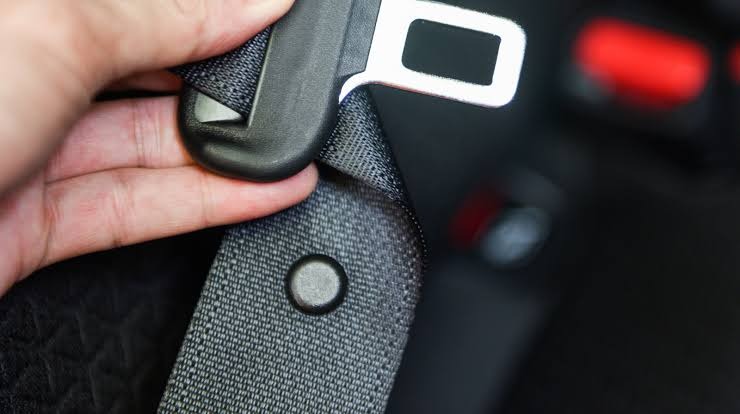
The next time you sit in your car, take a moment to look at your seat belt.
Notice where the metal latch rests when the belt is not being used.
Look at the small plastic stopper below it.
If the button is intact, it will probably continue doing its job without attracting any attention.
If it is broken or missing, replacing it can restore the belt’s normal positioning and make everyday use more convenient.
Just remember that the stopper is not a substitute for inspecting the seat belt itself.
If the webbing is damaged or the restraint system is malfunctioning, professional inspection is more important than simply replacing the plastic button.
The Little Button With a Surprisingly Useful Job
It is easy to assume that everything inside a car has an obvious purpose.
But automotive designers often solve everyday frustrations with tiny components that most people never notice.
The seat belt stop button is one of them.
It does not make the engine more powerful.
It does not change the appearance of the vehicle.
It does not appear on most drivers’ lists of favorite car features.
But every time you reach for the seat belt and find the latch exactly where you expect it to be, that little piece of plastic has quietly done its job.
And perhaps that is what makes it so interesting.
The best design details are often the ones that disappear into the experience.
You only notice them when they stop working.
So the next time you buckle up, take a second to appreciate the tiny plastic button sitting on the belt.
It may be one of the smallest parts in your car—but it was put there for a reason.