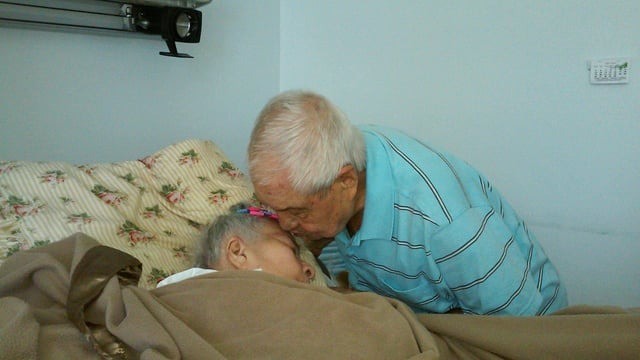
Losing someone you love can make the final goodbye feel incredibly important.
For many families, touching a loved one’s hand, holding them, or giving them one last kiss is a deeply personal part of saying goodbye. It can provide comfort during an emotional moment and help make the loss feel real.
But a video shared online by a doctor from Moldova, Dr. Viktor Ivanovik, has sparked a different conversation: Is it safe to kiss someone after they have died?
The topic has generated strong reactions online, with some people saying they would never give up that final gesture and others wondering whether there are health considerations they should know about.
The reality is more nuanced than many social media posts suggest.
What Happens to the Body After Death?

After death, the body begins a series of natural biological changes.
The heart stops pumping blood, breathing ends, and the body’s normal cellular processes gradually stop. Over time, tissues begin to break down.
This process is known as decomposition.
Microorganisms that normally live in and on the human body continue to play a role in breaking down tissues after death. As decomposition progresses, physical changes become increasingly noticeable.
However, there is no universal rule that a body suddenly becomes dangerous at a specific number of hours after death.
The speed of decomposition depends on many factors, including temperature, humidity, the person’s condition before death, how the body is handled, and whether it has been refrigerated or otherwise preserved.
That means claims suggesting that a person becomes hazardous precisely nine hours after death should be treated cautiously.
Is Kissing a Deceased Person Dangerous?
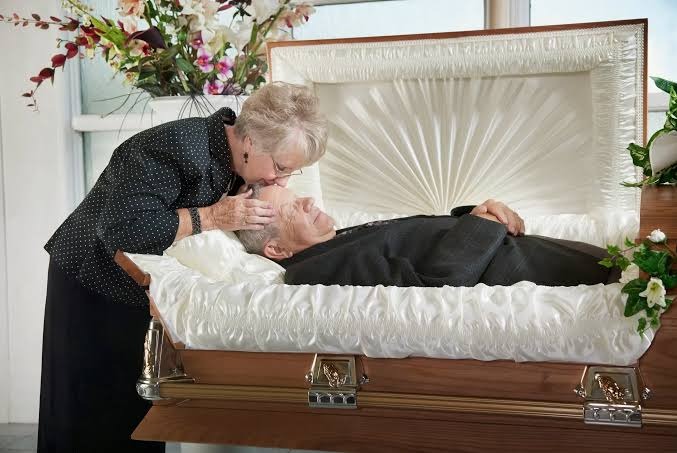
For most people, simply being near a deceased person does not automatically create a health emergency.
The risk depends largely on the circumstances surrounding the death and the person’s underlying infection status.
Some infectious diseases can remain transmissible after death, particularly through contact with blood or certain bodily fluids.
That is why healthcare professionals and funeral workers use appropriate precautions when handling bodies.
The risk can also be different when a person has died from a known infectious disease.
In such circumstances, family members should follow guidance from healthcare professionals or funeral personnel regarding physical contact.
Why Do Some Families Kiss the Deceased?
For many people, a final kiss has nothing to do with health risks.
It is about love.
A parent may kiss their child goodbye.
A husband or wife may touch their partner’s forehead.
A son or daughter may hold a parent’s hand one final time.
These gestures can have deep cultural, religious, and emotional significance.
For someone experiencing grief, physical contact may also help create a sense of closure.
There is no single “correct” way to say goodbye.
Some people want to be physically close to the person they lost, while others prefer to remember them as they were in life.
Both reactions are completely understandable.
The Importance of Individual Circumstances
Rather than assuming that every deceased person presents the same level of risk, it is more useful to consider the circumstances.
For example, if someone died after a serious contagious infection, healthcare professionals may recommend avoiding certain types of contact.
If the cause of death is unknown, families can ask medical or funeral professionals for advice.
The condition of the body also matters.
A body that has been properly refrigerated and handled by trained professionals undergoes changes differently from one that has remained at room temperature for an extended period.
This is one reason broad statements about a specific number of hours can be misleading.
What About Bacteria?
Bacteria are naturally present throughout the human body.
They live on the skin and inside areas such as the mouth and digestive system.
After death, the body’s immune system is no longer functioning, and natural biological processes begin to change.
Microorganisms contribute to decomposition.
However, the presence of bacteria does not automatically mean that touching or briefly kissing a deceased person will make someone sick.
Infection requires a particular pathogen and a route of transmission.
The risk varies significantly depending on the circumstances.
This distinction is important because social media discussions can sometimes turn a complicated medical issue into a simple statement such as “never touch a dead body.”
That is not an accurate description of every situation.
What Should Families Do?
If a loved one has recently died, the best approach is to ask the professionals responsible for their care.
Hospice staff, doctors, nurses, funeral directors, and other trained professionals can explain whether physical contact is appropriate.
If there is a known or suspected infectious disease, additional precautions may be necessary.
Families should also avoid contact with bodily fluids and follow any instructions provided by healthcare professionals.
If you are unsure, asking before touching or kissing the person is perfectly reasonable.
Grief Can Make Decisions Difficult
One reason this topic creates such strong reactions is that grief changes the way people experience time and decision-making.
When someone dies, families may have only a short period to say goodbye.
People may suddenly realize that they will never again hear that person’s voice, hold their hand, or see them smile.
A final gesture can therefore carry enormous emotional meaning.
This is why telling grieving families that they should or should not perform a particular farewell ritual without considering their circumstances can be insensitive.
The most important thing is to balance emotional needs with appropriate health precautions.
A Final Goodbye Can Take Many Forms
A kiss is only one way to say goodbye.
Someone might hold a loved one’s hand.
They might speak to them quietly.
They might place a favorite photograph beside them.
They might say a prayer.
They might simply sit nearby for a few moments.
For some people, these quiet moments become deeply meaningful memories.
And for others, saying goodbye without physical contact may feel more comfortable.
There is no universal formula for grief.
What Experts Really Want People to Understand
The main lesson isn’t that families should be afraid of their deceased loved ones.
It is that health precautions should be based on the circumstances rather than generalized claims circulating online.
If a person died from an infectious disease, appropriate precautions matter.
If healthcare professionals advise against certain forms of contact, their guidance should be followed.
And if a family is unsure whether touching or kissing a loved one is appropriate, asking the medical or funeral-care team is the safest way to get an answer.
At the same time, the emotional importance of saying goodbye should not be dismissed.
For many families, that final moment is an important part of grieving.
The Most Important Part of Saying Goodbye
When we lose someone close to us, there is often no perfect way to say goodbye.
Some people need one last touch.
Some need to say “I love you.”
Others simply need a quiet moment in the same room.
What matters is finding a way to honor the person while also taking reasonable precautions when health risks are present.
So, rather than relying on frightening claims about a precise number of hours after death, families should seek guidance based on the actual circumstances.
A final goodbye should be a moment of love and remembrance—not unnecessary fear.
And sometimes, the most meaningful farewell isn’t about what you do physically at all.
It is simply about being there, remembering the life someone lived, and carrying their memory with you afterward.