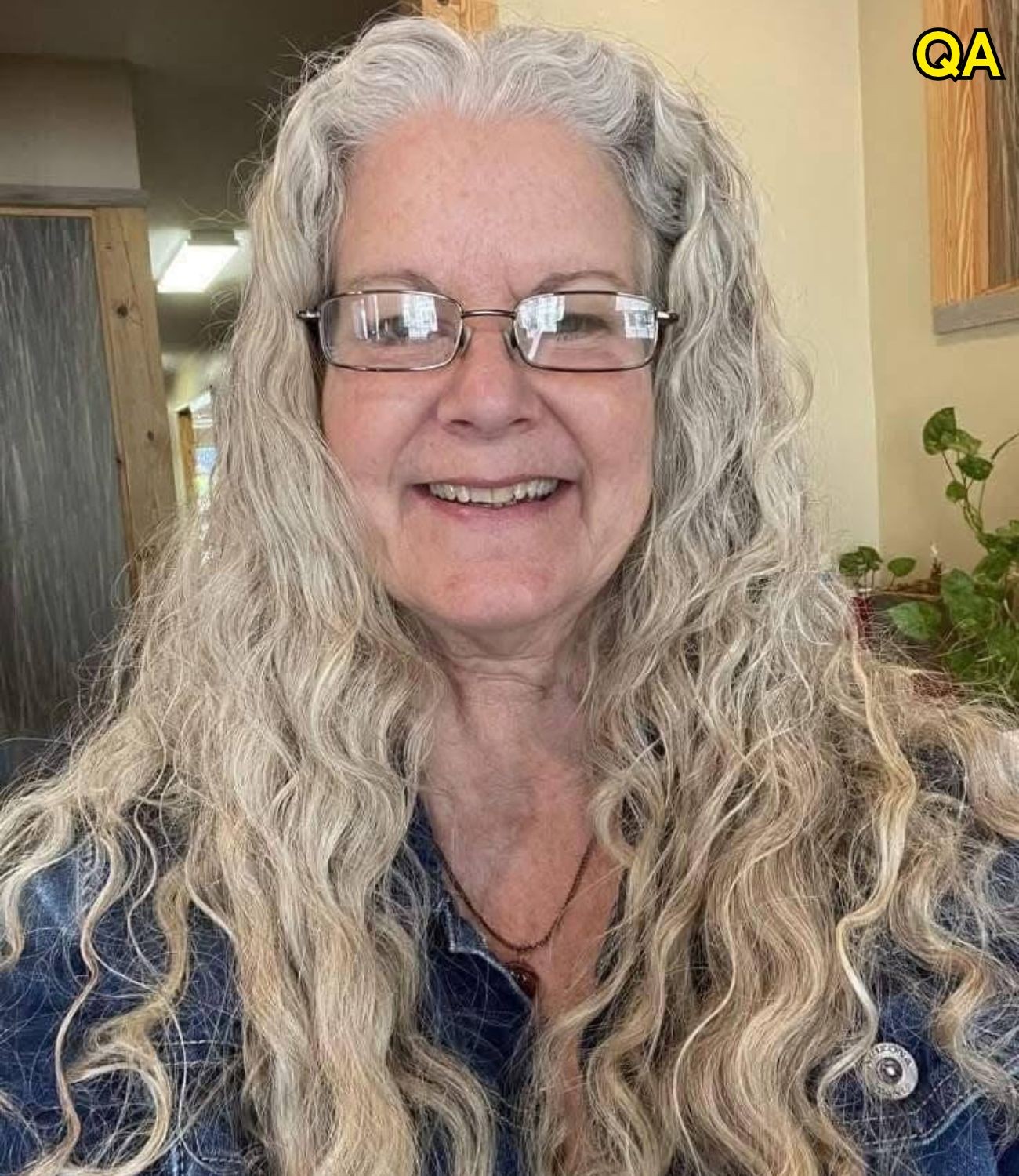
“You would look younger with shorter hair.”
“Long hair is for young women.”
“Doesn’t it become difficult to manage at your age?”
I have heard these comments more times than I can count. Sometimes they come from strangers, sometimes from people I know, and occasionally from friends who genuinely believe they are offering helpful advice.
I am in my 60s, and my hair falls well past my waist. It is no longer the golden blonde it was when I was younger. Years have softened its color into a beautiful silver-white, almost like the first light of morning.
People often ask why I do not simply cut it.
They assume I am afraid of getting older, that I am trying to preserve the appearance I had decades ago, or that I have become too attached to a hairstyle I have worn for most of my life.
But the truth is much more personal.
I keep my hair long because of a man who once loved it.
And although he has been gone for years, I am not yet ready to let go of the memories attached to it.
The Hair He Used to Call Beautiful
When I was younger, my hair was one of the first things he noticed about me.
We met at a time when neither of us knew what the future would bring. I was a young woman with a head full of golden hair, uncertain plans, and dreams that seemed much bigger than the little world I knew.
He had a way of making ordinary moments feel special.
He would notice the smallest things: the way I laughed when I was nervous, how I tucked my hair behind my ear when I was concentrating, and how the wind could turn a perfectly arranged hairstyle into something completely different.
He especially loved my long hair.
Sometimes, when we sat together in the evening, he would gently run his fingers through it. He never seemed to be in a hurry. He would slowly brush away the tangles, occasionally smiling when a strand caught on his hand.
He called me his “wildflower.”
He said my hair reminded him of something free and beautiful, something that did not need to be controlled to be lovely.
I remember laughing at him whenever he said things like that.
“You’re just saying that because you don’t have to brush it every morning,” I would tease.
He would smile and answer that he could spend all day doing it if I let him.
Those were simple moments. Nothing extraordinary happened. There were no grand gestures or expensive gifts.
But looking back, I realize that those small acts of affection became some of the most precious memories of my life.
A Lifetime Built on Ordinary Moments
We grew older together.
Our lives were not perfect, and our marriage was not a story without difficulties. We had disagreements, stressful days, financial worries, and moments when neither of us knew exactly what to do.
But we learned how to face those things together.
We built a home, celebrated birthdays, welcomed new chapters, and watched the years pass. There were mornings filled with laughter and evenings when we sat quietly, each occupied with our own thoughts.
Sometimes he would come home after a long day, find me brushing my hair, and stand behind me for a moment.
“Still beautiful,” he would say.
I would roll my eyes and tell him he had said that a thousand times.
“Then I’ll say it a thousand more,” he would reply.
I never imagined that one day I would miss hearing those words so much.
At the time, I thought we had all the time in the world.
Like many couples, we believed that tomorrow would bring another ordinary morning, another shared meal, and another opportunity to tell each other the things we sometimes forgot to say.
We did not know how quickly everything could change.
The Diagnosis That Changed Everything
The first signs of illness were easy to misunderstand.
He seemed more tired than usual. Some days, he had little appetite. He occasionally complained about discomfort, but neither of us initially imagined that the situation would become so serious.
Then came the medical appointments.
Tests, conversations with doctors, unfamiliar terminology, and waiting rooms gradually became part of our daily lives.
Eventually, we received the diagnosis: cancer.
I remember the silence that followed.
There are moments when words seem too small to express what is happening. I wanted to ask a hundred questions, but all I could do was reach for his hand.
We began treatment and tried to remain hopeful.
There were better days, when he could smile and make jokes as he always had. There were difficult days, when exhaustion seemed to take away the energy he once had.
I stayed beside him through appointments, treatments, and long nights.
We talked about the past, about the people we loved, and about the memories we had made together. Sometimes we discussed the future, although both of us knew that those conversations had become harder.
Cancer changed our lives in ways neither of us could have imagined.
It took away his strength gradually, and eventually, it took away the future we had expected to share.
The Promise I Made Beside His Hospital Bed
There is one moment I remember more clearly than almost anything else.
I was sitting beside his hospital bed, holding his hand.
He was very weak. His voice was quieter than before, and even the smallest movement seemed to require effort.
I brushed my hair away from my face, and he looked at me.
For a brief moment, I saw the familiar expression I had known for so many years.
He smiled.
I cannot remember every word we exchanged that day. Time has softened some details, as it often does when memories are painful.
But I remember the way he looked at me.
I remember the warmth of his hand.
And I remember realizing that the person who had been part of almost every chapter of my adult life might soon no longer be beside me.
When he was gone, the world continued moving.
The sun still rose. Cars still passed outside. People continued shopping, working, laughing, and making plans.
But my world had changed completely.
The house felt unfamiliar without his voice. His favorite chair remained empty. Small reminders appeared everywhere: a cup he used, a book he had been reading, and the familiar scent that seemed to linger in places he had once occupied.
My hair was one of those reminders.
I remembered his fingers moving through it and the way he used to call me his wildflower.
And somewhere in the middle of that grief, I made a quiet promise to myself.
I would not cut it.
Not because I believed he would want me to remain exactly as I had been, but because keeping it long gave me a small, comforting connection to a love that had shaped my life.
Learning to Live With the Memories
The months after his death were difficult.
There were mornings when I woke up and briefly forgot that he was gone. For a few seconds, everything felt normal.
Then reality returned.
I had to learn how to make decisions alone, how to spend evenings without our familiar conversations, and how to accept that the person I had expected to grow old with was no longer there.
People offered advice, often with good intentions.
They encouraged me to travel, meet new people, change my routine, and find activities that would help me move forward.
Some suggested that changing my appearance might make me feel better.
“Perhaps a new haircut would help you start a new chapter,” one friend said.
I understood what she meant. She wanted me to feel happy again.
But I did not need a new hairstyle to begin living.
I needed time.
I needed to discover how to carry my memories without allowing sadness to become the only thing I felt.
Gradually, I started doing small things for myself. I returned to activities I had neglected, spent more time with friends, and learned to enjoy quiet moments without feeling guilty.
Some days were still difficult, but I began to understand that healing did not mean forgetting.
It meant finding a way to continue while keeping the love that mattered most.
Why I Still Brush My Hair Every Morning
Today, my hair is silver-white and longer than many people think is practical.
I take care of it carefully. I wash it, brush it, and sometimes braid it when I want it out of the way.
The routine takes time, but I do not mind.
There is something peaceful about those few minutes each morning.
When I brush through the strands, I sometimes remember the man who once stood behind me and did the same thing with his fingers.
I remember his smile, his laughter, and the nickname he gave me.
Of course, my hair is not actually a part of him. It cannot bring him back, and keeping it long does not stop time from moving forward.
But it represents something meaningful to me.
It reminds me of a relationship built through years of shared experiences. It reminds me that I was once loved in a way that made ordinary things feel extraordinary.
And it reminds me that love does not always disappear when someone is no longer physically present.
Sometimes, it remains in the smallest details of our lives.
Growing Older Does Not Mean Giving Up What You Love
I have come to understand that people have different ideas about what it means to age gracefully.
Some women prefer short hairstyles. Others enjoy experimenting with new colors and styles. Some choose to embrace their natural appearance, while others simply wear whatever makes them feel comfortable.
There is no single correct way to look or behave in your 60s, 70s, or beyond.
Age does not automatically determine what someone should wear, how they should style their hair, or what choices they should make about their appearance.
For me, keeping my hair long is a personal decision.
It is not an attempt to look younger. It is not a refusal to accept the passage of time.
I know my hair has changed. I know my face has changed. I can see the years in my reflection, and I no longer expect to look like the young woman I once was.
But I have learned that growing older does not require abandoning everything that holds meaning.
If something brings comfort, happiness, or a sense of connection, why should someone else decide that it must be given up?
The Answer I Give When People Ask Again
People still make comments.
Sometimes I simply smile. Other times, when someone asks why I refuse to cut my hair, I give them a short answer.
“Because I like it this way.”
That is enough.
I do not owe everyone the story behind my decision. I do not need to explain my grief or turn a personal memory into a conversation with strangers.
But if someone asks with genuine curiosity, I might tell them about the man who called me his wildflower.
I might tell them about the evenings when he gently brushed my hair and made me laugh.
And I might tell them that he is no longer here, but the love we shared remains part of who I am.
Perhaps then they will understand.
Or perhaps they will simply see an older woman with unusually long silver hair.
Either way, I am comfortable with my choice.
I have lived long enough to understand that not every decision needs to make sense to everyone else.
Some things are beautiful because of what they mean to us, not because of how they appear to the world.
My hair is one of those things.
And every morning, as I brush it and watch the silver strands fall over my shoulders, I remember the words of the man who once called me his wildflower.
I cannot bring him back.
But I can carry the memory of his love with me.
And for now, that is enough.
Sometimes, what looks like a simple personal choice carries a lifetime of memories. Before telling someone to change something about themselves, remember that you may not know the story behind it.