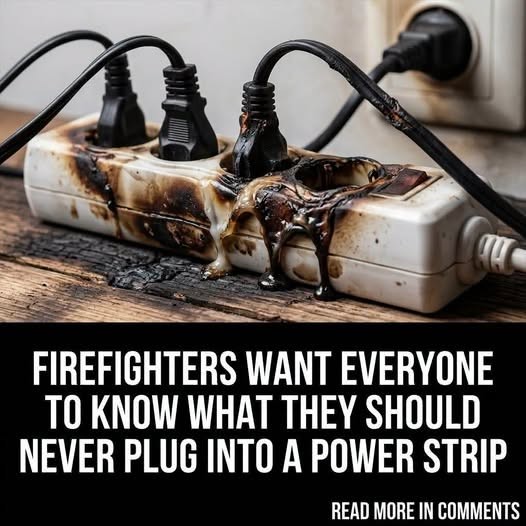
What You Should Never Plug Into a Power Strip
Power strips are useful household tools, but they are often misunderstood. They can provide extra outlets for low-power electronics, lamps, chargers, and similar devices, yet they do not increase the amount of electricity available from the wall circuit. Using a power strip incorrectly can overload the strip, damage equipment, trip a breaker, or create an avoidable fire hazard.
A crowded power strip behind a television stand, desk, or kitchen counter can look harmless because the connected devices may all be familiar. The risk is not usually the number of plugs alone. It is the combined electrical load, the condition of the strip and cord, the rating of the outlet circuit, and whether the connected appliance is designed to operate from a power strip at all.
Electrical-safety organizations, fire authorities, and appliance manufacturers generally advise consumers to reserve power strips for lower-wattage devices and connect high-demand appliances directly to properly installed wall outlets. Understanding why this matters can help households make safer choices without giving up the convenience of extra outlets where they are appropriate.
Power Strips Add Outlets, Not Electrical Capacity
The most important safety principle is simple: a power strip does not create additional electrical capacity. It merely allows multiple devices to share the capacity available from one wall outlet and its circuit.
In many North American homes, standard household circuits are commonly rated at 15 or 20 amperes. A typical power strip may be rated for 15 amperes, often equivalent to a maximum of approximately 1,875 watts on a 120-volt circuit. However, the actual safe load depends on the strip’s listed rating, the circuit, the outlet, the wiring, and the devices in use. Labels on the strip and appliance provide the most reliable information.
For example, a small phone charger may use relatively little power, while a portable heater, toaster oven, electric grill, or hair dryer can draw a large amount of electricity. Connecting one high-wattage appliance to a strip that is already powering electronics can exceed the strip’s rating quickly. The resulting heat may affect the cord, plug, internal connections, or outlet.
It is also important to remember that two wall outlets in the same room may be on the same electrical circuit. Moving a device from one outlet to another does not necessarily reduce the load on that circuit. If a breaker trips repeatedly, a qualified electrician can help determine whether the circuit is overloaded or whether another electrical problem needs attention.
Appliances That Should Usually Go Directly Into a Wall Outlet
High-wattage appliances should generally be connected directly to a wall outlet, following their manufacturer instructions. These products can draw substantial current, particularly when heating, cooling, starting a motor, or operating for long periods.
Space Heaters
Portable electric space heaters are among the most frequently cited examples of appliances that should not be used with ordinary power strips or extension cords. Space heaters commonly draw close to the maximum capacity of a standard household circuit. The National Fire Protection Association and other safety organizations advise plugging them directly into a wall outlet and keeping them away from combustible materials.
A heater may appear to work normally when plugged into a strip, but that does not mean the arrangement is safe. Heat can build up at connection points over time, especially if the strip is old, damaged, covered, or already supporting other equipment. A direct wall connection reduces unnecessary points of failure.
Kitchen Appliances With Heating Elements
Many countertop kitchen appliances use significant power because they generate heat. Toasters, toaster ovens, electric grills, slow cookers, air fryers, hot plates, coffee makers, microwave ovens, and electric kettles may require direct connection to an appropriate wall outlet. The manufacturer’s manual should always take priority.
Kitchen use also presents moisture-related concerns. Electrical connections should remain dry, cords should not run across sinks or wet surfaces, and outlets near water should have ground-fault circuit interrupter protection where required by local electrical codes. GFCI protection can help reduce the risk of electric shock by shutting off power when it detects an imbalance in current.
Large Appliances and Motor-Driven Equipment
Refrigerators, freezers, washing machines, dryers, dishwashers, air conditioners, dehumidifiers, sump pumps, and similar appliances may need dedicated outlets or dedicated circuits. These devices can draw high current when their motors start, even if their normal running load appears moderate. Connecting them to a power strip can create overheating risks and may conflict with the manufacturer’s installation instructions.
Air conditioners deserve particular attention. Window and portable units often have specific instructions about outlet type, grounding, and extension cords. Some models require a dedicated circuit because of their electrical demand. A power strip is not a substitute for properly installed household wiring.
Power Tools, Printers, and Office Equipment
Some workshop and office equipment also requires careful consideration. High-demand power tools, compressors, laser printers, photocopiers, and shredders can use substantial power or create momentary surges when starting. A heavy-duty surge protector or power distribution unit may be suitable in some professional settings, but only when it is rated and intended for the equipment involved.
For household use, the safest approach is to follow the product manual and use a direct wall outlet whenever a manufacturer advises it. A standard household strip should not be treated as a universal solution for every plug.
Why Daisy-Chaining Power Strips Is Unsafe
One of the clearest electrical-safety rules is to avoid “daisy-chaining” power strips. This means plugging one power strip into another, or plugging a power strip into an extension cord and then adding more devices. The added outlets may look convenient, but they do not increase the capacity of the original outlet or circuit.
Daisy-chaining can make it easier to overload a single connection without realizing it. It may also increase resistance and heat at the plugs and cords. Workplace safety standards commonly prohibit this setup, and it is an unsafe practice in homes as well.
If there are not enough outlets for a room’s legitimate needs, the long-term solution may be to have additional outlets installed by a licensed electrician. For temporary low-power needs, a properly rated power strip connected directly to a wall outlet may be appropriate, but its load limit must still be respected.
How to Read a Power Strip’s Electrical Rating
Before using a power strip, inspect its label. A listed strip should show an electrical rating, commonly expressed in amperes, volts, and watts. In the United States and Canada, consumers should look for a certification mark from a recognized testing laboratory, such as UL or ETL, indicating that the product has been evaluated to applicable safety standards.
To estimate the combined load, add the wattage of all devices connected to the strip. Appliance labels, manuals, and manufacturer websites often list wattage or amperage. If only amperage is shown, wattage can be estimated by multiplying volts by amps. On a 120-volt supply, a device rated at 10 amps uses roughly 1,200 watts.
This calculation is only a general guide. Devices with motors, compressors, or heating elements can have changing loads, and manufacturers may provide more specific instructions. Consumers should avoid operating a strip close to its maximum rating for extended periods, especially if they are uncertain about a device’s actual demand.
Signs a Power Strip Should Be Replaced
Power strips are not permanent fixtures. They should be checked periodically and replaced if they show signs of wear or malfunction. Stop using a strip immediately if it has a cracked housing, loose outlets, frayed cord, bent plug, discoloration, unusual odor, buzzing sound, or noticeable heat.
A power strip should never be covered by rugs, bedding, furniture, or other materials that trap heat. The cord should not be pinched in doors, run beneath carpets, or routed where it can be damaged by foot traffic. Keep strips away from water, damp areas, and locations where spills are likely.
Surge protectors require the same care. A surge protector can help protect certain electronic devices from voltage spikes, but it does not make an overloaded circuit safe. It is still a power strip with a maximum electrical rating, not a way to operate appliances beyond a circuit’s capacity.
Safe Use of Power Strips for Electronics
When used correctly, power strips can be practical for low-power electronics. Television systems, routers, computer accessories, game consoles, lamps, speakers, and charging equipment may be appropriate candidates, provided the combined load remains within the strip’s rating.
For a home office, a quality surge protector may be useful for computers and networking equipment. It should be placed where it can be inspected easily, kept ventilated, and connected directly to a wall outlet. Avoid combining it with heating appliances or high-demand equipment on the same strip.
Users should also avoid relying on cheap, unlisted, damaged, or counterfeit electrical products. Reputable retailers, recognized safety certification marks, and clear manufacturer documentation can help consumers identify products designed to meet applicable safety expectations.
Aquariums Require Moisture and Electrical Safety Planning
Aquarium equipment needs special attention because water and electricity are present in the same area. There is no universal rule that prohibits every power strip near an aquarium, but the setup must follow equipment instructions and sensible electrical-safety practices.
Use GFCI-protected outlets where appropriate, keep all plugs and connections dry, and create drip loops in cords. A drip loop is a section of cord that hangs below the outlet before rising to the plug, helping prevent water from traveling along the cord toward the electrical connection. Power strips should be positioned away from splashes and should never sit on the floor where leaks could reach them.
Equipment such as pumps, heaters, filters, and lights should be checked regularly. Any damaged cord, corroded plug, or water-exposed strip should be removed from service. Aquarium owners should follow the instructions provided by each equipment manufacturer rather than relying on a one-size-fits-all rule.
Medical Devices Need Manufacturer-Specific Guidance
Medical equipment, including CPAP machines, oxygen concentrators, mobility-device chargers, and other essential devices, should be used according to the manufacturer’s instructions and the advice of a healthcare provider when relevant. Some products may be designed for use with a specific type of extension cord, surge protector, or backup power system; others may require direct wall connection.
People who depend on electrically powered medical devices should not assume that any power strip is suitable. The equipment manual, device supplier, and manufacturer are the best sources for product-specific requirements. For oxygen equipment, users should also follow fire-safety guidance and keep the device away from open flames, smoking materials, and heat sources.
A household emergency plan can be valuable for people who rely on essential medical equipment. Planning may include knowing how to contact the equipment provider, maintaining any approved backup supplies, and understanding local emergency support options during a prolonged power outage.
When to Call a Qualified Electrician
Repeated circuit-breaker trips, outlets that feel warm, flickering lights, buzzing sounds, damaged receptacles, or frequent dependence on multiple power strips can indicate that a home’s electrical system needs professional assessment. These signs do not always mean there is a serious problem, but they should not be ignored.
A qualified electrician can evaluate circuit capacity, inspect wiring, identify overloaded outlets, and recommend safer options such as new circuits or additional receptacles. This is especially worthwhile in older homes, renovated rooms, home offices, workshops, and areas where major appliances have been added over time.
Practical Power Strip Safety Checklist
- Connect power strips directly to a wall outlet, never to another strip or extension cord.
- Check the strip’s wattage and amperage rating before use.
- Use power strips primarily for lower-wattage electronics and accessories.
- Plug space heaters, major kitchen appliances, air conditioners, and large appliances directly into suitable wall outlets.
- Follow every appliance manufacturer’s installation and power-supply instructions.
- Keep strips dry, uncovered, visible, and away from heat sources.
- Replace strips that are damaged, hot, discolored, loose, or making unusual sounds.
- Use GFCI protection and drip loops where water exposure is possible, including aquarium setups.
- Ask a qualified electrician for help when outlets are insufficient or breakers trip repeatedly.

Conclusion: Use the Right Outlet for the Job
Power strips can safely serve a useful purpose, but they are not designed to solve every household electrical need. Their role is to distribute a limited amount of available power among suitable low-demand devices. They cannot increase a circuit’s capacity, make a high-wattage appliance appropriate for shared use, or replace properly installed outlets and circuits.
Connecting high-demand appliances directly to appropriate wall outlets, avoiding daisy-chained strips, inspecting cords and plugs regularly, and following manufacturer guidance are practical steps that can reduce electrical risks at home. When there is uncertainty about an appliance, circuit, or outlet, professional electrical advice is the safest choice.
Sources
Disclaimer: This content is intended for entertainment purposes only and is not based on real events.