A Moment in Time of Easier Times
Hee Haw remains one of the most recognizable variety programs in American television history. For many viewers, it was not simply a weekly show but part of a shared family routine: a place where country music, broad comedy, familiar performers, and recurring sketches came together in an accessible format. A surviving clip or unpolished moment from the series can still feel like a small time capsule, offering a glimpse of a television era built around regular viewing habits and a broad, multigenerational audience.
The appeal of Hee Haw was rooted in its straightforward approach. It mixed musical performances with short comedy routines, rural-themed jokes, and a large ensemble cast. The program did not aim for subtle satire or elaborate dramatic storytelling. Instead, it relied on recognizable personalities, repetition, wordplay, and a welcoming sense that viewers were being invited into an ongoing community. That format helped the show reach audiences well beyond the country music fans who initially made up its core viewership.
How Hee Haw Became a Television Institution
Hee Haw premiered on CBS in 1969, during a period when American television networks were experimenting with formats designed to reach large national audiences. Created by Canadian television writers Frank Peppiatt and John Aylesworth, the series drew inspiration from the fast-paced comedy and music structure of Rowan & Martin’s Laugh-In, but recast the formula through country music and imagined rural settings.
The program’s original CBS run lasted until 1971. Its story did not end there. In a notable example of independent television distribution, the show continued in first-run syndication from 1971 through 1993. That lengthy syndicated life helped make it a fixture in many parts of the United States, particularly in communities where country music was a major part of local culture. Stations could schedule the program at different times, allowing it to become part of local weekend routines for viewers across generations.
Country stars Buck Owens and Roy Clark served as the best-known co-hosts for much of the program’s history. Owens, an influential figure in the Bakersfield sound of country music, brought a dry comic presence and musical authority. Clark was widely respected as a multi-instrumentalist and entertainer whose easygoing manner made him a natural television host. Their contrasting styles gave the show a dependable center, while the broader cast supplied much of its comic energy.
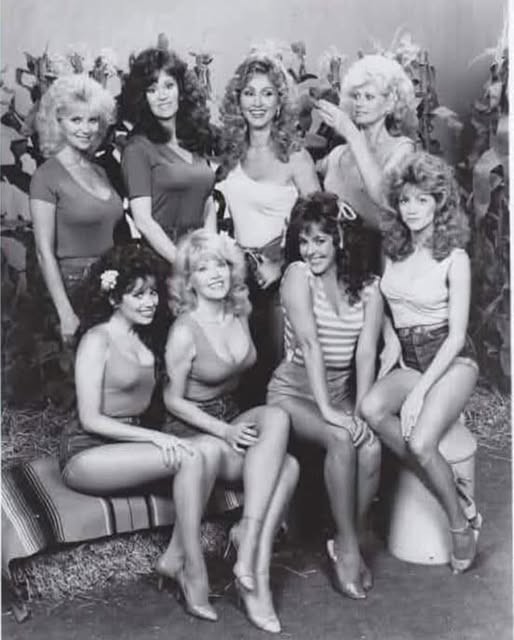
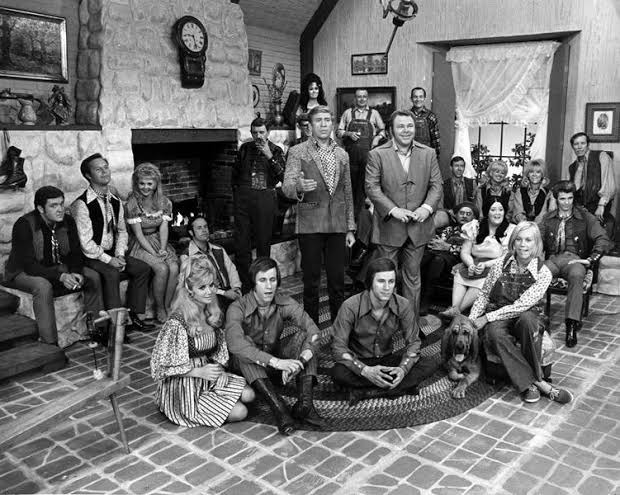
The ensemble included performers and entertainers such as Grandpa Jones, Minnie Pearl, Archie Campbell, Lulu Roman, Junior Samples, Gordie Tapp, Gunilla Hutton, Misty Rowe, and others over the years. The mix of established country artists, comedians, musicians, and television personalities gave Hee Haw a variety-show identity rather than the feel of a conventional scripted comedy.
Country Music at the Center of the Format
Music was central to Hee Haw, not an occasional addition. The show regularly featured country performers at a time when the genre was expanding its presence in American popular culture. Its stage gave artists an opportunity to reach households that might not have attended concerts or followed country radio closely. The performances ranged from traditional country to newer sounds, reflecting the changing landscape of the industry over more than two decades.
The series also placed country music within a light entertainment framework. A viewer could watch a well-known singer perform a hit song and then see the cast shift immediately into a short joke segment. That combination made the program approachable for viewers with different levels of interest in the music itself. For some people, the comedy was the main attraction; for others, the guest performances were the reason to tune in.
Television helped country music build wider national visibility during the late twentieth century, and Hee Haw was one part of that larger story. It was not the only country-focused program of its era, but its longevity gave it a particularly strong place in public memory. The show introduced or reinforced the public image of many performers as entertainers who could communicate directly with audiences in their homes.
The Enduring Appeal of Recurring Sketches
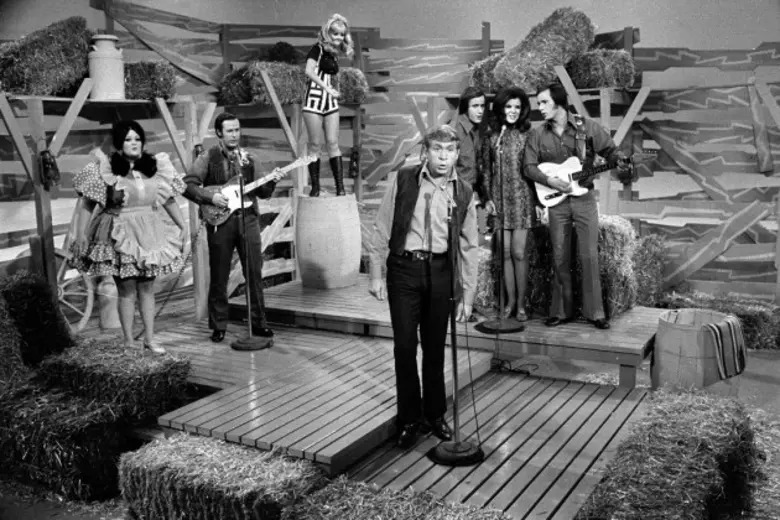
Many memories of Hee Haw are connected to recurring segments rather than individual episodes. “Kornfield Jokes,” for example, used a deliberately simple setup: cast members appeared in a cornfield, delivered quick jokes, and moved on to the next gag. The humor often depended on puns, regional expressions, and predictable punchlines. Its repetition became part of the appeal. Viewers knew what was coming, and that familiarity made the segment feel like a ritual.
Another well-remembered feature was “Gloom, Despair, and Agony on Me,” a comic musical number in which performers exaggerated everyday frustrations through a memorable chorus. The sketch worked because it transformed small disappointments into theatrical, harmless melodrama. It did not ask viewers to take the characters seriously; instead, it offered a playful reminder that humor can make ordinary setbacks feel more manageable.
These segments reflected a traditional variety-show principle: a successful program creates recognizable elements that audiences want to revisit. In an era before streaming libraries and on-demand replay, repetition also helped occasional viewers quickly understand the show’s world. Someone who missed several episodes could return and still recognize the format, the faces, and the style of humor.
A Time Capsule of Television Production
Clips from older television programs often attract attention because they show production styles that differ sharply from modern entertainment. Contemporary television commonly uses tightly edited footage, extensive visual effects, highly managed branding, and social-media promotion. By comparison, a vintage variety program can appear more immediate. Studio performances, visible audience reactions, simple sets, and occasional rough edges may feel less polished, but they can also feel more personal.
An unedited or lightly edited moment from Hee Haw is valuable in this context because it can reveal the practical rhythm of variety television. Performers had to move efficiently between music, dialogue, costumes, and sketches. The cast’s ability to maintain an easy atmosphere was important, especially when the humor depended on timing and collaboration rather than complex production techniques.
That does not mean television of the past was automatically more authentic than television today. Every entertainment program is shaped by planning, editing, business decisions, and the expectations of its audience. However, older clips can highlight forms of performance that have become less common in mainstream television, including ensemble variety shows designed for broad family viewing.

Family Viewing and Shared Cultural Memory
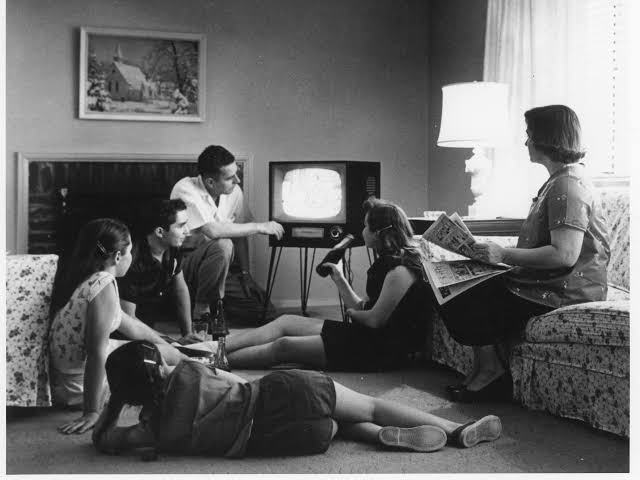
For longtime fans, the strongest connection to Hee Haw may be personal rather than historical. Many viewers associate it with visiting relatives, watching television after dinner, or gathering on a weekend evening. These memories matter because television has often served as a shared social activity. Before viewers could watch nearly anything at any time on personal devices, families were more likely to encounter the same programs together.
The program’s broad format made that kind of shared viewing easier. Children could understand the physical comedy and simple wordplay, while adults could appreciate the musical guests and familiar performers. Its jokes were generally built around everyday situations, exaggerated characters, and rural imagery rather than storylines requiring close attention from week to week.
Nostalgia for a program such as Hee Haw is therefore often nostalgia for a viewing experience. It can represent a time when a household had fewer channels, when scheduled broadcasts shaped routines, and when a popular show became a common reference point among neighbors and relatives. Those memories are not universal, and television audiences have always been diverse, but they help explain why old clips can generate warm reactions decades later.
Understanding the Show in Its Historical Context
A balanced view of Hee Haw also requires context. The series was made during a different period in American entertainment, and some aspects of its humor, character types, and cultural assumptions reflect that era. Modern audiences may respond differently to certain material than the original audience did. Revisiting older television can be an opportunity to recognize both its entertainment value and the ways popular culture changes over time.
The show’s rural setting was intentionally stylized. It presented a comic, fictionalized version of country life rather than a documentary portrait of rural America. Cornfields, overalls, farm imagery, and exaggerated accents became visual shorthand for the program’s comic world. At its best, the format celebrated country music traditions and the talents of its performers. At the same time, viewers can distinguish between a television caricature and the wide range of real experiences found in rural communities across the United States.
Its success also challenged a common assumption that national television audiences preferred only urban or coastal perspectives. The program’s syndicated popularity demonstrated that country-oriented entertainment could sustain a large and loyal audience. That lesson remains relevant in discussions about media representation, regional identity, and the value of programming that speaks to audiences often overlooked by major entertainment trends.
Why Hee Haw Still Connects With New Viewers
New audiences may discover Hee Haw through archival clips, streaming collections, social media posts, music history, or family recommendations. They may not share the original broadcast context, but they can still recognize the performers’ skill and the appeal of a clear, uncomplicated format. A strong musical performance remains compelling regardless of when it was recorded, and well-delivered comedy can retain its energy even when styles change.
There is also renewed interest in television history. Viewers increasingly seek out older programs to understand how genres developed, how stars built their careers, and how entertainment reflected its time. Hee Haw occupies an important place in that history because it combined the traditions of country music, vaudeville-style variety entertainment, network television, and local syndication.
For veteran fans, revisiting the series can bring back familiar voices, songs, and catchphrases. For newer viewers, it can offer a useful introduction to artists who had a major influence on country music and television entertainment. In both cases, the program’s legacy rests less on perfection than on consistency: it delivered a recognizable blend of music and humor to audiences for many years.
The Lasting Legacy of Hee Haw
Hee Haw endures because it represents more than a collection of sketches. It captures a significant chapter in American popular culture, one in which country music reached living rooms nationwide through an enduring variety-show format. Its co-hosts, cast members, and guest artists helped create a program that was instantly identifiable and deeply connected to the traditions of televised entertainment.
A memorable scene, especially one that preserves a spontaneous reaction or an informal exchange, can remind viewers why the series developed such a lasting audience. The value is not necessarily in technical polish. It is in the sense of performers working together, music being shared, and humor functioning as a simple form of connection.
In that sense, Hee Haw remains a gateway to both personal memories and cultural history. It invites longtime viewers to revisit familiar moments while giving new audiences a chance to explore an influential television institution. Its legacy is a reminder that accessible entertainment, memorable music, and a strong sense of community can remain meaningful long after the original broadcast ends.
Sources
Disclaimer: This content is intended for entertainment purposes only and is not based on real events.