Mysterious Postcard of Comfort
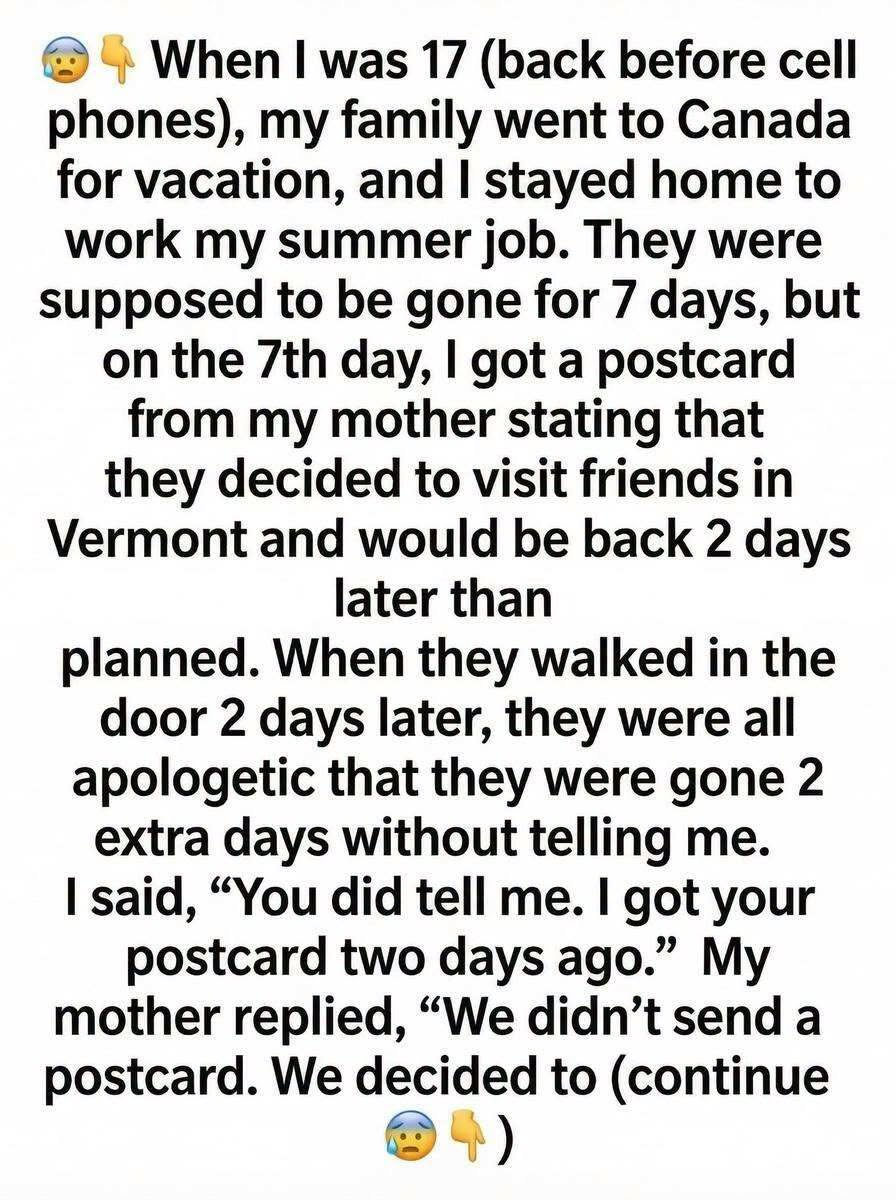
A postcard can be a small, ordinary piece of mail, yet it may carry enormous emotional weight. For someone feeling isolated, a few thoughtful words from a loved one can offer reassurance, connection, and a reminder that they are not alone. When the sender later says they never wrote the message, however, that comfort can turn into uncertainty.
This type of situation is often described as a personal mystery: a message arrives in handwriting that appears deeply familiar, contains words that seem perfectly timed, and is later questioned by the person believed to have sent it. While such stories can be emotionally compelling, it is important to approach them carefully. Memories, handwriting, postal handling, and assumptions about how mail travels can all influence what people believe happened.
There is no verified public evidence attached to the specific account described in the original draft. Rather than presenting unconfirmed events as fact, this article explores the real-world questions raised by unexpected postcards and disputed handwriting. It also offers practical, calm steps for anyone who receives mail that seems unusual or difficult to explain.
Why an Unexpected Postcard Can Feel So Meaningful
Handwritten mail has a personal quality that digital messages often do not. A postcard may show signs of a person’s choices: the handwriting, the selected image, the stamp, the wording, and even the date or location of the postmark. These details can make a recipient feel that the message was prepared specifically for them.
During periods of loneliness, grief, stress, or major life change, people may be especially sensitive to supportive communication. Research on social connection consistently shows that feeling supported by family, friends, and community can be important for emotional well-being. A kind message may not solve a difficult situation, but it can help a person feel seen and remembered.
That emotional context also explains why uncertainty about a postcard’s origin can be unsettling. If a parent, relative, or close friend denies sending a message that seems unmistakably theirs, the recipient may wonder whether they misunderstood the situation, whether the sender forgot, or whether someone else had access to personal information. These questions deserve a measured response rather than an immediate conclusion.
How Mail Can Become Difficult to Trace
Unlike many parcels, postcards are generally not tracked from sender to recipient. In most postal systems, a standard postcard can be deposited in a mailbox, processed through automated sorting equipment, transported between facilities, and delivered without a detailed public record of each stage.
A postmark may provide useful clues, but it does not always answer every question. Postmarks can indicate a processing location and date, although the location may be tied to a postal processing center rather than the precise place where the postcard was written or deposited. Mail can also be delayed, routed through different facilities, or collected before the recipient expects it.
In some cases, a postcard may have been written earlier and sent later. It could have been placed among papers, handed to another person to mail, or found after an extended delay. A sender may also simply have forgotten writing it, particularly if the card was prepared during a busy, emotional, or routine period. Forgetfulness alone does not establish wrongdoing or deception.
For these reasons, postal authorities generally advise people to retain the physical item if they have concerns. The postcard itself may contain useful details, including the stamp, cancellation mark, address formatting, ink, printing, and any return-address information.
Familiar Handwriting Is Not Always Conclusive Evidence
Handwriting can feel highly recognizable, especially within families. People often learn to identify the handwriting of parents, partners, teachers, and close friends through years of cards, notes, shopping lists, and letters. Still, recognizing handwriting is not the same as proving authorship.
Writing naturally changes over time. Age, illness, fatigue, stress, medication, writing position, pen type, paper texture, and speed can all affect letter shapes and spacing. A person writing quickly on a small postcard may produce a style that looks different from the one they use in a longer letter. Conversely, someone attempting to imitate another person’s writing may reproduce broad features without matching the finer details.
Professional document examination is a specialized field. When an issue has legal, financial, or safety implications, an appropriately qualified forensic document examiner may compare questioned writing with known writing samples. Such work examines more than whether letters “look alike.” It may assess slant, rhythm, pen pressure, line quality, word spacing, formation habits, and other features.
However, expert examination is not usually necessary for a single benign postcard. In many personal cases, an open conversation and a review of practical facts are more proportionate than treating the message as a formal investigation.
A Calm Checklist for Verifying an Unexplained Postcard
If a postcard appears to come from someone who denies sending it, the first step is to slow down. It is understandable to feel confused, but immediate assumptions can increase distress. A simple, organized review may clarify the situation.
- Keep the original postcard. Avoid throwing it away, marking it up, or separating it from its envelope if one was used.
- Photograph both sides. Clear images can preserve the postmark, handwriting, stamp, and message.
- Check the mailing details. Note the postmark date, location, return address, stamp, and any printing on the card.
- Ask the possible sender gently. Share a photograph and ask whether they recognize the card, message, stationery, or timeframe.
- Consider ordinary explanations. The card may have been written earlier, mailed by someone else, delayed, or confused with another note.
- Protect personal information. Do not publish addresses, signatures, or identifying details online.
- Report credible concerns. If the mail includes threats, requests for money, suspicious links, identity information, or signs of fraud, contact the relevant postal inspection service or local authorities.
The key distinction is between an unexpected personal message and mail that creates a genuine safety concern. A supportive postcard with no threatening or fraudulent content may be best handled through documentation and respectful communication. Mail involving intimidation, impersonation, financial pressure, or attempts to obtain sensitive information should be treated more seriously.
Privacy and Scam Awareness in Unexpected Mail
Unexpected mail can sometimes be connected to scams, though not every unfamiliar card is suspicious. People should be cautious if a postcard asks for banking details, passwords, payment, gift cards, account verification, or urgent action. Legitimate organizations generally do not ask people to disclose sensitive financial information through an unsolicited postcard.
It is also wise to be careful when sharing a mysterious message on social media. A postcard image may reveal a home address, postal barcode, signature, travel plans, family details, or other information that should remain private. If people choose to discuss the experience publicly, they can remove identifying details first.
In the United States, the U.S. Postal Inspection Service provides reporting guidance for mail fraud and suspicious postal activity. Other countries maintain their own postal security and consumer-protection channels. For immediate danger or a direct threat, people should contact local emergency services rather than relying only on a postal report.
Memory, Communication, and Family Conversations
When a loved one says they did not write a message that seems to be in their handwriting, the conversation can become emotionally charged. The recipient may feel invalidated, while the alleged sender may feel confused or accused. A constructive approach focuses on shared facts rather than blame.
Instead of saying, “You definitely wrote this,” it may help to ask, “Does any part of this look familiar to you?” or “Could this have been written at another time?” These questions leave room for uncertainty. They also recognize that people can remember events differently without either person acting in bad faith.
If the situation contributes to ongoing anxiety, mistrust, or distress, speaking with a trusted friend, counselor, or health professional may help. Support is particularly valuable when a person is already coping with loneliness or other emotional pressure. The goal is not to dismiss the experience, but to help the person feel grounded while examining the evidence available.
What Makes a Personal Mystery So Powerful
Stories about unexplained letters and postcards endure because they sit at the intersection of ordinary life and unanswered questions. Mail is familiar, but its journey is mostly invisible to the recipient. Handwriting feels personal, but it can be difficult to verify casually. A message may arrive at exactly the right emotional moment, making its origin feel especially significant.
For readers, the most responsible way to engage with such a story is to distinguish between emotional truth and verified fact. It can be true that a postcard offered comfort. It can also be true that its source remains uncertain. Those statements do not require a dramatic explanation.
A thoughtful message, whether its origin is immediately clear or not, may remind people of the importance of reaching out. Sending a card, making a phone call, or checking in with someone who may be isolated can have lasting value. In that sense, the enduring lesson of a mysterious postcard is not necessarily the mystery itself, but the human need for reassurance, connection, and careful communication.
Sources
Disclaimer: This content is intended for entertainment purposes only and is not based on real events.