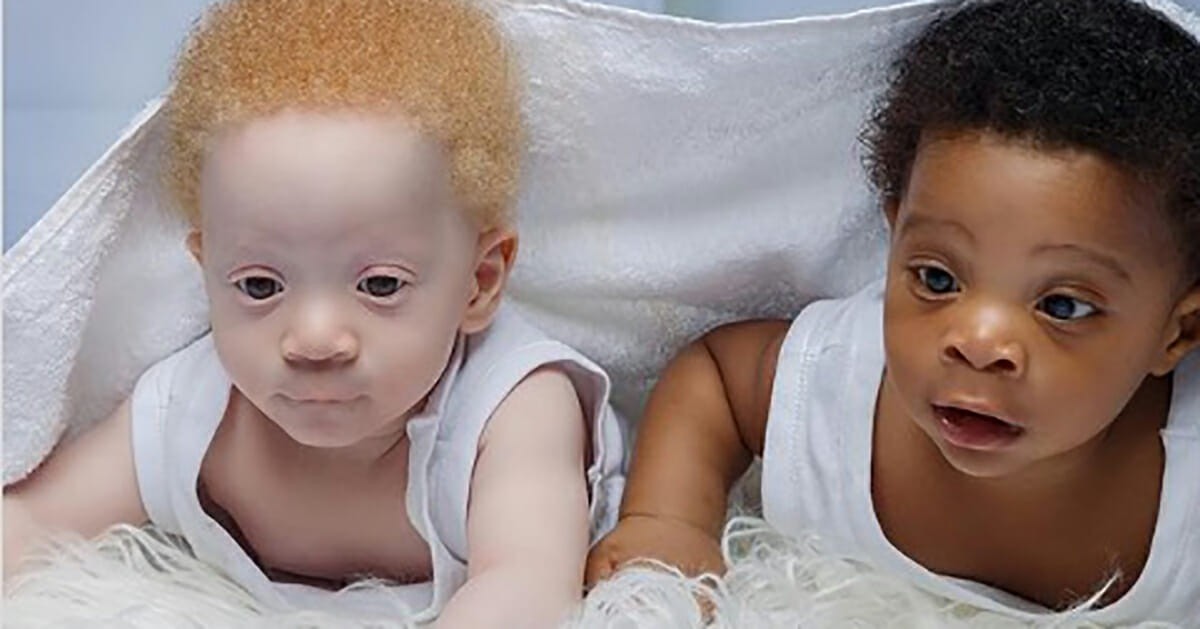
Unique Twins in Nigeria: The Emotional Journey of Daniel and David

Stacy and Babajide Omirin, residents of Lagos, Nigeria, longed to expand their family and give their beloved daughter a sibling. Like many parents, they hoped for the joy that comes with welcoming another child into their lives. However, their journey took an unexpected turn when they discovered Stacy was pregnant with twins. This revelation was only the beginning of an extraordinary story that would capture attention in Nigeria and beyond.
Discovering a Surprise During Pregnancy
The anticipation of welcoming twins was overwhelming for Stacy. She thought she was prepared for any outcome, but nothing could have prepared her for the surprise that awaited her and her husband at the hospital. On February 26th, 2019, following a scheduled cesarean section, Stacy gave birth to her baby boys—Daniel and David Omirin—born only minutes apart. As she looked at them for the first time, both parents were stunned by their sons’ remarkably different appearances.
Daniel emerged with dark skin and curly black hair, closely resembling his older sister. In contrast, David had golden curls and white skin—a striking difference in appearance for twins who share the same parents. Stacy described the moment as surreal: “We did not know about their differences while I was pregnant. The scan did not show such, so it was a huge surprise and the most amazing moment when the first twin (Daniel) came out with black hair and the second twin (David) came out with gold hair,” she told Bored Panda.
The medical team at the hospital was equally surprised. Nurses and doctors observed, “It seems you are having totally unidentical twins.” The scene soon drew more staff members who came to witness the extraordinary sight.
Understanding Oculocutaneous Albinism
While the boys have the same parents, David’s distinctive features stem from a genetic condition known as oculocutaneous albinism. Oculocutaneous albinism is a rare disorder affecting the pigmentation in skin, hair, and eyes, leading to the fair coloration that David displayed. According to medical literature and sources such as the World Health Organization (WHO), albinism occurs in approximately one in 5,000 to one in 15,000 births in Sub-Saharan Africa.
The medical implications of albinism include heightened sensitivity to sunlight, vision problems, and an increased risk of skin damage. Stacy initially felt anxious for David’s health and wellbeing, aware of both the medical challenges and social stigma that often accompany the condition. Fortunately, David has remained healthy, experiencing no serious health complications so far.
Albinism in Nigeria: Societal Context
Living with albinism in Nigeria presents unique challenges. The WHO estimates that over two million people have albinism in the country. Societal attitudes can range from curiosity and admiration to discrimination and misunderstanding. In some communities, myths and misinformation persist, leading to stigmatization and, in extreme cases, exclusion from social and educational opportunities. Advocacy groups have worked tirelessly to spread awareness and foster acceptance, emphasizing the need for inclusivity and respect for every individual, regardless of their appearance.
Stacy mentions that while she has encountered curiosity and questions from strangers, discrimination has not yet affected her family directly. She notes the frequent interest from people: “There’re always side talks whenever we go out, people often wanna know how and what’s happening and maybe due to their cute and adorable nature, you just wanna come close to say hello,” she explained.
The Family’s Response and Public Attention
Stacy’s husband, Babajide, was deeply moved upon seeing his sons for the first time. He affectionately nicknamed David “Golden,” celebrating his unique appearance. “He was all overjoyed seeing his boys. He stood for more than 10 minutes staring at them and said he was just looking at God’s wonderful work and that they are his best gift ever,” Stacy recounted to The Daily Mail.
The Omirin family’s story quickly gained attention, both locally and internationally. Images of Daniel and David circulated widely, sparking discussions about genetic diversity and acceptance in society. Modeling agencies reached out to the family, recognizing the twins’ extraordinary appearance, while Stacy—herself a clothing designer—expressed interest in her sons pursuing modeling should they wish. For now, she prioritizes advocacy and education.
Medical Perspective on Albinism
Experts emphasize the importance of recognizing albinism as a genetic condition with specific medical needs. The Mayo Clinic and the Centers for Disease Control and Prevention (CDC) advise that individuals with albinism require regular skin checks, protective clothing, and sunglasses to prevent sun damage. Early intervention for vision issues and education about albinism are critical to ensure a healthy and inclusive life.
Genetic counseling is recommended for parents and families to understand inheritance patterns. Albinism results from mutations in genes responsible for melanin production, and can occur in any ethnic group. In the case of the Omirin family, David’s albinism was not detected during prenatal scans—a common occurrence since standard imaging techniques do not reveal pigmentation disorders unless accompanied by other anomalies.
Impact on Identity and Inclusion
For many living with albinism, societal reactions shape their sense of identity. In Nigeria and other Sub-Saharan African countries, public awareness campaigns and community support are vital. Advocacy groups urge an end to discrimination and promote education about the genetics, health, and psychosocial aspects of albinism.
International responses have contributed to greater support. Organizations such as Under the Same Sun and The Albino Foundation Nigeria partner with global institutions like the United Nations to fight prejudice and raise visibility. Their efforts highlight the dignity and potential of people living with albinism.
Family Advocacy and Social Media Presence
Stacy has harnessed social media as a platform for advocacy, sharing her family’s journey through an Instagram account dedicated to the twins. The account features their daily lives and provides information on albinism. Through sharing their story, Stacy hopes to inspire other families and educate the public about the condition.
The Instagram page has become a source of encouragement for parents, caregivers, and individuals living with albinism. It showcases Daniel and David’s developing personalities—Daniel’s outgoing and food-loving demeanor contrasts with David’s quiet observation and gentle nature. Despite their differences, the twins are best friends, reinforcing the family’s message that diversity enriches relationships.
Global Awareness and Expert Views
Internationally, experts advocate for awareness about albinism not only as a medical condition but as a social issue. News outlets such as Reuters, BBC, and Al Jazeera have highlighted both the challenges and successes of families like the Omirins. Efforts to increase healthcare access, legal protection, and anti-discrimination campaigns continue to grow. Particularly in regions where misinformation can lead to harmful practices, global solidarity offers hope for lasting change.
Medical professionals stress the importance of early education for families, communities, and schools to cultivate acceptance and support for children with albinism. Providing accessible resources and fostering dialogue ensure that every child’s potential is recognized and celebrated.
Looking Ahead: Hope and Advocacy
The story of Daniel and David is not only a testament to genetic diversity but a beacon for inclusivity and acceptance. With two million Nigerians living with albinism, and millions more worldwide, their narrative highlights both the emotional complexity and the resilience required to challenge stereotypes. Stacy and Babajide’s openness and advocacy remind society that outward differences do not determine worth or ability.
As Daniel and David grow, their family aims to equip them with confidence, self-respect, and an appreciation for their unique backgrounds. The twins have already brought joy and unity to their immediate community and inspired individuals worldwide. The Omirin family’s commitment to education, advocacy, and compassion contributes meaningfully to a movement seeking dignity for all.
Conclusion
Stacy and Babajide’s story illustrates the profound power of family and the importance of societal acceptance. Daniel and David, with their distinctive appearances and loving spirits, encourage a broader conversation about albinism, genetic diversity, and the value of every individual. Through their advocacy, the Omirin family fosters understanding and celebrates the differences that make humanity so rich. Their journey continues to inspire, offering hope and encouragement to families everywhere.
Sources
- World Health Organization
- Centers for Disease Control and Prevention
- Mayo Clinic
- Reuters
- BBC News
- Al Jazeera
- The Guardian
Disclaimer: This content is intended for entertainment purposes only and is not based on real events.