Picture yourself standing beside an airport baggage carousel after a long journey. Suitcase after suitcase rolls past, most of them black, dark blue, or gray. You watch carefully, hoping to spot the familiar case that belongs to you.
Then a bright ribbon appears.
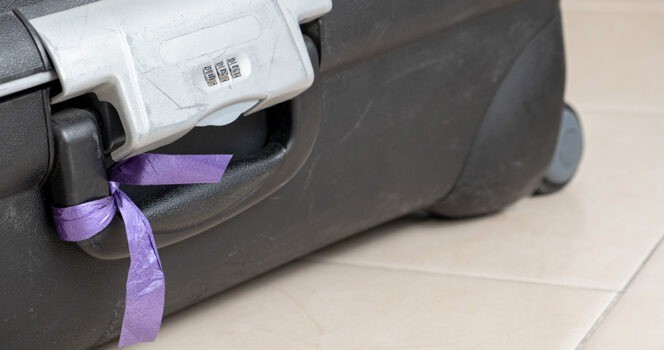
For many travelers, tying a colorful ribbon around a suitcase has become a simple travel trick. It makes luggage easier to recognize and can save valuable time at baggage claim.
But according to a baggage handler quoted in a Newsner report, there may be an unexpected downside to this popular habit.
A Dublin Airport baggage handler identified as John reportedly advised travelers to avoid attaching ribbons and removing old luggage stickers before checking a bag. His explanation focused on automated baggage scanning and the possibility that certain external items could interfere with the process.
The advice raises a broader question: are some of the travel hacks we rely on actually making airport journeys less convenient?
The answer is more nuanced than simply saying that ribbons are always bad. Airport baggage systems vary, and individual airports and airlines may have their own procedures. Still, there are several practical lessons travelers can take from the advice.

Why Travelers Put Ribbons on Their Luggage
The reason ribbons became popular is easy to understand.
Airports can be visually overwhelming. Hundreds or even thousands of bags may travel through the same baggage system, while many suitcases look remarkably similar.
A bright ribbon provides an immediate visual signal.
Instead of trying to remember a tiny manufacturer’s logo or checking every luggage tag, travelers can look for a distinctive color or pattern.
The strategy can be especially useful for families traveling with multiple bags. A unique visual marker makes it easier to identify which suitcase belongs to which traveler.
However, airport baggage systems are designed around more than what passengers can see.
Behind the scenes, luggage may pass through automated scanners, sorting systems, conveyor belts, and manual inspection points before reaching an aircraft.
That is where external decorations can potentially become relevant.
How Automated Baggage Systems Work
Modern airports rely heavily on automated systems to identify and route checked luggage.
When a passenger checks in a suitcase, the bag receives an identification tag containing information used by the airport and airline baggage systems. Scanners read the relevant information and direct the bag toward the appropriate processing area.
The goal is simple: identify the bag, match it to the correct journey, and move it efficiently through the airport.
Most of the process happens without passengers seeing it.
According to the baggage handler quoted by Newsner, ribbons and other attachments can sometimes interfere with scanning. If a bag cannot be processed automatically, it may need additional handling.
That does not mean every ribbon will cause a problem.
Nor does it mean that a suitcase with a ribbon will automatically miss a flight.
The more accurate interpretation is that unnecessary external items may create additional variables in a system designed for standardized processing.
For travelers, the lesson is straightforward: make the luggage easy for machines to process, not just easy for humans to recognize.

Could a Ribbon Really Cause a Delay?
This is where it is important to separate an individual worker’s experience from a universal airport rule.
The Newsner article reports that the Dublin Airport handler believed ribbons could create scanning difficulties. His explanation was that a bag requiring manual processing could take additional time.
Airport baggage systems are complex, and the exact effect of a ribbon can depend on where it is attached, how large it is, and whether it obstructs a scanner or conveyor mechanism.
Therefore, it would be an overstatement to say that all ribbons cause baggage delays.
A better conclusion is that travelers should avoid attaching anything that can obstruct luggage tags, moving components, handles, or scanning areas.
If you prefer a visual identifier, there are alternatives that can provide the same benefit without relying on a loose object tied around the suitcase.
Remove Old Luggage Stickers
One of the more practical suggestions from the baggage handler is removing old airline and airport stickers.
Frequent travelers sometimes accumulate labels from previous journeys. After several trips, a suitcase can become covered with old tags and stickers.
These may look harmless, but outdated labels can create unnecessary visual information around the luggage.
The most important baggage identification information should be current and clearly visible.
Before checking your suitcase, remove old baggage tags and travel stickers whenever possible.
This takes only a few seconds and can make the exterior of your suitcase much cleaner.
It is also a useful habit because airline baggage tags are designed for a specific journey. Once a trip is over, there is generally little reason to keep the old operational labels attached.
Choosing a More Distinctive Suitcase
If you are purchasing new luggage, one of the easiest ways to make it recognizable is to choose something visually distinctive.
Black luggage remains extremely popular because it is practical, versatile, and easy to coordinate with other travel items.
The problem is that popularity has a downside.
If hundreds of passengers have similar black suitcases, identifying yours becomes more difficult.
A patterned suitcase, unusual texture, or distinctive color can make a meaningful difference at baggage claim.
Travel & Leisure has similarly noted the popularity of black luggage and recommended considering different colors or patterns for travelers who want their bags to be easier to identify.
A distinctive suitcase does not have to be brightly colored.
Even a subtle geometric pattern or unusual surface design can make it easier to recognize.
What If You Already Own a Black Suitcase?
There is no need to replace perfectly functional luggage simply because it looks ordinary.
There are several ways to personalize a suitcase while keeping its important identification areas accessible.
A luggage tag with a distinctive design is one option.
Another is a removable luggage strap, provided it is positioned appropriately and does not interfere with baggage tags, handles, wheels, or airport equipment.
Some travelers also use permanent visual details such as a small pattern, approved luggage cover, or other secure identifier.
The key principle is not “never personalize your luggage.”
It is “personalize it without interfering with the baggage system.”
That distinction makes the advice much more practical.
Pay Attention to Where You Attach Identifiers
Even a useful luggage accessory can become inconvenient if it is placed incorrectly.
Travelers should avoid covering airline baggage tags, barcodes, handles, wheels, zippers, or other parts of the suitcase that need to remain accessible.
Loose items can also become detached during transportation.
If you use a luggage strap or identifier, make sure it is secure and designed for travel.
The goal is to create a visual marker that helps you identify the suitcase without creating an obstacle for airport personnel or equipment.
The Importance of Packing Smart
Baggage identification is only one part of preparing for air travel.
Another useful habit is organizing the contents of your suitcase before arriving at the airport.
Keep essential travel documents, medication that you are permitted to carry, valuables, and other important personal items according to the airline and airport rules.
Travelers should also check the baggage restrictions for their specific airline and destination before packing.
Rules can vary depending on the country, airline, route, and type of item.
Checking official guidance in advance is generally more reliable than depending on social media travel hacks.
A Note About Unusual Food Items
The Newsner article also included a claim about marzipan and airport security screening.
This is an area where travelers should be particularly careful about interpreting anecdotal advice as a universal rule.
Security screening systems use imaging technology to examine baggage, and different materials can produce different appearances on screening equipment. However, the fact that an item may look unusual on a scanner does not automatically mean it is prohibited.
Travelers should consult the airport, airline, and relevant aviation security authority for the destination involved.
Food regulations can also vary significantly between countries.
A food item that is permitted in one location may be subject to restrictions elsewhere.
Therefore, rather than relying on a blanket rule about a specific food, travelers should check the regulations that apply to their particular journey.
Put Your Suitcase Wheels Up When Practical
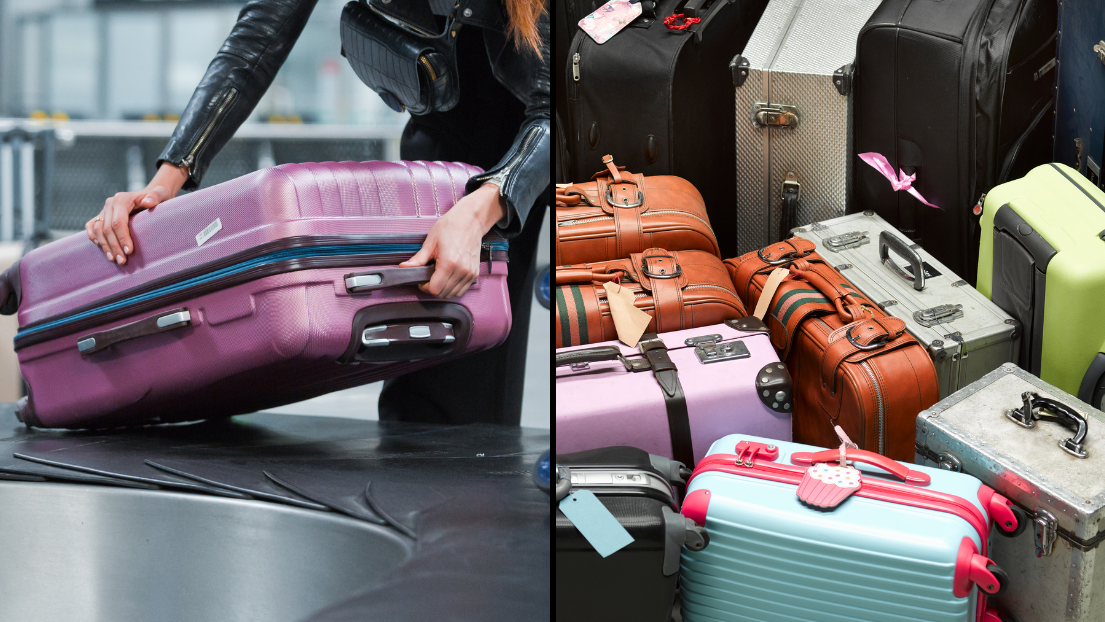
The baggage handler also reportedly recommended placing luggage wheels upward before it enters the baggage handling process.
The reasoning is straightforward: wheels and other protruding components can be vulnerable to damage when bags move through busy baggage systems.
However, travelers should follow the instructions given by airport staff and use the orientation recommended by the airline or airport equipment.
Not every baggage system is identical.
The safest approach is to avoid forcing a suitcase into a particular position when doing so conflicts with airport instructions.
Why Travel Hacks Need a Reality Check
Travel advice spreads quickly online.
A simple trick can become popular after one person shares it on social media. Thousands of travelers may then adopt it without knowing whether the original claim applies universally.
That does not mean travel hacks are useless.
Some are genuinely helpful.
But the best travel advice is usually based on a simple principle: understand why the recommendation exists.
In the case of luggage ribbons, the reason for the concern is not that colorful ribbons are inherently problematic. The concern is whether an attachment could interfere with automated baggage processing.
That is a much more reasonable and useful takeaway.
Simple Ways to Make Your Luggage Easier to Identify
You can make your suitcase easier to recognize without creating unnecessary complications.
Choose luggage with a distinctive color or pattern when buying a new suitcase.
Use a secure luggage tag with your contact information.
Remove old airline baggage stickers before each trip.
Keep current baggage tags clearly visible.
Avoid covering barcodes or identification information.
Make sure straps, covers, and accessories are secure.
Take a photo of your suitcase before checking it.
Keep your baggage receipt or tracking information until you have collected your luggage.
These small habits can make travel more organized.
The Bigger Lesson for Travelers
The story about luggage ribbons is ultimately a reminder that airports are highly coordinated environments.
What looks like a harmless decoration to a passenger may interact differently with equipment designed around standardized baggage.
At the same time, travelers should not assume that every ribbon will cause a problem. The available report reflects the experience of one baggage handler rather than a universal aviation regulation.
The most sensible approach is therefore practical rather than alarmist.
Make your luggage easy to identify.
Make it easy for airport systems to process.
Keep important identification information visible.
And always follow the specific baggage and security requirements provided by your airline and airport.
Conclusion: Make Your Journey Easier Before You Reach the Airport
Travel can already involve enough small uncertainties without adding unnecessary ones.
A suitcase should be simple to identify, easy to process, and properly prepared for its journey.
The colorful ribbon that seems like the perfect solution at baggage claim may not always be the best choice, according to the baggage handler’s experience reported by Newsner. But the larger lesson is more useful than simply removing a ribbon.
Before every trip, take a few minutes to prepare your luggage.
Remove outdated stickers.
Check your baggage tags.
Keep identification areas unobstructed.
Choose distinctive luggage when possible.
Secure any accessories you use.
And verify unusual packing questions with official airline and airport guidance.
The next time you stand beside a busy baggage carousel, surrounded by nearly identical suitcases, you may realize that the best luggage strategy is not necessarily the most eye-catching one.
Sometimes, the smartest travel trick is simply making things easier for both people and machines.
Sources
Newsner, “Baggage handler reveals why you should never tie a ribbon on your luggage.” The original article reporting comments attributed to a Dublin Airport baggage handler.
RSVP Live, reporting on the baggage handler’s advice regarding ribbons, old stickers, and baggage processing.
Travel + Leisure, guidance and recommendations concerning luggage identification and distinctive suitcase designs.
International Air Transport Association (IATA), passenger and baggage guidance for air travelers.
Airport and airline official baggage policies should always be consulted for the specific airport, airline, route, and destination involved.