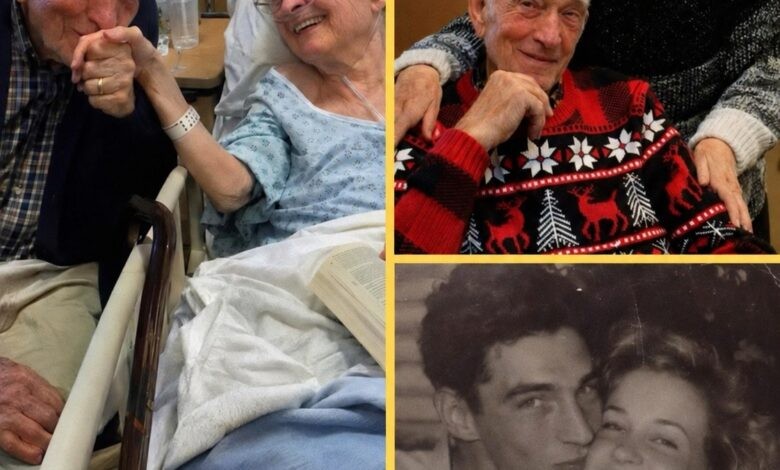
Editor’s note: The following is a fictionalized narrative about bereavement, memory, dementia caregiving, and the gradual process of rebuilding life after loss. The health and grief context included in this article is based on guidance from recognized public-health and medical organizations.
For a decade, my grandfather wrote messages to my grandmother’s inactive Facebook account. He sent them on birthdays, anniversaries, holidays, and ordinary days when something reminded him of her. He never expected a response. After she died, writing became his private ritual: a way to preserve the small details of a long marriage and express the thoughts he no longer had the chance to say aloud.
Then, on his 89th birthday, a message appeared from her account.
“Don’t be afraid of tomorrow, my love,” it began. “If I can’t remember your face, I’ll still remember how safe you made me feel.”
My grandfather read the words aloud in a trembling voice. When he reached the next sentence, he stopped.
“And if I ever forget how to live without you,” the message said, “promise you’ll find a way to remind me.”
He looked at me with disbelief. Those, he said, were words he had once whispered to my grandmother during her final illness. He believed nobody else had heard them.
Less than two hours earlier, our family had celebrated his birthday. He had laughed, told familiar jokes, and accepted a sweater he did not need. But now he sat alone at his kitchen table, wearing the blue sweater my grandmother had knitted years before. Her Facebook account, silent since her death, had sent him a message at 11:47 p.m.
For years, he had written to her without expecting an answer. Now, faced with words that echoed his own private grief, he did not know whether to feel comfort, confusion, anger, or hope.
A Marriage Remembered Through Everyday Moments
My grandparents had been married for 56 years. Their relationship was built less on grand gestures than on familiar routines: shared breakfasts, long train journeys, disagreement over directions, terrible jokes, and the quiet companionship of sitting in the same room without needing to talk.
During my grandmother’s final year, her memory and communication changed significantly. At times she recognized everyone around her. At other times she appeared confused, frightened, or unable to place herself in familiar surroundings. My grandfather became her primary caregiver, spending long hours beside her and trying to offer reassurance when words were difficult to find.
Dementia is not a normal part of aging, although the risk of developing dementia increases with age. It is an umbrella term for conditions that affect memory, thinking, behavior, and the ability to manage daily life. Alzheimer’s disease is the most common cause of dementia, but there are several other forms. Symptoms and progression can vary substantially from person to person.
For families, dementia can bring complicated emotional experiences. A person may have periods of clarity alongside periods of confusion. Caregivers may feel deep love and commitment while also experiencing fatigue, sadness, frustration, guilt, or isolation. These feelings do not mean a caregiver has failed. They are recognized responses to the sustained emotional and practical demands of care.
My grandfather had always seemed strong to the rest of us. He remembered which songs soothed her, which foods she could tolerate, and how to make her feel safe when she woke in distress. Yet strength did not mean he was untouched by the strain. He had hidden his exhaustion because he thought everyone needed him to remain steady.
The unexpected message brought those hidden feelings back to the surface.
The Drawer of Unfinished Plans
The message included one instruction: look in the drawer where they kept their unfinished plans.
In the bedroom my grandparents had shared for decades, an old writing desk stood by the window. Its top drawer contained postcards, faded photographs, train schedules, travel brochures, and a blue notebook tied with a ribbon.
On the cover, in my grandmother’s handwriting, were the words: “For my darling, when the time is right.”
The early pages described memories from their marriage. There was the first apartment they could barely afford, a dinner my grandfather burned on an anniversary, and a summer thunderstorm that soaked them both while they ran for shelter. As he listened, my grandfather smiled. These were not dramatic memories. They were the kinds of details that make a shared life feel real.
Later pages were different. The handwriting became less steady, with crossed-out words and unfinished sentences. One entry described a day when my grandmother had forgotten where she was. She wrote that my grandfather held her hands and told their story again, even though he looked tired.
Another entry revealed something that deeply affected him: she had noticed his fear.
“He thinks I am the frightened one,” she had written. “Sometimes I am. But when I remember clearly, I can see that he is frightened too.”
For my grandfather, this was difficult to hear. He had spent years trying to protect her from his own distress. But the notebook suggested that love had allowed her to see him even during periods when illness affected her memory and communication.
Caregiver guilt is common, especially after a loved one dies. People may replay specific moments: a time they lost patience, an appointment they missed, or a decision they wish they could reconsider. Medical and caregiving organizations emphasize that no caregiver can be endlessly patient or completely free from stress. Seeking respite, support, and honest conversation can be important parts of caring for both the person with dementia and the caregiver.
The Meaning Behind a Delayed Message
Near the back of the notebook, we found a letter addressed to Margaret, a former hospital caregiver who had known my grandmother during her final months.
The letter explained the message.
During a period when my grandmother was able to communicate clearly, she had asked Margaret for help preparing a future birthday message. She wanted the message sent from her Facebook account ten years after her death, on my grandfather’s birthday. She had also asked Margaret to leave the notebook in the drawer with their travel plans.
Her request was unusual, but it was carefully documented. She had typed portions of the message with assistance as writing became more difficult. The notebook included the words my grandfather had spoken to her years earlier, along with a birthday card and instructions for Margaret.
My grandfather’s first response was anger. He had spent ten years writing messages to his wife, unaware that one had been waiting for him. Why, he asked, would she choose to wait so long?
The answer came in her letter.
She did not want his first years of grief to become a countdown to another sign from her. She wanted him to grieve honestly, without anticipating a message or trying to interpret every anniversary as a test. But after ten years, she hoped the message might offer something different: permission to move forward without feeling that he was betraying her memory.
“I don’t want grief to become the only way he remembers me,” she had written.
That idea resonated with a central reality of bereavement. Continuing bonds with someone who has died can be meaningful. People may talk to a loved one, revisit places connected to them, keep photographs, cook familiar recipes, or maintain traditions. Grief does not require forgetting. At the same time, healthy adaptation can include finding new routines, relationships, interests, and reasons for hope.
There is no single timeline for grief. Some people experience intense emotions for months or years, while others move between sadness, acceptance, gratitude, numbness, and even moments of joy. The American Psychiatric Association and other health organizations note that grief is highly individual. Support may be especially important when distress remains severe, interferes substantially with daily life, or is accompanied by hopelessness or thoughts of self-harm.
Caregiving, Regret, and Compassion
When Margaret visited, my grandfather asked the question he had carried quietly for years: Had my grandmother been unhappy with him near the end of her life?
He remembered one difficult day when she repeatedly asked where they were going. Exhausted and overwhelmed, he had responded sharply. He apologized immediately, but her illness meant that she might not have remembered the apology the next day. To him, that moment had become evidence that he had failed her.
Margaret showed him another page from the notebook.
My grandmother had described that same day. She acknowledged that he had become frustrated, but her conclusion was simple: “I don’t need him to be perfect. I just need him to stay.”
The sentence did not erase my grandfather’s regret, but it gave it a different context. Loving care is not perfection. It is the repeated decision to show up, to try again, and to remain present through difficult circumstances.
Families affected by dementia often need support that extends beyond medical treatment. Education about the condition can help relatives understand behavioral and communication changes. Respite care can give caregivers necessary breaks. Local support groups may provide a space where people can speak honestly about exhaustion and guilt without judgment. Counseling can also help individuals process anticipatory grief, bereavement, and the changing roles that illness can bring.
My grandfather had been praised for being devoted, but the praise made it harder for him to admit that he was overwhelmed. His experience was a reminder that caregivers deserve compassion as well as admiration. Asking for help is not a sign that someone loves less. Often, it is what makes sustained care possible.
Learning to Live After Loss
Inside the birthday card, my grandmother had written one final message. She told him not to spend the rest of his life waiting to be reunited with her. She reminded him of their unrealized plans: mountain train rides, unfamiliar breakfasts, music, dancing, and quiet mornings in new places.
“Those things were wonderful because we shared them,” she wrote. “But they can still be wonderful when you share them with someone else.”
For several days after Margaret’s visit, my grandfather said little. He read the notebook, sat by the window, and kept the birthday card near his bed. I worried that the message had reopened pain rather than brought peace.
Then, one morning, he called and asked whether I was free the following month.
He had been looking at train schedules.
My grandmother had always wanted to see the mountains in autumn. My grandfather wanted to go, and he wanted me to come with him. He planned the hotel, bought a new jacket, and packed the blue notebook alongside a photograph of his wife.
Before leaving, he opened their old Facebook conversation. He read ten years of messages: notes about roses blooming, favorite soup, anniversaries, and ordinary moments he wished she could have seen. Then he typed one last message.
“I remembered everything, my little girl. Now I’m going to learn how to live again.”
On the train, he opened the notebook to a page titled “Things We Still Have to Do.” The first item read: “Take the train through the mountains.” He placed a check mark beside it.
He told me that for years he had believed happiness without my grandmother would mean leaving her behind. Now he was beginning to understand something different. Remembering her did not require remaining frozen in the worst moment of losing her. Love could remain part of his life while life itself continued.
That distinction matters for anyone living with loss. Moving forward does not mean moving on as if a person never mattered. It can mean carrying their influence into new experiences, allowing memory to become a source of meaning rather than only pain, and accepting that joy and sadness can exist together.
Sources
Disclaimer: This content is intended for entertainment purposes only and is not based on real events.