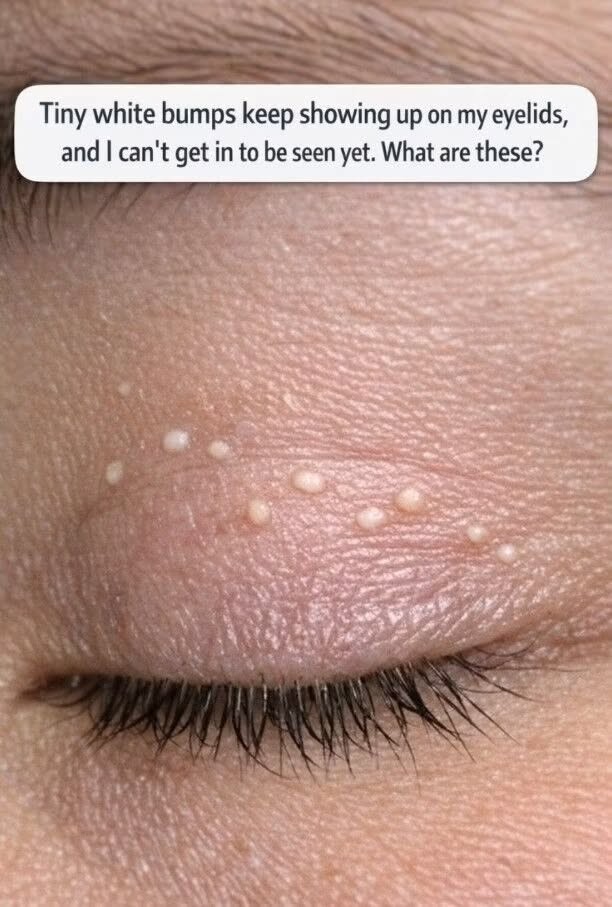
Tiny White Bumps Keep Appearing on Your Eyelids: What Could They Be?
Noticing tiny white bumps around your eyelids can be unsettling, especially when new ones seem to appear before you can schedule an appointment with an eye specialist. Some bumps remain almost invisible unless you look closely in a mirror. Others become swollen, red, tender, or uncomfortable enough to interfere with everyday activities.
The good news is that many eyelid bumps are associated with common, manageable conditions. Milia, blocked oil glands, styes, and irritation are among the possibilities. However, these conditions do not all develop for the same reasons, and they do not respond to the same treatments.
A small, painless white bump may be something very different from a painful lump near the eyelashes. Understanding these differences can help you decide what to do while waiting for professional advice.
Still, appearance alone cannot establish a diagnosis. The eyelid contains delicate skin, oil glands, and structures that help protect the eye, so persistent or recurring changes deserve attention.

What Causes Tiny White Bumps on the Eyelids?
Several conditions can produce small bumps on or around the eyelids. Their appearance, location, and associated symptoms can offer clues, but there is often some overlap.
1. Milia: Small White Bumps Beneath the Skin
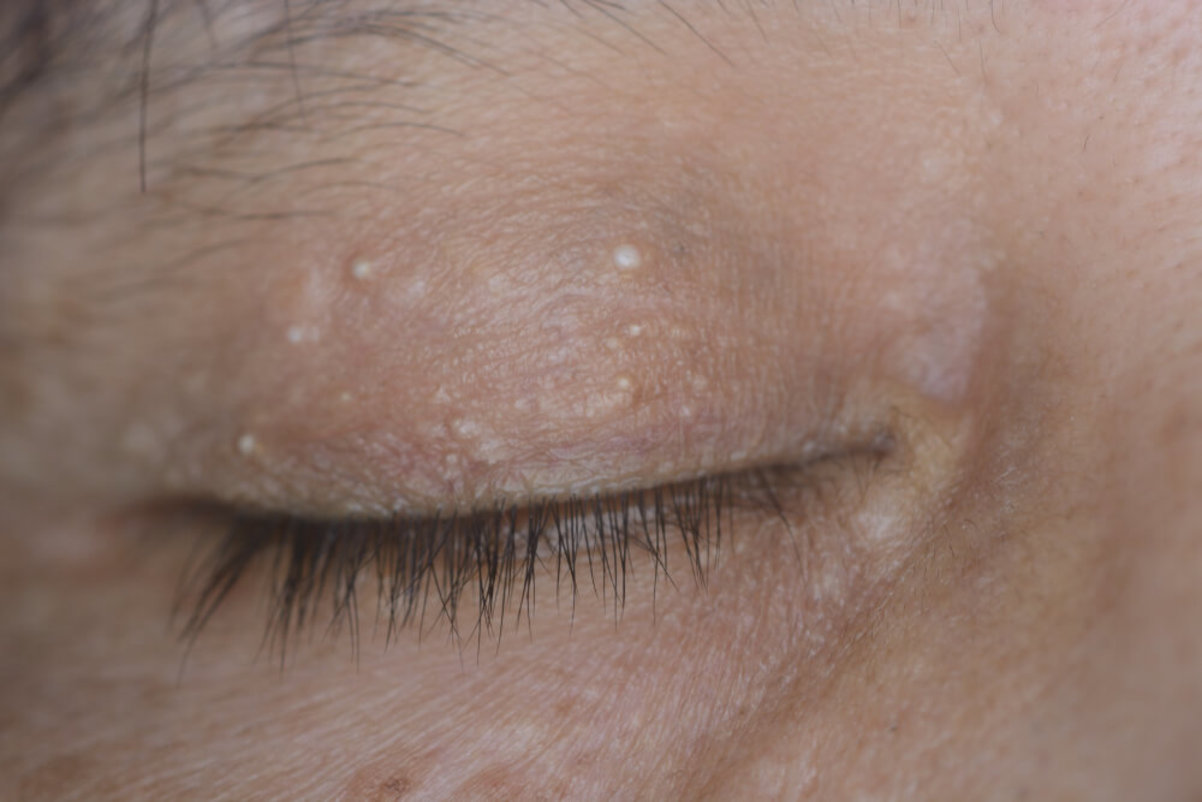
Milia are among the most recognizable causes of tiny white or yellowish bumps on the face. They are small cysts containing keratin, a protein naturally found in the skin, hair, and nails.
They can develop when dead skin cells become trapped beneath the skin’s surface rather than shedding normally. Milia frequently appear around the eyes, on the cheeks, and across the forehead.
Unlike many pimples, milia are generally not red, painful, or inflamed. They often look like tiny, firm, pearly-white dots that remain relatively unchanged over time.
Although milia are harmless in most cases, they can be frustrating when several appear close together. Some disappear without treatment, while others may remain for weeks or months.
It is important not to squeeze or scrape them. The skin around the eyes is delicate, and attempting to remove a milium at home can cause irritation, infection, or scarring.
If the bumps persist or become bothersome, a dermatologist or qualified healthcare professional can confirm whether they are milia and discuss appropriate removal options.
2. Chalazion: A Blocked Oil Gland in the Eyelid
A chalazion develops when an oil-producing gland in the eyelid becomes blocked. These glands, known as meibomian glands, help produce the oily layer of the tear film that slows the evaporation of tears.
When oil cannot drain properly, it may accumulate and trigger localized inflammation. The result is often a rounded lump within the eyelid.
A chalazion may initially resemble a stye, particularly when swelling first appears. However, it is usually less painful and may become a firm, relatively painless lump as the inflammation settles.
Some chalazia are small and barely noticeable. Others grow large enough to create pressure or interfere with vision.
Warm compresses are commonly recommended because gentle heat can help soften the material blocking the gland. However, a chalazion may take time to resolve, and persistent lumps sometimes require treatment from an eye specialist.
3. Stye: A Tender, Inflamed Eyelid Lump
A stye, medically known as a hordeolum, is an acute infection involving an oil gland or eyelash follicle.
Unlike milia, which are generally painless, styes commonly cause noticeable tenderness, redness, and swelling. They may look like a small pimple near the eyelashes or develop deeper inside the eyelid.
Other possible symptoms include:
-
A painful or sensitive eyelid.
-
Localized redness and swelling.
-
A small bump that may contain pus.
-
Excessive tearing or irritation.
-
A sensation that something is rubbing against the eye.
Most uncomplicated styes improve without major treatment. Gentle warm compresses can help relieve discomfort and encourage natural drainage.
However, squeezing or puncturing a stye is not recommended. Doing so may spread infection and worsen inflammation around the eye.
If redness spreads, swelling becomes severe, or vision is affected, medical assessment should not be delayed.

4. Allergic or Cosmetic Irritation
Not every eyelid problem is caused by a blocked gland or a small cyst. The delicate skin around the eyes can react to cosmetics, skincare ingredients, cleansers, fragrances, and other substances.
Allergic contact dermatitis may cause itching, redness, dryness, scaling, and swelling. In some cases, small irritated areas may look like bumps.
A reaction can develop after introducing a new eye cream, mascara, eyeliner, makeup remover, or facial product. Sometimes, a product that was previously tolerated can begin causing irritation.
Unlike typical milia, allergic irritation often involves discomfort beyond individual white dots. Itching and redness may affect a broader area of the eyelid.
If a recently introduced product seems connected to the problem, stop using it temporarily and avoid applying additional products near the irritated area. Persistent or worsening symptoms should be assessed by a healthcare professional.
Milia vs. Chalazion vs. Stye: How Are They Different?
Although these conditions can appear similar at first, several characteristics may help distinguish them.
| Feature | Milia | Chalazion | Stye |
|---|---|---|---|
| Typical appearance | Tiny white or yellow dots | Rounded eyelid lump | Red, sometimes pus-filled bump |
| Pain | Usually painless | Usually painless or mildly tender | Often painful |
| Location | On or around eyelid skin | Within the eyelid | Near eyelashes or inside eyelid |
| Redness | Usually absent | Possible mild inflammation | Often present |
| Main cause | Trapped keratin | Blocked oil gland | Infection of an eyelid gland or follicle |
| Common approach | Observation or professional removal | Warm compresses; sometimes medical treatment | Warm compresses; sometimes medical treatment |
These are general patterns, not diagnostic rules. A healthcare professional may need to examine the eyelid to determine what is actually causing the bump.
Other conditions can also produce eyelid growths or patches. For example, yellowish plaques around the eyes may be associated with xanthelasma, while some chronic eyelid conditions can cause recurring inflammation and blocked glands.
A bump that repeatedly appears in the same location, changes in appearance, or refuses to heal should not automatically be assumed to be milia or a stye.
What Can You Do at Home While Waiting for an Appointment?
If the bumps are mild and there are no warning signs, a few careful steps may help protect the eyelids while you arrange an examination.
The most important principle is to avoid aggressive treatment. The skin around the eyes is thin, and products designed for other areas of the face may not be appropriate.
Use a Warm Compress for Suspected Styes or Chalazia
A clean, comfortably warm washcloth may help with a suspected stye or blocked oil gland.
Wet the cloth with warm water, squeeze out the excess, and gently place it over the closed eyelid for approximately 10 to 15 minutes. Repeat several times daily, keeping the cloth comfortably warm without allowing it to become hot enough to burn the skin.
For a chalazion, warmth may help soften the blocked oil and encourage drainage. It can also provide relief from discomfort associated with a stye.
However, warm compresses are not a reliable way to remove milia. Applying heat repeatedly to tiny, painless white cysts is unlikely to solve the underlying issue.
Keep Your Eyelids Clean
Wash your hands before touching the area around your eyes. Clean the eyelids gently and avoid rubbing or scrubbing.
If makeup or skincare products appear to be irritating the area, stop using them until the symptoms improve or a professional can assess the reaction.
Avoid sharing eye makeup, towels, or other items that come into direct contact with your eyelids.
Take a Break From Eye Makeup and Contact Lenses
If you have a painful, inflamed eyelid bump, temporarily avoid mascara, eyeliner, and other eye cosmetics. Contact lenses should also be avoided when a stye or significant eyelid inflammation is present, particularly if the eye itself feels irritated.
Makeup can introduce additional irritation, while contact lenses may become uncomfortable during an active eye problem.
Wait until the condition has healed or a healthcare professional confirms that it is safe to resume normal use.
Never Squeeze, Puncture, or Scrub the Bumps
This is especially important when the bumps are close to the eyelashes or the edge of the eyelid.
Squeezing a stye or chalazion may spread infection into surrounding tissue. Trying to extract milia with needles or sharp tools can injure delicate skin and introduce bacteria.
Avoid using strong exfoliating acids, retinoids, acne treatments, or essential oils directly on the eyelids unless a qualified professional specifically recommends an appropriate product.
When Should You Seek Medical Attention?
Many mild eyelid bumps are not emergencies. However, certain symptoms may indicate infection, significant inflammation, or another problem requiring prompt assessment.
Seek urgent medical advice if you experience:
-
Changes in vision or blurred eyesight.
-
Severe pain in or around the eye.
-
Significant or rapidly spreading redness and swelling.
-
An eyelid that becomes extremely swollen or difficult to open.
-
Fever or feeling generally unwell alongside eye or eyelid symptoms.
-
Pus or discharge accompanied by worsening inflammation.
If the eye itself becomes painful, vision changes, or swelling spreads beyond the eyelid, do not wait for a routine appointment.
Even without emergency symptoms, arrange a medical review if the bumps continue appearing, persist for several weeks, grow, or repeatedly return in the same location.
A clinician can examine the eyelid and determine whether the problem is related to milia, a blocked gland, infection, inflammation, or another condition.
How Are Persistent Eyelid Bumps Treated?
Treatment depends on the underlying cause rather than simply the color or size of the bump.
Milia may not require treatment because they are generally harmless. If removal is desired, a trained professional can use an appropriate procedure to extract them safely.
Chalazia may improve with consistent warm compresses. If a lump remains for a long time, becomes large, or affects vision, an ophthalmologist may consider additional options, such as medication injections or a minor drainage procedure.
Styes often resolve naturally, but some cases may require prescription treatment. Antibiotics are not automatically necessary for every eyelid lump; a clinician determines whether an infection requires them.
When allergic irritation is suspected, identifying and avoiding the trigger is an important part of management. A healthcare professional may recommend suitable treatment depending on the severity and location of the reaction.
Repeated or unusual eyelid lesions deserve particular attention. In uncommon cases, a growth that looks like a routine blocked gland may require further examination or a biopsy to rule out a more serious condition.
Can You Prevent White Bumps From Appearing Again?
Not every eyelid bump can be prevented, especially milia. However, maintaining good eyelid hygiene and avoiding unnecessary irritation may reduce some common problems.
Remove eye makeup before sleeping and avoid using expired or contaminated cosmetic products. Wash your hands before handling contact lenses or touching the eye area.
If you frequently experience blocked glands or eyelid inflammation, ask an eye specialist whether an ongoing eyelid-cleaning routine would be appropriate.
People who experience repeated styes or chalazia may also benefit from an evaluation for underlying eyelid inflammation, such as blepharitis.
It is equally important to avoid applying heavy skincare products too close to the eyelid margins if they seem to trigger irritation or clogged pores.
The Bottom Line: Small Eyelid Bumps Deserve the Right Kind of Attention
Tiny white bumps on the eyelids can have several explanations. Milia are often small, firm, and painless. Chalazia develop when oil glands become blocked, while styes are typically more tender and inflamed. Allergic irritation can also cause changes around the eyes.
Although many of these conditions are manageable, their treatments are different. A warm compress may help a blocked gland or stye, but it will not necessarily remove milia. Squeezing, puncturing, or applying harsh skincare products near the eyes can make matters worse.
If you cannot get an appointment immediately, focus on gentle hygiene, avoid suspected irritants, and monitor any changes. Seek urgent care if you develop vision problems, severe pain, rapidly spreading swelling, or fever.
Most importantly, do not assume that every white bump is harmless simply because it is small. Persistent or recurring eyelid changes deserve a proper examination so that the right treatment can be chosen.