
The Vintage Hand-Cranked Egg Beater: A Nostalgic Kitchen Tool That Generations Grew Up With
Before electric mixers became common household appliances, the hand-cranked rotary egg beater was an essential tool in kitchens across America and Europe. With its wooden handles, metal gears, and spinning wire beaters, this simple invention helped families prepare everything from fluffy pancakes to homemade cakes.
For many people, seeing an old egg beater today brings back memories of childhood kitchens, holiday baking, and weekend breakfasts. Its familiar clicking sound represents a time when cooking required a little more patience, hands-on effort, and often the help of the whole family.
But how did this humble kitchen gadget become such an important part of everyday life, and why does it still hold a special place in people’s memories?
The History of the Hand-Cranked Egg Beater
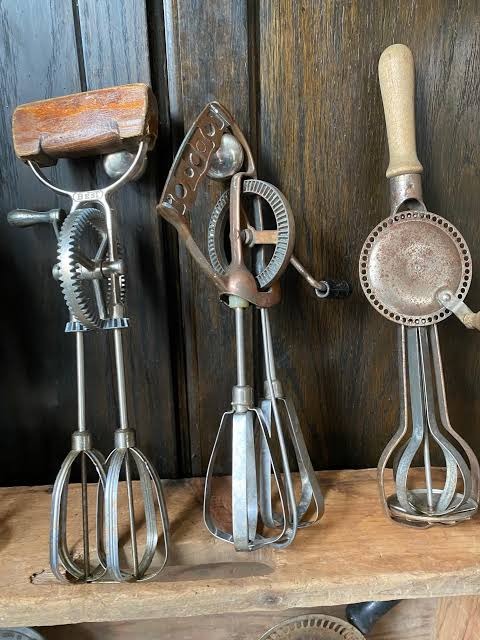
The rotary egg beater emerged during the nineteenth century, when inventors began developing practical tools to make everyday cooking easier. In 1856, American inventor Ralph Collier patented an egg beater with rotating beaters. Other inventors soon introduced their own designs, helping establish the hand-operated mixer as a useful household invention.
Early models varied in appearance and construction. Some featured wooden handles, while others were made primarily of metal, with gears designed to transfer the turning motion of a crank into the rapid rotation of wire beaters.
By the early twentieth century, hand-cranked egg beaters had become familiar kitchen tools in many households. They were affordable, relatively simple to maintain, and did not require electricity.
Before electric mixers became widely accessible, these tools offered a practical way to mix ingredients more efficiently than using a fork or an ordinary whisk.
How Did This Simple Kitchen Gadget Work?
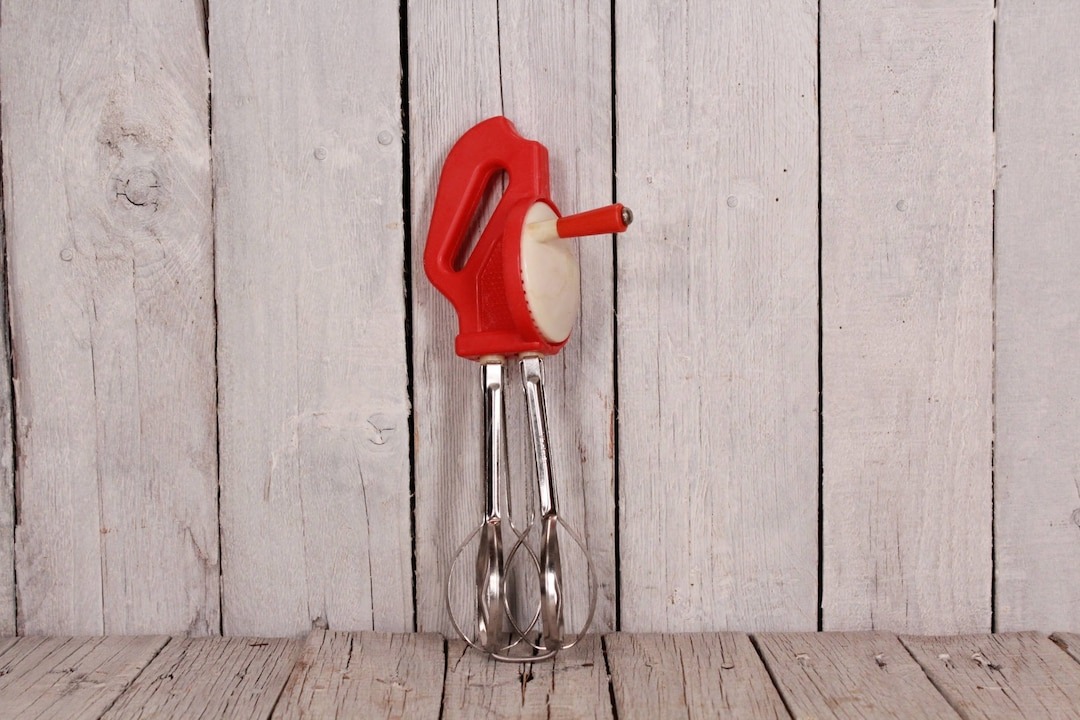
The hand-cranked egg beater relied on a straightforward mechanical design.
When the user turned the handle, a set of gears transferred the motion to the beaters. Many models used two beaters that rotated in opposite directions, helping mix ingredients and incorporate air into the mixture.
Although the cook had to provide the power manually, the gears made the process more efficient and comfortable than beating everything by hand with a simple utensil.
Families used these beaters for a wide range of everyday recipes, including:
-
Eggs and omelets: Beating eggs until the yolks and whites were thoroughly combined.
-
Pancakes and cakes: Mixing ingredients for homemade breakfasts and desserts.
-
Whipped cream: Incorporating air into cream until it thickened, depending on the design and technique.
-
Light batters and sauces: Blending ingredients for simple household recipes.
The design was practical, compact, and easy to store. It could be used almost anywhere, making it particularly valuable in kitchens without reliable access to electricity.
When Cooking Was a Family Activity
For many families, the hand-cranked egg beater was more than a convenient cooking tool. It was part of the experience of learning how to prepare food at home.
Children often helped their parents or grandparents in the kitchen by turning the crank while someone else measured flour, cracked eggs, or prepared the next ingredient.
The task could require patience. As mixtures became thicker, turning the handle sometimes became more difficult, and young helpers had to learn to maintain a steady rhythm.
Meanwhile, the kitchen filled with the familiar sounds of mixing bowls, utensils, and the clicking gears of the beater.
On weekend mornings, it might be used to prepare pancake batter. During the holidays, it could help with cakes, cookies, and other homemade treats. These everyday tasks gave children opportunities to learn practical skills while spending time with the people they loved.
Looking back, many people remember these moments not because the equipment was extraordinary, but because cooking was an activity that brought families together.
Why Vintage Egg Beaters Bring Back So Many Memories
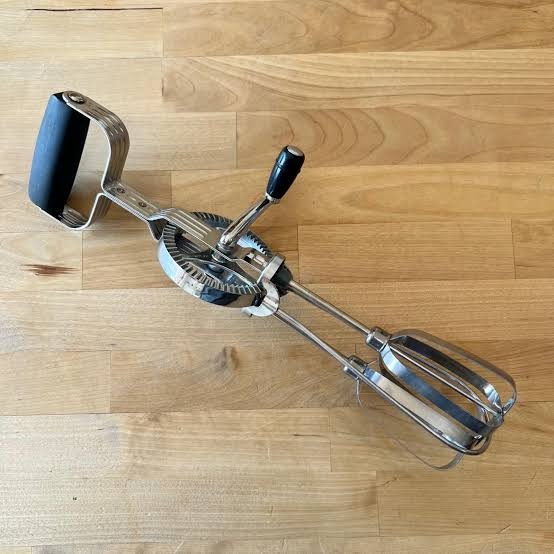
An old kitchen utensil can carry a surprising amount of emotional significance.
A worn wooden handle may remind someone of a grandparent who prepared breakfast every Sunday. Scratched metal and chipped paint may suggest years of use in a busy family kitchen.
For people who grew up before electric mixers became commonplace, a rotary egg beater can evoke memories of birthday cakes, holiday meals, and afternoons spent helping in the kitchen.
These objects also represent a different approach to household life. Many cooking tasks required more physical effort, and preparing a meal often involved several people working together.
Of course, every household had its own routines, and not everyone used the same tools. Nevertheless, the hand-cranked egg beater remains a recognizable symbol of traditional home cooking.
Its appeal comes from a combination of practical design, historical significance, and the personal memories associated with the meals it helped create.
The Rise of Electric Mixers Changed Home Baking
As electricity became more widely available during the twentieth century, electric mixers gradually transformed home cooking.
Electric appliances reduced the physical effort required to mix ingredients and made it easier to prepare larger quantities. Handheld electric mixers and stand mixers eventually became popular choices for people who baked frequently.
Compared with their hand-operated predecessors, these machines offered speed and convenience, particularly when working with thick batters or recipes requiring extended mixing.
However, the traditional egg beater did not disappear completely.
Its simple construction, portability, and independence from electricity continued to make it useful for smaller tasks. Some cooks still appreciate having one available when they need to beat a few eggs or mix a small quantity of ingredients without taking out a larger appliance.
The transition from manual tools to electric machines reflects a broader change in domestic life, as new technologies gradually reduced the time and effort required for everyday household work.
Why Collectors Still Love Vintage Kitchen Tools
Today, antique and vintage egg beaters can be found in flea markets, antique shops, estate sales, and private collections.
Some collectors are interested in the craftsmanship and mechanical design of older models. Others enjoy displaying them as decorative pieces in farmhouse kitchens or traditional cooking spaces.
Features that may attract collectors include unusual handle designs, distinctive gear mechanisms, manufacturer markings, and well-preserved original finishes.
Condition and rarity can influence an item’s value, but not every old egg beater is particularly valuable. Common models may be inexpensive, while rarer examples can attract greater interest.
For families who inherit one from a parent or grandparent, however, its sentimental value may be far more important than its resale price.
An ordinary utensil can become a meaningful reminder of someone who spent years preparing meals for the people they loved.
Can You Still Use a Hand-Cranked Egg Beater Today?
Absolutely. A well-maintained rotary egg beater can still handle many simple kitchen tasks.
It works well for beating a few eggs, mixing light batters, and blending small quantities of ingredients. Because it does not require electricity, it can also be useful for camping, outdoor cooking, or situations where power is unavailable.
Before using a vintage model, inspect it carefully. Check for rust, damaged wires, loose handles, worn gears, and areas that may be difficult to clean.
Older utensils with flaking coatings, uncertain materials, or damaged components may be better suited to display than food preparation.
If you want to use one regularly, choose a model that is clean, structurally sound, and suitable for contact with food.
Its simplicity remains one of its greatest advantages: there is no motor to plug in, no complicated control panel, and no need to rely on electricity.
A Simple Invention With a Lasting Legacy
The hand-cranked egg beater may seem modest compared with today’s powerful kitchen appliances, but it represents an important chapter in the history of home cooking.
It made everyday mixing easier, brought mechanical ingenuity into ordinary households, and became part of countless family routines.
For some people, it is a collectible piece of kitchen history. For others, it is still a practical tool. And for many, it is a reminder of parents and grandparents who prepared meals by hand, turning the crank one rotation at a time.
Technology continues to change the way we cook, but the appeal of homemade food remains remarkably constant.
Sometimes, the simplest objects tell the most meaningful stories. An old egg beater reminds us that the value of a kitchen tool lies not only in what it can do, but also in the memories it helps preserve: family recipes, shared responsibilities, and the quiet joy of making something together.