
Our Vestigial Traits: Traces of Evolution in the Human Body
Human evolution is a story told not only by fossils and ancient artifacts, but also by the very characteristics of our bodies. Many of our physical attributes, both external and internal, are inherited from distant ancestors and no longer serve essential functions in modern life. These vestigial traits, or evolutionary remnants, are living clues to our complex history as a species. As we have transitioned from a hunter-gatherer existence to urban civilization, some features persist despite their original purposes having faded. In this article, we delve into common vestigial traits, scientific understanding behind their persistence, and what these features reveal about the ongoing evolution of Homo sapiens.

Understanding Vestigial Traits in Humans
Vestigial traits are anatomical structures or behaviors that served critical roles in our evolutionary ancestors, but have diminished or become functionless with changing lifestyles or evolutionary pressures. These features are not unique to humans; countless animals also possess vestigial organs. However, in humans they provide especially compelling evidence of how natural selection and genetic drift shape us over generations.
Examples of vestigial traits are diverse, spanning from wisdom teeth and the appendix to minute muscles attached to our ears (the auricular muscles once useful for pivoting ears, now mostly decorative). These anatomical leftovers pose no significant harm in most cases but reflect our evolutionary journey — and hint at the adaptability and impermanence of all biological functions. They also spark scientific curiosity, as medical and evolutionary research continues to unravel the mysteries behind why certain traits persist and others disappear.
The Curious Phenomenon of Goosebumps
One of the most visually noticeable vestigial responses is piloerection, commonly known as “goosebumps.” This reaction occurs when tiny muscles at the base of each body hair, called arrector pili muscles, contract. In our mammalian ancestors, goosebumps served two primary purposes: insulation from cold by increasing the air-trapping capacity of fur, and intimidation by making the animal appear larger in the face of threats.
When humans experience cold or strong emotions such as fear, these arrector pili muscles activate, causing hair to stand upright and creating the tiny bumps visible on our skin. However, in modern humans — who have far less body hair compared to our forebears — the effect is largely symbolic, providing little practical benefit for temperature regulation or defense.
Yet, goosebumps persist as a vestigial response, occasionally reminding us of the evolutionary past when retaining heat or appearing intimidating could mean the difference between survival and peril. The same display can be seen in modern mammals: a bird fluffing up its feathers to conserve warmth, a cat arching its back and expanding its fur to look bigger, or a porcupine bristling its quills in response to danger. The underlying biological mechanism has been conserved across millions of years, even as its functional significance has diminished for us.
Dermatologists and evolutionary biologists note that while goosebumps are no longer life-saving in our era of clothing and shelter, they remain a distinctive relic of our evolutionary history. The persistence of this reflex is a kind of living fossil, marking the continuity of our lineage with all other mammals. It also underscores that evolution is not an instant process, but a gradual, generational transition that can leave behind these non-harmful, vestigial features for millennia.
The Palmaris Longus Tendon: Anatomy of Ongoing Evolution
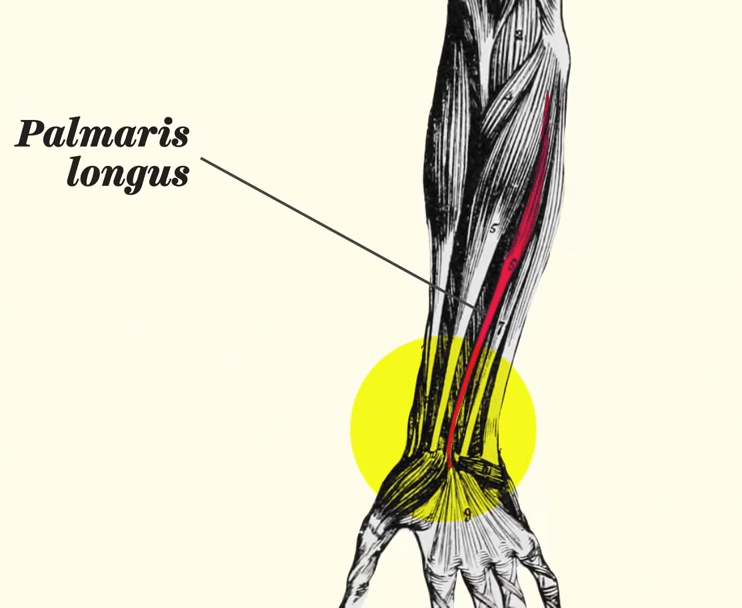
Beyond visible traits like goosebumps, some of the most telling evidence of evolution can be found beneath the skin. A prime example is the palmaris longus tendon — a structure with roots stretching far back in our ancestry. The palmaris longus is a slender muscle that runs from the inner elbow to the palm, and it’s especially notable for its variable presence in humans today.
For our arboreal primate ancestors, strong forearms and enhanced grip were essential for climbing and brachiation (swinging from limb to limb). The palmaris longus muscle and tendon conferred added strength and flexibility for these movements. However, as humans and our close evolutionary relatives (such as ground-dwelling apes) transitioned away from life in the trees, the demand for such specialized grip muscles diminished.
The Surprising Variation Among Humans
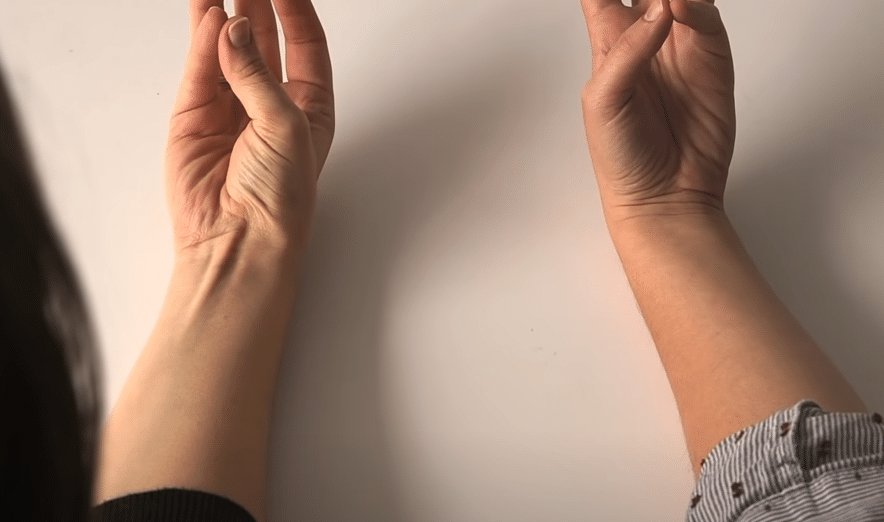
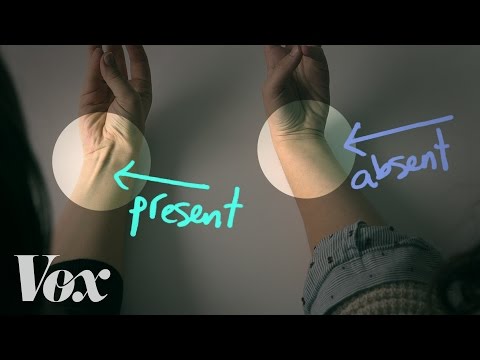
Scientific studies have found that the palmaris longus tendon is absent in approximately 10-15% of the global human population. This absence can occur in one or both arms without any significant effect on grip strength or daily function. Surgeons often use the palmaris longus tendon for grafts in reconstructive procedures, precisely because its loss does not significantly handicap patients.
The gradual reduction or absence of the palmaris longus among humans is a rare example of a vestigial structure actively disappearing from the species. This phenomenon is sometimes cited as “observable evolution” in action — a shift reflecting changes in lifestyle, with the muscle becoming unnecessary as our dependence on arboreal mobility ended millions of years ago.
Testing for the Palmaris Longus: Do You Have This Vestigial Tendon?
Curious about your own biology? Here’s a simple test, recommended by anatomists, that allows you to check for the presence of the palmaris longus tendon:
- Rest your forearm on a flat surface with your palm facing up.
- Touch your thumb to your pinky finger.
- Gently raise your hand while keeping your arm flat.
If a discernible raised band appears in the center of your wrist, you possess the palmaris longus tendon. If not, you are among the minority of people who do not have this vestigial trait — a living testament to ongoing evolution within our species.
The presence or absence of the palmaris longus has provided valuable material for evolutionary biologists and medical researchers. Its gradual disappearance is tracked through large population studies, which suggest a slow but steady reduction in frequency over generations — an excellent illustration that evolution is an ongoing process, not merely history.
Why Do Vestigial Traits Persist?
The persistence of vestigial structures, even those that no longer confer survival advantages, is explained by the principles of evolutionary biology. Traits that do not significantly hinder an organism’s ability to survive or reproduce may remain in the genetic pool simply due to genetic drift, the random fluctuation of gene variants in a population.
Additionally, evolutionary change tends to act more swiftly on harmful traits, which become selected against, whereas neutral vestiges might linger for countless generations. In some cases, like the palmaris longus, the trait is so inconsequential to modern living that there is little evolutionary pressure to eliminate it rapidly.
The disciplines of anthropology, comparative anatomy, and genetics regularly investigate these evolutionary leftovers to both reconstruct our past and predict potential changes in our anatomical future. Notably, not all vestigial traits are entirely useless: in rare instances, such as sudden changes in environment, these dormant capabilities may regain relevance, demonstrating the “tinkering” nature of evolution.
Broader Scientific Perspective on Human Vestigiality
The study of vestigial features in humans has evolved considerably over the decades. Early evolutionary biologists, such as Charles Darwin, highlighted these traits as powerful evidence supporting the theory of natural selection and shared ancestry. Modern research incorporates tools from genetics, developmental biology, and medicine, providing a multidimensional understanding of how and why specific structures become vestigial.
Peer-reviewed studies of population genetics reveal patterns in the variance and loss of these features. For example, the distribution patterns of the palmaris longus tendon vary among ethnic groups and geographical regions, suggesting a combination of genetic drift and localized selective pressures at work.
Medical research enhances our understanding of the physiological role of vestigial organs. The appendix, long considered a purely vestigial organ, is now known to play a minor part in the immune system, particularly during early childhood. However, its inflammation poses a risk, illustrating that the legacy of evolutionary adaptation sometimes comes with costs as well as curiosities.
Fossil evidence and genomic analysis together help reconstruct the timeline over which particular features have diminished or transformed. For instance, analyses of ancient hominin skeletons indicate when jaw sizes shrank and wisdom teeth began to crowd, or when bipedalism altered pelvic structure, leaving vestiges of our quadrupedal ancestry.
Evolution in Real Time: Humans Are Still Changing
The reduction or loss of vestigial features like the palmaris longus muscle serves as direct evidence that human evolution continues in the present day. These changes occur slowly, over many generations, and are only detectable through careful anatomical studies and genetic surveys.
Recent advances in genomics have pinpointed not only the inheritance of vestigial traits, but also the ongoing adaptation to new environments, diets, and diseases. For example, populations in parts of Africa and Europe have independently evolved lactase persistence, the ability to digest milk in adulthood, while certain island populations have lost the third molar gene entirely due to jaw size reduction.
While dramatic transformation of the human physique may no longer be as rapid or visible as in our ancestral past, genetics and anatomy alike reveal that evolution is a living process, inscribed in the variability of traits like the palmaris longus or the persistence of goosbumps.
Societal and International Perspective on Human Evolution
The understanding of vestigial traits as products of human evolution is widely supported within the international scientific community. Organizations such as the World Health Organization (WHO) and the Centers for Disease Control and Prevention (CDC) frequently highlight the relevance of evolutionary biology in public understanding of medicine, genetics, and health.
Educational outreach and science communication efforts seek to bridge the gap between complex scientific concepts and everyday experience. Knowing about vestigiality can inspire curiosity about human origins, emphasize the importance of genetic diversity, and foster appreciation for the slow, adaptive nature of change. Understanding our evolutionary heritage can shape societal attitudes toward topics ranging from medicine and diet to conservation and the environment.
As more research emerges, the narrative of evolution becomes ever more personalized — accessible not only in textbooks and research journals, but also in the features of our very own bodies. The science of vestigiality continues to unfold, offering both answers and new questions about humanity’s intricate story.
Conclusion
Vestigial traits such as goosebumps and the palmaris longus tendon serve as remarkable, tangible signposts of our evolutionary history. While they may seem trivial or functionless, they embody the long and ongoing journey of human adaptation. Their continued presence and gradual disappearance remind us that evolution is not merely a chapter in prehistoric times, but an active, observable process shaping each new generation. As science advances and understanding deepens, these vestigial features remain a testament to nature’s enduring legacy within us all.
Sources
- Centers for Disease Control and Prevention
- World Health Organization
- BBC Science & Environment
- Reuters World News
- The Guardian: Evolution
- Mayo Clinic
- Nature Scientific Reports
Disclaimer: This content is intended for entertainment purposes only and is not based on real events.