For a show built around a deserted island, seven stranded travelers, and an endless supply of improbable adventures, Gilligan’s Island was never supposed to be a perfectly realistic television experience.
The classic sitcom first aired in 1964 and ran for three seasons, but its popularity continued through decades of reruns. That gave viewers something the original production could never have anticipated: the opportunity to watch the same episodes over and over again.
And with repeated viewing came discovery.
Fans began noticing small details that did not quite match from one shot to another. A hat might suddenly change position. A prop could disappear between camera angles. The island could appear dramatically different depending on the scene. Even the famous boat, the S.S. Minnow, has been the subject of continuity discussions.
None of these mistakes destroys the series. In fact, they may be part of what makes Gilligan’s Island so entertaining to revisit.
Why Are There So Many Gilligan’s Island Mistakes?
Television production in the 1960s was very different from modern filmmaking.
Episodes were produced under tight schedules, and sitcoms were designed primarily to entertain viewers rather than encourage frame-by-frame investigation. Scenes could be filmed from multiple angles and edited together later.
Small differences could easily escape notice.
Today, however, viewers can pause scenes, replay individual moments, and compare details that originally appeared only for a fraction of a second.
Fan databases now document a large number of reported errors involving continuity, props, geography, production equipment, and story logic. One database currently lists more than 170 reported mistakes across the series.
That does not mean every entry represents a universally accepted error. Some observations are matters of interpretation, while others are clearly visible inconsistencies.
The distinction is important.
The Mysterious Changes to the S.S. Minnow
One of the easiest details to notice involves the boat that begins the entire story.
The vessel is known as the S.S. Minnow, but viewers have noticed that the boat shown in different portions of the opening sequence does not always appear identical.
According to fan documentation, the boat changes in appearance between shots, including differences involving the upper steering area and the shape of the cabin. Another commonly noted detail is that the vessel appears tilted in one sequence but upright in another.
Rather than being evidence of some hidden story development, this is best understood as a production continuity issue.
The audience was expected to accept the boat as the same vessel. The differences were simply not important enough to interrupt the comedy.
The Island Could Look Surprisingly Different
The setting of Gilligan’s Island is one of the show’s most recognizable elements.
Yet the island itself does not always appear consistent.
Some scenes make it appear relatively small and accessible, while other shots make the landscape seem considerably larger and more mountainous. Fan observers have pointed out that this creates an interesting visual contradiction because the island is repeatedly described as a small location in the Pacific.
This is understandable from a production perspective.
Different scenes require different filming locations, camera angles, sets, and backgrounds. A wide establishing shot needs to communicate one thing, while a jungle scene needs to create another visual environment.
The result is an island that seems to change size depending on what the story requires.
For viewers watching casually, the difference is easy to overlook.
For longtime fans, it becomes another entertaining detail to search for.
The Professor’s Coordinates Create Another Curious Problem
Perhaps one of the more interesting inconsistencies involves the island’s supposed location.
In different episodes, different coordinates are mentioned. One documented example notes that the Professor gives a position of 110 degrees latitude and 10 degrees longitude in one episode, while another episode gives a different figure.
There is also a particularly amusing geographical issue in the episode “X Marks the Spot.”
The episode reportedly gives coordinates involving 140 degrees latitude. However, latitude only extends to 90 degrees north or south.
That means the stated coordinates cannot represent a real geographic position as written. IMDb’s episode goof listings document this as a geographical error and note the possibility that the numbers may have been transposed.
For a group desperately hoping to be found, that would certainly make navigation more complicated.
Fortunately, the show’s comedy did not depend on precise cartography.
Props Sometimes Have a Mind of Their Own
Continuity mistakes involving props are among the easiest errors for fans to spot.
A famous example occurs in “Pass the Vegetables, Please,” where a radiation meter reportedly disappears between shots. In another scene from the same episode, a book changes position as the camera cuts between angles.
These are classic examples of editing continuity.
An actor may have moved an object between takes. A prop assistant may have repositioned something. Or two shots filmed at different times may have been edited together without anyone noticing the small difference.
For modern viewers, these moments can be surprisingly amusing because the technology makes them easy to examine.
The Changing Clothes Mystery
The castaways were supposedly stranded with whatever belongings they had aboard the Minnow.
That premise creates an amusing wardrobe question.
Ginger, in particular, is frequently shown wearing different outfits despite dialogue and scenes suggesting that she had limited clothing with her when the voyage began.
Fan documentation has repeatedly pointed out this apparent inconsistency.
There are possible explanations within the show’s fictional world. Later episodes introduce crates, costumes, and other objects that could theoretically explain where additional clothing came from.
But the simplest explanation may be the most practical one.
The characters needed different costumes because they were television characters.
A sitcom could hardly expect one of its main characters to wear exactly the same outfit for every episode simply because the story began with a shipwreck.
The wardrobe was part of the entertainment.
Sometimes the Camera Reveals the Production
Perhaps the most charming mistakes are the moments when the artificial nature of the television set becomes visible.
Fan records include reports of visible studio equipment, backgrounds, wires, and other production elements appearing briefly in certain scenes.
One reported example from “Two on a Raft” involves the shadow of a boom microphone appearing in a scene.
Another reported example involves wires being visible during a scene involving Gilligan and the Skipper.
For modern audiences accustomed to sophisticated digital effects, these moments can look surprisingly obvious.
But it is worth remembering that Gilligan’s Island was made in an era when practical sets, physical props, lighting, camera tricks, and carefully positioned equipment were fundamental parts of television production.
The illusion did not have to be perfect.
It only had to work well enough for the audience to enjoy the story.
The Famous “Eighth Castaway” Question
Another long-running curiosity concerns the opening sequence and the number of people appearing aboard the Minnow.
The series establishes seven principal castaways, yet fans have noticed imagery that can appear to show an additional person in certain versions or shots of the opening sequence.
This has led to years of discussion about the so-called “eighth castaway.”
However, the explanation is less mysterious than many viral posts suggest.
The show’s early production history included changes to the pilot and cast. Some material from the earlier version of the program differed from the final series, and later viewers sometimes interpreted people visible in the footage as an additional passenger. Contemporary retrospectives have discussed these unusual details as part of the show’s production history rather than evidence of a secret character.
So while the image can certainly be fun to investigate, it should not automatically be presented as a hidden plot revelation.
Why Fans Love These Mistakes
The fascinating thing about television mistakes is that they can sometimes make a show feel more human.
A perfect production can be impressive, but small imperfections reveal the people behind the camera.
They remind viewers that actors had to repeat scenes, props had to be moved, sets had to be rearranged, and editors had to assemble dozens of pieces into a finished episode.
Gilligan’s Island was never designed to be a mystery about production errors.
It was a lighthearted comedy.
The fact that audiences are still examining it decades later says more about its lasting popularity than about its imperfections.
Some Errors Are More Amusing Than Important
It can be tempting to describe every continuity problem as a major discovery.
But context matters.
A character’s hat changing position does not alter the story. A prop moving between shots does not change the outcome of an episode. A background set becoming visible does not make the characters’ adventures meaningless.
These are simply examples of the limitations and working methods of television production.
In fact, many viewers find them enjoyable precisely because they are harmless.
Once you know about a particular mistake, watching the episode again becomes a small game.
Can you spot it?
Does the prop really move?
Is that actually a microphone shadow?
Did the boat really change?
The viewer becomes part of the investigation.
The Enduring Charm of Gilligan’s Island
More than half a century after its original run, Gilligan’s Island remains recognizable to audiences who were not even born when the first episode aired.
Its longevity comes from much more than production tricks.
The memorable characters, simple premise, playful humor, tropical setting, and exaggerated adventures created a formula that could be revisited again and again.
The mistakes are simply another layer of that legacy.
Instead of proving that something was fundamentally wrong with the series, they offer viewers a chance to see how television was made during a very different era.
And perhaps that is why these little imperfections remain so fascinating.
Final Thoughts
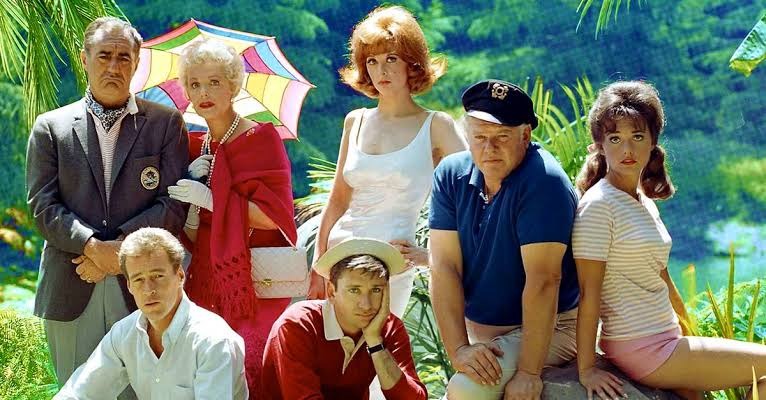
The next time you watch Gilligan’s Island, try looking beyond the dialogue.
Watch the background.
Notice the props.
Pay attention to costumes.
Look closely at the boat.
You may discover something you never noticed during your first viewing.
But there is no need to treat every inconsistency as a hidden secret or dramatic revelation. Most are simply ordinary production mistakes, continuity issues, or playful quirks that survived the editing process.
And perhaps that is the real lesson behind the show’s enduring collection of bloopers.
Television does not have to be flawless to become memorable.
Sometimes the smallest imperfections give audiences another reason to return, look closer, and wonder how something so simple became part of popular culture for generations.
Human curiosity has a remarkable way of turning even a tiny background detail into a new story. And with a show as familiar as Gilligan’s Island, there may always be another little mistake waiting to be noticed.
Sources
IMDb. Gilligan’s Island Goofs and production observations.
MovieMistakes. Gilligan’s Island continuity mistakes, factual errors, plot inconsistencies, and production details.
IMDb. Gilligan’s Island: X Marks the Spot episode goofs and geographical observations.
IMDb. Gilligan’s Island: Two on a Raft episode goofs and continuity observations.
SlashFilm. Retrospective discussion of memorable Gilligan’s Island production mistakes.