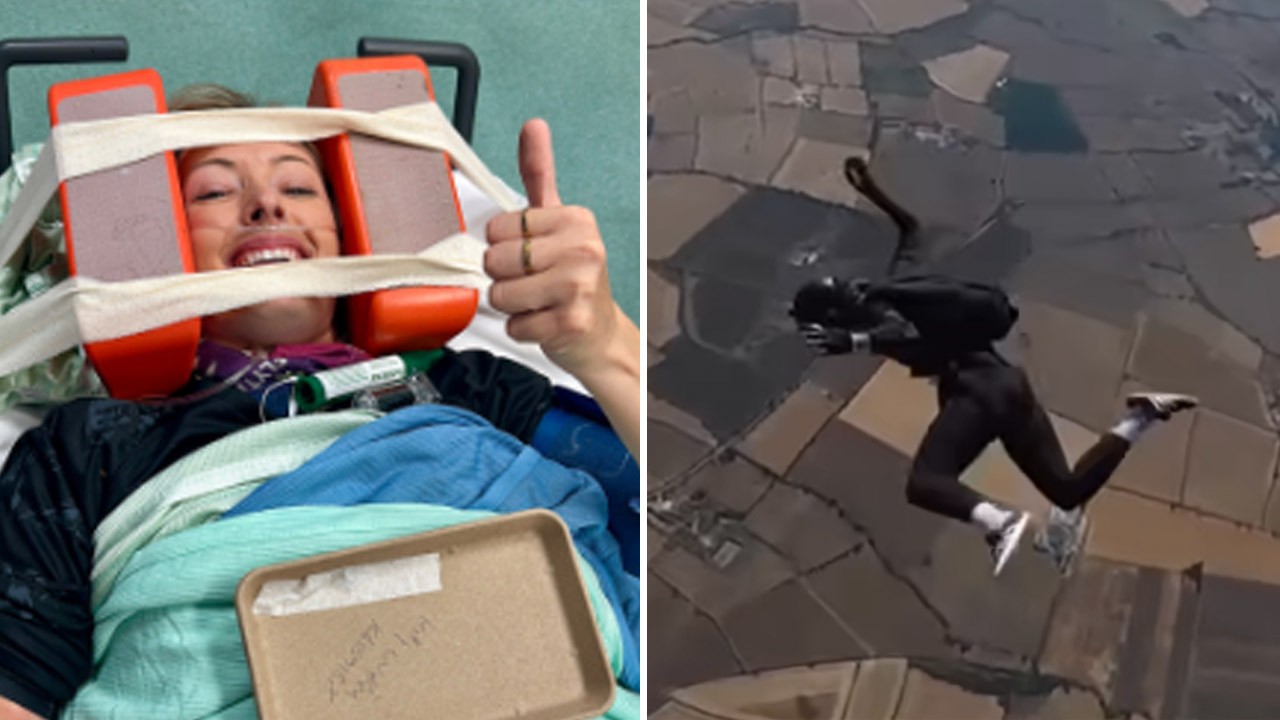
Holly Wiffen, 35, Plummeted 10,000ft Without an Open Parachute While Skydiving – and Miraculously Survived the Terrifying Ordeal Above Langar Airfield, Near Nottingham
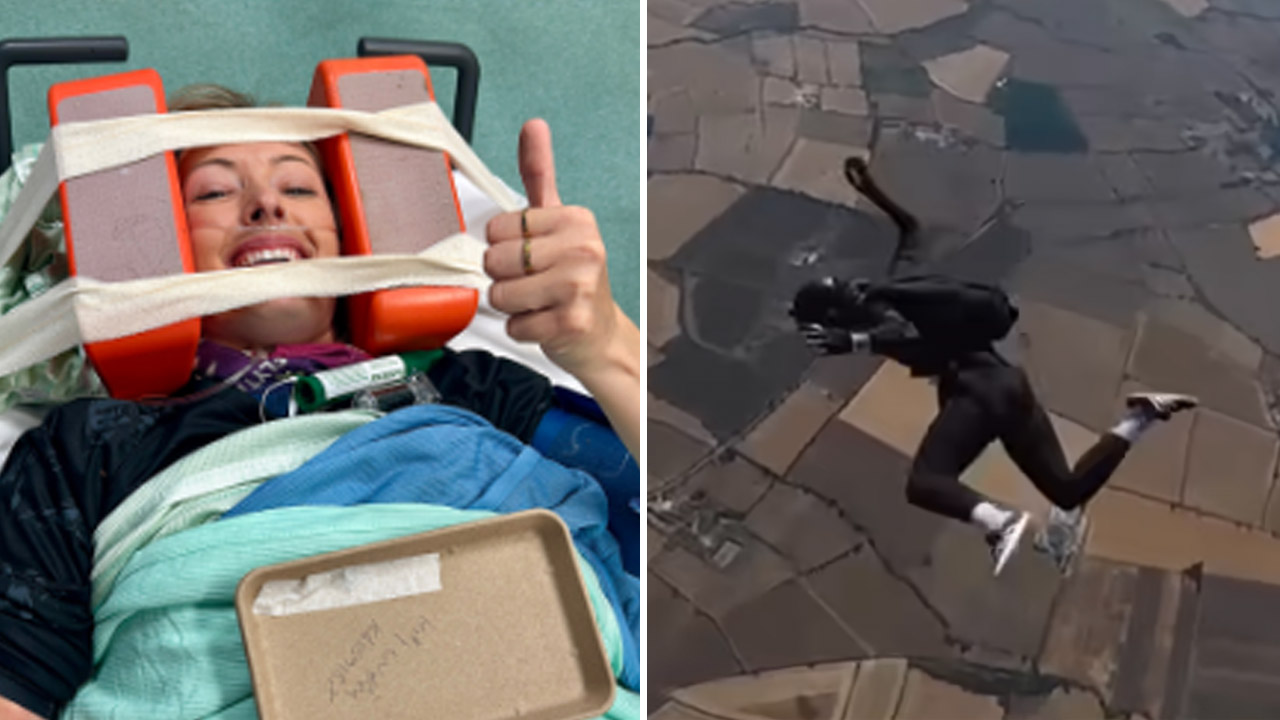
On August 7, 2023, Holly Wiffen, a 35-year-old self-employed woman, found herself at the center of one of the most remarkable survival stories in recent skydiving history. Participating in a group skydiving session at Langar Airfield near Nottingham, Holly’s day took a dramatic turn that would highlight both the dangers of extreme sports and the life-saving advances in skydiving technology. Her terrifying 10,000ft fall without an open parachute, yet ultimate survival, has captivated the public, raised important questions about skydiving safety, and inspired an outpouring of support from the global skydiving community.
The Skydiving Incident: A Routine Jump Turns Catastrophic
Skydiving has long attracted thrill-seekers, combining calculated risk with rigorous training and safety protocols. On this summer day, Wiffen joined a group performing a “tracking jump,” a skydiving technique where jumpers maintain a horizontal body posture to maximize forward speed and separation from other members during freefall. Such jumps, while exhilarating, require precise coordination among participants.
However, what began as a routine dive quickly deteriorated into a life-threatening situation. In mid-air, another skydiver inadvertently kicked Wiffen in the head. Moments after exiting the aircraft, the collision rendered her unconscious at approximately 10,000 feet above ground. As reported by The Mirror, she lost all awareness and control, unable to deploy her main parachute or stabilize herself in any way.
Immediate Consequences: Descent Without Awareness
Unconsciousness during a skydive is exceptionally rare but always dangerous. Holly’s inability to control her descent meant she was at the mercy of gravity, wind currents, and her unresponsive body. The situation was further complicated by the increased speed associated with the horizontal track, which can reach rates of up to 180 miles per hour during freefall. In such circumstances, manual intervention is essential to deploy a parachute – but Holly’s accident eliminated that possibility.
Wiffen later recounted to UK television’s ‘This Morning’ program that her memory of the incident is almost nonexistent, only recalling a dream-like sensation of falling. “It just went black, I don’t even remember leaving the plane… I just thought, ‘I’m falling and dreaming about falling’, it was really kind of peaceful,” she described. This lapse into unconsciousness meant her body was completely unresponsive throughout the critical moments of her descent, making her survival all the more extraordinary.
Safety Mechanisms: The Role of the Automatic Activation Device
Skydiving, despite its risks, has made significant strides in safety technology in recent decades. The key factor in Holly Wiffen’s survival was the presence of an Automatic Activation Device (AAD). This small, tamper-proof unit is fitted into modern skydiving rigs and is designed to automatically deploy the reserve parachute if it senses that the skydiver is still in freefall at a dangerously low altitude, typically below 2,500 feet.
In Holly’s case, the AAD detected her rapid descent without parachute activation and initiated the deployment sequence of her reserve canopy just moments before ground impact. This vital intervention allowed her to slow down enough to avoid a fatal outcome, and her descent ended with her canopy catching in the thick branches of a large conifer tree. According to experts from the British Parachute Association, the AAD has saved hundreds of lives since its adoption in the sport and is considered an essential piece of equipment by recognized drop zones worldwide.
Injury and Recovery: The Physical and Emotional Aftermath
While Holly’s survival was miraculous, she did not emerge unscathed. Upon regaining consciousness, Wiffen found herself suspended by her harness high up in a tree, disoriented and in shock. She immediately checked her mobility and was initially numb to any pain due to adrenaline, but soon discovered a broken leg and fractured vertebrae.
Her sister, acting quickly in the aftermath, launched a crowdfunding campaign to help cover the costs of physiotherapy and living expenses. As Holly is self-employed, her injuries temporarily prevented her from working, adding financial strain to her already difficult situation. The fundraiser provided a platform for the public and skydiving enthusiasts to show their support, with her family sharing updates on her healing journey and emphasizing the solidarity of the tight-knit skydiving community.
“Holly isn’t one to ask for help but I know from what she has told me about the skydiving community, everyone will be eager to help out one of their own,” her sister wrote in the campaign’s introduction.
Expert Perspectives on Skydiving Safety
Incidents like Wiffen’s, while rare, underscore the importance of ongoing education, training, and equipment checks in extreme sports. Experts stress the critical role of group preparation in tracking jumps, including careful spacing and clear communication before each exit. Additionally, mandatory use of AADs and regular equipment inspection have been instrumental in reducing serious injury rates.
The British Parachute Association and other parachuting organizations advocate for mandatory safety briefings, especially for advanced jumps that involve maneuvers increasing the risk of in-air contact. Dr. Jane Thomas, an aerospace medicine specialist, explains, “The physical and cognitive demands placed on skydivers are significant, and even a brief lapse – whether from distraction or impact – can have life-threatening consequences. Redundancies like the AAD are a lifesaver when the worst happens.”
The Psychological Challenge: Resilience After Trauma
Recovering from such a traumatic experience is as much a psychological journey as a physical one. Wiffen herself has spoken about the strange calm she experienced while unconscious, and the challenges she faces during rehabilitation. Mental health experts note that post-traumatic stress is common in survivors of near-fatal accidents and recommend counseling and gradual reintegration into daily life and hobbies.
Despite her injuries, Wiffen remains determined to return to skydiving. She told ‘This Morning,’ “After surviving this, I still love the sport and can’t wait to get back up there.” Her resilience has resonated with many who see her story as a testament to human fortitude and the critical importance of safety mechanisms in adventure sports.
Wider Implications: Skydiving Safety Developments and Societal Response
Holly Wiffen’s experience has become a new touchpoint in discussions about the balance between adventure and safety in extreme sports. The skydiving community has rallied around her, sharing resources for mental and physical recovery and emphasizing the importance of continuous learning. The incident also highlights the value of regular equipment upgrades and adherence to evolving international safety standards.
Public reaction has been one of amazement at her survival, gratitude for the technology that helped save her, and empathy for her challenges in recovery. News outlets worldwide picked up her story, and experts hope that it will inspire new and experienced skydivers alike to prioritize precaution and respect the powerful forces at play each time they leap from a plane.
Technological Progress in Skydiving Safety
Modern skydiving is safer than ever thanks to advances in instructional methodology, gear materials, and fail-safe devices like the AAD. Leading manufacturers periodically update their systems based on the latest accident data and user feedback. International collaboration – for instance, among the US Parachute Association, the European Skydiving Symposium, and the British Parachute Association – helps ensure that best practices and innovative safety features are broadly disseminated.
This continual improvement stems, in part, from the systematic analysis of incidents like Holly’s. Detailed reporting and review enable manufacturers and instructors to teach from real-world cases, refine emergency procedures, and encourage a culture of vigilance among participants at all levels.
Personal Reflections: Lessons Learned and Inspiring Others
For Holly Wiffen, the accident has not diminished her enthusiasm for skydiving. Her openness about the event, injuries, and recovery process has inspired others to appreciate both the rewards and responsibilities of participating in high-adrenaline pursuits. In interviews and online updates, she continues to advocate for safety awareness, community support, and the belief that with determination and the right safeguards, extreme sports can be enjoyed responsibly.
Her extraordinary survival is a powerful reminder of both human vulnerability and the remarkable advances of modern technology. As the story of her fall and recovery spreads, it leaves an indelible impression on anyone who faces fear or adversity – proof that split-second decisions (and innovations like the AAD) can make the difference between tragedy and triumph.
Sources
Disclaimer: This content is intended for entertainment purposes only and is not based on real events.