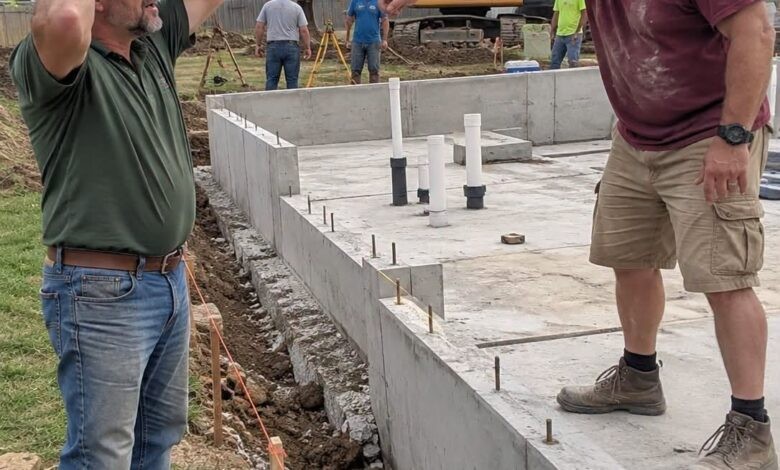
My Neighbor Built A $160,000 Foundation On My Land So I Tore It Down
“My Neighbor Built A $160,000 Foundation On My Land So I Tore It Down” is presented as a dramatic property-boundary dispute involving a Texas landowner, a neighboring construction project, disputed survey markers, and a partially completed concrete foundation. The account describes a homeowner returning from an out-of-state family visit to find that a substantial portion of a neighbor’s new foundation allegedly crossed onto his property.
However, readers should approach the narrative carefully. The draft does not identify a court case number, verified property records, named attorneys, official survey documents, or independent reporting that would allow the specific events and individuals described to be confirmed. It should therefore be treated as an unverified story or illustrative scenario, rather than a documented news report.
Even so, the central issues raised in the account are real and important. Property-line conflicts, construction encroachments, unauthorized removal of boundary markers, and disagreements over compensation can create expensive legal and practical problems for homeowners, builders, and neighboring landowners.
What the Story Claims Happened
According to the draft, a landowner identified as Cole and his wife Sarah owned rural property in Hays County, Texas. Before leaving town to assist Sarah’s mother following surgery, the couple reportedly had clearly marked property lines, including visible orange posts placed near surveyed iron monuments.
While the couple was away, their neighbor, Victoria Voss, allegedly began construction on a large guest-house or entertainment structure. The story claims that a reinforced concrete foundation was built approximately 14 feet across the boundary line and onto Cole and Sarah’s land.
The account further alleges that visible boundary posts had been removed before construction began, although the original iron survey monuments remained underground. When the property owners returned, they reportedly hired a licensed surveyor, who found that approximately 2,600 square feet of concrete foundation and related footings extended onto their side of the property line.
The dispute escalated after the neighbor allegedly offered payment in exchange for keeping the construction in place. The homeowner refused, arguing that ownership and recorded boundaries could not simply be overridden through a financial offer. The story then states that demolition began while the concrete was relatively new, followed by a lawsuit and a court ruling. Those later events are referenced but not fully included in the supplied draft, and they cannot be independently verified from the information provided.
Why Property Surveys Matter Before Construction
One of the clearest lessons in any boundary dispute is the value of a current, professional land survey. A survey establishes the location of property lines by reviewing deeds, recorded plats, existing monuments, measurements, and relevant legal descriptions. It is not the same as relying on a fence, a landscaping feature, an old marker, or a neighbor’s informal understanding of where a boundary might be.
In Texas and other U.S. states, surveyors are licensed professionals subject to state standards. Their work can become essential evidence when a dispute involves a building, driveway, retaining wall, fence, utility line, or foundation that may have crossed a property boundary.
For a major construction project, owners and contractors should not assume that an older fence or a rough visual estimate accurately reflects the legal lot line. A visible fence may have been placed for livestock management, convenience, drainage, or historical reasons. It may not align with the recorded boundary at all.
Before excavation starts, prudent owners typically confirm setbacks, easements, utility locations, drainage requirements, zoning restrictions, and property boundaries. These steps can reduce the risk of a costly redesign or a conflict with adjoining landowners.
Construction Encroachments Can Be Costly
An encroachment occurs when a structure, improvement, or use of land extends onto another person’s property without permission. Common examples include fences, sheds, roof overhangs, retaining walls, driveways, septic components, and portions of permanent buildings.
A foundation encroachment can be especially difficult because it may involve excavation, reinforcement steel, footings, concrete, drainage systems, framing plans, inspections, and future utility connections. The longer an issue goes unaddressed, the more expensive it may become to correct.
In the story, the disputed foundation is described as having been poured only days before the property owners discovered it. Concrete gains strength over time through curing, and removal of newly placed concrete may be less complicated than removal after a structure has been completed above it. Still, demolition should never be treated casually. Removing concrete, especially reinforced concrete near a property line, can create safety, drainage, structural, and legal concerns.
A landowner generally should not rely on personal assumptions before taking action involving a neighboring structure. Consulting a licensed surveyor, an attorney, and qualified demolition professionals is a safer path. Depending on the circumstances, a court order, temporary injunction, negotiated agreement, or other legal remedy may be appropriate before any physical removal occurs.
Can a Neighbor Simply Pay for the Land They Used?
No neighbor can ordinarily force a property owner to sell land merely because construction has already taken place. Property rights, however, are governed by state law, local rules, deeds, court decisions, and the specific facts of a case. The outcome of a construction encroachment dispute can vary widely.
In some circumstances, the parties may negotiate a purchase, boundary adjustment, easement, license, lease, or settlement payment. A voluntary agreement may make sense where the encroachment is minor, both parties want certainty, and the arrangement is properly documented and recorded.
But a landowner may decline an offer if the affected area has personal, financial, agricultural, environmental, or future-development value. A narrow strip of land can still matter. It may affect access, setbacks, fencing, water use, grazing, drainage, resale value, or the owner’s ability to build in the future.
When parties cannot agree, courts may consider the evidence surrounding the boundary, the seriousness of the encroachment, whether the conduct was accidental or intentional, whether notice was provided, and what remedy is equitable under applicable law. Potential remedies can include damages, removal of the encroachment, injunctions, or negotiated property interests. No article can reliably predict the result of a specific case without reviewing jurisdiction-specific law and evidence.
The Importance of Intent and Documentation
The draft emphasizes an allegation that visible property markers were removed before construction. If true, conduct of that kind could substantially affect how a dispute is viewed. Intentionally interfering with markers, knowingly building across a boundary, or misrepresenting property ownership may expose people to serious civil consequences and, in some situations, potential criminal issues under applicable state law.
However, claims involving intent require evidence. Relevant documentation could include survey reports, recorded plats, photographs, security-camera footage, contractor communications, text messages, permits, invoices, witness statements, and correspondence between attorneys. A reliable legal outcome depends on evidence tested through appropriate procedures, not simply on one party’s account.
For property owners, documentation should begin early. Photographs of survey pins and markers, copies of closing documents, survey maps, dated communications, and records of contractor activity can all help establish a clear timeline. If possible, owners should avoid confrontations that could escalate the dispute and should communicate in writing after obtaining legal advice.
Texas Property Lines, Monuments, and Recorded Documents
Texas has a long history of rural land ownership, subdivided tracts, ranch boundaries, and development-related disputes. In growing areas such as Central Texas, previously open land may be divided into residential lots, commercial sites, or mixed-use developments. That change can increase pressure on boundaries, easements, drainage systems, and access roads.
Property ownership is generally established through recorded instruments and legal descriptions, not through appearances. Physical survey monuments can be important because they connect recorded descriptions to real locations on the ground. A qualified surveyor may use existing monuments, field measurements, historical records, and professional standards to determine the boundary location.
County appraisal maps and online parcel viewers may be useful for general reference, but they are usually not a substitute for a formal survey. Their lines may be approximate and may include disclaimers warning users not to rely on them for construction, legal boundary determinations, or title purposes.
How Homeowners Should Respond to a Suspected Encroachment
Anyone who believes a neighbor has built on their land should act promptly but carefully. The first step is usually to avoid altering the site or making threats. An emotionally charged response can complicate an already difficult situation.
Property owners should gather available documents, including their deed, title materials, prior survey, photographs, and any communications with the neighbor or contractor. If the boundary is uncertain or the existing survey is outdated, hiring a licensed surveyor may be necessary.
Next, an experienced real-estate or property-dispute attorney can explain options under state and local law. Depending on the facts, the attorney may send a formal notice, request that work stop, seek a temporary restraining order or injunction, negotiate an agreement, or file a civil claim. Local building officials may also have a role if construction permits, setbacks, site plans, or inspections are involved.
Contractors also have responsibilities. A builder who notices conflicting markers, uncertain boundaries, or a potential encroachment should pause and seek clarification. Continuing work after a credible warning can increase costs and legal exposure for everyone involved.
A Broader Lesson About Neighbor Relations
The appeal of stories like this one often comes from a simple principle: a larger budget or more expensive construction project does not automatically outweigh another person’s legal property rights. At the same time, real boundary disputes are rarely resolved well through public arguments, retaliation, or assumptions about who is right.
Good neighbor relations depend on early communication, accurate surveys, respect for recorded boundaries, and professional advice before construction begins. A redesigned plan may be inconvenient, but it is usually far less disruptive than litigation, demolition, delayed permits, damaged relationships, and uncertain title issues.
Whether or not the particular events in this story occurred as described, its central warning is sound: permanent construction should never begin until the legal limits of the property are clearly understood. Concrete may be durable, but it does not erase a boundary or create ownership rights by itself.
Sources
Disclaimer: This content is intended for entertainment purposes only and is not based on real events.