If you grew up watching Happy Days, you probably remember the leather jacket, the jukebox, Arnold’s diner, and that unmistakable “Ayyyy!” from Fonzie.
For millions of viewers, the sitcom became much more than a television comedy. It offered a warm, nostalgic version of 1950s America, filled with family dinners, teenage friendships, first romances, music, and the comforting feeling of returning to familiar faces every week.
But behind the scenes, Happy Days had a fascinating history of its own.
The show almost had a completely different setting and name. Henry Winkler wasn’t the obvious choice to play Fonzie, Ron Howard initially hesitated about joining the series, and a young Robin Williams received one of his most important early television opportunities because of the sitcom.
Even some of the show’s most recognizable moments have stories that longtime fans may never have heard.
It Almost Wasn’t a 1950s Show
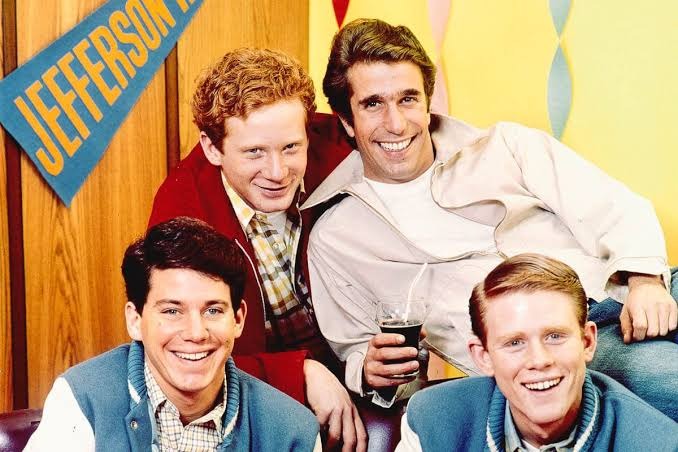
When producer Garry Marshall was first asked to develop a new sitcom in the early 1970s, he initially considered setting it during the 1920s or 1930s.
The idea eventually changed when Marshall realized that the 1950s were a period he knew much better.
The original pilot centered on a Midwestern family getting its first television set. Their teenage son hoped the new invention might even help him impress girls.
The pilot wasn’t immediately turned into a regular television series. Instead, it eventually appeared as a segment of Love, American Style.
That small experiment would ultimately lead to something much bigger.
The Show Almost Had a Completely Different Name
Before Happy Days became Happy Days, Garry Marshall reportedly considered a much shorter title: COOL.
The problem came when test audiences associated the word with cigarettes.
Producer Carl Kleinschmitt eventually suggested Happy Days, a title that captured the warm, optimistic atmosphere the series would eventually become famous for.
Looking back, it is difficult to imagine the show being called anything else.
Ron Howard Wasn’t Sure He Wanted to Play Richie
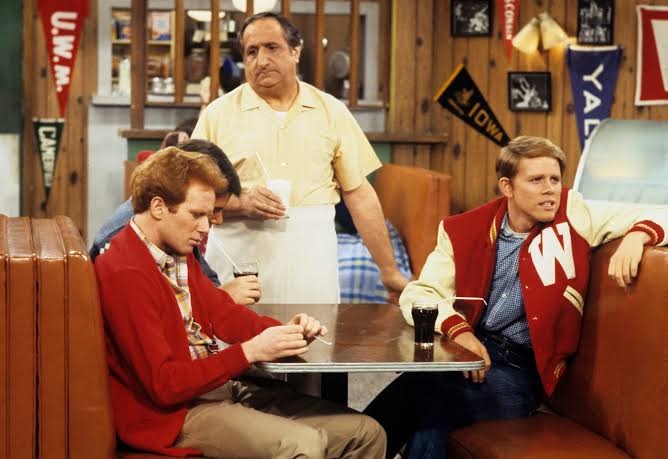
Ron Howard had already spent years working in television when Happy Days came along.
He wasn’t immediately enthusiastic about returning to a sitcom because he worried about being permanently associated with teenage characters.
Marshall persuaded him with an important promise: the characters would grow up.
Richie Cunningham and his friends wouldn’t remain teenagers forever. They would graduate, move into adulthood, and experience new stages of life.
That promise mattered to Howard, who was increasingly interested in directing.
He had enrolled at the University of Southern California with hopes of developing a career behind the camera. His role on Happy Days would eventually give him something even more valuable than another acting credit: a front-row seat to television production.
Years later, Howard would become one of Hollywood’s most respected directors.
Fonzie Almost Looked Nothing Like Fonzie
Henry Winkler seems almost impossible to separate from Arthur “Fonzie” Fonzarelli today.
But when Garry Marshall first imagined the character, Winkler wasn’t exactly the actor he had in mind.
Marshall reportedly pictured someone larger and more physically imposing, closer to the tough-guy image associated with actors such as Sylvester Stallone or Perry King.
Micky Dolenz, formerly of The Monkees, was also considered.
Then Henry Winkler auditioned.
Although he didn’t have the physical appearance Marshall had originally imagined, Winkler immediately understood the personality of the character.
He reportedly drew inspiration from Stallone, with whom he had previously worked on The Lords of Flatbush.
Marshall eventually realized something important: Fonzie didn’t need to look intimidating.
He needed attitude.
And Winkler had plenty of it.
Fonzie Became Bigger Than the Show
As Happy Days became increasingly popular, Fonzie’s role expanded dramatically.
The leather-jacket-wearing character who had initially been a supporting figure became one of the show’s biggest stars.
At one point, the network even considered changing the title to Fonzie’s Happy Days or simply Fonzie.
Fortunately for television history, Happy Days remained the name.
Henry Winkler Had a Secret Struggle With Reading
One of the most interesting stories surrounding Henry Winkler involves something audiences couldn’t see.
Winkler struggled with reading throughout his childhood and wasn’t diagnosed with dyslexia until he was 31.
That experience even affected his Happy Days audition.
Fonzie reportedly had only a handful of lines during the audition, but Winkler had difficulty reading them exactly as written.
Instead, he improvised.
The result wasn’t a perfect reproduction of the script, but it captured the character’s personality so effectively that the producers wanted him back.
In a remarkable way, the challenge that had caused him difficulties in school helped lead to the creation of one of television’s most memorable personalities.
Fonzie Went to the Library
Happy Days wasn’t afraid to use its popularity for positive messages.
One memorable storyline involved Fonzie visiting a library and checking out a book.
It was an unusual image because Fonzie was hardly the character viewers would have expected to see surrounded by books.
The episode ended with a straightforward message encouraging children to read.
A popular story later claimed that the episode caused library-card registrations to increase by 500 percent.
However, the American Library Association reportedly found no evidence supporting that extraordinary figure.
The real legacy of the episode may be simpler.
It showed millions of young viewers that reading could be part of everyday life — even for someone as effortlessly cool as Fonzie.
“Rock Around the Clock” Helped Set the Tone
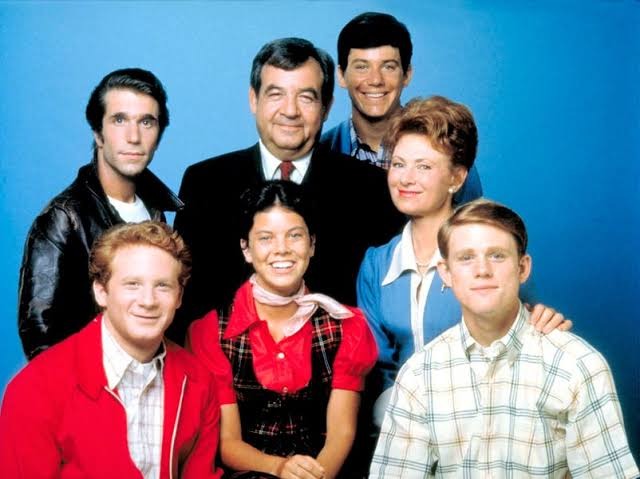
Music was an important part of Happy Days, and Bill Haley & His Comets’ “Rock Around the Clock” became closely associated with the series.
Interestingly, the original recording wasn’t used throughout the entire run.
The first episode featured one version, while Bill Haley later recorded another version specifically for the show.
The familiar recording became the opening theme during the series’ first two seasons.
For viewers, those opening notes became part of the experience of stepping back into the world of Happy Days.
Henry Winkler Wasn’t Comfortable on a Motorcycle
Fonzie made riding a motorcycle look effortless.
Henry Winkler, however, wasn’t particularly comfortable riding one in real life.
That’s why some of Fonzie’s famous motorcycle scenes relied on clever filmmaking.
The motorcycle could be secured to a platform and moved by a vehicle, creating the appearance that Fonzie was casually riding down the road.
It was another example of television magic: what looked completely natural on screen often required a little help behind the camera.
Fonzie Once Took a Very Important Phone Call
At the height of Happy Days‘ popularity, viewers sometimes felt a powerful connection to its characters.
That became especially clear when a teenager reportedly contacted Paramount and asked to speak with Fonzie during a personal crisis.
Henry Winkler took the call.
Rather than simply dismissing the request, Winkler spent time talking with the young person and offering encouragement.
The story became a touching reminder of how strongly audiences can connect with characters they encounter through television.
Sometimes, the person behind a fictional character can make an unexpected difference simply by taking the time to listen.
Pat Morita Was Asked to Change His Speech
Pat Morita became widely known as Arnold on Happy Days and later achieved international recognition for playing Mr. Miyagi in The Karate Kid.
Morita was a California native and naturally spoke English without the exaggerated accent sometimes associated with his television character.
According to accounts of his early Happy Days appearances, he was encouraged to use a more pronounced accent because executives believed the character should sound more distinctly Asian-American.
Morita later clarified that Arnold was Japanese-American after concerns arose about viewers interpreting the character differently.
His career would eventually become an important part of Asian-American representation in mainstream American entertainment.
Fonzie’s Big Romance Didn’t Go as Planned
One of the show’s heavily promoted storylines was Fonzie Loves Pinky.
Pinky Tuscadero, played by Roz Kelly, was introduced as someone who could match Fonzie’s confidence and personality.
The storyline attracted considerable attention, but the romance ultimately didn’t become a permanent part of the series.
Pinky was eventually written out.
Still, the storyline remains an interesting snapshot of how television producers tried to expand Fonzie’s character beyond his familiar cool-guy persona.
A Young Janine Turner Once Appeared on the Show
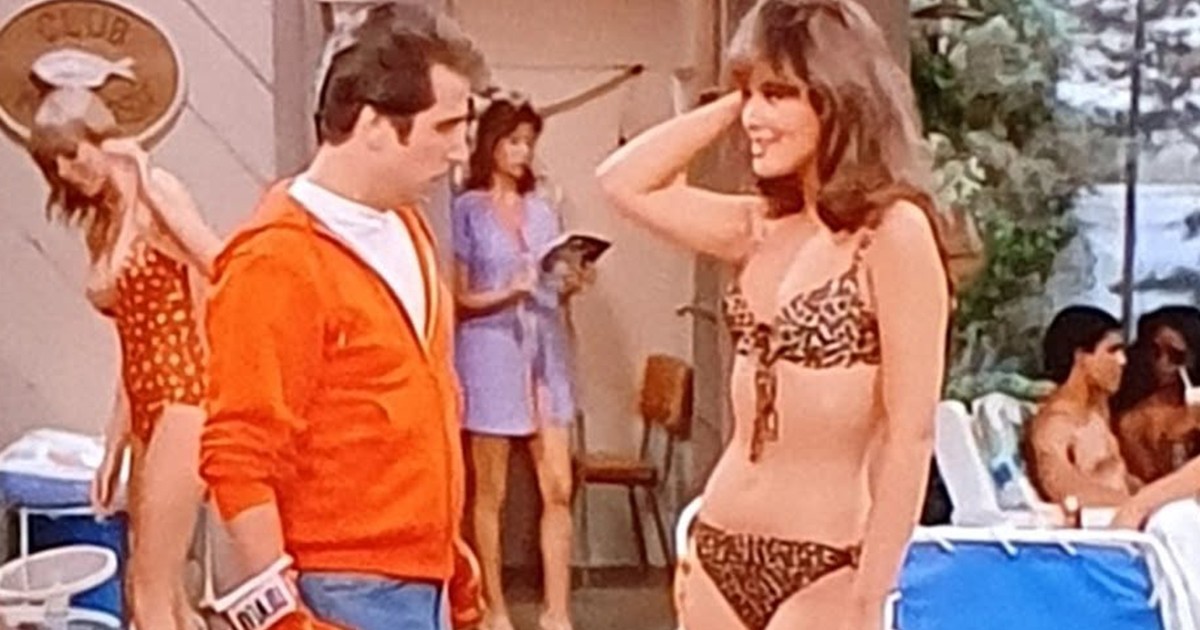
In 1983, a young actress named Janine Turner appeared on Happy Days in the episode “Where the Guys Are.”
She played Debbie, a young woman Fonzie meets while attending a singles resort.
At the time, Turner was still early in her career.
Years later, she became best known for playing Maggie O’Connell on Northern Exposure, along with appearances in films including Cliffhanger.
Seeing her in an old Happy Days episode today offers an interesting glimpse at an actress before she became widely recognized.
Ron Howard Appeared in His Own Past
One of the cleverest jokes involving Ron Howard was hidden in plain sight.
In one episode, the Cunningham family leaves a theater after watching The Music Man.
Mrs. Cunningham notices a young boy in the movie and comments on how much he resembles Richie as a child.
The joke works because the boy really was Ron Howard.
He had played Winthrop Paroo in The Music Man when he was only eight years old — years before he became Richie Cunningham.
It was a playful bit of television history hiding inside the fictional Cunningham family story.
John Lennon Visited the Set
In 1975, an unexpected visitor reportedly arrived at the Paramount lot: former Beatle John Lennon.
Lennon was there with his son Julian, who was reportedly a fan of Happy Days.
He spent time meeting cast members, signing autographs, and visiting the people working on the production.
For the actors and crew, it must have been a remarkable moment to see one of the most famous musicians in the world walk onto their television set.
Happy Days Helped Introduce Robin Williams to a Wider Audience
Before Robin Williams became a global comedy star, he was still a relatively unknown performer.
Garry Marshall needed someone to play Mork, an eccentric alien from Ork.
Marshall’s sister, Ronny, recommended Williams after seeing him perform.
Williams’ appearance was unlike anything the producers expected.
His rapid-fire delivery, unpredictable physical comedy, and unique energy made Mork instantly memorable.
The character became so popular that he received his own spinoff series, Mork & Mindy.
For Williams, Happy Days became an important early step toward the extraordinary career that followed.
Even Some Character Names Had Real Connections
Garry Marshall occasionally drew inspiration from people he knew.
The name Potsie Webber reportedly came from someone his wife had known at school.
Richie Cunningham was reportedly inspired by the name of a friendly young man Marshall knew through church.
Even Fonzie almost had a completely different identity.
Marshall considered using Arthur Masciarelli, based on his own family’s original surname.
Arthur Fonzarelli ultimately won.
And television history was better for it.
“Jump the Shark” Was Born on Happy Days
Few television expressions have become as famous as “jump the shark.”
The phrase originated with a Happy Days episode in which Fonzie waterskis over a shark.
Henry Winkler performed much of the waterskiing himself, although the actual shark-jumping portion was handled separately for safety reasons.
The moment later became a cultural expression for the point when a television series begins relying on increasingly exaggerated ideas.
Ironically, the phrase became far more famous than the episode itself.
A Small Diner Detail Changed Between the Pilot and Series
Fans familiar with Arnold’s diner may be surprised to learn that the location originally had a different name.
In the pilot, the diner was called Arthur’s.
When Happy Days returned as a regular series, it had become Arnold’s.
It was a tiny continuity change, but Arnold’s eventually became one of the most recognizable locations in the show’s universe.
The Cast Became a Team Off Camera Too
Garry Marshall encouraged the cast and crew to develop a strong sense of friendship away from the studio.
One example was the Happy Days All-Star Softball Team.
Cast and crew members played other celebrity teams, raised money for charity, and even traveled to military bases in Europe and Japan.
These activities helped strengthen the sense of community surrounding the show.
That atmosphere may help explain why so many cast members have continued to speak warmly about their years on Happy Days.
Henry Winkler Remembered One Co-Star Who Took Fame Too Seriously
Despite the show’s generally friendly reputation, Henry Winkler has recalled one recurring actor who apparently became particularly focused on his popularity.
Winkler remembered the actor repeatedly discussing the large amount of fan mail he was receiving.
Rather than seeing the cast as competitors, Winkler believed they were part of an ensemble.
The actor was later identified by fans as Denis Mandel, who played Eugene Belvin.
The story offers a small glimpse into something viewers rarely see: even on a beloved television set, personalities and egos can occasionally clash.
Fonzie’s Leather Jacket Almost Didn’t Happen
Today, Fonzie’s brown leather jacket is almost as recognizable as the character himself.
But ABC initially didn’t want him wearing one.
Network executives reportedly worried that the leather jacket gave Fonzie an overly rebellious or “hoodlum” image.
For a while, he wore a blue windbreaker instead.
Eventually, however, the leather jacket became part of Fonzie’s signature appearance.
Several jackets were reportedly produced for the series, with one eventually becoming part of the Smithsonian collection and another remaining with Henry Winkler.
Few pieces of television wardrobe have become quite as closely connected with a character.
The Final Episode Offered a Heartfelt Goodbye
After more than a decade on television, Happy Days eventually came to an end in 1984.
The final episode carried an emotional moment when Tom Bosley, who played Howard Cunningham, briefly stepped outside his character and addressed viewers directly.
He thanked audiences for welcoming the Cunningham family into their homes.
It was a fitting farewell to a series that had become part of American television culture.
Why Happy Days Still Feels Special
More than four decades after its debut, Happy Days remains memorable for reasons that go far beyond its jokes.
It introduced audiences to characters who felt familiar and comforting. It helped launch or strengthen the careers of performers such as Ron Howard, Henry Winkler, and Robin Williams. It created expressions, costumes, locations, and characters that became part of popular culture.
Most importantly, it captured something audiences still recognize today: the comfort of returning to a familiar world.
Whether it was Richie walking into Arnold’s, Fonzie straightening his leather jacket, the Cunningham family gathering around the television, or the unmistakable opening music beginning another episode, Happy Days created a sense of warmth that has lasted long after the original series ended.
And perhaps that’s the biggest secret behind its enduring appeal.
Television changes. Trends change. Audiences change.
But the feeling of remembering a favorite show from childhood can remain remarkably powerful.
For many fans, Happy Days isn’t simply a sitcom from another era.
It’s a little piece of their own past.
Sources
-
American Film Institute — Happy Days and television history
-
Smithsonian Institution — Television costume and popular culture collections
-
American Library Association — Library promotion and reading initiatives
-
Television Academy — Interviews and archival material on television history
-
Encyclopaedia Britannica — Ron Howard, Henry Winkler, and American television
-
Library of Congress — American popular culture and television history