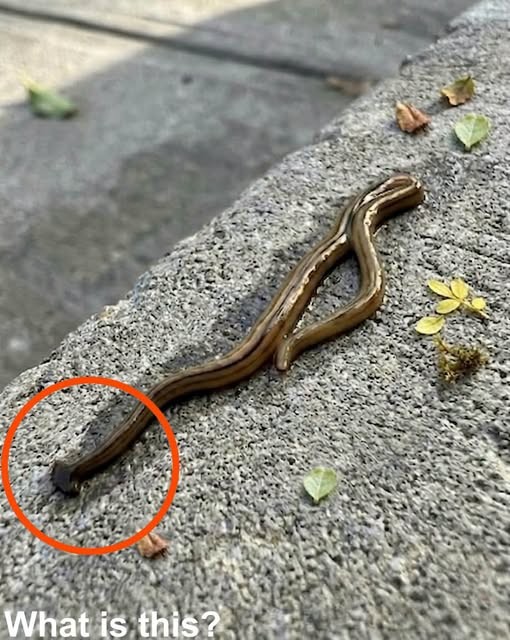
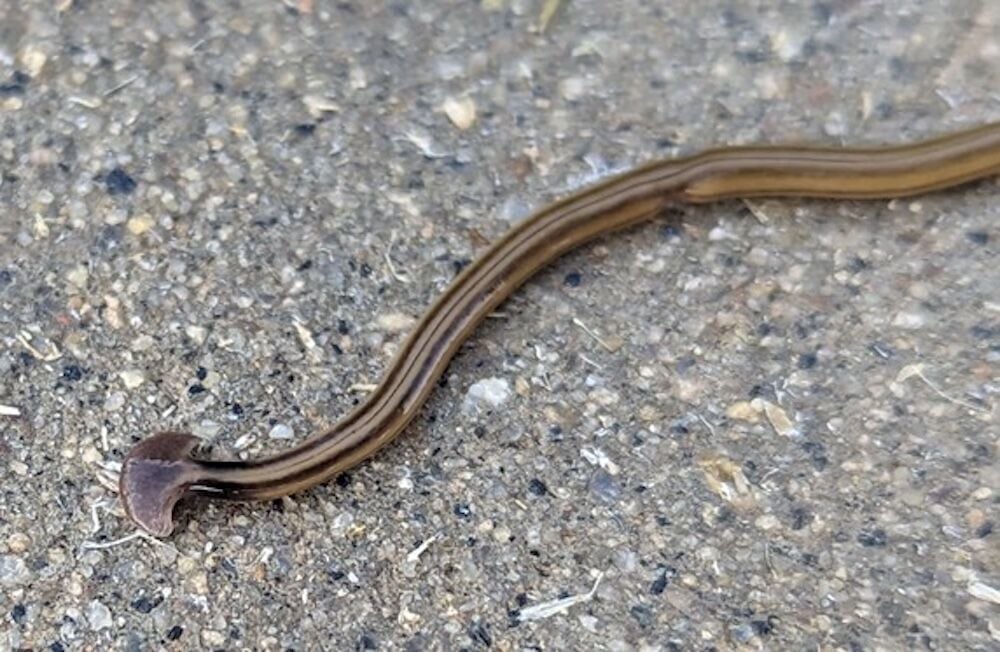
A long, glossy creature moving across a wet driveway or garden path can be an unexpected sight. At first glance, it may resemble an unusually large earthworm, a small snake, or even a strip of damp ribbon. A closer look often reveals its most distinctive feature: a broad, flattened head shaped like a hammer, shovel, or crescent.
This animal is commonly called a hammerhead worm. Despite the name, it is not an earthworm at all. It is a land flatworm, also known as a terrestrial planarian, and several species in this group have been reported outside their native ranges through the movement of potted plants, soil, mulch, and nursery materials.
Hammerhead worms are not known to attack people, and simply seeing one in a yard is not an emergency. However, experts generally advise against touching unfamiliar land flatworms with bare hands. Some species have been found to contain tetrodotoxin, a potent toxin that may help deter predators or subdue prey. In addition, these flatworms can prey on earthworms and other soil invertebrates, raising concerns in places where non-native species become established.
Understanding what a hammerhead worm is, why it appears after rain, and how to respond responsibly can help homeowners avoid unnecessary alarm while protecting local ecosystems.
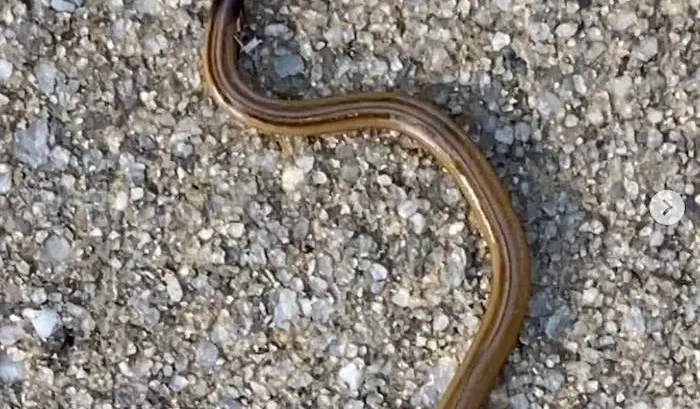
What Is a Hammerhead Worm?
Hammerhead worms are terrestrial flatworms in the family Geoplanidae. Many widely recognized hammerhead-shaped species are classified in the genus Bipalium, although related genera can also have similarly expanded heads. They are often called land planarians because they are relatives of aquatic planarians, a group well known in biology for regeneration research.
Unlike earthworms, which are segmented annelids, hammerhead worms have flattened, unsegmented bodies. Their head is wider than the rest of the body and can look like a small hammerhead shark silhouette when viewed from above. Depending on the species, the body may be cream, tan, yellow-brown, gray, dark brown, or nearly black. Some have prominent stripes running along their backs.
Size varies greatly. Some species are only a few inches long, while others can grow much longer under favorable conditions. Their bodies are soft and coated with mucus, giving them a smooth, glossy appearance. They are most likely to be found in damp, shaded places such as beneath plant pots, stones, leaf litter, mulch, logs, or garden debris.
Why Hammerhead Worms Appear in Gardens After Rain
Land flatworms need moisture to survive. Their bodies are susceptible to drying out, so they generally avoid hot, exposed, dry conditions. Rain, high humidity, and shaded soil create a more suitable environment for movement and feeding.
This is why many people first notice hammerhead worms on rainy mornings or after extended wet weather. A flatworm found on a patio, sidewalk, driveway, or lawn may not have arrived overnight. It may have been living unnoticed in a sheltered area and emerged when the ground became damp enough for it to travel.
Gardens can provide favorable habitat because they often contain moist organic matter, irrigation, mulch, dense planting, and places to hide. Greenhouses, plant nurseries, and potted plants can also create conditions that support terrestrial flatworms. The international horticultural trade is widely recognized as a pathway through which small soil-dwelling organisms can be moved beyond their original ranges.
How Hammerhead Worms Differ From Earthworms
The most important difference between a hammerhead worm and an earthworm is that they belong to entirely different animal groups and play different roles in soil ecosystems.
Earthworms are segmented animals that consume organic material and help break it down. Their burrowing activity can influence soil structure, water movement, and nutrient cycling. Although earthworms are not native everywhere and their ecological role can vary by region, they are familiar and important members of many garden soil communities.
Hammerhead worms are predators. Rather than mainly feeding on decaying plant material, many species hunt other invertebrates. Earthworms are a well-documented prey item for several land planarians. Some species may also consume slugs, snails, or other small soil animals.
This predatory behavior is why scientists and agricultural agencies monitor introduced land flatworms. A non-native predator can potentially affect local food webs if it becomes abundant, particularly where it feeds on organisms that contribute to soil processes.
How Hammerhead Worms Hunt Earthworms
Hammerhead worms move slowly, but they are specialized hunters. They can detect chemical cues left by potential prey and use their broad heads to explore the surface around them. When they encounter an earthworm or another suitable invertebrate, they may use sticky mucus and their flexible bodies to restrain it.
They feed through a structure called a pharynx, which is located on the underside of the body rather than at the front of the head. This feeding method is very different from the way earthworms consume soil and organic matter.
The presence of a hammerhead worm does not mean every earthworm in a garden is at immediate risk. Ecological effects depend on the flatworm species, the number of individuals present, local prey populations, climate, and habitat conditions. Still, repeated sightings of an introduced predatory flatworm can be useful information for local experts studying its distribution.
Are Hammerhead Worms Dangerous to Humans or Pets?
Hammerhead worms are not known to chase, bite, or attack people. Finding one outdoors should not be treated as a medical emergency. Nevertheless, it is sensible to avoid direct contact with any unidentified wild animal, including a land flatworm.
Scientific research has identified tetrodotoxin in some hammerhead flatworms, including certain species in the genus Bipalium. Tetrodotoxin is a neurotoxin also associated with pufferfish and several other animals. Researchers are still studying how land flatworms acquire, use, and retain this toxin.
The detection of tetrodotoxin does not mean that casual proximity creates a typical poisoning risk. There is no reason to panic after spotting a hammerhead worm in a garden. However, people should not pick one up with bare hands, and children and pets should be discouraged from touching or eating unfamiliar worms or other garden creatures.
If accidental contact occurs, wash hands thoroughly with soap and water and avoid touching the eyes, mouth, or face beforehand. Anyone who develops concerning symptoms after exposure, or whose pet has swallowed an unfamiliar organism, should contact a medical professional, poison center, or veterinarian for advice.
Why You Should Not Cut a Hammerhead Worm Into Pieces
One of the most remarkable features of land planarians is their ability to regenerate. Regeneration is a major subject of scientific study because certain flatworms can repair or replace damaged tissues to an unusual degree.
In hammerhead worms, regeneration capacity varies among species and depends on the size and condition of the fragment. However, cutting a suspected hammerhead worm into pieces is not considered a reliable control method. Some fragments may survive, and in some circumstances can regenerate missing structures.
For this reason, homeowners should not chop, tear, or crush these flatworms. Fragmenting an animal may complicate disposal and could potentially contribute to persistence if viable pieces remain in a moist environment.
Instead, local extension services, state agriculture departments, or invasive species programs may provide location-specific guidance on containment, reporting, and disposal. Recommendations can differ between jurisdictions, so following local instructions is preferable to relying on social media claims or improvised methods.
What to Do If You Find a Hammerhead Worm in Your Yard
If you see a suspected hammerhead worm, remain calm and avoid bare-handed contact. The animal is unlikely to present an immediate threat, but careful handling protects both people and the environment.
- Keep children and pets away. Do not allow pets to sniff, lick, or eat the flatworm.
- Take a clear photograph. Capture the head shape, body markings, approximate size, and the place where it was found.
- Record the location and date. This information can help experts assess whether a species is present in a new area.
- Contact local authorities if appropriate. A county extension office, state department of agriculture, university extension program, or invasive species office may help with identification.
- Follow local removal guidance. Do not relocate the animal to a park, woodland, neighboring property, or drainage area.
It is also wise to avoid broad pesticide use. Applying chemicals indiscriminately can harm beneficial insects, soil organisms, pets, and nearby plants without necessarily solving the issue. Identification and targeted advice are more responsible first steps.
Why Reporting Sightings Can Be Helpful
Not every hammer-shaped flatworm is the same species, and not every species has the same distribution or ecological significance. A photograph alone may not always be enough for a definitive identification, but it can provide useful evidence for trained specialists.
Reporting programs help researchers and authorities understand where non-native organisms are appearing. These records can reveal patterns related to climate, plant trade, landscaping activity, and habitat conditions. They may also help agencies decide whether further monitoring or public guidance is needed.
Before reporting, check the website of a local university extension service, state wildlife agency, department of agriculture, or invasive species network. Some areas have established systems for submitting photographs and location details. Others may advise residents to contact a regional office directly.
How Hammerhead Worms Spread to New Places
Hammerhead worms do not typically travel long distances on their own. Their wider spread is often linked to human movement of plants and soil. A flatworm, egg capsule, or small fragment can remain hidden in the soil of a nursery pot, beneath a container, or within moist landscaping material.
Gardeners can reduce the chance of moving unwanted organisms by inspecting new plants, pots, trays, and soil before bringing them into a garden. Checking underneath containers and removing excess debris can be useful, especially when plants have been kept in consistently damp conditions.
Sharing plants is common and can be an enjoyable part of gardening, but it also means that soil-associated organisms may travel from one property to another. Avoid moving suspicious flatworms or contaminated soil to a new location. Prevention is generally easier than trying to manage an organism after it has become widespread.
The Ecological Importance of Soil-Dwelling Animals
Garden soil is a living ecosystem. Beneath the surface are fungi, bacteria, insects, mites, nematodes, worms, and many other organisms that influence decomposition and nutrient cycling. These relationships can be difficult to see, but they contribute to the health and function of the soil.
Predators are a natural part of ecosystems. The concern about invasive land flatworms is not that predation itself is unusual, but that a predator introduced to a new environment may interact with species that did not evolve alongside it. Scientists therefore study how introduced flatworms establish themselves, what they eat, and whether they alter local invertebrate communities.
Public interest in hammerhead worms has grown partly because their appearance is so striking. Yet the most useful response is not fear. It is observation, accurate identification, responsible gardening practices, and reliance on advice from qualified local authorities.
Key Takeaways About Hammerhead Worms
Hammerhead worms are unusual land flatworms that can appear in damp gardens, especially after rainfall. Their broad heads, smooth bodies, and gliding movement make them easy to distinguish from ordinary earthworms.
They are predators that may feed on earthworms and other invertebrates. Some species are non-native in areas where they have been found, and their potential ecological effects are an ongoing subject of research. Although they are not known to attack humans, bare-handed contact is best avoided because some species contain tetrodotoxin and because unidentified wildlife should be handled cautiously.
If you find one, do not cut it apart or move it elsewhere. Photograph it, keep pets and children away, and consult a local extension service or agriculture authority for guidance. A strange creature in the garden can be a reminder that even familiar outdoor spaces contain complex and often overlooked forms of life.
Sources
Disclaimer: This content is intended for entertainment purposes only and is not based on real events.