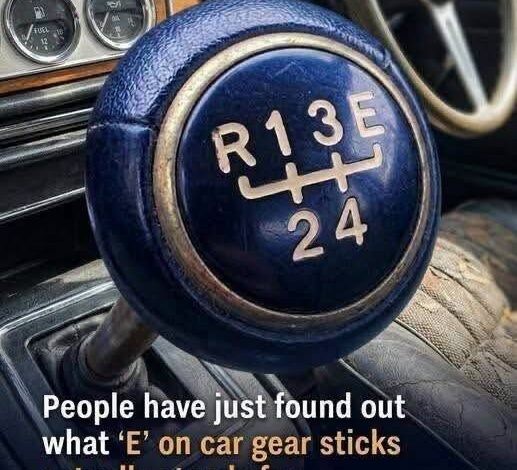
You’re kidding me: What the ‘E’ on Older Gear Selectors Means
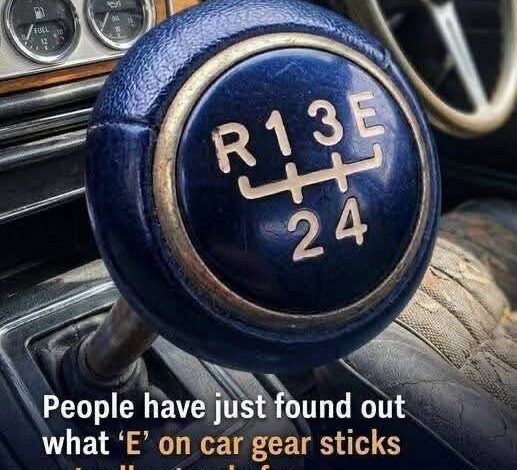
Introduction: The Enigmatic ‘E’ on Gear Selectors
Modern vehicles are increasingly defined by digital interfaces and coded complexities hidden behind touchscreens. Yet in the not-so-distant past, a simple labeled gear selector was the practical link between car and driver. Alongside the familiar P (Park), R (Reverse), and D (Drive), a solitary ‘E’ often appeared on gear levers in certain makes and models, confounding many drivers and enthusiasts. What did it symbolize? Why did manufacturers include it, and how did it impact everyday driving?
Origins of the ‘E’ Button: Efficiency at the Driver’s Fingertips
The ‘E’ on older automatic transmission selectors typically stood for “Economy” or “Efficient.” Emerging in the late 1970s through the 1990s—especially during periods of heightened awareness about fuel costs and environmental impact—this feature was driven by the automotive industry’s urge to empower drivers with control over their vehicle’s efficiency. By giving a tangible choice for maximizing fuel savings, manufacturers bridged the gap between mechanical engineering and user preference.
According to automotive historians and technical documentation from brands such as Mercedes-Benz, BMW, Saab, and early Japanese imports, the ‘E’ mode was built into automatic transmissions as a response to evolving consumer priorities. The oil crises of the 1970s and the subsequent decades of fuel economy standards brought greater innovation in transmission technology, including the ability to tweak shift patterns for economy versus performance.
How Does ‘E’ Mode Work?
Unlike today’s automatic transmissions programmed with intelligent software, the ‘E’ selector manually changed the transmission’s shifting behavior. When a driver selected ‘E’ (often via a physical switch or by moving the gear lever), the car’s transmission would adapt its gear changes in several key ways:
- Shifts happened earlier, keeping engine revolutions per minute (RPMs) low.
- Acceleration softened, making for a smoother ride and decreasing strain on engine components.
- Fuel consumption dropped, as the vehicle avoided high-revving behavior that wasted energy.
- Engine noise and vibration reduced, promoting comfort and a calming driving experience.
In technical terms, the ‘E’ mode optimized the transmission’s hydraulic or electronic controls to favor upshifting. This resulted in longer periods spent in higher gears, minimizing the engine’s workload and enhancing efficiency—a precursor to the more sophisticated “Eco” modes seen in new vehicles.
Driver Experience: ‘E’ in Daily Use
For many drivers, especially those commuting or navigating urban environments, the ‘E’ setting became a conscious tool for saving fuel and reducing operating costs. Selecting ‘E’ meant intentionally sacrificing some degree of performance—such as faster acceleration or immediate response— in favor of economy. Drivers reported feeling a palpable difference: the car’s response mellowed, gear shifts became less aggressive, and fuel receipts began to show incremental savings.
This tactile choice elevated driver awareness of efficiency. It wasn’t just about passive savings; it was about an actual behavioral shift, immersing drivers in the process of managing resources. In period car manuals and owner reviews, the ‘E’ was frequently recommended for city driving and long highway cruises, where consistent speeds allowed its benefits to fully materialize.
Technical Design: Mechanisms Behind the ‘E’ Selector
Underneath the gear lever, the technology driving ‘E’ varied. Early implementations used mechanical linkages or pressure-sensitive switches to adjust the transmission’s governor. As electronics advanced, automakers integrated solenoids and microprocessors to make mode selection more precise and reliable.
Diagnostics from service manuals reveal that the ‘E’ mode often interacted with transmission fluid pressure, throttle position, and even the vehicle’s load sensors. In some vehicles, it could disable performance-oriented features like “kickdown” (rapid gear drops for overtaking) to maintain efficiency. The engineering challenge was to ensure the mode reliably delivered savings without compromising reliability or safety—criteria closely monitored through regulatory standards and consumer feedback.
Transition to Intelligent Systems: From ‘E’ to Eco
The legacy of the ‘E’ selector is visible in today’s Eco driving modes, hybrid systems, and intelligent automatic transmissions. Modern vehicles continuously adapt to conditions in real-time, optimizing for efficiency through software and sensor-driven algorithms. The manual choice of ‘E’ has largely vanished, replaced by automatic settings informed by driving style, weather, and predictive data.
Automakers such as Toyota, Honda, General Motors, and Volkswagen now integrate multifaceted Eco modes, further enhancing fuel economy, mitigating emissions, and balancing driver comfort. However, the educational aspect—the driver’s direct involvement in choosing efficiency—is still promoted in owner manuals and on dashboard displays, encouraging users to monitor and refine their driving habits.
International and Societal Context: Why Efficiency Matters
The appearance of the ‘E’ mode coincided with globally recognized shifts in societal values. Oil shortages, rising fuel prices, and environmental concerns in Europe, America, and Asia spurred carmakers to innovate. Government policies such as the Corporate Average Fuel Economy (CAFE) in the US and tighter emissions regulations in the EU further compelled manufacturers toward efficiency solutions.
Environmentally conscious drivers welcomed these changes, viewing the ‘E’ button as a step toward sustainable mobility. Road safety organizations noted the additional benefit: smoother, calmer driving in ‘E’ mode led to fewer sudden maneuvers and a reduction in accident rates. In regions with congested roads, the preference for economy modes became a practical response to urban traffic dynamics.
Expert Views: Automotive Engineers and Industry Analysts
Technical experts describe the ‘E’ selector as a milestone in driver-vehicle interaction. According to engineers interviewed by BBC and Reuters, the mode anticipated modern concerns about fossil fuel consumption long before hybrid and electric propulsion dominated headlines.
Industry analysts highlight the trade-off inherent in efficiency modes: while they reduced fuel usage, they also made driving less responsive, prompting some enthusiasts to stick with performance-oriented settings. However, for the majority of drivers, especially as fuel prices rose, the advantages quickly outweighed the downsides. Automotive journalists routinely emphasized the ‘E’ mode’s practical impact in comparison tests, noting measurable differences in miles per gallon and maintenance costs.
Consumer Reaction and Legacy
Owners of vehicles equipped with the ‘E’ option generally regarded it as a beneficial feature—even if its technical details remained opaque. Car forums and retrospective discussions reveal nostalgia for the era when drivers physically chose their car’s behavior. Many recall the satisfaction of understanding and controlling a tangible mechanical process—a feeling sometimes lost in today’s opaque, software-based systems.
The legacy of the ‘E’ mode is visible in the ongoing push for greater efficiency, transparency, and user empowerment in vehicle technology. As automotive manufacturers increasingly tailor their technologies to meet global sustainability goals, the foundational concept introduced by the ‘E’ selector remains highly relevant.
Conclusion: The Significance of the ‘E’ Setting
The ‘E’ on older gear selectors marks a fascinating chapter in automotive history, blending practical engineering with evolving cultural values. It represented more than a simple transmission setting—it was an invitation for drivers to take an active role in conservation and efficiency. As vehicles became more sophisticated, the principles behind the ‘E’ mode were retained and expanded, influencing the development of new eco-conscious technologies that define today’s automotive landscape.
By understanding the story of the ‘E’ selector, car enthusiasts and everyday drivers alike gain appreciation for how small innovations can pave the way for lasting industry transformation. Efficiency remains a central concern, and today’s drivers—whether toggling digital Eco modes or reminiscing about analog gear levers—benefit from decades of progress rooted in these original innovations.
Sources
- BBC
- Reuters
- The Guardian
- Al Jazeera
- National Highway Traffic Safety Administration (NHTSA)
- U.S. Environmental Protection Agency (EPA)
Disclaimer: This content is intended for entertainment purposes only and is not based on real events.