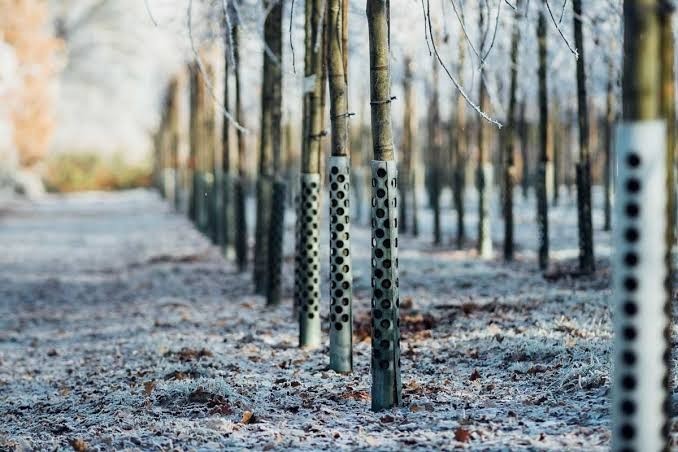
Why Do Some Trees Have Metal Collars?
Introduction to Tree Baffles
Metal collars, commonly known as tree baffles, often attract curiosity due to their unusual appearance around tree trunks. While they might initially seem puzzling, these structures serve a straightforward and practical function: protecting trees and nearby buildings from climbing animals. Used in residential and urban settings worldwide, tree baffles are an example of a humane, environmentally-friendly method for mitigating wildlife conflicts.
The Climbing Challenge: Why Animals Target Trees
Squirrels, raccoons, and various other wildlife are renowned for their agility and climbing abilities. These animals can scale rough tree bark with surprising ease, thanks to their strong claws and anatomical adaptations. For urban wildlife, trees serve as both sources of shelter and convenient pathways. Squirrels often establish nests in branches, and raccoons have been known to climb trees to access attics or roofs by jumping onto adjacent structures. Additionally, tree branches can provide animals with a route to bird feeders, chimneys, and even upper floors of homes.
Such activities can lead to a range of problems for homeowners and property managers. Animals may cause damage by chewing on branches or bark, displacing roof shingles, or leaving behind droppings or nesting materials. These behaviors not only threaten the health and longevity of trees but also pose risks to building integrity.

How Metal Collars Work as Wildlife Barriers
The primary function of a tree baffle is to act as a physical barrier that prevents animals from advancing beyond a certain point on the tree trunk. Mounted at strategic heights, these smooth, metallic surfaces thwart climbing efforts by making it nearly impossible for animals to gain the traction they need. The effectiveness lies in the inability of claws to grip the slick surface, rendering it too slippery for upward movement.
According to arborists and wildlife specialists, the design is both passive and non-lethal, meaning that animals are not harmed but are simply redirected away from areas where they might cause problems. This approach is favored by many wildlife advocacy organizations as an ethical alternative to traps or poisons, which can injure or kill non-target animals and impact the local ecosystem.
Varieties of Tree Baffles
There are several styles and sizes of tree baffles available, designed with the age, size, and species of the tree in mind. The most common type is a wide, cylindrical band made of galvanized or stainless steel. These are typically found on mature trees with larger trunks. For younger or thinner trees, cone-shaped baffles may be preferred, as they occupy less space and can be adjusted easily as the tree grows.
Innovations in aesthetics have seen the introduction of paintable or decoratively coated baffles that blend with their environment. This is especially useful for landscape designers or homeowners who wish to maintain visual harmony in gardens or public parks while still providing effective protection.
Commercially available baffles can often be customized in diameter and length, ensuring that they fit tightly enough around the trunk to function properly without restricting growth or damaging bark.
Proper Installation and Maintenance
Successful deployment of a tree baffle requires attention to installation techniques. The baffle must be positioned at a height that animals cannot bypass by leaping from the ground or adjacent objects such as fences, patio furniture, or sheds. According to guidance from arboricultural organizations, the recommended mounting height is typically four to five feet above ground level. Additionally, there must be sufficient vertical space above the baffle and below the branches to prevent animals from circumventing the barrier.
To avoid injuring the tree, it is important that baffles are not attached with nails, screws, or wires that penetrate the bark. Instead, adjustable clamps, springs, or padded brackets are employed to accommodate future growth. As trees age and increase in girth, the baffle should be checked and adjusted or replaced regularly to prevent girdling or constriction, which can impede nutrient flow and ultimately harm the tree.
Homeowners are also encouraged to periodically inspect baffles for signs of warping, rust, or detachment, which can reduce their effectiveness. Regular maintenance ensures that the device continues to function as intended year after year.

Balancing Wildlife Control and Environmental Stewardship
The use of tree baffles exemplifies a growing movement towards non-lethal and ecologically conscious wildlife management. Rather than removing animals from an area—or eliminating them—baffles simply restrict their access to sensitive places, such as rooftops and attics, while allowing them to pursue natural behaviors elsewhere in the environment.
Experts in urban ecology point out the importance of coexisting with local wildlife, especially in cities and suburban neighborhoods where habitats overlap. By limiting opportunities for nuisance behavior, property owners can reduce their reliance on potentially harmful measures like trapping, poison, or exclusion fencing. Long-term studies have shown that such humane approaches foster greater public support for conservation measures and contribute to healthier urban ecosystems.
Tree Baffles and Integrated Pest Management
Integrated pest management (IPM) is an evidence-based strategy that combines physical, biological, and chemical controls to minimize pest damage while safeguarding human health and the environment. Tree baffles fit seamlessly into an IPM approach, as they provide a physical, chemical-free solution for deterring unwanted wildlife.
Pest control professionals often recommend pairing baffles with other measures, such as trimming back branches that overhang roofs, securing attic and roof vents, and keeping bird feeders on poles with their own baffles. This multifaceted strategy reduces the likelihood of animals exploiting multiple access points and supports long-term prevention.
When used alongside ongoing habitat management, tree baffles reduce the need for repeated interventions. This ultimately saves time and money while improving outcomes for both property owners and local wildlife populations.
Societal and International Perspectives
The adoption of tree baffles is not limited to private residences. Many public parks, botanical gardens, and heritage sites with valuable old-growth trees have embraced this tool to manage wildlife without resorting to lethal means. In some regions, local governments or environmental organizations offer guidance on appropriate wildlife deterrence compatible with conservation goals.
Internationally, solutions similar to tree baffles have been tailored to address varying challenges. In the UK, for example, tree guards are used extensively to protect saplings from deer and rodents, while in parts of Asia, metal sheaths deter monkeys and other local wildlife. Regardless of the species targeted, the principle remains the same: implementing gentle barriers to foster peaceful coexistence between people and nature.
Expert Views on Tree Baffles
Arborists and wildlife biologists agree that tree baffles are among the safest and most effective ways to protect trees and buildings from climbing animals. “When installed correctly, tree baffles do not harm the tree or local wildlife populations,” says a representative from the International Society of Arboriculture (ISA). “They’re a valuable tool for homeowners who want to avoid recurring conflicts with animals without endangering them.”
Conservationists also highlight the need to balance property interests with the ecological benefits provided by squirrels, raccoons, and similar animals. These species play important roles in seed dispersal, soil aeration, and the broader food web. By encouraging humane deterrent methods such as tree baffles, communities can help protect biodiversity while addressing legitimate concerns over property damage.
Conclusion: The Role of Tree Baffles in Modern Landscapes
The next time you notice a shiny metal collar fitted around a tree trunk, recognize it as a discreet but effective wildlife barrier. Tree baffles are critical components in the toolkit of homeowners, park managers, and conservationists committed to protecting both human interests and urban nature. Their growing popularity reflects society’s shift toward gentle, science-based methods for managing the intersection of wildlife and human development.
Through proper installation, maintenance, and integration with broader wildlife management strategies, tree baffles will continue to offer practical, humane protection for both trees and the built environment for years to come.
Sources
- Reuters
- BBC
- Al Jazeera
- The Guardian
- Tree Care Tips – International Society of Arboriculture
- Mayo Clinic
Disclaimer: This content is intended for entertainment purposes only and is not based on real events.